Gymnastics academies · Digital marketing
Spend where parents of the right age are looking, and send them to a trial.
Digital marketing for a gymnastics academy is the mix of search, maps, social media and paid advertising that brings parents to a trial class. GullySales chooses the channels for each programme, builds the pages they point to and measures from enquiry to enrolment.
Scope, fee, reporting and term are agreed in writing after we have read your brief and spoken to you.
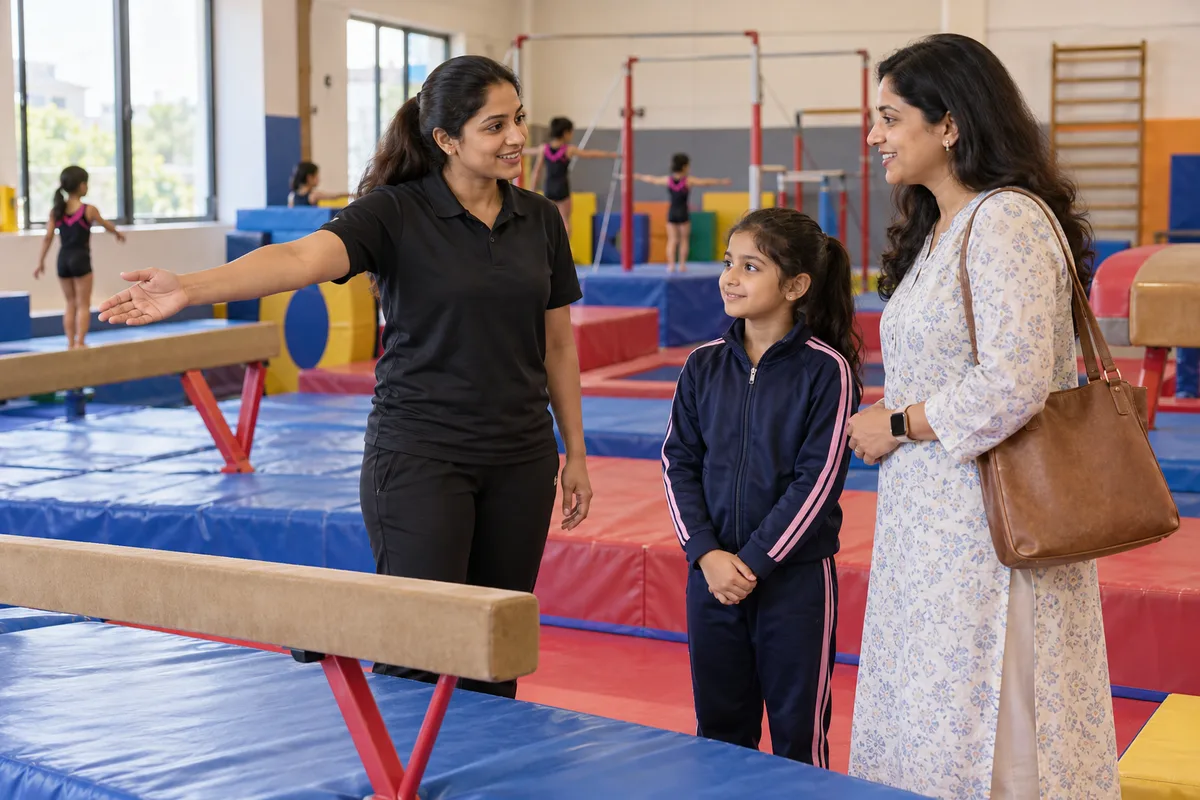
What digital marketing means
Digital marketing is the combined work of search, social media, advertising and website channels running together rather than as separate projects with separate people. GullySales runs these as one connected system so a change in one channel, such as a new offer, is reflected everywhere at once.
Also for gymnastics academies
- Buyer personas for gymnastics academies
- Lead generation for gymnastics academies
- SEO for gymnastics academies
- Local SEO for gymnastics academies
- Social media marketing for gymnastics academies
- Content marketing for gymnastics academies
- CRM for gymnastics academies
- Follow-up systems for gymnastics academies
Sales and marketing for gymnastics academies, the overview.
Last updated 14 Nov 2026.
For gymnastics academies
Where it usually goes wrong, and what we would do.
“A parent is reached through the other parent's phone”
Gymnastics decisions pass through two adults, a family group and a school WhatsApp circle. A mix of search, maps and a recommendation reaches the household better than one loud advertisement.
“Advertising about children has rules”
Advertising that involves minors can attract platform restrictions and parental objections. Check the platform's current rules, show children only with written consent and aim messages at the parent, not the child.
“The calendar drives the demand”
Admissions cluster around term starts and the lead-up to summer holidays. Spending evenly across the year pays for attention when parents are not deciding and leaves the busy weeks under-served.
“Clicks are not children on the mat”
A campaign that reports page visits tells you little about the batch that is empty. The figures that matter are trial bookings, trials attended and enrolments for each programme.
What we do
What we deliver for gymnastics academies.
The work available for this need. We agree the deliverables and responsibilities for your engagement in writing.
A channel plan by programme
A short plan saying which channels carry the toddler, recreational and squad programmes, and why, based on your current enquiries.
Result: Effort follows where each type of parent is found.
Campaigns for batches with places
Search and social advertising aimed at the age groups and areas where you have room, paused when a batch fills.
Result: Spend goes to batches that need children.
Landing pages for each campaign
A page for each advertised batch showing days, venue and trial booking, free of the distractions of a full website.
Result: Parents arrive where the next step is obvious.
A summer camp and term-start plan
A plan for the pre-admission periods, including the camp, the offer and the follow-up that moves camp children into term batches.
Result: Demand is met when parents are deciding.
Tracking from enquiry to enrolment
Source tags and trial outcomes in one view, joined to the advertising and search figures.
Result: You can see which channel produced enrolled children.
A baseline and a plain report
Enquiries, trials and enrolments by programme, set against the figures taken before work started.
Result: You can judge the work on enrolments, not clicks.
How the result is measured
- Enquiries across channels
- Cost per enquiry overall
- Channel mix by contribution
Recorded as a baseline before work starts, so every later report has an honest comparison.
Searches your buyers type
Where gymnastics marketing meets a parent in search and ads.
- gymnastics classes for kids near me
- A search ad and landing page showing the batch for each age, with a trial form asking age and date.
- gymnastics summer camp registration
- A camp page promoted before the holidays and reused each season, with dates and seats updated by the desk.
- rhythmic gymnastics academy for girls
- A separate page and ad for rhythmic, so the artistic page is not diluted by a different audience.
- birthday party at gymnastics academy
- A page explaining a party at the academy if you offer it, with safety supervision described.
- gymnastics trial class offer
- A page setting out what a trial includes, with the form that books a named slot.
Who it is for
This is written for these gymnastics academies.
- Recreational gymnastics academies
- Artistic gymnastics clubs
- Rhythmic gymnastics academies
- Toddler and preschool movement programmes
- Competitive gymnastics squads
- Gymnastics within multi-sport centres
- Parkour, tumbling and trampoline programmes
- Gymnastics and fitness programmes for older children and teenagers
Before you decide
When this may not be the right fit.
- You have no trial booking process, so clicks would arrive and not turn into children on the mat.
- You have not set rules for advertising with images of children, and ads that show them need the parent's consent and the platform's approval.
Before you decide
Agree the work. Know how to judge it.
Digital marketing for gymnastics academies: use these checks to prepare, choose the scope, and review what changes.
Bring the right evidence
Bring a recent won order and an enquiry that went nowhere. Trace how each buyer found you, what they asked, and who handled the next step. A channel list alone will not explain the difference.
Make the scope clear
Choose one offer and one buyer group first. Agree which part needs attention: being found, getting a useful enquiry, or turning an enquiry into an order. Separate recommendations from the work required to carry them out.
Check the work in use
A useful plan names the first change, its owner, the evidence behind it, and the number that will show whether it worked. Ask what has deliberately been left out and why.
Know when to change course
If your team cannot answer the enquiries it already receives, improve that handover before buying more traffic. If the offer itself is unclear, test it with buyers before adding channels.
These are discussion points, not a fixed package. GullySales confirms the deliverables, responsibilities, fee, and term in writing after reading your brief and speaking with you.
Before we start
What to have ready before the work starts.
The records, access and decisions this work needs from gymnastics academies. Anything missing is noted in the written scope, with who will supply it.
- The places-left sheet for each batch
- Show how many places remain in each batch and which batch you want to fill first. Campaigns are built around empty places, not around the academy in general. Without the sheet we might promote a class that is already full, and families would be turned away after paying for the click, and the desk would have to refuse a parent who had followed an advertisement for a class that no longer had a place for their child.
- Owner-level access to ad and analytics accounts
- Bring the logins for any advertising account, the website analytics and the business profile, or confirm they do not exist so we create them in the academy's name. Without the access, results cannot be traced to channels, and the baseline would depend on the guesses of whoever ran the last campaign.
- The agreed ceiling on spend
- Decide in writing how much you are ready to spend on paid reach during the trial period and who approves any increase. We never go beyond it. If no figure is given, we run organic work only and keep the paid step switched off until the owner sets a limit.
- Photographs and a video cleared by parents
- Prepare the pictures and a short video of the facility with signed consent for any child shown. If no cleared material exists, advertisements use the equipment and empty floor, which converts less well but stays within what the parents agreed to. We note the limit in the plan.
- The calendar of terms, camps and showcases
- Give the term-start dates, the camp dates and school holidays. Demand follows them, and campaigns are timed to them. If the calendar is not fixed, campaigns for camps wait until the dates are settled, because an advertisement for a camp that then moves wastes the interest it creates.
How it works
How the digital marketing work runs
The work itself, in order. How an engagement starts, from your brief to a written scope, is set out on our method page.
- 1
Decide which batches deserve paid reach
We read the places-left sheet with you and choose the one or two batches where a campaign makes sense, such as a beginners' evening class with empty places. A full squad is left alone. You decide the limit of what the academy is willing to spend, and we record it before any campaign is built.
- 2
Check the pages, tags and phone line first
Before any money is spent we test the pages that campaigns will point to, the tracking tags and the number the desk answers. We submit a test enquiry as a parent. If the form fails or nobody answers, we stop and fix that first, since spending on top of a broken route only buys complaints.
- 3
Write the message for each parent group
We draft the advertisement text and the page headline for the toddler parent, the beginner parent and the camp parent separately. Anything about children is checked against the platform's current rules and your own adviser where wording is in doubt. You approve each message before it is built.
- 4
Build the landing pages and the creative
We prepare one landing page per campaign with the age band, the batch, the trial date and a short form, plus the photographs and short video that sit in the advertisement. Pictures of children are used only with consent on file. The pages are shown to you on a phone first.
- 5
Switch on one campaign and watch the desk
We start with a single campaign, aimed at the streets and schools around the hall. The desk logs every enquiry with its source. You and we look at the first enquiries together, and a campaign that brings the wrong parents or wrong ages is paused and rewritten before another one begins.
- 6
Match enquiries to enrolments in the register
At the end of the period we take the enquiries each channel brought and match them against trials attended and enrolments in your register. A click is not a child on the mat, so the match is by name. You decide which channel continues and which stops, from those matched figures.
Where this fits
Three pieces of sales work, in this order.
This work sits inside sales process design, at stage 0, foundation. The audit comes before it, and sales management keeps it running.
Step 1
Sales audit
Find where deals are being lost and what to fix first.
Start here if you cannot say where orders are lost.
Step 2 · you are here
Sales process design
One written way to sell, from first enquiry to repeat order.
Start here if every salesperson sells differently.
Step 3
Sales management
A target, a review routine and someone who owns the number.
Start here if the team has targets and no routine.
FAQ
Questions owners ask before they call.
Not here? More answers, or ask on WhatsApp.
How much should an academy spend on advertising?
Is organic better than paid for us?
Can the academy run all of this alone?
Where does a new academy start in digital marketing?
Who pays the advertising platform?
What if the desk cannot handle more enquiries?
How long is the contract?
How soon will we see results?
Who will actually do the work?
What do you need from us?

More for gymnastics academies
Related work to consider.
Closest to this: strategy and research
Also for gymnastics academies
Or start from the overview: sales and marketing for gymnastics academies.
Your next practical step
Tell us what you are trying to grow, and we will read it before we call.
Eight short steps, mostly taps. Skip anything you would rather answer on the call.