Home and office automation · Sales enablement
Give your sales team a way to show the finished result, not just describe it.
Sales enablement for home and office automation means quotation templates, project galleries and demonstration material your sales team can use during a showroom visit or a site meeting. The pitch should not rely on memory or improvisation. GullySales builds these tools around your actual product range and past projects.
Scope, fee, reporting and term are agreed in writing after we have read your brief and spoken to you.
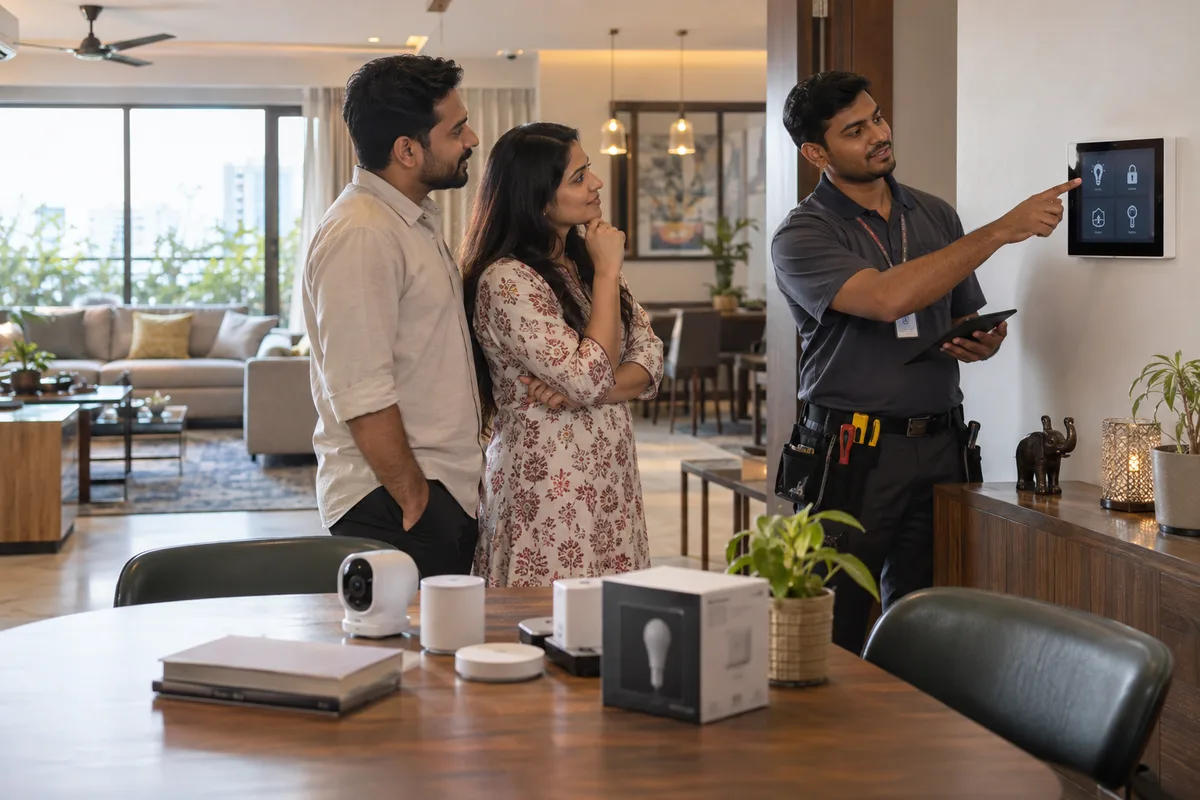
What sales enablement means
Sales enablement is giving a sales team the tools it needs to sell, such as scripts, brochures, pricing sheets and a working CRM, rather than teaching a skill. GullySales builds and keeps these tools current so a salesperson is never explaining a product from memory alone.
Also for home and office automation
- Sales management for home and office automation companies
- Sales process for home and office automation companies
- Sales training for home and office automation companies
- Branding for home and office automation companies
- Buyer journey for home and office automation companies
- Buyer personas for home and office automation companies
- Content marketing for home and office automation companies
- Digital marketing for home and office automation companies
Sales and marketing for home and office automation, the overview.
Last updated 5 Oct 2026.
For home and office automation
Where it usually goes wrong, and what we would do.
“A quotation that explains, not just prices, closes faster”
A detailed quotation showing what each component does and why it was chosen helps a buyer justify the decision to a partner or a board, not just to themselves.
“A project gallery organised by budget and style speeds up the showroom visit”
A salesperson who can quickly show a comparable past project, matched to the buyer's budget and taste, builds confidence faster than a generic tour of the showroom.
“Objection material should exist before the objection comes up”
Prepared, honest answers to common concerns about cost, maintenance or system reliability let a salesperson respond calmly instead of improvising under pressure.
What we do
What we deliver for home and office automation.
Every deliverable, what it covers for you, and the result it is there to produce. Nothing here is an extra.
Explanatory quotation template
A quotation format that states what each component does and why it was chosen, not just a price list.
Result: A buyer can justify the decision to a partner or a board using the document itself.
Project gallery organised by budget and style
Past projects catalogued so a salesperson can quickly show a comparable example matched to a buyer's own budget and taste.
Result: A showroom visit builds confidence faster with a relevant example on hand.
Prepared objection answers
Written, honest responses to common concerns about cost, maintenance and reliability, ready before a buyer raises them.
Result: A salesperson answers calmly instead of improvising under pressure.
Showroom demonstration script
A structured way to walk a buyer through the showroom's key demonstrations in an order that builds the strongest case.
Result: Every showroom visit covers the points that actually move a decision.
Regular gallery and case update routine
A standing habit of adding each strong new project to the gallery and case examples as it completes.
Result: The material sales uses always shows current, not dated, work.
How the result is measured
- Tools in active use
- Time to onboard a new salesperson
- Consistency of pitch across the team
Recorded as a baseline before work starts, so every later report has an honest comparison.
What your sales team carries
Carry proof of a working home, not a brochure of products.
- Room-by-room scope sheet
- For each room, what is controlled: lights, curtains, AC, lock or cameras, with the brand and protocol such as KNX, Zigbee or Wi-Fi. The design lead fills it per quotation.
- Demo route for the showroom
- A fixed sequence: arrival scene, voice command, phone app and what happens when the internet drops. Staff rehearse it so nothing fails in front of a client.
- Package comparison by budget
- Entry, mid and premium packages with brands, inclusions and exclusions such as wiring, hub or programming. The sales head updates it when an OEM changes its price list.
- Finished project videos
- Short clips of real sites shared with the owner's consent and labelled by budget and style. The site engineer sends the raw files at handover.
- Architect and builder brief
- A one-page note for the designer: conduit and neutral-wire needs, switch positions and the stage at which to call you in. The project head owns it.
- After-sales and warranty note
- Who the client calls, what the OEM warranty covers and what your own support covers. The support lead keeps it current as brands change their terms.
Who it is for
This is written for these home and office automation.
- Residential smart-home integrators
- Office and boardroom automation specialists
- Villa and apartment builder tie-up specialists
- Security and CCTV integration specialists
- Home theatre and AV specialists
- Motorised curtain and gate automation specialists
How it works
From your first message to the first report.
No open-ended retainer. Every step gives you something in writing.
First
Your brief
You tell us what you need in a few short steps: your business, what you want, where enquiries come from and how they are handled.
After the brief
A conversation and a written scope
We read it, then talk with whoever handles your enquiries. If you want our help, the scope, the fee and the reporting come in writing, and nothing starts before you have read them.
Before work starts
Baseline recorded
The numbers this work is meant to move, such as enquiries, quotations, orders, visits or renewals, written down so every later report has an honest comparison.
After the baseline
The first fix goes live
The fix we agreed to start with is put in place and measured against the baseline, whether that is a reply, a follow-up, a page, a listing or the handover between marketing and sales.
As agreed
Report against the baseline
What moved, what did not, and what changes next, in plain words. How often you get it is set in writing before work starts.
At renewal
Renew on the numbers
The term ends and you decide whether to continue from the results. The length is agreed in writing before anything starts.
How the sales enablement work runs
- 1
Audit existing material and tools
We gather what already exists across the team, however scattered.
- 2
Organise the library
Material is structured so anyone can find what they need without asking a colleague.
- 3
Fill the gaps
Missing battle cards, guides or answers are identified and built.
- 4
Build the onboarding pathway
A clear route through the material for new hires' first weeks is set.
- 5
Maintain and refresh
An ongoing schedule keeps material current as products, competitors and the team change.
Why us
Why owners pick GullySales over an agency.
Marketing and sales, as one job
Most agencies stop at the enquiry. We also fix what happens after it: the reply, the follow-up, the quote and the CRM.
The person on the first call does the work
No account managers in between. You are never handed to someone you have not met.
A baseline before anything starts
Your numbers are written down on day one, so every later report compares against something honest.
The fee in writing, split three ways
Our time, your media spend and production on separate lines. You always see what goes to us.
No guarantees we cannot keep
The term is agreed in writing and never a default twelve months. We never promise a ranking or a lead count, because nobody controls those.
One office, and we say so
Nagarbhavi, Bengaluru. We work across India by call and WhatsApp and travel when a session needs to be in person.
#257, 3rd floor, Sri Nanjundeshwara Complex, Nagarbhavi 8th Block, Outer Ring Road. How we work.
Your brief
Tell us what you need, and we will read it before we call.
Eight short steps about your business, what you want and who decides. Most questions are a tap, and you can skip any you would rather answer on the call.
FAQ
Questions owners ask before they call.
Not here? More answers, or ask on WhatsApp.
What tools matter most for a small sales team?
How often should these be updated?
How do we run a demo when the client cannot visit our showroom?
What should our sales person never promise about compatibility?
How much does it cost?
How long is the contract?
How soon will we see results?
Who will actually do the work?
What do you need from us?
What if we are not happy with the work?
From the blog
Further reading for home and office automation.

More for home and office automation
Everything else we would do for you.
Closest to this: sales craft
Also for home and office automation
- Branding for home and office automation companies
- Buyer journey for home and office automation companies
- Buyer personas for home and office automation companies
- Content marketing for home and office automation companies
- Digital marketing for home and office automation companies
- Lead generation for home and office automation companies
Or start from the overview: sales and marketing for home and office automation.
Your next practical step
Tell us what you are trying to grow, and we will read it before we call.
Eight short steps, mostly taps. Skip anything you would rather answer on the call.