Home and office automation · Lead generation
Build the architect pipeline that brings work in before a homeowner even searches.
Lead generation for home and office automation means cultivating architects, interior designers and builders as a referral channel, alongside search visibility for buyers researching directly. GullySales works both channels, because an architect who trusts you specifies your panel on the drawing before the client ever searches.
Scope, fee, reporting and term are agreed in writing after we have read your brief and spoken to you.
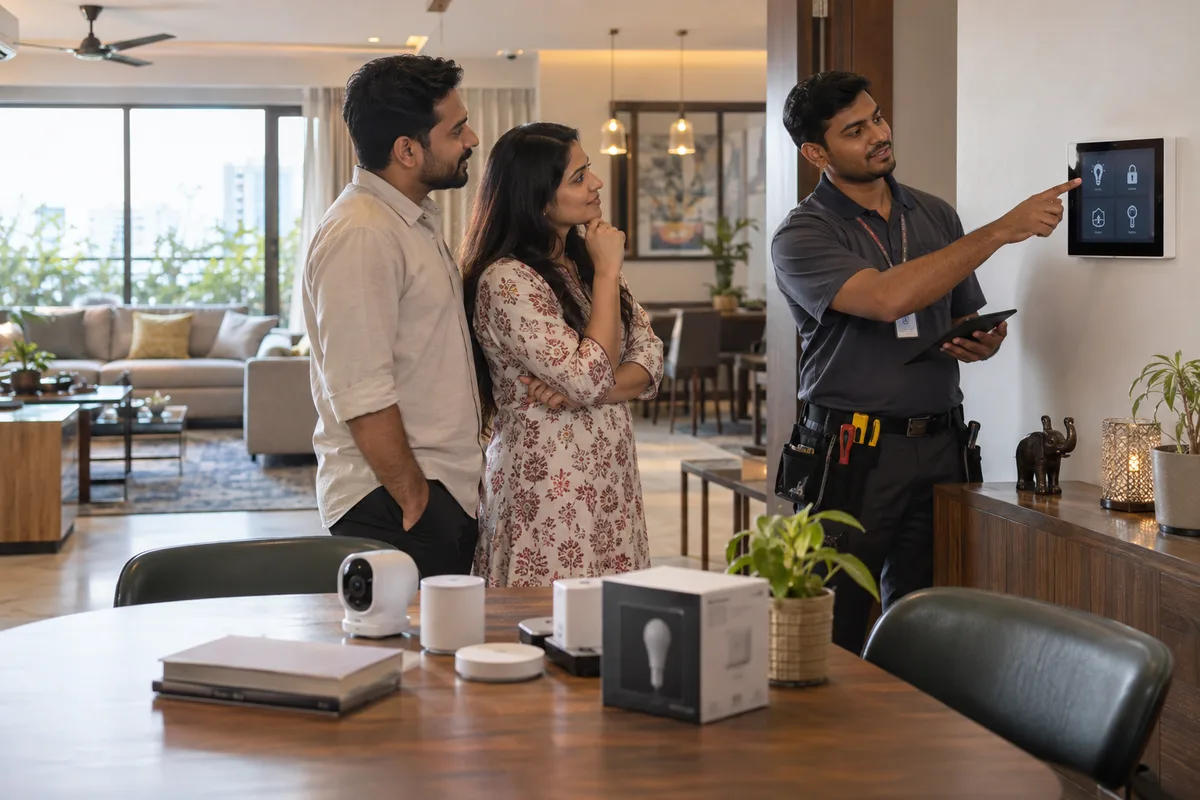
What lead generation means
Lead generation is the combined work of every channel that brings in a new enquiry, whether from search, adverts, referrals or a stall at an exhibition. GullySales runs these channels together and reports the number of enquiries each one produced, not the activity behind it.
Also for home and office automation
- Follow-up systems for home and office automation
- CRM for home and office automation
- Branding for home and office automation companies
- Buyer journey for home and office automation companies
- Buyer personas for home and office automation companies
- Content marketing for home and office automation companies
- Digital marketing for home and office automation companies
- PPC for home and office automation companies
Sales and marketing for home and office automation, the overview.
Last updated 5 Oct 2026.
For home and office automation
Where it usually goes wrong, and what we would do.
“A small number of design professionals can drive most of your pipeline”
A handful of architects and interior designers who trust your work and refer regularly often matter more to revenue than a much larger, colder marketing effort.
“Builder tie-ups bring volume, referrals bring value”
A tie-up with a builder handing over new apartments brings a steady volume of smaller projects, while architect referrals tend to bring larger, higher-budget ones.
“Search still matters for the buyer who starts alone”
Not every buyer is referred, and a homeowner searching directly for smart home automation in their city needs to find you too.
What we do
What we deliver for home and office automation.
Every deliverable, what it covers for you, and the result it is there to produce. Nothing here is an extra.
Architect and designer outreach programme
A steady, ongoing approach to reaching new architects and interior designers, rather than a one-off push.
Result: New referral relationships keep forming instead of relying on the same handful.
Builder tie-up development
Outreach to builders handing over new villas or apartment blocks, aimed at a standing arrangement rather than a one-time introduction.
Result: A steady volume of smaller projects flows in alongside referred ones.
Direct search visibility for self-starting buyers
Pages and search presence built for the homeowner who researches automation without ever going through an architect.
Result: A buyer who never gets referred still finds you.
Referral relationship tracking
A record of which architects and builders are actually sending enquiries, reviewed with you to see which relationships are worth growing.
Result: You know which referral source to invest more time in.
Design event and exhibition presence plan
A plan for attending or exhibiting at interiors and design events where architects and builders gather.
Result: New referral relationships start from a room full of the right people.
How the result is measured
- Enquiries generated
- Cost per enquiry
- Enquiries by source
Recorded as a baseline before work starts, so every later report has an honest comparison.
Where enquiries come from
The places an automation integrator's enquiries arrive, and what to record at each.
- Architect or interior designer's request for a proposal
- Record the designer, the project, the rooms and the stage of the wiring. Ask for the plans, and tell them the date by which cabling choices must be fixed.
- Builder's enquiry for a villa or tower
- Log the builder, the number of homes, the specification and the handover date. Ask which apartments will include automation, and offer a sample flat.
- Homeowner's WhatsApp after seeing a smart home online
- Note the rooms, the wiring stage and what they want to control. Ask for the floor plan. If the walls are finished, tell them what is possible without opening them.
- Showroom or experience centre visitor
- Write the name, the home or office they plan to automate and the features they liked. Note who attended with them, and send the proposal after the visit.
- Electrician or office contractor referral
- Record the referrer and the site. Electricians know the wiring stage and can hold a job for you, so thank them with the outcome.
- Past client recommending a friend
- Note the client, the friend and the home. Ask the client to say what they use every day, since a friend asks about the real use and not the brochure.
Who it is for
This is written for these home and office automation.
- Residential smart-home integrators
- Office and boardroom automation specialists
- Villa and apartment builder tie-up specialists
- Security and CCTV integration specialists
- Home theatre and AV specialists
- Motorised curtain and gate automation specialists
How it works
From your first message to the first report.
No open-ended retainer. Every step gives you something in writing.
First
Your brief
You tell us what you need in a few short steps: your business, what you want, where enquiries come from and how they are handled.
After the brief
A conversation and a written scope
We read it, then talk with whoever handles your enquiries. If you want our help, the scope, the fee and the reporting come in writing, and nothing starts before you have read them.
Before work starts
Baseline recorded
The numbers this work is meant to move, such as enquiries, quotations, orders, visits or renewals, written down so every later report has an honest comparison.
After the baseline
The first fix goes live
The fix we agreed to start with is put in place and measured against the baseline, whether that is a reply, a follow-up, a page, a listing or the handover between marketing and sales.
As agreed
Report against the baseline
What moved, what did not, and what changes next, in plain words. How often you get it is set in writing before work starts.
At renewal
Renew on the numbers
The term ends and you decide whether to continue from the results. The length is agreed in writing before anything starts.
How the lead generation work runs
- 1
Understand your capacity
We agree how many enquiries your sales team can actually handle well, so the system is not built to overwhelm it.
- 2
Audit current sources
We check what already brings in enquiries today, even informally, before adding anything new.
- 3
Strategise the channel mix
Content, search and paid channels are chosen based on where your buyers already look.
- 4
Implement capture and follow-up
Pages, forms and a follow-up process are built and connected end to end.
- 5
Measure and optimise
We track enquiry volume and quality and adjust the channel mix to match.
Why us
Why owners pick GullySales over an agency.
Marketing and sales, as one job
Most agencies stop at the enquiry. We also fix what happens after it: the reply, the follow-up, the quote and the CRM.
The person on the first call does the work
No account managers in between. You are never handed to someone you have not met.
A baseline before anything starts
Your numbers are written down on day one, so every later report compares against something honest.
The fee in writing, split three ways
Our time, your media spend and production on separate lines. You always see what goes to us.
No guarantees we cannot keep
The term is agreed in writing and never a default twelve months. We never promise a ranking or a lead count, because nobody controls those.
One office, and we say so
Nagarbhavi, Bengaluru. We work across India by call and WhatsApp and travel when a session needs to be in person.
#257, 3rd floor, Sri Nanjundeshwara Complex, Nagarbhavi 8th Block, Outer Ring Road. How we work.
Your brief
Tell us what you need, and we will read it before we call.
Eight short steps about your business, what you want and who decides. Most questions are a tap, and you can skip any you would rather answer on the call.
FAQ
Questions owners ask before they call.
Not here? More answers, or ask on WhatsApp.
How do we reach new architects?
Should we prioritise builder tie-ups or architect referrals?
A homeowner has already finished plaster and false ceilings. Is the enquiry still worth taking?
How do we price a proposal when the plans are not final?
How long is the contract?
How soon will we see results?
Who will actually do the work?
What do you need from us?
What if we are not happy with the work?
From the blog
Further reading for home and office automation.

More for home and office automation
Everything else we would do for you.
Closest to this: leads and follow-up
Also for home and office automation
- Branding for home and office automation companies
- Buyer journey for home and office automation companies
- Buyer personas for home and office automation companies
- Content marketing for home and office automation companies
- Digital marketing for home and office automation companies
- PPC for home and office automation companies
Or start from the overview: sales and marketing for home and office automation.
Your next practical step
Tell us what you are trying to grow, and we will read it before we call.
Eight short steps, mostly taps. Skip anything you would rather answer on the call.