Home and office automation · Follow up systems
Follow the site, not the calendar, because the wiring stage decides the order.
Follow-up for an automation integrator is the chasing after the showroom visit and the quotation: who calls, when, and with what. The date that matters is a construction date. GullySales builds the routine around the site's stage, so a quote is not left waiting while the plaster goes on.
Scope, fee, reporting and term are agreed in writing after we have read your brief and spoken to you.
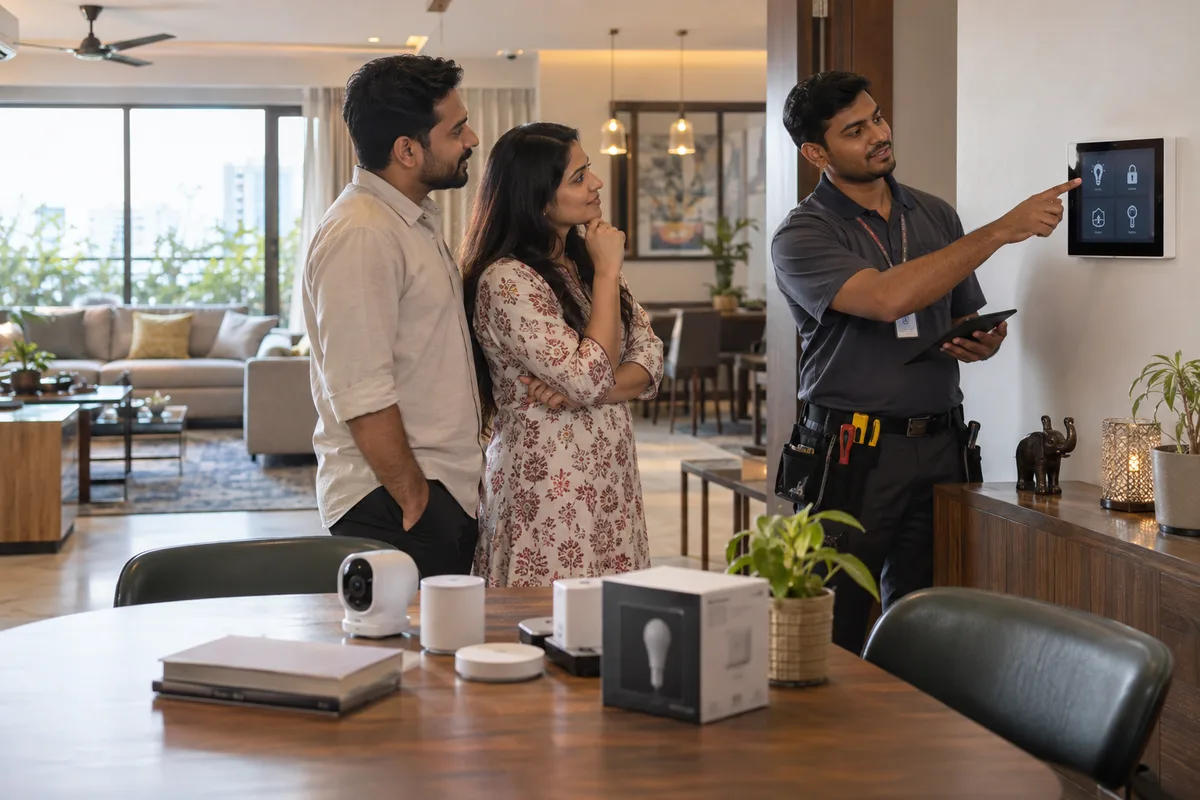
What follow up systems means
A follow-up system is the set routine for calling, messaging or emailing an enquiry more than once, since most buyers do not decide on the first conversation. GullySales sets the number and timing of follow-ups so an undecided buyer keeps hearing from you until they decide either way.
Also for home and office automation
- Lead generation for home and office automation companies
- CRM for home and office automation
- Branding for home and office automation companies
- Buyer journey for home and office automation companies
- Buyer personas for home and office automation companies
- Content marketing for home and office automation companies
- Digital marketing for home and office automation companies
- PPC for home and office automation companies
Sales and marketing for home and office automation, the overview.
Last updated 5 Oct 2026.
For home and office automation
Where it usually goes wrong, and what we would do.
“The follow-up date is a construction date”
A homeowner who saw the demo while the slab was being cast is months from deciding anything. The call that matters is the one placed before the electrician starts pulling conduit, because after the plastering the honest answer becomes no.
“The person who kills the job is often the electrical contractor”
The client said yes in the showroom, then the site electrician told him automation means too many wires and a headache at handover. Your follow-up has to reach the contractor with a wiring drawing, not only the client with a reminder.
“A quote with nothing to answer goes quiet”
Eighty line items and a total leave the buyer nothing to reply to. Send one question with it, about which rooms stay in phase one, and a silent PDF becomes a conversation you can move.
What we do
What we deliver for home and office automation.
Every deliverable, what it covers for you, and the result it is there to produce. Nothing here is an extra.
Every open enquiry tagged by site stage
Design, wiring, plaster, interiors or handover recorded against each project, so the list can be worked in the order the buildings are moving.
Result: Your team calls the site that is about to be wired, not the oldest name on the list.
A wiring-stage alert on every live project
A flag set when a site is approaching first fix, with the conduit drawing and the point of contact attached to it.
Result: No project is lost because the call came a fortnight late.
A separate follow-up to the electrical contractor
A short call and a drawing to the contractor or site engineer, covering conduit sizes, point counts and what you need left in the wall.
Result: The person on site stops arguing against the system.
One question attached to every quotation
A specific decision the buyer can answer in a line, such as which rooms go in phase one, sent with the quote rather than a week later.
Result: The quotation gets a reply instead of silence.
Revived enquiries counted apart from new ones
Orders recovered from projects that had gone quiet, kept as their own number rather than folded into total sales.
Result: You can see what the chasing is actually worth.
How the result is measured
- Follow-up completion rate
- Average number of follow-ups before close
- Enquiries closed after repeat follow-up
Recorded as a baseline before work starts, so every later report has an honest comparison.
Follow-up routine for this trade
Here is what the sales team does next at each stage of a project.
- Showroom visit, no quote request
- Ring and ask which rooms and which devices the customer had in mind. Write the construction stage and the room list on the enquiry.
- Quote sent, no reply
- Ask the owner whether the electrician or the architect has seen it, because those two often decide. Record their names and the date you will call.
- Plaster and conduit stage approaching
- Message the owner or contractor before the walls close to confirm what wiring is needed. Note the date the electrician starts.
- Builder or architect recommended you
- Send the builder a short sheet on the scope and the model options. Ask who gives the final approval and write that name down.
- Customer says the quote is high
- Ask which parts he would drop, such as curtains or audio, and offer a revised scope instead of a lower price. Write both versions on the record.
- Installation complete
- Call after he has used the system for a few days to ask how he finds it. Note any fault or training need before the next visit.
Who it is for
This is written for these home and office automation.
- Residential smart-home integrators
- Office and boardroom automation specialists
- Villa and apartment builder tie-up specialists
- Security and CCTV integration specialists
- Home theatre and AV specialists
- Motorised curtain and gate automation specialists
How it works
From your first message to the first report.
No open-ended retainer. Every step gives you something in writing.
First
Your brief
You tell us what you need in a few short steps: your business, what you want, where enquiries come from and how they are handled.
After the brief
A conversation and a written scope
We read it, then talk with whoever handles your enquiries. If you want our help, the scope, the fee and the reporting come in writing, and nothing starts before you have read them.
Before work starts
Baseline recorded
The numbers this work is meant to move, such as enquiries, quotations, orders, visits or renewals, written down so every later report has an honest comparison.
After the baseline
The first fix goes live
The fix we agreed to start with is put in place and measured against the baseline, whether that is a reply, a follow-up, a page, a listing or the handover between marketing and sales.
As agreed
Report against the baseline
What moved, what did not, and what changes next, in plain words. How often you get it is set in writing before work starts.
At renewal
Renew on the numbers
The term ends and you decide whether to continue from the results. The length is agreed in writing before anything starts.
How the follow up systems work runs
- 1
Measure today's reply time
From last month's enquiries, we measure how long each waited for a first reply and how many follow-ups it got.
- 2
Agree targets and the sequence
We set reply targets and the follow-up sequence with your team, based on its real hours and workload.
- 3
Set up templates, tasks and ownership
Templates, first-call questions, CRM tasks and named owners go live, with cover for leave and weekends.
- 4
Track and adjust every month
Reply time and follow-up completion are reported against the baseline, and the routine is changed where it is not kept.
Why us
Why owners pick GullySales over an agency.
Marketing and sales, as one job
Most agencies stop at the enquiry. We also fix what happens after it: the reply, the follow-up, the quote and the CRM.
The person on the first call does the work
No account managers in between. You are never handed to someone you have not met.
A baseline before anything starts
Your numbers are written down on day one, so every later report compares against something honest.
The fee in writing, split three ways
Our time, your media spend and production on separate lines. You always see what goes to us.
No guarantees we cannot keep
The term is agreed in writing and never a default twelve months. We never promise a ranking or a lead count, because nobody controls those.
One office, and we say so
Nagarbhavi, Bengaluru. We work across India by call and WhatsApp and travel when a session needs to be in person.
#257, 3rd floor, Sri Nanjundeshwara Complex, Nagarbhavi 8th Block, Outer Ring Road. How we work.
Your brief
Tell us what you need, and we will read it before we call.
Eight short steps about your business, what you want and who decides. Most questions are a tap, and you can skip any you would rather answer on the call.
FAQ
Questions owners ask before they call.
Not here? More answers, or ask on WhatsApp.
How long should we keep following up a villa enquiry?
Should the sales person or the technical person do the chasing?
Can we follow the builder or architect instead of the owner?
A customer says our quote is too high. Should we reply?
How much does it cost?
How long is the contract?
Who will actually do the work?
What do you need from us?
What if we are not happy with the work?
From the blog
Further reading for home and office automation.

More for home and office automation
Everything else we would do for you.
Closest to this: leads and follow-up
Also for home and office automation
- Branding for home and office automation companies
- Buyer journey for home and office automation companies
- Buyer personas for home and office automation companies
- Content marketing for home and office automation companies
- Digital marketing for home and office automation companies
- PPC for home and office automation companies
Or start from the overview: sales and marketing for home and office automation.
Your next practical step
Tell us what you are trying to grow, and we will read it before we call.
Eight short steps, mostly taps. Skip anything you would rather answer on the call.