Home and office automation · Buyer journey
Map the weeks between an architect's suggestion and a signed order.
The buyer journey for home and office automation runs from an architect first mentioning the idea, through weeks of research and a showroom visit, to a detailed quotation. The decision is usually made by more than one person. GullySales maps this journey so nothing that matters at each stage is missing when a buyer looks for it.
Scope, fee, reporting and term are agreed in writing after we have read your brief and spoken to you.
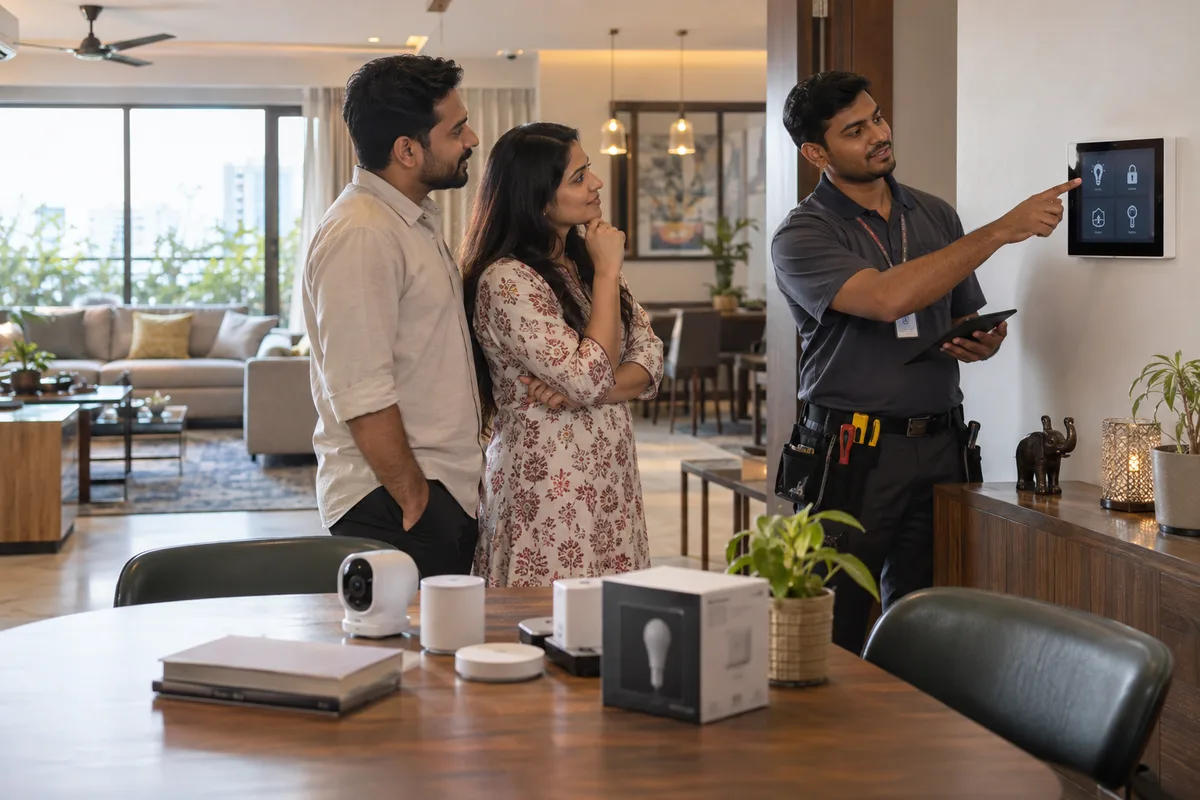
What buyer journey means
The buyer journey is the sequence of steps a customer actually takes, from first hearing about you to deciding to buy, which is rarely a single visit or call. GullySales maps this sequence for your business and checks that something useful happens at each step instead of only at the final call.
Also for home and office automation
- Buyer personas for home and office automation companies
- Digital marketing for home and office automation companies
- Marketing strategy for home and office automation companies
- Branding for home and office automation companies
- Content marketing for home and office automation companies
- Lead generation for home and office automation companies
- PPC for home and office automation companies
- Public relations for home and office automation companies
Sales and marketing for home and office automation, the overview.
Last updated 5 Oct 2026.
For home and office automation
Where it usually goes wrong, and what we would do.
“The journey often starts before the buyer contacts you at all”
An architect mentioning automation during a design meeting plants the idea weeks before the homeowner ever searches or visits a showroom. The referral relationship matters as much as the website.
“The showroom visit is a distinct, decisive stage”
A buyer who has only seen photographs online treats a showroom demonstration as the moment that turns interest into a real decision. The experience there needs to match that weight.
“The decision usually involves more than one person”
A homeowner rarely decides alone, and a sales process built for a single decision-maker misses the second conversation that actually needs winning.
What we do
What we deliver for home and office automation.
Every deliverable, what it covers for you, and the result it is there to produce. Nothing here is an extra.
Journey map from architect mention to signed order
A written map of the stages a buyer actually moves through, from an architect's suggestion to the showroom visit to the final quotation.
Result: You know exactly where to focus attention at each stage.
Showroom visit follow-up checklist
A defined next step for every showroom visit, whether a scheduled call or a promised quotation date, so no visit ends without one.
Result: A buyer has a clear reason to come back to you rather than a competitor.
Second decision-maker contact plan
A way to reach a spouse or business partner who was not at the showroom visit, instead of relying on the first buyer to relay everything.
Result: The second conversation that often decides the outcome actually happens.
Stage-based enquiry tracking
Every enquiry recorded against the stage it has reached, showroom visit, quotation or decision, reviewed with you regularly.
Result: You can see exactly where deals are stalling before they go cold.
How the result is measured
- Drop-off rate by step
- Time from first contact to sale
- Steps with no content
Recorded as a baseline before work starts, so every later report has an honest comparison.
Stages of the buyer's journey
A smart-home buyer is usually introduced by someone else and decides after a demo, with the wiring clock already running.
- An architect or friend mentions it
- The idea comes from a designer or a neighbour. Keep a short brief that a designer can forward, saying what a typical home or floor needs.
- Research and comparison
- The buyer watches videos and compares brands and protocols. Say which brands and protocols you work with, and what happens when a device fails.
- Showroom or demo visit
- They try the scenes, lights, curtains and locks. Run the demo for their own room, with the lights, curtains and cooling they will actually have.
- Site survey and drawing
- Conduits are laid before plaster. Ask for the electrical layout and the plaster date, and flag what must be done before the walls close.
- The quotation
- A spouse reads it line by line. Break the quote down by room, so a feature can be removed without reworking the whole thing.
- Installation and handover
- The family needs to use it without calling you. Hand over a written scene list and a short user guide, and train every adult who will use the app.
Who it is for
This is written for these home and office automation.
- Residential smart-home integrators
- Office and boardroom automation specialists
- Villa and apartment builder tie-up specialists
- Security and CCTV integration specialists
- Home theatre and AV specialists
- Motorised curtain and gate automation specialists
How it works
From your first message to the first report.
No open-ended retainer. Every step gives you something in writing.
First
Your brief
You tell us what you need in a few short steps: your business, what you want, where enquiries come from and how they are handled.
After the brief
A conversation and a written scope
We read it, then talk with whoever handles your enquiries. If you want our help, the scope, the fee and the reporting come in writing, and nothing starts before you have read them.
Before work starts
Baseline recorded
The numbers this work is meant to move, such as enquiries, quotations, orders, visits or renewals, written down so every later report has an honest comparison.
After the baseline
The first fix goes live
The fix we agreed to start with is put in place and measured against the baseline, whether that is a reply, a follow-up, a page, a listing or the handover between marketing and sales.
As agreed
Report against the baseline
What moved, what did not, and what changes next, in plain words. How often you get it is set in writing before work starts.
At renewal
Renew on the numbers
The term ends and you decide whether to continue from the results. The length is agreed in writing before anything starts.
How the buyer journey work runs
- 1
Understand the sales process
We walk through how a sale actually happens today, from the person who first answers an enquiry to the one who closes it.
- 2
Audit the data
Website analytics, call logs and CRM records are pulled together to see where people actually drop out, not where they are assumed to.
- 3
Interview buyers and staff
A handful of recent customers and the team who speak to them fill in the reasons behind the numbers.
- 4
Build the map
Stages, touchpoints and drop-off points are set out in one document everyone can read the same way.
- 5
Fix and measure
Each fix is implemented against the stage it addresses, and the drop-off rate at that stage is checked afterwards.
Why us
Why owners pick GullySales over an agency.
Marketing and sales, as one job
Most agencies stop at the enquiry. We also fix what happens after it: the reply, the follow-up, the quote and the CRM.
The person on the first call does the work
No account managers in between. You are never handed to someone you have not met.
A baseline before anything starts
Your numbers are written down on day one, so every later report compares against something honest.
The fee in writing, split three ways
Our time, your media spend and production on separate lines. You always see what goes to us.
No guarantees we cannot keep
The term is agreed in writing and never a default twelve months. We never promise a ranking or a lead count, because nobody controls those.
One office, and we say so
Nagarbhavi, Bengaluru. We work across India by call and WhatsApp and travel when a session needs to be in person.
#257, 3rd floor, Sri Nanjundeshwara Complex, Nagarbhavi 8th Block, Outer Ring Road. How we work.
Your brief
Tell us what you need, and we will read it before we call.
Eight short steps about your business, what you want and who decides. Most questions are a tap, and you can skip any you would rather answer on the call.
FAQ
Questions owners ask before they call.
Not here? More answers, or ask on WhatsApp.
How long does this buyer journey usually take?
Where do most buyers drop off?
A buyer says they will wait until the house is nearly finished. Is that a lost enquiry?
Should we speak to the architect or the homeowner first?
How much does it cost?
How long is the contract?
Who will actually do the work?
What do you need from us?
What if we are not happy with the work?
From the blog
Further reading for home and office automation.

More for home and office automation
Everything else we would do for you.
Closest to this: strategy and research
Also for home and office automation
- Branding for home and office automation companies
- Content marketing for home and office automation companies
- Lead generation for home and office automation companies
- PPC for home and office automation companies
- Public relations for home and office automation companies
- Reputation management for home and office automation companies
Or start from the overview: sales and marketing for home and office automation.
Your next practical step
Tell us what you are trying to grow, and we will read it before we call.
Eight short steps, mostly taps. Skip anything you would rather answer on the call.