Home and office automation · Public relations
Get featured in the design press an architect actually reads.
Public relations for home and office automation means coverage in interior design and architecture publications, and participation in design exhibitions. This is where the architects and designers who refer this business actually pay attention. GullySales targets this coverage rather than general business press.
Scope, fee, reporting and term are agreed in writing after we have read your brief and spoken to you.
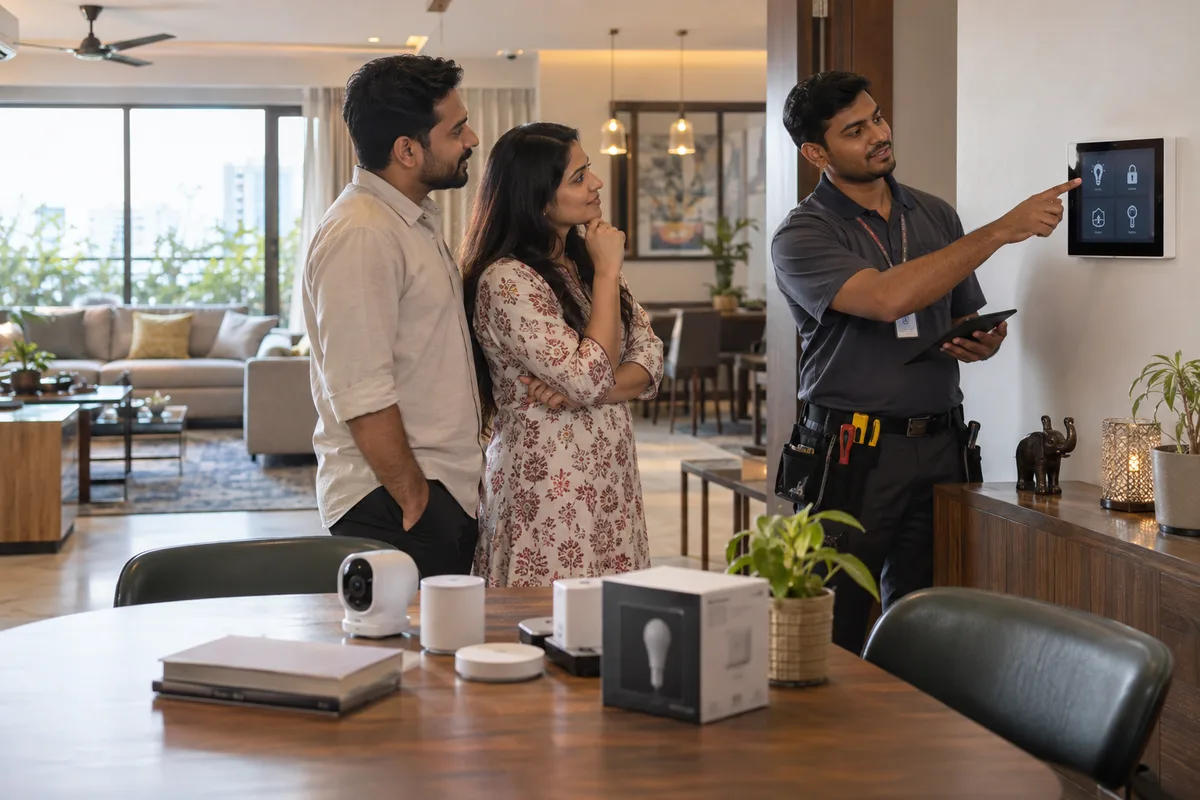
What public relations means
Public relations is getting your business covered by journalists, trade publications or local news, which carries more trust than an advert because a third party is saying it. GullySales pitches your story to the right publications and prepares your team for interviews when coverage is offered.
Also for home and office automation
- Reputation management for home and office automation companies
- Review generation for home and office automation
- Branding for home and office automation companies
- Buyer journey for home and office automation companies
- Buyer personas for home and office automation companies
- Content marketing for home and office automation companies
- Digital marketing for home and office automation companies
- Lead generation for home and office automation companies
Sales and marketing for home and office automation, the overview.
Last updated 5 Oct 2026.
For home and office automation
Where it usually goes wrong, and what we would do.
“The right press here is design trade press, not general news”
A feature in an interior design publication reaches the exact architects and designers who refer clients, which a general business news mention does not.
“A completed project makes a better story than the company itself”
A well-photographed finished home or office project pitched as a design story earns coverage more easily than a press release about the company.
“Design exhibitions put you in front of the referral network directly”
A stand or a demonstration at an interiors or architecture exhibition reaches the design professionals who influence buyers, in one concentrated setting.
What we do
What we deliver for home and office automation.
Every deliverable, what it covers for you, and the result it is there to produce. Nothing here is an extra.
Design press pitch for a completed project
A well-photographed finished project pitched as a design story to an interiors or architecture publication's editor.
Result: The architects who refer this business see your work where they already read.
Design exhibition presence
A stand or demonstration arranged at an interiors or architecture exhibition where design professionals gather.
Result: Your work reaches the referral network directly in one setting.
Press-ready project material
Photography and a written brief prepared in the format a design editor expects, ready whenever a strong project is completed.
Result: A pitch can go out while the project is still newsworthy.
Coverage tracking and follow-up
A record of where coverage appeared and how it was used, followed up with the architects and clients it might interest.
Result: A piece of press coverage keeps working after publication.
How the result is measured
- Coverage secured
- Publication reach
- Enquiries after coverage
Recorded as a baseline before work starts, so every later report has an honest comparison.
What is worth telling the press
What a design magazine or architect network wants from an automation firm.
- A finished room, not a device
- Photograph a completed villa or boardroom after styling, with the designer's permission. Design magazines want rooms and moods, not control panels.
- Credit for the architect and interior designer
- Name the architect and interior designer in every note. The editor knows them, and they decide whether to share the story.
- A working demo at a design exhibition
- Book a stand or demo corner at a design or building materials show where architects and builders visit. Show a live scene of lights, curtains and audio instead of handing out brochures.
- An article on pre-wiring
- Offer a trade magazine a short article on why conduits and cabling must be planned before the walls are closed. It is advice an architect can use on the next project.
- Systems named accurately
- Name the systems used in the project, such as KNX, Zigbee or Matter, only where they were actually installed. Editors and designers check the specification.
- The homeowner's written consent
- Get written consent before you share photographs or the address. Security-minded owners may refuse, so offer to blur gate and door details.
Who it is for
This is written for these home and office automation.
- Residential smart-home integrators
- Office and boardroom automation specialists
- Villa and apartment builder tie-up specialists
- Security and CCTV integration specialists
- Home theatre and AV specialists
- Motorised curtain and gate automation specialists
How it works
From your first message to the first report.
No open-ended retainer. Every step gives you something in writing.
First
Your brief
You tell us what you need in a few short steps: your business, what you want, where enquiries come from and how they are handled.
After the brief
A conversation and a written scope
We read it, then talk with whoever handles your enquiries. If you want our help, the scope, the fee and the reporting come in writing, and nothing starts before you have read them.
Before work starts
Baseline recorded
The numbers this work is meant to move, such as enquiries, quotations, orders, visits or renewals, written down so every later report has an honest comparison.
After the baseline
The first fix goes live
The fix we agreed to start with is put in place and measured against the baseline, whether that is a reply, a follow-up, a page, a listing or the handover between marketing and sales.
As agreed
Report against the baseline
What moved, what did not, and what changes next, in plain words. How often you get it is set in writing before work starts.
At renewal
Renew on the numbers
The term ends and you decide whether to continue from the results. The length is agreed in writing before anything starts.
How the public relations work runs
- 1
Understand what is newsworthy
We identify genuine stories in your business, since manufactured news rarely earns real coverage.
- 2
Audit relevant press
We research which journalists and publications actually cover your industry or locality.
- 3
Prepare the pitch
A release or pitch is written specifically for the target publication, not sent as a mass broadcast.
- 4
Approach and follow up
Journalists are approached directly, with a reasonable follow-up rather than a single unanswered email.
- 5
Measure and prepare ahead
Coverage is tracked, and a communications plan is kept ready for any significant matter that may need a public response.
Why us
Why owners pick GullySales over an agency.
Marketing and sales, as one job
Most agencies stop at the enquiry. We also fix what happens after it: the reply, the follow-up, the quote and the CRM.
The person on the first call does the work
No account managers in between. You are never handed to someone you have not met.
A baseline before anything starts
Your numbers are written down on day one, so every later report compares against something honest.
The fee in writing, split three ways
Our time, your media spend and production on separate lines. You always see what goes to us.
No guarantees we cannot keep
The term is agreed in writing and never a default twelve months. We never promise a ranking or a lead count, because nobody controls those.
One office, and we say so
Nagarbhavi, Bengaluru. We work across India by call and WhatsApp and travel when a session needs to be in person.
#257, 3rd floor, Sri Nanjundeshwara Complex, Nagarbhavi 8th Block, Outer Ring Road. How we work.
Your brief
Tell us what you need, and we will read it before we call.
Eight short steps about your business, what you want and who decides. Most questions are a tap, and you can skip any you would rather answer on the call.
FAQ
Questions owners ask before they call.
Not here? More answers, or ask on WhatsApp.
How do we get press coverage without an agency?
Is this worth it if we already get architect referrals?
A design magazine wants a fee to feature our project. Is that normal?
Should the architect or we send the project to the magazine?
How long is the contract?
How soon will we see results?
Who will actually do the work?
What do you need from us?
What if we are not happy with the work?
From the blog
Further reading for home and office automation.

More for home and office automation
Everything else we would do for you.
Closest to this: reputation
Also for home and office automation
- Branding for home and office automation companies
- Buyer journey for home and office automation companies
- Buyer personas for home and office automation companies
- Content marketing for home and office automation companies
- Digital marketing for home and office automation companies
- Lead generation for home and office automation companies
Or start from the overview: sales and marketing for home and office automation.
Your next practical step
Tell us what you are trying to grow, and we will read it before we call.
Eight short steps, mostly taps. Skip anything you would rather answer on the call.