Home and office automation · Review generation
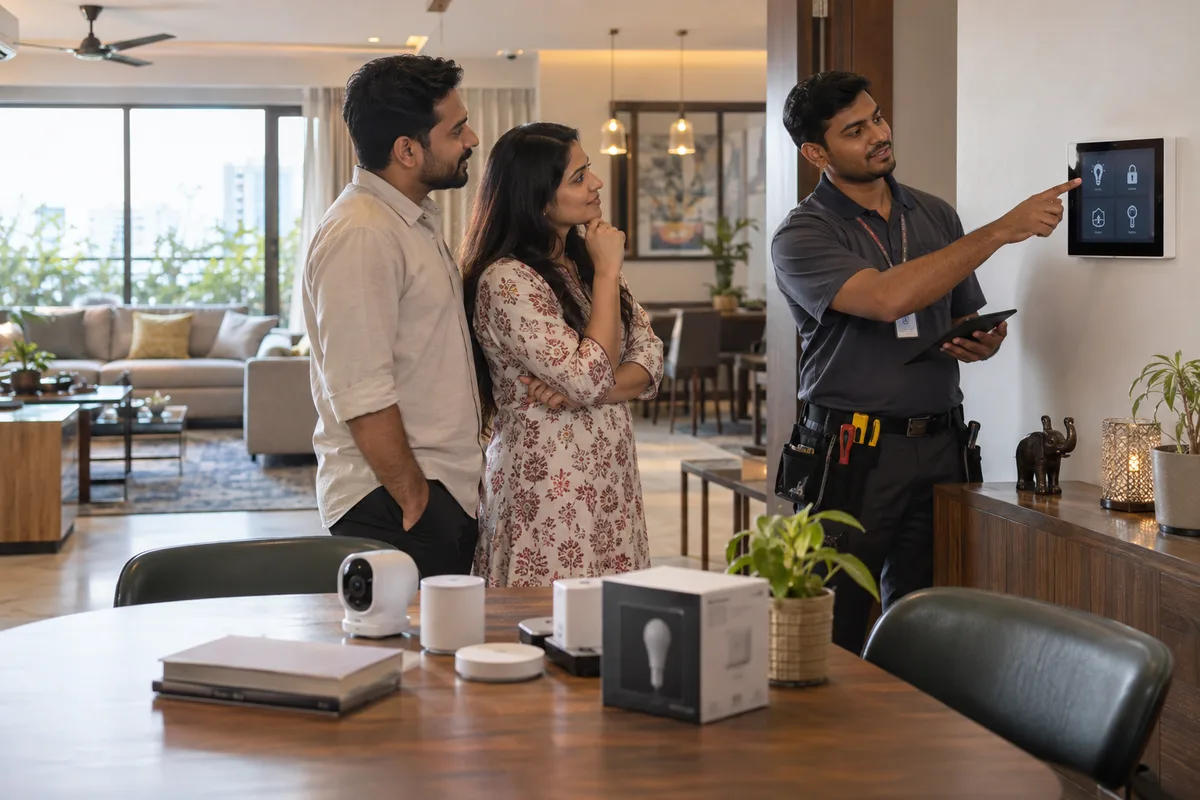
Ask at the handover walk-through, while the client is still pressing the scenes.
Review generation for an automation integrator is getting a written account of a finished project from the client who lives in it. The window is narrow and it closes when the snag list opens. GullySales sets the ask into the handover and shapes what a useful review actually says.
Scope, fee, reporting and term are agreed in writing after we have read your brief and spoken to you.
What review generation means
Review generation is the routine of asking satisfied customers to leave a Google or platform review at the moment they are happiest, rather than hoping they remember later. GullySales builds the request into your existing follow-up steps and tracks how many turn into a review.
Also for home and office automation
- Public relations for home and office automation companies
- Reputation management for home and office automation companies
- Branding for home and office automation companies
- Buyer journey for home and office automation companies
- Buyer personas for home and office automation companies
- Content marketing for home and office automation companies
- Digital marketing for home and office automation companies
- Lead generation for home and office automation companies
Sales and marketing for home and office automation, the overview.
Last updated 5 Oct 2026.
For home and office automation
Where it usually goes wrong, and what we would do.
“The handover walk-through is the only moment they will feel this”
A client presses the good night scene, the whole house responds and the lights fade in the right order. That is the feeling worth capturing. A fortnight later the snag list has started and the goodwill has gone into a curtain track that sticks.
“A review that names the locality and the scope is the one that earns you work”
Lighting, curtains and a video door phone for a four-bedroom house in Sarjapur is close to what the next homeowner types. Good service, five stars, does nothing for you at all.
“Your bad reviews will come from year two”
Nobody writes an angry review about a well-run installation. They write it when a keypad died, they rang three times and nobody came. Fixing the service line lifts your rating more than asking harder ever will.
What we do
What we deliver for home and office automation.
Every deliverable, what it covers for you, and the result it is there to produce. Nothing here is an extra.
The ask written into the handover checklist
A line on the same sheet as the scene demonstration and the app handover, so the request happens while the client is still delighted with the house.
Result: You stop asking a month late, when the mood has changed.
A prompt that gets the scope into the words
Two questions given to the client, about what was installed and what changed in how the house is used, instead of an open invitation to write something.
Result: The review mentions the work a future buyer is searching for.
A private handover feedback form before the public ask
A short internal form that catches snags first, so an unhappy client raises it with your engineer rather than with the internet.
Result: Problems reach you before they reach the profile.
Reviews requested per completed project, tracked
A tally of handovers against reviews asked for and received, so a site team that has stopped asking is visible.
Result: The habit does not quietly die after the first month.
Service response tied to the rating
Complaint reviews traced back to the service calls behind them, and the delay that caused each one named.
Result: You fix the reason rather than replying to the symptom.
How the result is measured
- Reviews received
- Average rating
- Response rate to requests
Recorded as a baseline before work starts, so every later report has an honest comparison.
Asking for reviews the right way
Ask at the handover demonstration, when the lights, curtains and scenes all work on a single tap.
- A scene run by the client's own finger
- Ask after the client has run a scene themselves, such as movie mode or the good-night switch. Delight peaks when it works under their finger, not yours.
- Snag list closed, app on the phone
- Hold the ask until the snag list is cleared and the control app is on the client's phone. A pending fault makes the review about the fault.
- Scope named, address left out
- Suggest the client list the scope, such as lighting, curtains, video door phone and AV room, and the type of home, without a street or flat number.
- System named
- Let reviewers mention the system, such as KNX, Lutron or a Zigbee-based set-up. Buyers search for the system name, and the integrator is judged on it.
- A closed service call before a link
- After a repair visit, send a short message asking whether the fault is fixed. Only a customer who says yes should get a link, and never one with a fault still open.
- Boardrooms and office floors
- For a boardroom or office floor, ask the admin or IT head, and ask whether the company allows its name on public pages. Many will prefer a signed letter.
Who it is for
This is written for these home and office automation.
- Residential smart-home integrators
- Office and boardroom automation specialists
- Villa and apartment builder tie-up specialists
- Security and CCTV integration specialists
- Home theatre and AV specialists
- Motorised curtain and gate automation specialists
How it works
From your first message to the first report.
No open-ended retainer. Every step gives you something in writing.
First
Your brief
You tell us what you need in a few short steps: your business, what you want, where enquiries come from and how they are handled.
After the brief
A conversation and a written scope
We read it, then talk with whoever handles your enquiries. If you want our help, the scope, the fee and the reporting come in writing, and nothing starts before you have read them.
Before work starts
Baseline recorded
The numbers this work is meant to move, such as enquiries, quotations, orders, visits or renewals, written down so every later report has an honest comparison.
After the baseline
The first fix goes live
The fix we agreed to start with is put in place and measured against the baseline, whether that is a reply, a follow-up, a page, a listing or the handover between marketing and sales.
As agreed
Report against the baseline
What moved, what did not, and what changes next, in plain words. How often you get it is set in writing before work starts.
At renewal
Renew on the numbers
The term ends and you decide whether to continue from the results. The length is agreed in writing before anything starts.
How the review generation work runs
- 1
Understand the customer journey
We identify one fixed point in your service, such as handover or checkout, where every customer is asked in the same way.
- 2
Read your current reviews
We read every review you have, count how many were answered, and note what customers praise in their own words.
- 3
Set up the ask process
Templates and a simple sending process are built into your existing customer communication.
- 4
Implement responses
Every incoming review, positive or negative, is responded to by the routine set down in writing after we have spoken to you.
- 5
Measure and adjust
We track review volume and rating trend and adjust the ask timing if response rates are low.
Why us
Why owners pick GullySales over an agency.
Marketing and sales, as one job
Most agencies stop at the enquiry. We also fix what happens after it: the reply, the follow-up, the quote and the CRM.
The person on the first call does the work
No account managers in between. You are never handed to someone you have not met.
A baseline before anything starts
Your numbers are written down on day one, so every later report compares against something honest.
The fee in writing, split three ways
Our time, your media spend and production on separate lines. You always see what goes to us.
No guarantees we cannot keep
The term is agreed in writing and never a default twelve months. We never promise a ranking or a lead count, because nobody controls those.
One office, and we say so
Nagarbhavi, Bengaluru. We work across India by call and WhatsApp and travel when a session needs to be in person.
#257, 3rd floor, Sri Nanjundeshwara Complex, Nagarbhavi 8th Block, Outer Ring Road. How we work.
Your brief
Tell us what you need, and we will read it before we call.
Eight short steps about your business, what you want and who decides. Most questions are a tap, and you can skip any you would rather answer on the call.
FAQ
Questions owners ask before they call.
Not here? More answers, or ask on WhatsApp.
Our clients are private people and will not have their homes named online.
Should we ask the architect who referred us for a review?
Should we ask on Google or on Houzz and similar sites?
The client said they were too busy at handover. When do we follow up?
How much does it cost?
How long is the contract?
How soon will we see results?
Who will actually do the work?
What do you need from us?
What if we are not happy with the work?
From the blog
Further reading for home and office automation.

More for home and office automation
Everything else we would do for you.
Closest to this: reputation
Also for home and office automation
- Branding for home and office automation companies
- Buyer journey for home and office automation companies
- Buyer personas for home and office automation companies
- Content marketing for home and office automation companies
- Digital marketing for home and office automation companies
- Lead generation for home and office automation companies
Or start from the overview: sales and marketing for home and office automation.
Your next practical step
Tell us what you are trying to grow, and we will read it before we call.
Eight short steps, mostly taps. Skip anything you would rather answer on the call.