Water and fire damage restoration companies · Branding
At midnight a homeowner is choosing between a name they know and yours.
Branding for a restoration company is what your name, your trucks and the technician at the door say against a franchise the homeowner already knows. GullySales settles the name, the look, and the words your crew uses on arrival.
Scope, fee, reporting and term are agreed in writing after we have read your brief and spoken to you.
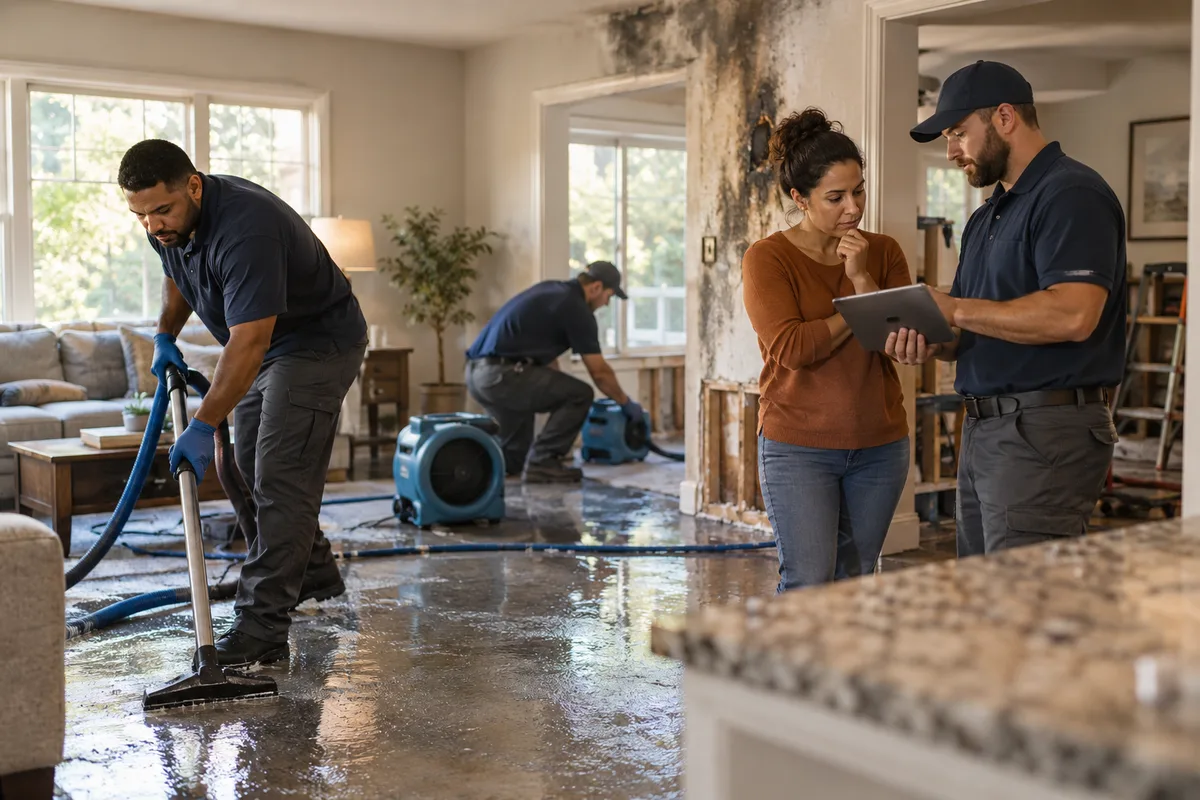
What branding means
Branding is what a customer remembers about your business beyond the product, including your name, colours, tone of voice and what you are known for locally. GullySales sets or corrects this once and applies it consistently across your website, signage and adverts so the business looks like one company everywhere.
Also for water and fire damage restoration companies
- SEO for water and fire damage restoration companies
- PPC ads for water and fire damage restoration companies
- Lead generation for water and fire damage restoration companies
- Digital marketing for water and fire damage restoration companies
- Reputation management for water and fire damage restoration companies
- Local SEO for water and fire damage restoration companies
- Social media marketing for water and fire damage restoration companies
- Content marketing for water and fire damage restoration companies
Sales and marketing for water and fire damage restoration companies, the overview.
Last updated 5 Oct 2026.
For water and fire damage restoration companies
Where it usually goes wrong, and what we would do.
“Name recall is the franchise's whole advantage”
The homeowner has heard one restoration name on the radio since childhood. Yours has to look like a real company on a phone screen at midnight.
“The truck is your largest piece of advertising”
It sits in a driveway for four days while the street walks past it. A wrap that states water, fire and mould beats a logo.
“The technician at the door is the brand”
Boot covers, a badge, a card and a plain account of the next three days. That is the part the homeowner repeats to the neighbours.
What we do
What we deliver for water and fire damage restoration companies.
Every deliverable, what it covers for you, and the result it is there to produce. Nothing here is an extra.
The name and mark settled across every surface
Trucks, uniforms, yard signs, the estimate, the invoice and the reconstruction paperwork, so the rebuild does not arrive looking like another company.
Result: Four months of work carry one name.
A truck wrap that states the work
Water, fire, mould and reconstruction, with a number large enough to read from a driveway, laid out for the side that faces the street.
Result: A parked truck advertises for four days.
An arrival script and what the crew carries
What is said at the door, the badge, the card, the boot covers, and the one-page account of what happens over the next three days.
Result: The homeowner repeats something specific to the neighbours.
Yard signs and door hangers with a purpose
A sign for the lawn during the job and a hanger for the neighbours, naming the problem that street keeps having rather than a slogan.
Result: The house you are working on brings the next one.
Credentials shown where they carry weight
IICRC credentials, state licences and carrier programme membership placed on the truck, the estimate and the profile a property manager opens.
Result: An adjuster sees your standing before asking for it.
Recruitment material that matches the trucks
Hiring ads, the application page and the first-day note written in the same voice, because techs read both before they apply.
Result: Applicants arrive knowing what the job looks like.
How the result is measured
- Recognition in customer feedback
- Consistency across channels
- Repeat enquiries by name
Recorded as a baseline before work starts, so every later report has an honest comparison.
Positioning in one sentence
We restore this kind of loss for these callers, and here is what a property owner can check about us.
- Who it is for: the person who makes the first call
- Decide whether you are written for the homeowner, the property manager or the plumber who refers you. The same sentence cannot speak to all three. Pick the one who calls most often and write the sentence for them.
- What you do: dry-out only, or dry-out and rebuild
- Say it in one line. A company that does both can write 'one team from the first hour to the finished wall'. A mitigation-only firm should say who it works with on the rebuild so the owner is not left guessing.
- What the owner gets that a franchise does not
- Franchises have a known name. You can offer a named local person who answers, a technician who explains the moisture readings, a firm that is still here next year. Pick one you can prove.
- The proof you can show
- Before and after photographs of equipment placement and drying logs, with the owner's permission, plus your licence and insurance documents. A page of reviews from property managers carries more weight than from homeowners alone.
- Words every restoration firm uses
- '24/7', 'rapid response' and 'we treat you like family' are on every van. Replace them with what happens: who picks up the phone, who arrives, and what they tell the owner at the door.
Who it is for
This is written for these water and fire damage restoration companies.
- Water mitigation companies working residential losses
- Fire and smoke damage restoration companies
- Mould remediation specialists
- Contents cleaning and pack-out operations
- Restoration companies holding a general contractor licence for the rebuild
- Independents competing with national franchises
- Franchise owners who need local work beyond the brand's leads
- Commercial large-loss and multi-family restoration teams
- Biohazard and trauma scene cleaning companies
How it works
From your first message to the first report.
No open-ended retainer. Every step gives you something in writing.
First
Your brief
You tell us what you need in a few short steps: your business, what you want, where enquiries come from and how they are handled.
After the brief
A conversation and a written scope
We read it, then talk with whoever handles your enquiries. If you want our help, the scope, the fee and the reporting come in writing, and nothing starts before you have read them.
Before work starts
Baseline recorded
The numbers this work is meant to move, such as enquiries, quotations, orders, visits or renewals, written down so every later report has an honest comparison.
After the baseline
The first fix goes live
The fix we agreed to start with is put in place and measured against the baseline, whether that is a reply, a follow-up, a page, a listing or the handover between marketing and sales.
As agreed
Report against the baseline
What moved, what did not, and what changes next, in plain words. How often you get it is set in writing before work starts.
At renewal
Renew on the numbers
The term ends and you decide whether to continue from the results. The length is agreed in writing before anything starts.
How the branding work runs
- 1
Interview customers and team
We talk to real buyers, won and lost, and to people inside the business who deal with customers daily.
- 2
Review the competitive field
We look at how the nearest competitors present themselves so the position is not accidentally identical.
- 3
Draft the position
A first version of the positioning statement and messaging pillars is written and checked against what customers actually said.
- 4
Test it against real conversations
The draft is tried out in a real sales call or two before it is finalised, since a position that does not survive a real conversation needs rework.
- 5
Hand over the rollout brief
The final position, pillars and not-for list are documented for your team and any agency to apply consistently.
Why us
Why owners pick GullySales over an agency.
Marketing and sales, as one job
Most agencies stop at the enquiry. We also fix what happens after it: the reply, the follow-up, the quote and the CRM.
The person on the first call does the work
No account managers in between. You are never handed to someone you have not met.
A baseline before anything starts
Your numbers are written down on day one, so every later report compares against something honest.
The fee in writing, split three ways
Our time, your media spend and production on separate lines. You always see what goes to us.
No guarantees we cannot keep
The term is agreed in writing and never a default twelve months. We never promise a ranking or a lead count, because nobody controls those.
Hours that fit your day, agreed up front
Which hours we overlap with yours is settled before any work starts, so you know when a reply is coming and when it is not.
#257, 3rd floor, Sri Nanjundeshwara Complex, Nagarbhavi 8th Block, Outer Ring Road. How we work.
Your brief
Tell us what you need, and we will read it before we call.
Eight short steps about your business, what you want and who decides. Most questions are a tap, and you can skip any you would rather answer on the call.
FAQ
Questions owners ask before they call.
Not here? More answers, or ask on WhatsApp.
We are a franchise owner. What is left for us to brand?
Should the reconstruction side carry a different name?
Should we advertise as emergency first or as a restorer?
Can the sentence mention insurance claims?
How much does it cost?
How long is the contract?
How soon will we see results?
Who will actually do the work?
What do you need from us?
What if we are not happy with the work?
More for water and fire damage restoration companies
Everything else we would do for you.
- SEO for water and fire damage restoration companies
- PPC ads for water and fire damage restoration companies
- Lead generation for water and fire damage restoration companies
- Digital marketing for water and fire damage restoration companies
- Reputation management for water and fire damage restoration companies
- Local SEO for water and fire damage restoration companies
Or start from the overview: sales and marketing for water and fire damage restoration companies.
Your next practical step
Tell us what you are trying to grow, and we will read it before we call.
Eight short steps, mostly taps. Skip anything you would rather answer on the call.