Garage door companies · Follow up systems
The replacement quote you sent in March should still be talking in September.
A follow-up system for a garage door company is a written sequence of calls, texts and emails that keeps a replacement quote alive after the technician has gone. GullySales drafts the sequence, sets the triggers and works the call-backs in the hours we agree.
Scope, fee, reporting and term are agreed in writing after we have read your brief and spoken to you.
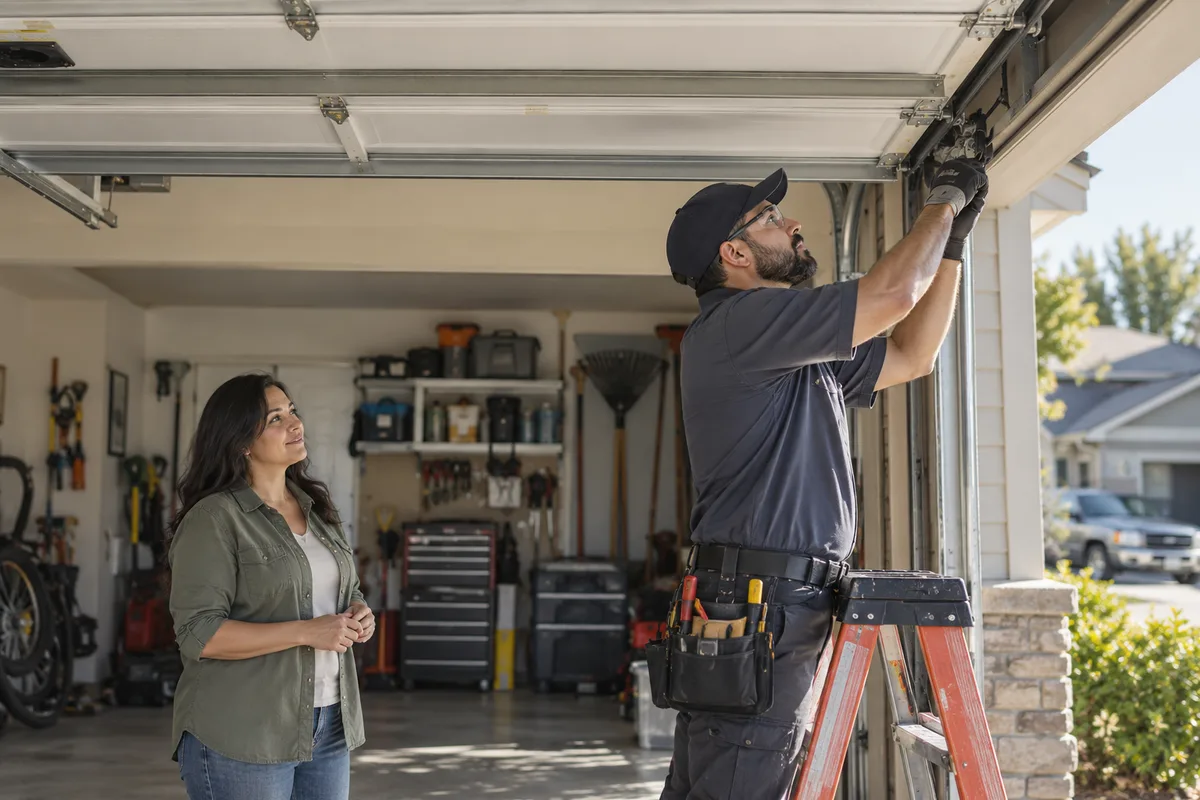
What follow up systems means
A follow-up system is the set routine for calling, messaging or emailing an enquiry more than once, since most buyers do not decide on the first conversation. GullySales sets the number and timing of follow-ups so an undecided buyer keeps hearing from you until they decide either way.
Also for garage door companies
- Lead generation for garage door companies
- CRM for garage door companies
- SEO for garage door companies
- PPC ads for garage door companies
- Digital marketing for garage door companies
- Reputation management for garage door companies
- Local SEO for garage door companies
- Branding and identity for garage door companies
Sales and marketing for garage door companies, the overview.
Last updated 14 Nov 2026.
For garage door companies
Where it usually goes wrong, and what we would do.
“A maybe in the spring means exactly that”
The homeowner who says they will think about a new door is not saying no. They are waiting for a better moment, such as a tax refund, a house sale or a second quote. Silence from you leaves that moment to a competitor.
“One chaser is not a system”
A single reminder two days after the quote feels like effort and produces little. Door decisions take months, so the sequence has to space its contacts and change what it says each time.
“Repair customers need a different follow-up”
A repaired door does not need a sales push. It needs a thank-you, a review request, a note of what was done and, later, a tune-up reminder. Mixing the two messages makes the company look pushy.
“Consent decides what you may send”
Texts and automated calls to a homeowner need the right permission recorded before you send anything. Rules differ by state and by channel, so check with your own adviser before you build the schedule.
What we do
What we deliver for garage door companies.
The work available for this need. We agree the deliverables and responsibilities for your engagement in writing.
A written replacement-quote sequence
A call, a text and an email on a schedule you approve, each with a new reason to reply: a financing note, a photograph, a seasonal offer.
Result: Every open quote has a next contact on the calendar.
Consent captured and recorded
A line on the quote and the booking that records permission to text and email, kept with the customer record.
Result: You can show what each customer agreed to.
Call-backs on web forms
A routine for answering every form or missed call, with our team taking the overflow in the hours we agree.
Result: Fewer enquiries go unanswered.
A post-repair sequence
A thank-you, a review request and a tune-up reminder that pass the job to the right place in the calendar.
Result: Each repair customer gets a clear next step.
A stop rule for each sequence
Rules that end the contact when the customer books, declines or asks to stop.
Result: Nobody keeps being chased after saying no.
Reading the results with you
A review of which messages got replies and which quotes were lost, with changes proposed.
Result: You can see which touch works and which does not.
How the result is measured
- Follow-up completion rate
- Average number of follow-ups before close
- Enquiries closed after repeat follow-up
Recorded as a baseline before work starts, so every later report has an honest comparison.
What to capture or send
Say something new each time a replacement quote is chased.
- The quote sent from the driveway
- A text with the price, the door style and a photograph of the old door, sent before the truck leaves so the homeowner has it in hand.
- The first check-in after the quote
- A note asking whether the homeowner wants to change the style or the size, which gives a reason to reply.
- A seasonal reason to write
- A message before the cold or the storm season, noting that installation dates fill and that the quote is still open.
- The post-repair thank-you
- A message after a spring or cable repair with a plain note on the door's condition and a record of what was done.
- The customer's consent to text
- Noted at the first call or on the invoice, with the date, so messages go only to those who said yes.
- The stop rule
- A recorded point where a quote is closed, either by a decision or by a polite closing note, so the file does not linger.
Who it is for
This is written for these garage door companies.
- Residential repair and service companies running one to five trucks
- Garage door dealers with a showroom
- Opener and smart-opener specialists
- Commercial door companies working rolling steel and dock equipment
- New construction installers working for homebuilders
- Spring and cable repair specialists
- Custom carriage and wood door builders
- Franchise locations that need local work beyond the brand's leads
Before you decide
When this may not be the right fit.
- The company has no replacement quotes going out, because the technicians do only repairs, so there is nothing to chase.
- Nobody has been given the job of sending the messages, and they would stop the first busy week.
- Consent to text has not been collected, and the company is unsure which customers it may message.
Before you decide
Agree the work. Know how to judge it.
Follow-up systems for garage door companies: use these checks to prepare, choose the scope, and review what changes.
Bring the right evidence
Trace recent enquiries from arrival to the last recorded action. Include a won enquiry, an unsuitable one, and one that went quiet, with personal details removed for the initial discussion.
Make the scope clear
Agree who accepts each enquiry, what makes it qualified, and how ownership changes. Include a rule for missed replies and a clear reason for closing an enquiry.
Check the work in use
Pick an enquiry at random and ask the team to find its owner, latest conversation, and next action. Check that the record agrees with what actually happened.
Know when to change course
If no one has capacity to respond, assign that responsibility before buying more leads. Automation can support the owner, but it cannot replace an unresolved handover.
These are discussion points, not a fixed package. GullySales confirms the deliverables, responsibilities, fee, and term in writing after reading your brief and speaking with you.
Before we start
What to have ready before the work starts.
The records, access and decisions this work needs from garage door companies. Anything missing is noted in the written scope, with who will supply it.
- The list of quotes sent last season
- Quotes with date, customer and door. The sequence starts from them. Without a list, we start from the quotes sent from now. Include the technician who gave the quote and any note about why the customer waited, since the first message is written from that reason.
- Consent records for texts and calls
- How each customer agreed to be contacted. The sequence uses them. Without records, we contact only by the channel the customer used. If consent was taken only for the job itself, we treat the customer as reachable for that job only, and ask again at the next visit.
- A person to call back web forms
- A named staff member with time to call. Without one, the call-back waits. This person also needs a way to log the result of each call, so the next message does not repeat a conversation that has already happened.
- Your stop rule for each sequence
- When a sequence ends: booked, lost or asked to stop. The system follows it. Without one, we end at a count you set. Add a rule for customers who book elsewhere, so they stop receiving messages and your record shows the quote as lost.
How it works
How the follow up systems work runs
The work itself, in order. How an engagement starts, from your brief to a written scope, is set out on our method page.
- 1
List the quotes still open from spring
We take every replacement quote sent in the past season and mark which are still open, won or lost. You tell us which customers you remember. This is the first count and shows what the follow-up has to recover. We also mark quotes where the technician noted a reason for hesitation, such as a spouse to consult or a budget in the autumn, because the first message should address that reason and not repeat the price.
- 2
Write the sequence for a replacement quote
We draft a sequence of calls, texts and emails that returns to the quote with a new reason each time: a style, an insulation point, a photograph. You approve each message. Nothing sounds like a reminder alone. The sequence runs as a conversation: one message with a photograph of a similar door, one about insulation, one that offers to measure again, and each can be stopped by the dispatcher without the others being cancelled.
- 3
Record consent and the stop rule
We set how consent is captured and recorded on each customer, and the rule that stops the sequence when they book or ask to stop. You approve the wording. Check with your own adviser on the rules for texts and calls. We write the permission line your technician reads at the doorstep or on the tablet, and the record shows who agreed, to which channel and on which day.
- 4
Set the call-back on web forms
We arrange that a form submission is called back by a named person at agreed hours. You decide who. The call has a short script. The caller sees one name and one number each time, so a homeowner is not handed from person to person while deciding whether to trust you.
- 5
Draft the post-repair sequence
After a repair, we write a short sequence that thanks the customer and mentions the door's age if the technician flagged it. You approve it. The sequence names the door and the date of the visit, so it reads as a note from your company and not as a stranger.
Where this fits
Three pieces of sales work, in this order.
This work sits inside sales process design, at stage 2, qualification. The audit comes before it, and sales management keeps it running.
Step 1
Sales audit
Find where deals are being lost and what to fix first.
Start here if you cannot say where orders are lost.
Step 2 · you are here
Sales process design
One written way to sell, from first enquiry to repeat order.
Start here if every salesperson sells differently.
Step 3
Sales management
A target, a review routine and someone who owns the number.
Start here if the team has targets and no routine.
FAQ
Questions owners ask before they call.
Not here? More answers, or ask on WhatsApp.
How many times should we contact a quote?
Is it legal to text a homeowner who called us?
Can you do the calling for us?
Should the follow-up go by phone call or text?
Who sends the messages, the office or the technician?
Should follow-up go by phone or by text?
How much does it cost?
How long is the contract?
How soon will we see results?
Who will actually do the work?
More for garage door companies
Related work to consider.
Closest to this: leads and follow-up
Also for garage door companies
Or start from the overview: sales and marketing for garage door companies.
Your next practical step
Tell us what you are trying to grow, and we will read it before we call.
Eight short steps, mostly taps. Skip anything you would rather answer on the call.