Pest control companies · Follow up systems
Chase the quote, the second treatment and the renewal before the customer forgets.
A follow-up system for a pest control company is the set of reminders and messages that run after the first call: the unanswered quote, the check after treatment and the renewal. GullySales writes the messages and sets the triggers so the office is not relying on memory.
Scope, fee, reporting and term are agreed in writing after we have read your brief and spoken to you.
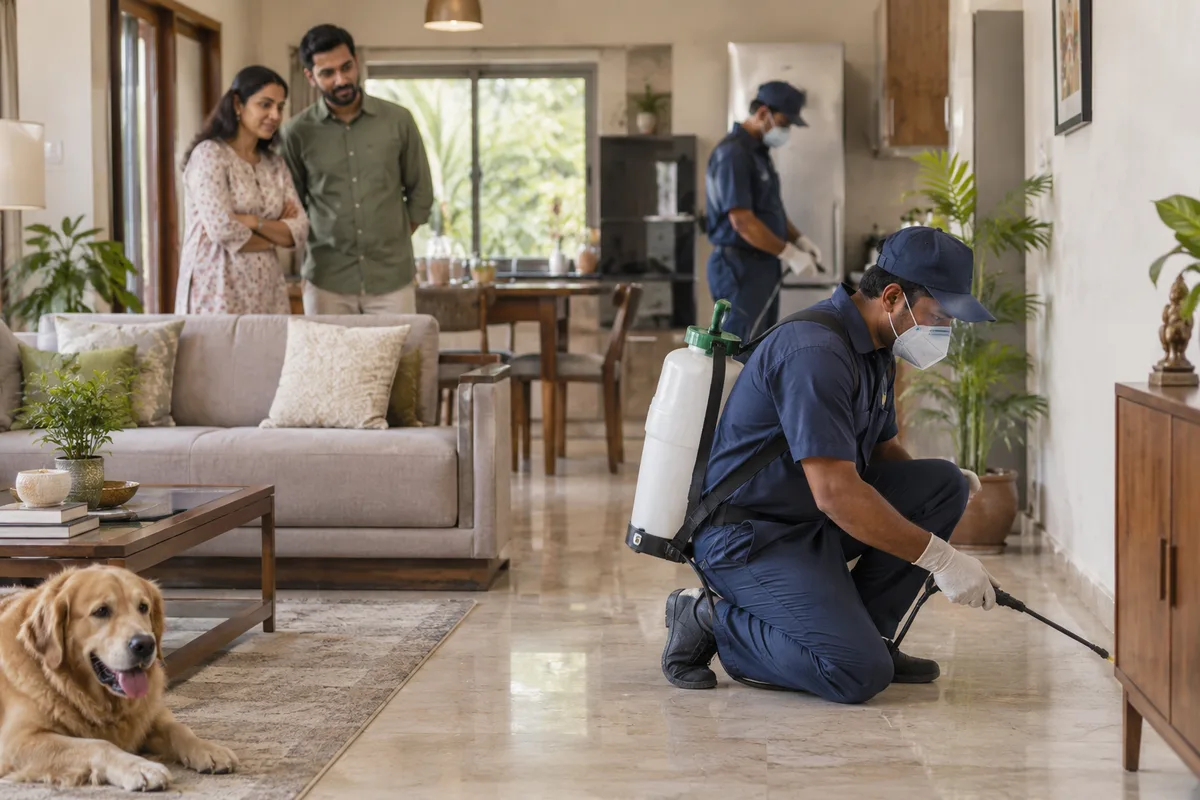
What follow up systems means
A follow-up system is the set routine for calling, messaging or emailing an enquiry more than once, since most buyers do not decide on the first conversation. GullySales sets the number and timing of follow-ups so an undecided buyer keeps hearing from you until they decide either way.
Also for pest control companies
- Lead generation for pest control companies
- CRM for pest control companies
- Call generation advertising for pest control companies
- IndiaMART and marketplace lead management for pest control companies
- Apartment advertising for pest control companies
- SEO for pest control companies
- PPC advertising for pest control companies
- Digital marketing for pest control companies
Sales and marketing for pest control companies, the overview.
Last updated 14 Nov 2026.
For pest control companies
Where it usually goes wrong, and what we would do.
“A quote goes silent after the first reply”
A household asks for a price, receives it and says they will think. Nobody calls again, and the household books the operator who followed up. The silence is rarely a refusal.
“The second treatment is where the real problem gets solved”
Termite and bed-bug work needs a return visit. If the customer is not reminded, the infestation comes back and the blame lands on the first treatment rather than the missed date.
“A check message after the job shows care”
A short note a few days after treatment, asking whether the pest has gone, catches a problem while it is small. It also gives a natural moment to ask for a review from a satisfied household.
“A renewal needs a conversation before the date”
An AMC that lapses on its end date is already half lost. The client has by then compared quotes or assumed the cover continues, so the reminder has to arrive while the decision is still open.
What we do
What we deliver for pest control companies.
The work available for this need. We agree the deliverables and responsibilities for your engagement in writing.
A quote follow-up sequence
Two or three short messages for an unanswered quote, each adding something new, such as a safety note or a free-slot reminder.
Result: Every quote gets a recorded follow-up, not a hope.
Return-visit reminders for repeat treatments
A reminder tied to the treatment date in the record, sent to the customer and listed for the office.
Result: A second treatment is booked before the first effect fades.
A post-treatment check message
One plain message after the job asking whether the problem has gone and how to reach the office if not.
Result: A returning pest is reported early instead of lost to a bad review.
Renewal reminders for contracts
A run of reminders for AMC and subscription renewals, written for a household and for a business separately.
Result: The renewal conversation starts before the date, not after.
An overdue list for the owner
A list of quotes, visits and renewals that nobody has acted on, opened each time the owner reviews the office.
Result: The owner sees what has slipped without asking around.
How the result is measured
- Follow-up completion rate
- Average number of follow-ups before close
- Enquiries closed after repeat follow-up
Recorded as a baseline before work starts, so every later report has an honest comparison.
What to capture or send
The moments in a pest control job where a short message keeps a customer from drifting away.
- Quote sent, no reply
- Send a short check naming the pest and the flat size, and ask whether the date still suits. Record the reply or the silence so the office stops guessing.
- Evening before the second treatment
- Remind the household what to move and how long to stay away. A missed second visit is where cockroach and bed bug jobs fail.
- After closing a job
- Ask whether anything has been seen since the visit and note the answer. A returned pest caught here becomes a revisit, not a bad review.
- Contract end date
- Raise renewal with the person who pays, with the visit records attached. Record whether they renewed, moved or chose another firm.
- Customer who said no
- Note the reason in one line, such as price, timing or a rival's contract. Message again before the next monsoon, not before.
Who it is for
This is written for these pest control companies.
- Residential pest control operators
- Termite treatment specialists
- Commercial AMC providers for restaurants and hotels
- Warehouse and industrial pest control contractors
- Mosquito fogging and municipal contract operators
- Multi-technician city-wide pest control companies
Before you decide
When this may not be the right fit.
- You have no written re-treatment policy, so a check message after a job would invite complaints with nothing to offer in reply.
- Enquiries are not recorded anywhere yet, so there would be no list to follow up and no way to see who was already asked.
Before you decide
Agree the work. Know how to judge it.
Follow-up systems for pest control companies: use these checks to prepare, choose the scope, and review what changes.
Bring the right evidence
Trace recent enquiries from arrival to the last recorded action. Include a won enquiry, an unsuitable one, and one that went quiet, with personal details removed for the initial discussion.
Make the scope clear
Agree who accepts each enquiry, what makes it qualified, and how ownership changes. Include a rule for missed replies and a clear reason for closing an enquiry.
Check the work in use
Pick an enquiry at random and ask the team to find its owner, latest conversation, and next action. Check that the record agrees with what actually happened.
Know when to change course
If no one has capacity to respond, assign that responsibility before buying more leads. Automation can support the owner, but it cannot replace an unresolved handover.
These are discussion points, not a fixed package. GullySales confirms the deliverables, responsibilities, fee, and term in writing after reading your brief and speaking with you.
Before we start
What to have ready before the work starts.
The records, access and decisions this work needs from pest control companies. Anything missing is noted in the written scope, with who will supply it.
- The quotes sent over the last season
- To see what went silent, we need the quotes with the date, the customer and the pest, in a folder, a notebook or a messaging thread. Without them, the starting count is a guess, and the improvement from the new messages cannot be shown.
- A table of repeat-treatment gaps by pest
- The senior technician must state when each pest needs a second visit and what the household should look for before then. A written table is acceptable. Without it, reminders are timed wrongly and a customer is asked to book a visit too soon or too late.
- The contract register with expiry dates
- Renewal calls depend on exact dates, so we need the register with the start and end of each contract and who signs. A photographed notebook is acceptable. Without it, reminders cannot be scheduled, and an expired contract is discovered only when the client stops calling.
- The person who sends and the person who calls
- Name who sends messages and who makes calls, and what each may promise. Without names, follow-up is left to whoever remembers, and a customer hears from nobody or from three people on the same afternoon.
- A note of which customers agreed to messages
- Check which customers agreed to be messaged and how. A note in the register is acceptable. Without it, only direct replies to a customer's own message are planned, and the reminders for second treatments are made by phone.
How it works
How the follow up systems work runs
The work itself, in order. How an engagement starts, from your brief to a written scope, is set out on our method page.
- 1
Read the quotes that went silent
We list the quotes sent in the last season and mark which were accepted, which were refused and which were never answered, with the pest and the locality beside each. You tell us what you remember of the silent ones. They show where a short message at the right moment might have changed the result.
- 2
Fix the gap between treatments, pest by pest
With the senior technician, we agree when a second treatment is needed for each pest, and what a customer should have seen or done before it. You approve the order of events. Each reminder is tied to that order, so a household is never told to book a visit that the pest does not need.
- 3
Write the check message sent after a job
We draft a short message sent after the technician closes the job, asking whether the pest has been seen again and offering the re-treatment promise. You approve the wording and decide who sends it. The message carries the technician's name, because a household remembers the person who came.
- 4
Plan the renewal conversation before the date
For each annual contract we plan a call ahead of the expiry, with the latest reports on the desk and the visits completed counted. You name who calls each client. The calendar is built from the contract dates in the register, and calls to the largest clients come first.
- 5
Build the overdue list the owner reads
We build one sheet showing quotes unanswered, second treatments due and renewals approaching, with a name beside each. You choose where the owner reads it and on which day of the week it is checked. Anything unmarked past its date is raised with the person it was assigned to.
- 6
Compare accepted quotes and renewals with the start
After a season, we read the quotes accepted, second treatments done and renewals kept against the counts taken at the start. You see which messages brought a reply and which did not. We rewrite the quiet ones and drop any step that customers found tiresome.
Where this fits
Three pieces of sales work, in this order.
This work sits inside sales process design, at stage 2, qualification. The audit comes before it, and sales management keeps it running.
Step 1
Sales audit
Find where deals are being lost and what to fix first.
Start here if you cannot say where orders are lost.
Step 2 · you are here
Sales process design
One written way to sell, from first enquiry to repeat order.
Start here if every salesperson sells differently.
Step 3
Sales management
A target, a review routine and someone who owns the number.
Start here if the team has targets and no routine.
FAQ
Questions owners ask before they call.
Not here? More answers, or ask on WhatsApp.
Will follow-ups annoy customers?
Who sends the messages, the office or the system?
How should a customer's refusal be handled?
What if the customer wants the second treatment later than planned?
Will repeated messages annoy customers?
What if a customer's refusal comes after a long chase?
How much does it cost?
How long is the contract?
How soon will we see results?
Who will actually do the work?
From the blog
Further reading for pest control companies.
 7 min read · 22 May 2026How to get security contracts, and win cleaning and facility tendersSecurity, cleaning, pest control, painting and water treatment contracts are won on compliance papers, site references and renewals, not rate alone.
 6 min read · 6 May 2026AMC renewal: how to sell and renew annual maintenance contractsAMCs lapse because nobody asks in time, not because customers refuse. Keep an end-date list, start early, show the service record, sell at installation.
 7 min read · 20 Jan 2026What is answer engine optimisation?Answer engine optimisation means being the source quoted at the top of the page, by putting the question in a heading and answering it straight away.
More for pest control companies
Related work to consider.
Closest to this: leads and follow-up
Also for pest control companies
Or start from the overview: sales and marketing for pest control companies.
Your next practical step
Tell us what you are trying to grow, and we will read it before we call.
Eight short steps, mostly taps. Skip anything you would rather answer on the call.