Pest control companies · Call generation advertising
Pay for the call from the household that cannot wait, then answer it.
Call generation advertising for a pest control company is paid advertising built to make a worried household or a restaurant manager phone your office, with each call traced to the advertisement that caused it. GullySales plans the placements around the pests and localities you serve, sets up numbers that name their source, and records what each call became.
Scope, fee, reporting and term are agreed in writing after we have read your brief and spoken to you.
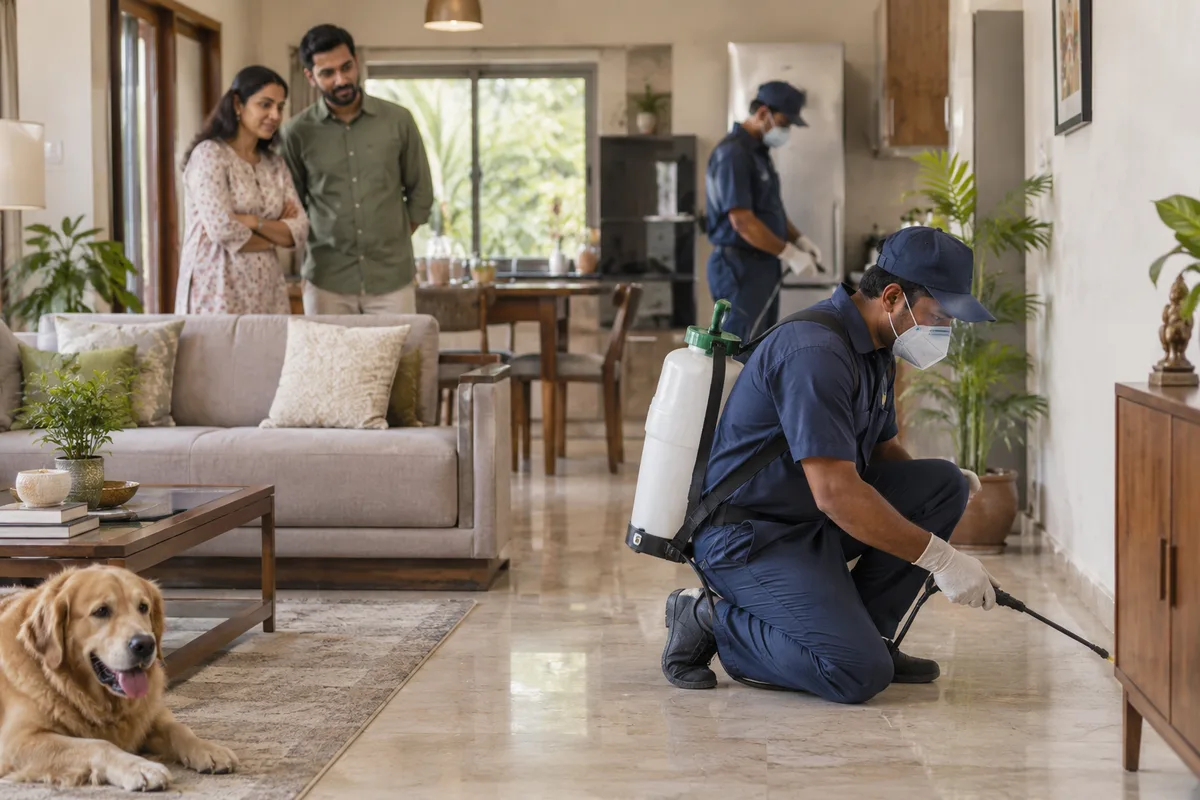
What call generation advertising means
Call generation advertising uses paid placements to encourage buyers to phone your business, with tracking that separates dial clicks from connected conversations. GullySales plans the media, sets up source-specific numbers where available, and connects call records to your team's enquiry outcomes, so spending decisions reflect relevant calls and orders rather than button clicks alone.
Also for pest control companies
- Lead generation for pest control companies
- CRM for pest control companies
- Follow-up systems for pest control companies
- IndiaMART and marketplace lead management for pest control companies
- Apartment advertising for pest control companies
- SEO for pest control companies
- PPC advertising for pest control companies
- Digital marketing for pest control companies
Sales and marketing for pest control companies, the overview.
Last updated 14 Nov 2026.
For pest control companies
Where it usually goes wrong, and what we would do.
“The call arrives when the problem is found”
A termite trail behind a wardrobe, bed bugs found at night, a cockroach seen an hour before guests arrive: the household rings the first operators that appear and books the one that picks up. Advertising that runs while the office is shut pays for calls that ring out. The first decision is therefore which hours your phone is answered by a person, and the advertising follows those hours, not the other way round.
“A household and a restaurant ring for different reasons”
A parent asks whether the treatment is safe near children and pets, and wants a visit that suits the house. A restaurant or hotel manager has an inspection coming, needs a certificate and a record of visits, and compares operators on paperwork. One opening line cannot serve both, so the advertisements, the numbers and the first thing your staff say are written separately for each caller.
“A tap on the call button is not a conversation”
The platform counts a tap. Your office counts a connected call from someone who needs a pest you treat in an area you reach. Between the two sit misdials, callers asking for a job, callers wanting a pest or a town you do not cover, and callers who hang up on a long wait. Without a record of what each call became, spending is judged on taps and the weakest source looks the same as the strongest.
“The season changes what a call is worth”
Monsoon fills the diary with mosquito and cockroach calls, while termite and bed bug calls arrive whenever the problem is found. The quiet months need annual contract renewals and commercial visits, which are worth more over the season than one-off treatments. The plan therefore pauses pests your technicians cannot visit, and moves effort towards the calls that keep the van full when the rain stops.
What we do
What we deliver for pest control companies.
The work available for this need. We agree the deliverables and responsibilities for your engagement in writing.
Pest and locality call map
A written list of the pests, the localities and the types of caller worth paying for, set beside the ones to exclude, such as pests you do not treat or areas beyond a technician's round. Your operations lead checks it against the vans and licences you actually have before any advertisement is drawn.
Result: Every advertised pest and locality appears on a list your operations lead signed.
Source-specific number plan
A register of the numbers used, one for each advertising source where the platform and your telephone provider allow it, each forwarding to a named line. The plan notes where a source cannot carry its own number, so those calls are marked as untraced instead of being credited to the wrong place.
Result: A test call to each number reaches the intended line and shows the right source.
Answering hours and overflow rule
A written rule for who answers, at which hours, and what happens when both lines are busy or the office is shut. It names a backup person and an after-hours message that tells a caller what happens next, so the advertisement is not running for a phone nobody is watching.
Result: An unanswered test call lands with the named backup person or the recorded message.
Opening scripts for two callers
One short opening for a household and one for a restaurant or hotel manager, with the questions that follow: the pest seen, the place, the premises type and the best time for a visit. Your sales lead approves the wording on safety, so staff say only what your own licensed technicians would stand behind.
Result: Staff can say both openings aloud, and your sales lead has approved the safety lines.
Missed-call register
A register of calls that were not answered, with the time, the number shown where available, the person who must return the call and the outcome recorded afterwards. An attempted call back is logged as an attempt; only a conversation counts as recovered.
Result: Each missed call has a named person and an outcome, or a note that nobody reached the caller.
Call and booking report
A report that separates button taps from connected calls and connected calls from booked visits, by source, pest and locality. It sets spending against the visits and contracts your own office recorded, and marks the calls nobody could trace to a source.
Result: Each source shows calls, booked visits and signed contracts side by side, with gaps marked.
How the result is measured
- Dial clicks compared with recorded connected calls
- Missed calls and callback outcomes
- Time taken to answer
Recorded as a baseline before work starts, so every later report has an honest comparison.
Who it is for
This is written for these pest control companies.
- Residential pest control operators
- Termite treatment specialists
- Commercial AMC providers for restaurants and hotels
- Warehouse and industrial pest control contractors
- Mosquito fogging and municipal contract operators
- Multi-technician city-wide pest control companies
Before you decide
Agree the work. Know how to judge it.
Call generation advertising for pest control companies: use these checks to prepare, choose the scope, and review what changes.
Bring the right evidence
Define the organisations or buyers you can serve and the reasons they would consider a conversation. Bring examples of accepted and rejected prospects so the selection rule is visible.
Make the scope clear
Agree the research sources, contact approach, qualification rules, and handover. Clarify which meetings count as accepted and what happens to replies that are not ready to buy.
Check the work in use
Review why a prospect was selected and what was learned from the response. Count held, relevant conversations separately from contacts found, messages sent, or meetings booked.
Know when to change course
If the same objection appears repeatedly, adjust the offer or buyer group before increasing outreach. Respect a request to stop contact and keep the exclusion in the record.
These are discussion points, not a fixed package. GullySales confirms the deliverables, responsibilities, fee, and term in writing after reading your brief and speaking with you.
Before we start
What to have ready before the work starts.
The records, access and decisions this work needs from pest control companies. Anything missing is noted in the written scope, with who will supply it.
- Your current call and booking record
- The phone log, the booking diary or the enquiry sheet for the last busy season. Without it we cannot say what a call was worth before the advertisement began, and the later review would compare against a guess instead of your own figures.
- Localities and pests you will treat
- A list of the localities each van can reach and the pests you take on, with the ones you refuse. If this is missing, the advertisements reach callers you cannot serve, and the office spends its time saying no.
- A person who answers each line
- The name of whoever answers at each hour, and a backup. A technician on a roof cannot answer a call from a household that found termites, so the phone needs a person in the office or a clear message that promises a call back.
- Your rule for a first visit
- Whether you charge for an inspection, what the caller is told about price and what you will not quote on the phone. We do not supply any figure. When the rule is missing, each staff member answers differently and the caller compares you unfavourably with the operator who stated a clear rule.
- Your adviser on recording and safety wording
- A person who can confirm how calls may be recorded and what may be said about chemicals, children and pets in your advertisements. Rules for pest control wording differ between places and change. We prepare the draft; your adviser decides what is allowed.
How it works
How the call generation advertising work runs
The work itself, in order. How an engagement starts, from your brief to a written scope, is set out on our method page.
- 1
List the calls you want
You tell us the pests you treat, the localities your technicians reach and the callers you want, such as households, restaurants or warehouses. We write them as a plain list, and you strike out anything a technician would turn away. Before any advertisement runs, we also copy down your present call log and booking figures, so the later review has something recorded to read against.
- 2
Check who answers and when
We sit with your office and write down who lifts the phone, at which hours, and what a caller hears when nobody can. If the answering gap is wider than the advertising hours you want, the plan shrinks to match it. A pest control advertisement that rings out at the hour a household panics is worse than no advertisement.
- 3
Approve placements and areas
We propose the search call formats, the map placements or the local notices that the platform currently offers, and the localities each will reach. You approve the pests, the areas and the spending limit you set. We check the platform's current rules before recommending a format, because call features change and some are withdrawn.
- 4
Test numbers from a real phone
Each source number is called from an ordinary mobile phone, once while the office is open and once while it is not. We confirm that it reaches the intended line, that the source is named in the record, and that the backup person is reached when the first line is busy. Nothing is published until these test calls behave as the plan says.
- 5
Go live and listen to samples
The advertisements begin inside the limit you approved. Your sales lead listens to a sample of calls where recording is agreed, or reads the register where it is not, and marks the calls that were wrong for the service. Recording needs an opening notice and storage rules, and your own adviser decides what applies to your business.
- 6
Read booked visits against calls
We compare the calls, the visits booked and the contracts signed with the figures recorded before the work began. The comparison is by pest, locality and source. Spending moves towards the sources whose calls became visits and away from those whose calls were misdials or the wrong pest, and you decide each change.
Where this fits
Three pieces of sales work, in this order.
This work sits inside sales process design, at stage 1, prospecting and lead generation. The audit comes before it, and sales management keeps it running.
Step 1
Sales audit
Find where deals are being lost and what to fix first.
Start here if you cannot say where orders are lost.
Step 2 · you are here
Sales process design
One written way to sell, from first enquiry to repeat order.
Start here if every salesperson sells differently.
Step 3
Sales management
A target, a review routine and someone who owns the number.
Start here if the team has targets and no routine.
FAQ
Questions owners ask before they call.
Not here? More answers, or ask on WhatsApp.
Why pay for calls instead of form enquiries when a household has a pest problem?
How do I know which advertisement made the phone ring?
What if my staff miss calls while technicians are out on jobs?
Can the same campaign serve restaurants and homes?
Will you record my calls?
Can you promise how many calls I will receive?
How much does it cost?
How long is the contract?
How soon will we see results?
Who will actually do the work?
From the blog
Further reading for pest control companies.
 7 min read · 22 May 2026How to get security contracts, and win cleaning and facility tendersSecurity, cleaning, pest control, painting and water treatment contracts are won on compliance papers, site references and renewals, not rate alone.
 6 min read · 6 May 2026AMC renewal: how to sell and renew annual maintenance contractsAMCs lapse because nobody asks in time, not because customers refuse. Keep an end-date list, start early, show the service record, sell at installation.
 7 min read · 20 Jan 2026What is answer engine optimisation?Answer engine optimisation means being the source quoted at the top of the page, by putting the question in a heading and answering it straight away.
More for pest control companies
Related work to consider.
Closest to this: leads and follow-up
Also for pest control companies
Or start from the overview: sales and marketing for pest control companies.
Your next practical step
Tell us what you are trying to grow, and we will read it before we call.
Eight short steps, mostly taps. Skip anything you would rather answer on the call.