Pet breeders and kennels · Website
Build a site that shows a family the kennel, the papers and how to visit.
A website for a breeder or kennel is where a family decides whether the kennel is genuine and whether to visit. GullySales plans and builds the pages, the booking steps and the enquiry form around that decision.
Scope, fee, reporting and term are agreed in writing after we have read your brief and spoken to you.
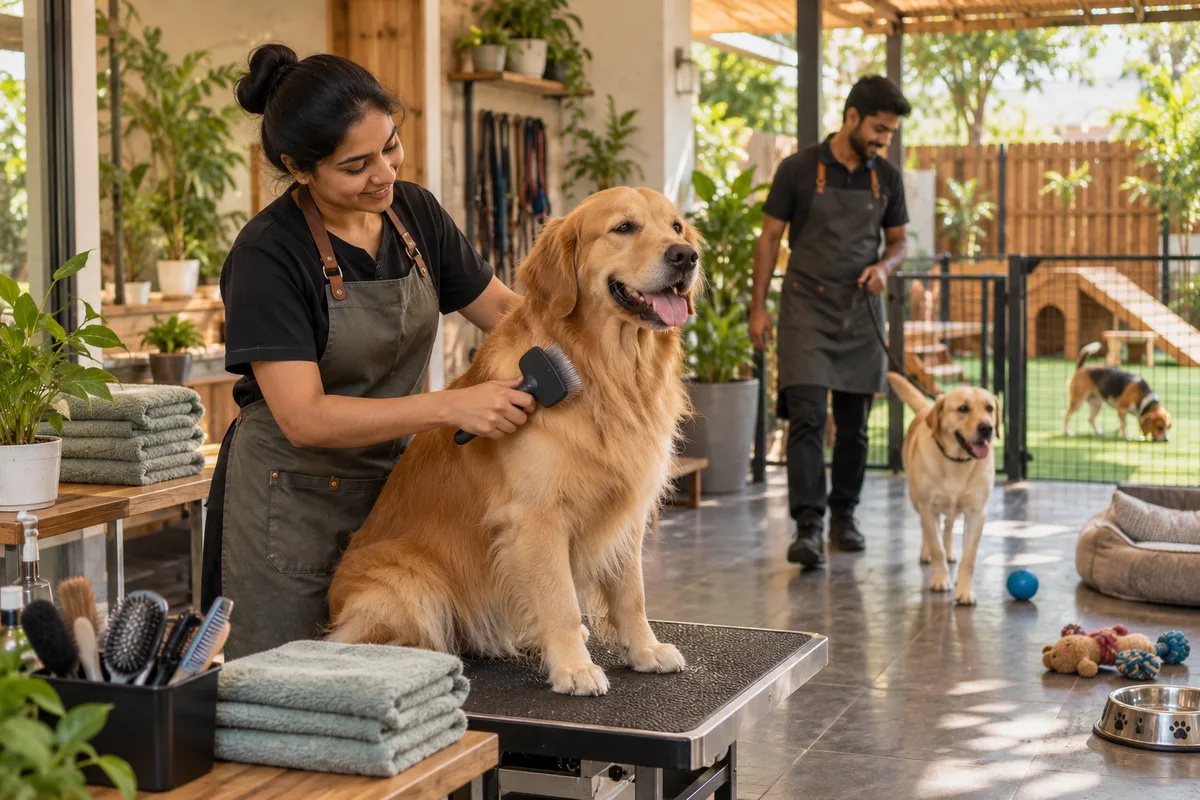
What website means
A website is the page a customer lands on after searching, clicking an advert or scanning a code, and it decides whether they call or leave. GullySales builds and maintains sites that load quickly, explain the offer plainly and make the enquiry form or phone number easy to find.
Also for pet breeders and kennels
- SEO for pet breeders and kennels
- Local SEO for pet breeders and kennels
- Lead generation for pet breeders and kennels
- Social media marketing for pet breeders and kennels
- Content marketing for pet breeders and kennels
- Buyer persona for pet breeders and kennels
- CRM for pet breeders and kennels
- Follow-up systems for pet breeders and kennels
Sales and marketing for pet breeders and kennels, the overview.
Last updated 14 Nov 2026.
For pet breeders and kennels
Where it usually goes wrong, and what we would do.
“The home page must show real places and people”
Stock pictures of puppies could belong to anyone. A page with the kennel, the people, the parents and the living areas shows a family that this is a real place and lets them judge how animals are kept.
“A page for each breed beats one page for all”
A family wants the breed it has chosen. Separate pages for each breed let the family read about the litters, the parents, the papers and the care in one place. They also give search engines something specific to read.
“Booking steps must be visible”
Families have been burned by fake sellers. A page that says plainly how a puppy is reserved, how visits work and what the kennel will never ask for tells a careful family that the process is safe.
“Litter status needs updating”
A page that shows a litter as available after it has been placed wastes visitors' time. Each litter should show a clear status and the way to join the waiting list when the litter is full.
What we do
What we deliver for pet breeders and kennels.
The work available for this need. We agree the deliverables and responsibilities for your engagement in writing.
A site map for the kennel
A plan for pages on breeds, litters, papers, care, visits, bookings and contact.
Result: Every question a family asks has a page.
Breed pages
A page for each breed raised, with litter status, the care notes and the booking steps.
Result: A family lands on the breed it came for.
A papers and care page
A plain page explaining what a puppy goes home with and where to take medical questions.
Result: A new owner knows what to expect.
A visit and enquiry form
A short form that asks the breed, the city and a good time to talk, with a note on how details are used.
Result: Enquiries arrive in a form the kennel can act on.
A mobile layout with click-to-call and message buttons
Large buttons for calling or messaging from a phone.
Result: A family reaches the kennel in one touch.
How the result is measured
- Page load time
- Bounce rate
- Enquiries from the website
Recorded as a baseline before work starts, so every later report has an honest comparison.
Searches your buyers type
A kennel site needs a page for each thing a family checks before it writes.
- kennel visit booking form
- A form asking breed, number of visitors and preferred day, with a line on what to expect, so the kennel can plan the visit.
- puppy papers and vaccination records
- A page showing what comes with a puppy, with sample documents, so a first-time buyer knows what to ask.
- parents of the litter
- A page for each breed showing the parents, with the owner's consent and only the details the kennel chooses to share.
- kennel address and directions
- A contact page with a map, landmarks and a note that visits are by appointment, so families from other towns find the gate.
- adult dogs looking for a home
- A page for adults and retired breeding animals placed by the kennel, kept apart from the puppy litters.
- boarding and training at the kennel
- Service pages for kennels with a boarding or training side, each with its own enquiry route.
Who it is for
This is written for these pet breeders and kennels.
- Dog breeders of Labrador, Golden Retriever, German Shepherd, Beagle and Pug litters
- Breeders of Indian breeds such as Rajapalayam, Mudhol Hound, Kombai and Chippiparai
- Cat breeders of Persian and other pedigree kittens
- Small-scale home breeders with one or two females
- Registered kennels with a boarding or training side
- Aviary and exotic bird breeders, within the rules for each species
- Aquarium and fish breeders supplying shops and hobbyists
- Kennels placing adult dogs and retired breeding animals
Before you decide
When this may not be the right fit.
- You have no photographs, papers or breed notes of your own to put on pages, so a site would be an empty shell
- Nobody can update litter status, and a site listing puppies already placed would send families to a kennel with nothing to offer
- Rules on selling animals online are unchecked with your adviser, and a site with a basket would run ahead of them
Before you decide
Agree the work. Know how to judge it.
Website for pet breeders and kennels: use these checks to prepare, choose the scope, and review what changes.
Bring the right evidence
List the pages that support a buying decision and the actions visitors must complete. Keep examples of failed forms, unclear product information, and questions your team answers repeatedly.
Make the scope clear
Agree the page list, content ownership, integrations, and who controls the domain and hosting. Include redirects and existing search traffic in a redesign brief, before changing addresses.
Check the work in use
Complete a real enquiry journey on a phone and a laptop. Check that the confirmation appears, the enquiry reaches the right person, and tracking records the action once.
Know when to change course
If visitors can enquire but the team does not follow up, start with the sales handover. A larger website will not resolve that delay.
These are discussion points, not a fixed package. GullySales confirms the deliverables, responsibilities, fee, and term in writing after reading your brief and speaking with you.
Before we start
What to have ready before the work starts.
The records, access and decisions this work needs from pet breeders and kennels. Anything missing is noted in the written scope, with who will supply it.
- The domain name and its registrar login
- Bring the name of the domain and the account it is registered under. If the domain is not in your name, we start by getting it transferred, since a site on a domain you do not own can be taken away.
- Your own photographs of dogs and premises
- Clear originals of each parent, the whelping area, the runs and the gate are what the pages are built from. Stock pictures make a family suspect a fake seller. If few exist, the shoot comes first and the build waits.
- Copies of papers you are willing to show
- Choose which documents appear on the site, such as the registration of the kennel or a sample vaccination card. A page can describe only what exists. Anything you would rather show at the gate is marked as shown on a visit.
- A person to update litter status
- Name the person who will change the status line when a litter is booked out. A site that still claims puppies are available is the commonest complaint. If nobody is named, we build the status as a single line that is simple to edit.
- The visit rule in your own words
- Write when families may come, whether they must book, and what they should bring. The visit page and the form are built on it. If the rule changes through the year, say so now so the page does not promise what you cannot do.
How it works
How the website work runs
The work itself, in order. How an engagement starts, from your brief to a written scope, is set out on our method page.
- 1
Take the domain and hosting inventory
We start by finding who owns the domain, where the site now lives and who holds the logins, since small kennels depend on a helper who has moved on. You confirm what is yours. Nothing is built until we know the site can be moved, and we write down the access in one place.
- 2
Gather the pictures and papers to be shown
With you we collect the photographs of the parents, the premises and the litters, and the papers that will be described on the site. You mark what may be public. Anything unclear is held back, so the site only shows what is real and yours.
- 3
Draw the site map around a family's questions
We sketch the pages a family needs: the home page, one page per breed, the papers and care page, the visit and enquiry page. You tell us what a family asks that we have missed. The sketch is agreed before any design, so no page exists without a purpose.
- 4
Build one breed page on a test site
We build a single breed page on a private test address and show it to you on your phone. You read the parents, the status line and the visit steps for mistakes. Once it holds true, the same layout is used for the other breeds, each filled with its own facts.
- 5
Test the enquiry form and the click buttons
On the test site we send enquiries through the form, the call button and the message button, and see what reaches the kennel and in what form. You confirm that each lands with a person who can answer. A form that goes to an unused email is fixed before launch.
- 6
Launch, then read visits against the old record
After launch we check every page on a phone, hand over the logins, and name who updates the litter status. Later we read the enquiries and visits that came through the site against the figures noted before it was built. You decide what to change, and no booking is promised.
Where this fits
Three pieces of sales work, in this order.
This work sits inside sales process design, at stage 1, prospecting and lead generation. The audit comes before it, and sales management keeps it running.
Step 1
Sales audit
Find where deals are being lost and what to fix first.
Start here if you cannot say where orders are lost.
Step 2 · you are here
Sales process design
One written way to sell, from first enquiry to repeat order.
Start here if every salesperson sells differently.
Step 3
Sales management
A target, a review routine and someone who owns the number.
Start here if the team has targets and no routine.
FAQ
Questions owners ask before they call.
Not here? More answers, or ask on WhatsApp.
Can we sell puppies directly through the website?
How should we show the parent dogs?
How long should the site be?
Do we need a separate site for phones?
Once the site is built, whose property is it?
Should the site show the kennel's address?
How much does it cost?
How long is the contract?
Who will actually do the work?
What do you need from us?
More for pet breeders and kennels
Related work to consider.
Closest to this: search and visibility
Also for pet breeders and kennels
Or start from the overview: sales and marketing for pet breeders and kennels.
Your next practical step
Tell us what you are trying to grow, and we will read it before we call.
Eight short steps, mostly taps. Skip anything you would rather answer on the call.