Water and fire damage restoration companies · Lead generation
Most of your work comes from a plumber, and nobody writes the plumber's name down.
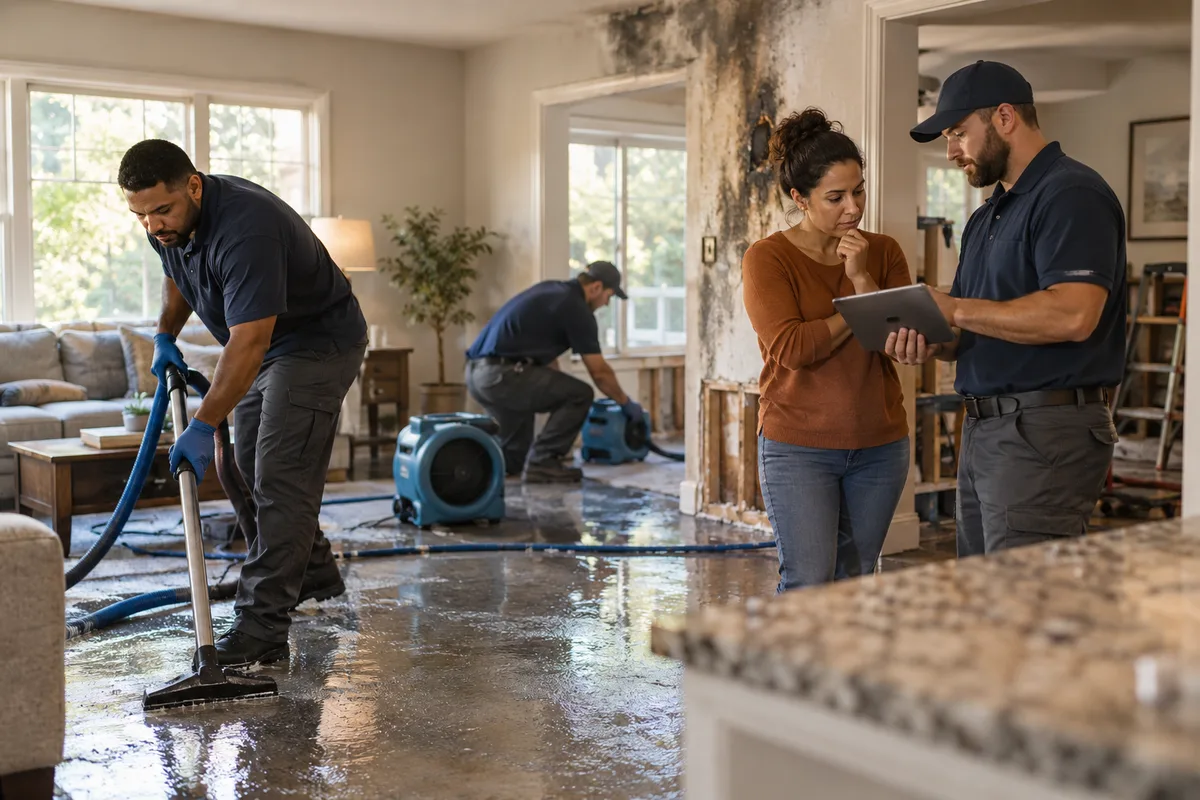
Lead generation for a restoration company means two things: being visible in the hour after a pipe bursts, and being the name a plumber or an agent gives out. GullySales builds the partner list, writes the intake, and records where every loss came from.
Scope, fee, reporting and term are agreed in writing after we have read your brief and spoken to you.
What lead generation means
Lead generation is the combined work of every channel that brings in a new enquiry, whether from search, adverts, referrals or a stall at an exhibition. GullySales runs these channels together and reports the number of enquiries each one produced, not the activity behind it.
Also for water and fire damage restoration companies
- CRM for restoration companies
- Follow-up systems for restoration companies
- SEO for water and fire damage restoration companies
- PPC ads for water and fire damage restoration companies
- Digital marketing for water and fire damage restoration companies
- Reputation management for water and fire damage restoration companies
- Local SEO for water and fire damage restoration companies
- Branding and identity for water and fire damage restoration companies
Sales and marketing for water and fire damage restoration companies, the overview.
Plan the next part of the work
Last updated 21 Nov 2026.
For water and fire damage restoration companies
Where it usually goes wrong, and what we would do.
“The person standing in the water is not the homeowner”
A plumber who finds three burst pipes in a freeze week decides on the spot where all three go. The plumber rings whoever answered last time.
“An intake call has about forty seconds”
Category and class matter, and so does whether a truck can leave now. Take the address, the source, the carrier, then dispatch.
“Property managers flood twice a year”
The same building calls again in the spring. One priority agreement and a named contact is worth more than a dozen first-time homeowners.
What we do
What we deliver for water and fire damage restoration companies.
The work available for this need. We agree the deliverables and responsibilities for your engagement in writing.
Every referral source written down by name
Plumbers, roofers, agents, property managers and adjusters, with what each one sent, who owns the relationship, and when they last heard from you.
Result: A partner going quiet becomes visible in a month.
An intake script for the first forty seconds
Address, cause, when it started, whether the water is still running, which carrier, and whether anybody has already been out to look.
Result: The dispatcher has what a crew needs before hanging up.
Priority agreements for the buildings that flood
A written arrangement with apartment managers, HOA boards and facility teams naming your response time and one contact for every property.
Result: The building that flooded last winter rings you first.
A route and a reason for your marketing rep
A month of visits planned by territory, with the leave-behind and the continuing education offer, instead of whoever happens to be near at lunchtime.
Result: Your rep stops visiting the same five plumbers.
Reconstruction asked for on day three
A written step in the job where the homeowner is asked about the rebuild while the air movers still run, with a scope and photographs prepared.
Result: The margin stays in the company that dried the house.
Every loss tagged to where it came from
Emergency search, paid advertisement, plumber, agent, property manager, carrier programme or a past customer, recorded before the job file is opened.
Result: You feed the source that actually pays.
How the result is measured
- Relevant enquiries by source
- Duplicate and unsuitable enquiries
- Time to the first response
- Accepted enquiries reaching an agreed next step
Recorded as a baseline before work starts, so every later report has an honest comparison.
Where enquiries come from
Where a water or fire loss call comes from, and what the intake sheet should capture for each.
- A plumber or roofer on site
- Record the tradesman's name and company on the job file at intake, not afterwards. When the job closes, tell them it closed. Silence after a referral is how partners drift away.
- A property manager or building engineer
- Note the building, the person with authority to approve work and whether a priority agreement exists. A repeat building should show up as a repeat, not as a new customer.
- An insurance agent or adjuster
- Log the agent's office, the carrier and the claim number if there is one. Agents refer when they trust you to treat their client well, so record how each one went.
- A homeowner calling the emergency line
- Ask where they found the number before dispatch, and write it down. The caller who saw the truck, the Maps listing or a fridge magnet are different sources with different costs.
- A carrier or third-party administrator assignment
- Log the programme, the claim number and the response clock. These are not your own leads, so keep them in a separate column or your referral numbers will look weaker than they are.
- A past customer or neighbour
- A repeat caller or a neighbour of a recent job is the cheapest source. Record the old job number against the new one so the connection is visible at year end.
Who it is for
This is written for these water and fire damage restoration companies.
- Water mitigation companies working residential losses
- Fire and smoke damage restoration companies
- Mould remediation specialists
- Contents cleaning and pack-out operations
- Restoration companies holding a general contractor licence for the rebuild
- Independents competing with national franchises
- Franchise owners who need local work beyond the brand's leads
- Commercial large-loss and multi-family restoration teams
- Biohazard and trauma scene cleaning companies
Before you decide
When this may not be the right fit.
- No one keeps a list of the plumbers and property managers who sent work, so a new push has nothing to build on
- The office cannot staff an intake call, and a better referral flow would only reach a voicemail box
- You are expecting the first call to be the rebuild sale, when the homeowner is still standing in the water
Before you decide
Agree the work. Know how to judge it.
Lead generation for water and fire damage restoration companies: use these checks to prepare, choose the scope, and review what changes.
Bring the right evidence
Define the organisations or buyers you can serve and the reasons they would consider a conversation. Bring examples of accepted and rejected prospects so the selection rule is visible.
Make the scope clear
Agree the research sources, contact approach, qualification rules, and handover. Clarify which meetings count as accepted and what happens to replies that are not ready to buy.
Check the work in use
Review why a prospect was selected and what was learned from the response. Count held, relevant conversations separately from contacts found, messages sent, or meetings booked.
Know when to change course
If the same objection appears repeatedly, adjust the offer or buyer group before increasing outreach. Respect a request to stop contact and keep the exclusion in the record.
These are discussion points, not a fixed package. GullySales confirms the deliverables, responsibilities, fee, and term in writing after reading your brief and speaking with you.
Before we start
What to have ready before the work starts.
The records, access and decisions this work needs from water and fire damage restoration companies. Anything missing is noted in the written scope, with who will supply it.
- A list of referrers who have sent work
- Referral work depends on knowing who gave it. Pull names from invoices, the job software and the memory of your estimators. A short, rough list is fine. Without it we begin from the phone book and lose the warmest leads.
- Recordings or notes of recent intake calls
- The script is only as good as what it replaces. Provide recordings with the callers' consent, or notes from a week of calls. If neither exists, we sit in on live calls with your permission.
- The terms you can honour for a priority list
- A property manager wants to know how fast you arrive and what you charge. Without quoting a promise to us, decide what you can really do and write it down for yourself. If you cannot commit, the arrangement is left out.
- A representative with time to visit
- Relationships need visits. Name the person who will call on plumbers and property managers, and the hours they have for it. If nobody is free, we cut the plan to what your phone staff can do.
- A rule for when to raise the rebuild
- Decide the point in a job when the project manager raises reconstruction, and who prices it. Without a rule the conversation does not happen, and we cannot add the step.
How it works
How the lead generation work runs
The work itself, in order. How an engagement starts, from your brief to a written scope, is set out on our method page.
- 1
List every source of work by name
We sit with your owner and your marketing representative and write down every person and company that has sent you a loss: plumbers, roofers, agents, property managers, adjusters, neighbours. You add the ones nobody has called in a while. The list becomes the starting sheet for everything else in this work.
- 2
Listen to a week of intake calls
We listen to recorded calls, or sit beside your intake person, noting what is asked in the first forty seconds, what is missed and where callers hang up. You then decide which questions are essential. The recording shows how the call is handled at the moment the work is won or lost.
- 3
Write the intake script around those first moments
We draft a short script that gets the address, the loss, the safety state and the person standing in the water, and says what happens next. You edit it into the voice your team uses. The script is tried on live calls before we call it done.
- 4
Build the priority arrangement for property managers
For the buildings that flood more than once, we draft a standing arrangement: who to call, what is sent first, what the manager receives afterwards. You set the terms you can honour. We take it to the managers with your marketing representative, who visits on a route we agree.
- 5
Ask for the rebuild while the equipment runs
We add a step to the job where your project manager raises reconstruction on the third day, with the scope in hand. You decide who asks and who prices. The step is written into the job, not left to memory.
- 6
Tag each loss and read where it came from
Every job gets a source tag, and we read the tags against the jobs opened and the figures noted before we began. You see which referrers and which routes produced work. You decide whom to visit more, whom to thank and what to stop.
Where this fits
Three pieces of sales work, in this order.
This work sits inside sales process design, at stage 1, prospecting and lead generation. The audit comes before it, and sales management keeps it running.
Step 1
Sales audit
Find where deals are being lost and what to fix first.
Start here if you cannot say where orders are lost.
Step 2 · you are here
Sales process design
One written way to sell, from first enquiry to repeat order.
Start here if every salesperson sells differently.
Step 3
Sales management
A target, a review routine and someone who owns the number.
Start here if the team has targets and no routine.
FAQ
Questions owners ask before they call.
Not here? More answers, or ask on WhatsApp.
How do we stop referral partners drifting away?
Are carrier and third-party administrator programmes worth chasing?
Should we pay for shared leads from a lead-selling website?
What counts as a qualified loss call?
Is it worth paying a referrer for each job sent?
How much does it cost?
How long is the contract?
How soon will we see results?
Who will actually do the work?
What do you need from us?
More for water and fire damage restoration companies
Related work to consider.
Closest to this: leads and follow-up
Also for water and fire damage restoration companies
- SEO for water and fire damage restoration companies
- PPC ads for water and fire damage restoration companies
- Digital marketing for water and fire damage restoration companies
- Reputation management for water and fire damage restoration companies
- Local SEO for water and fire damage restoration companies
- Branding and identity for water and fire damage restoration companies
Or start from the overview: sales and marketing for water and fire damage restoration companies.
Your next practical step
Tell us what you are trying to grow, and we will read it before we call.
Eight short steps, mostly taps. Skip anything you would rather answer on the call.