Water and fire damage restoration companies · Pay per click advertising
The two o'clock search goes to whoever bought the top of the screen.
Paid search for a restoration company is the only channel that works at two in the morning, and the most expensive one to run badly. GullySales weights the spend to nights, weekends and the weeks the weather turns, separates the loss types, and follows each call through to a job.
Scope, fee, reporting and term are agreed in writing after we have read your brief and spoken to you.
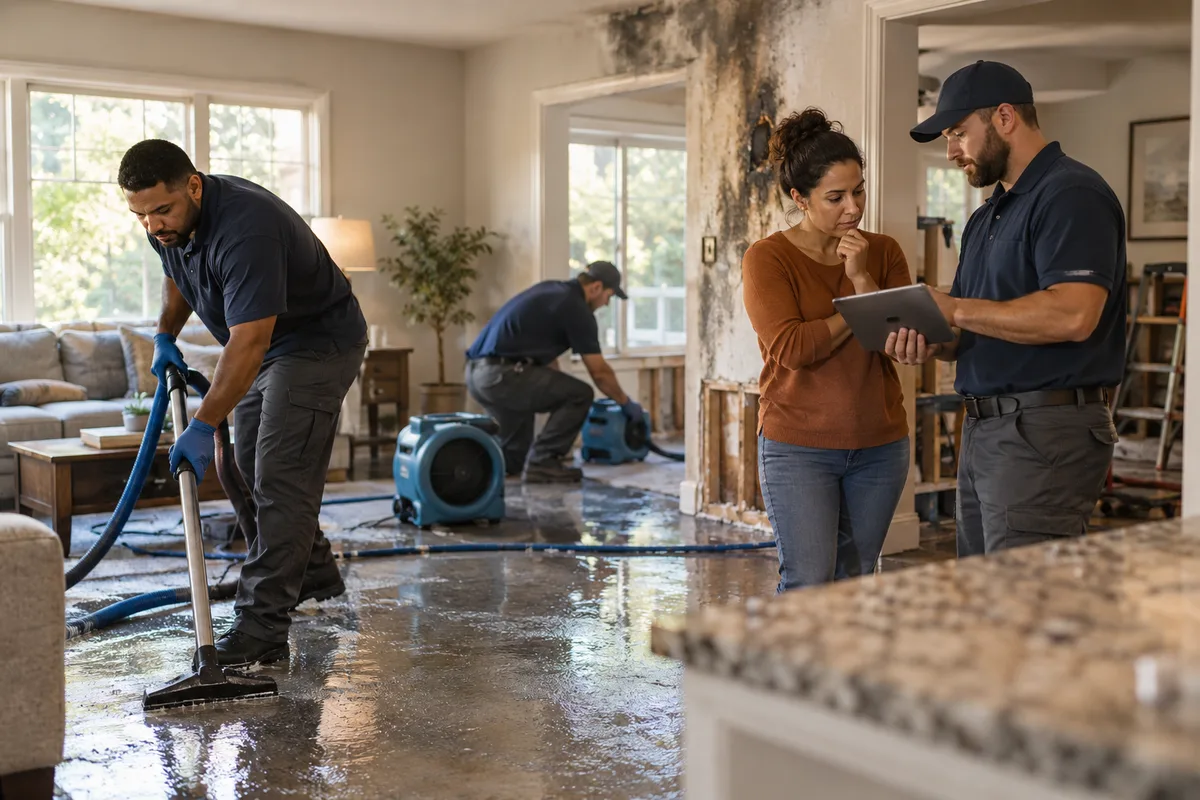
What pay per click advertising means
Pay per click advertising (PPC) is paying a fee each time someone clicks your advert on Google or another platform. It puts you at the top of a search page immediately, instead of waiting for ranking to build. GullySales sets the targeting, writes the ad text and checks spend against enquiries received.
Also for water and fire damage restoration companies
- SEO for water and fire damage restoration companies
- Lead generation for water and fire damage restoration companies
- Digital marketing for water and fire damage restoration companies
- Reputation management for water and fire damage restoration companies
- Local SEO for water and fire damage restoration companies
- Branding and identity for water and fire damage restoration companies
- Social media marketing for water and fire damage restoration companies
- Content marketing for water and fire damage restoration companies
Sales and marketing for water and fire damage restoration companies, the overview.
Last updated 14 Nov 2026.
For water and fire damage restoration companies
Where it usually goes wrong, and what we would do.
“Budget by forecast, not by month”
A hard freeze fills ten days of schedule. A flat daily cap hands the same money to April, when nobody's pipes are bursting.
“A mould click and a flood click are worth different money”
One is a crew leaving tonight, the other is a quote in a fortnight. Run them together and you cannot tell which is paying.
“Local Services Ads sit above everything you buy”
Google's screened listing appears over the ordinary ads on restoration searches. Getting through that background check beats any bid increase.
What we do
What we deliver for water and fire damage restoration companies.
The work available for this need. We agree the deliverables and responsibilities for your engagement in writing.
Spend weighted to nights, weekends and freeze weeks
Bids raised after six in the evening and across Saturday and Sunday, with a prepared schedule switched on when a hard freeze appears in the forecast.
Result: Money goes out while the water is still moving.
Campaigns split by loss type
Water, fire, mould, sewage and reconstruction kept apart with their own budgets, so an emergency search cannot spend the money meant for quotes.
Result: You can see what each kind of loss costs to win.
Call-only ads for the phone already in the homeowner's hand
Ads that dial straight through on mobile for emergency searches, with no form and no page between the homeowner and your dispatcher.
Result: Nobody types an address while standing in water.
Local Services Ads applied for and kept live
The background check, licence and insurance documents filed, the profile kept current, and any disputed lead challenged inside the window.
Result: You appear above the ads you are paying for.
Negative keywords against renters, coursework and lawyers
Blocks on drying carpet myself, restoration training, water damage attorney and rental deposit, checked against the search terms report.
Result: Your budget stops funding people who will never call.
Every call traced to a job and a source
A tracking number per campaign, matched to your job list so spend sits beside mitigation revenue and rebuilds signed.
Result: The account is judged on jobs, not on calls.
How the result is measured
- Cost per click
- Cost per enquiry
- Enquiries from paid search
Recorded as a baseline before work starts, so every later report has an honest comparison.
Searches to bid on and block
The searches worth paying for as a restoration company, and the ones to keep out.
- Emergency searches, such as water damage repair near me at night
- Bid hardest, as a call-only advert, and run it only when a dispatcher will pick up. A flooded floor does not wait, so a missed call is a lost job and a wasted click.
- Loss-type searches, such as fire and smoke cleaning or sewage backup
- Bid in separate ad groups. Each loss needs a different crew, equipment and quote, so a fire click should not draw on the water budget, and the page should describe that loss only.
- Insurance claim searches, such as water damage insurance claim help
- Bid carefully. Say that you document the loss and photograph it for the claim. Do not say what an insurer will pay or approve, because that is the insurer's decision.
- Do-it-yourself and training searches, such as drying a wet carpet myself
- Block, together with restoration course, franchise and equipment hire. These people are solving it themselves or want to join the trade, and neither will book a crew.
- Where the click lands
- Send an emergency click to a mobile page with a tap-to-call button first, and your service area and answering hours second. Longer pages with photos suit the quote searches, not the flood.
- Counting a real enquiry
- Count a call that a person answered and that ended in a crew dispatched or an assessment booked. Log missed calls, and calls from suppliers or other restorers, separately so they do not pass as leads.
Who it is for
This is written for these water and fire damage restoration companies.
- Water mitigation companies working residential losses
- Fire and smoke damage restoration companies
- Mould remediation specialists
- Contents cleaning and pack-out operations
- Restoration companies holding a general contractor licence for the rebuild
- Independents competing with national franchises
- Franchise owners who need local work beyond the brand's leads
- Commercial large-loss and multi-family restoration teams
- Biohazard and trauma scene cleaning companies
Before you decide
When this may not be the right fit.
- Intake has no one on at night and at weekends, when most of the paid clicks arrive and are paid for
- The company cannot yet say which source sent last season's jobs, so spend would be judged by feeling
- Crews are already booked solid after a storm, and paying for more emergency calls would only turn them away
Before you decide
Agree the work. Know how to judge it.
PPC ads for water and fire damage restoration companies: use these checks to prepare, choose the scope, and review what changes.
Bring the right evidence
Bring search-term reports, conversion definitions, and the sales outcome of past enquiries where available. Identify products, locations, and enquiries you cannot serve.
Make the scope clear
Choose the offer and landing page before setting a media budget. Agree who pays the platform, which actions count as conversions, and how unsuitable searches will be reviewed.
Check the work in use
Trace a test enquiry from the advert to the sales record. Review qualified enquiries and orders alongside spend, and separate duplicates or spam from genuine buyer demand.
Know when to change course
If the advert generates enquiries that do not fit, revise targeting and qualification before increasing spend. If suitable enquiries are lost after contact, work on the sales process.
These are discussion points, not a fixed package. GullySales confirms the deliverables, responsibilities, fee, and term in writing after reading your brief and speaking with you.
Before we start
What to have ready before the work starts.
The records, access and decisions this work needs from water and fire damage restoration companies. Anything missing is noted in the written scope, with who will supply it.
- Access to any existing ad account
- Past campaigns hold the keywords and bad calls that save us money now. Give us view access if an account exists. If the account belongs to a former agency, we start by recovering it and planning from nothing meanwhile.
- A dispatch sheet showing night capacity
- There is no point in buying a midnight click if no crew can attend. Bring the on-call rota and the hours you can respond for each loss type. Without it, we limit the schedule to hours you can cover.
- Your licence, insurance and background papers
- Local Services Ads ask for documents before the listing goes live. Gather the licence, insurance certificate and staff checks required for your area. If any are missing, tell us and we plan around the delay.
- A clear rule on jobs you decline
- Some losses are not worth a dispatch, such as a single-room leak below your minimum or work outside your radius. Write down your limits. We use them to write the wording and the negative keywords.
- A landing page that opens fast
- Clicks need somewhere to go that loads fast and shows the number. Bring the page you would use, or agree to a simple one. If the current site is slow or hides the number, the ads wait for a fix.
How it works
How the pay per click advertising work runs
The work itself, in order. How an engagement starts, from your brief to a written scope, is set out on our method page.
- 1
Read the call log by hour and loss
We begin with your phone log, your dispatch sheet and any past ad account, sorted by time of day, loss type and what became a job. You tell us which calls were real emergencies and which were suppliers or students. This shows when the phone rings for work, which is the pattern the spend should follow.
- 2
Check the Local Services listing and licences
We look at whether your company can qualify for Local Services Ads and which documents the platform asks for, such as licence, insurance and background checks. You supply the papers. If the listing needs verification, that process starts first, because it can take time that the rest of the plan has to wait for.
- 3
Split the campaigns by loss type
We build separate campaigns for clean water, sewage, fire and smoke, and mould, each with its own keywords, wording and landing page. You tell us which loss types the crews can take at night. A mould click and a flood click are different customers, so each gets its own budget line.
- 4
Write negative keywords from your own bad calls
We list the searches that sent you the wrong callers: renters, students, rival restorers, lawyers, suppliers. Your intake staff mark the calls that wasted a dispatch. We block those terms and review the search report as the first results arrive.
- 5
Set the budget weights for storms and nights
You tell us when freezes, storms and heavy rain hit your area and which hours your crews can respond. We weight spend towards those periods and set call-only ads for the phone already in the homeowner's hand. The weights are agreed before any money is committed.
- 6
Trace every call to a job and a source
We set up call tracking and ask intake staff to record the source on every call. We then read the spend against jobs opened and the figures noted before the campaigns started. You decide what to raise, cut or stop.
Where this fits
Three pieces of sales work, in this order.
This work sits inside sales process design, at stage 1, prospecting and lead generation. The audit comes before it, and sales management keeps it running.
Step 1
Sales audit
Find where deals are being lost and what to fix first.
Start here if you cannot say where orders are lost.
Step 2 · you are here
Sales process design
One written way to sell, from first enquiry to repeat order.
Start here if every salesperson sells differently.
Step 3
Sales management
A target, a review routine and someone who owns the number.
Start here if the team has targets and no routine.
FAQ
Questions owners ask before they call.
Not here? More answers, or ask on WhatsApp.
What is a reasonable cost per call for water damage?
Should we advertise into a county that has just flooded?
Should we advertise for rebuild work as well as emergency dry-out?
How do we stop paying for calls from suppliers and rival restorers?
Who answers the call when the crew is already out?
How long is the contract?
How soon will we see results?
Who will actually do the work?
What do you need from us?
More for water and fire damage restoration companies
Related work to consider.
- SEO for water and fire damage restoration companies
- Lead generation for water and fire damage restoration companies
- Digital marketing for water and fire damage restoration companies
- Reputation management for water and fire damage restoration companies
- Local SEO for water and fire damage restoration companies
- Branding and identity for water and fire damage restoration companies
Or start from the overview: sales and marketing for water and fire damage restoration companies.
Your next practical step
Tell us what you are trying to grow, and we will read it before we call.
Eight short steps, mostly taps. Skip anything you would rather answer on the call.