Water and fire damage restoration companies · Branding
At midnight a homeowner is choosing between a name they know and yours.
Branding for a restoration company is what your name, your trucks and the technician at the door say against a franchise the homeowner already knows. GullySales settles the name, the look, and the words your crew uses on arrival.
Scope, fee, reporting and term are agreed in writing after we have read your brief and spoken to you.
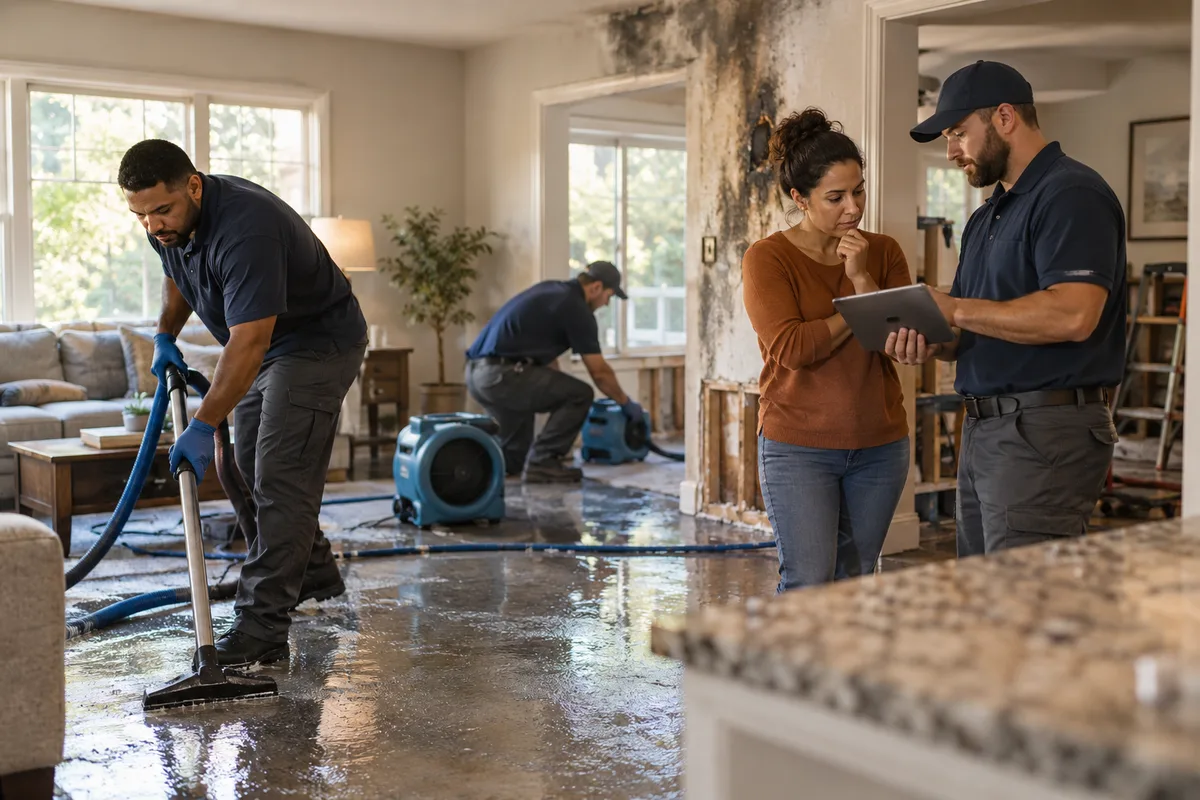
What branding means
Branding is what a customer remembers about your business beyond the product, including your name, colours, tone of voice and what you are known for locally. GullySales sets or corrects this once and applies it consistently across your website, signage and adverts so the business looks like one company everywhere.
Also for water and fire damage restoration companies
- SEO for water and fire damage restoration companies
- PPC ads for water and fire damage restoration companies
- Lead generation for water and fire damage restoration companies
- Digital marketing for water and fire damage restoration companies
- Reputation management for water and fire damage restoration companies
- Local SEO for water and fire damage restoration companies
- Social media marketing for water and fire damage restoration companies
- Content marketing for water and fire damage restoration companies
Sales and marketing for water and fire damage restoration companies, the overview.
Last updated 14 Nov 2026.
For water and fire damage restoration companies
Where it usually goes wrong, and what we would do.
“Name recall is the franchise's whole advantage”
The homeowner has heard one restoration name on the radio since childhood. Yours has to look like a real company on a phone screen at midnight.
“The truck is your largest piece of advertising”
It sits in a driveway for four days while the street walks past it. A wrap that states water, fire and mould beats a logo.
“The technician at the door is the brand”
Boot covers, a badge, a card and a plain account of the next three days. That is the part the homeowner repeats to the neighbours.
What we do
What we deliver for water and fire damage restoration companies.
The work available for this need. We agree the deliverables and responsibilities for your engagement in writing.
The name and mark settled across every surface
Trucks, uniforms, yard signs, the estimate, the invoice and the reconstruction paperwork, so the rebuild does not arrive looking like another company.
Result: Four months of work carry one name.
A truck wrap that states the work
Water, fire, mould and reconstruction, with a number large enough to read from a driveway, laid out for the side that faces the street.
Result: A parked truck advertises for four days.
An arrival script and what the crew carries
What is said at the door, the badge, the card, the boot covers, and the one-page account of what happens over the next three days.
Result: The homeowner repeats something specific to the neighbours.
Yard signs and door hangers with a purpose
A sign for the lawn during the job and a hanger for the neighbours, naming the problem that street keeps having rather than a slogan.
Result: The house you are working on brings the next one.
Credentials shown where they carry weight
IICRC credentials, state licences and carrier programme membership placed on the truck, the estimate and the profile a property manager opens.
Result: An adjuster sees your standing before asking for it.
Recruitment material that matches the trucks
Hiring ads, the application page and the first-day note written in the same voice, because techs read both before they apply.
Result: Applicants arrive knowing what the job looks like.
How the result is measured
- Recognition in customer feedback
- Consistency across channels
- Repeat enquiries by name
Recorded as a baseline before work starts, so every later report has an honest comparison.
Positioning in one sentence
We restore this kind of loss for these callers, and here is what a property owner can check about us.
- Who it is for: the person who makes the first call
- Decide whether you are written for the homeowner, the property manager or the plumber who refers you. The same sentence cannot speak to all three. Pick the one who calls the most and write the sentence for them.
- What you do: dry-out only, or dry-out and rebuild
- Say it in one line. A company that does both can write 'one team from the first hour to the finished wall'. A mitigation-only firm should say who it works with on the rebuild so the owner is not left guessing.
- What the owner gets that a franchise does not
- Franchises have a known name. You can offer a named local person who answers, a technician who explains the moisture readings, a firm that is still here next year. Pick one you can prove.
- The proof you can show
- Before and after photographs of equipment placement and drying logs, with the owner's permission, plus your licence and insurance documents. A page of reviews from property managers carries more weight than from homeowners alone.
- Words every restoration firm uses
- '24/7', 'rapid response' and 'we treat you like family' are on every van. Replace them with what happens: who picks up the phone, who arrives, and what they tell the owner at the door.
Who it is for
This is written for these water and fire damage restoration companies.
- Water mitigation companies working residential losses
- Fire and smoke damage restoration companies
- Mould remediation specialists
- Contents cleaning and pack-out operations
- Restoration companies holding a general contractor licence for the rebuild
- Independents competing with national franchises
- Franchise owners who need local work beyond the brand's leads
- Commercial large-loss and multi-family restoration teams
- Biohazard and trauma scene cleaning companies
Before you decide
When this may not be the right fit.
- The trucks are going to be replaced or re-wrapped soon, so a new mark would be paid for twice
- The franchise agreement fixes your name and colours, and you have not yet read what it leaves free for local use
- Crews arrive in unmarked vehicles and unbranded clothes, which no logo on a website would fix
Before you decide
Agree the work. Know how to judge it.
Branding and identity for water and fire damage restoration companies: use these checks to prepare, choose the scope, and review what changes.
Bring the right evidence
Collect the sales presentation, website, quotations, and other material buyers actually see. Mark where the description of the business changes or where a claim has no supporting evidence.
Make the scope clear
Agree whether the work concerns the offer, the words, the visual identity, or all of them. List the formats that need updating and who owns the final approval.
Check the work in use
Test the proposed direction on a real sales page or proposal. A buyer should be able to tell who the offer is for, what is different, and what evidence supports it.
Know when to change course
A new identity will not fix an unresolved service problem. Put the delivery issue right before making a stronger public promise about it.
These are discussion points, not a fixed package. GullySales confirms the deliverables, responsibilities, fee, and term in writing after reading your brief and speaking with you.
Before we start
What to have ready before the work starts.
The records, access and decisions this work needs from water and fire damage restoration companies. Anything missing is noted in the written scope, with who will supply it.
- Photographs of every truck and uniform
- We cannot judge the look without seeing it. Bring clear photos of each vehicle type, the crew uniform and the equipment. If trucks differ, we note which is the standard. Include the van or truck that goes to the first call on a job, since it is the one seen first.
- Samples of every printed piece
- Invoices, hangers, signs and cards show how many styles are in use. Bring one of each. Where something exists only on a phone, we cannot compare. Add the older versions of the logo, because they show what the market already recognises.
- A decision on franchise rules, if any
- Franchise owners can have limits on name and colour. Bring the brand manual and tell us which parts you may change. If the manual forbids it, the work narrows to what you control.
- Credentials in current form
- Credentials belong where they carry weight. Bring current certificates and say which you want shown. A lapsed one is left off. Add the training certificates that crew members hold, so recruitment material can name them.
How it works
How the branding work runs
The work itself, in order. How an engagement starts, from your brief to a written scope, is set out on our method page.
- 1
Photograph the trucks as a homeowner sees them
We stand where a homeowner would when a truck arrives, and photograph the vehicle, the crew uniform and the equipment on the lawn. You tell us what the company wants to stand for. Next to a franchise the homeowner already knows, small differences carry the first impression. We also photograph a franchise truck from the same street where possible, so the comparison is made at the same distance and light.
- 2
Compare what each surface says about you
We collect the invoices, door hangers, yard signs, website and trucks and place them side by side. You see how many names and styles are in use. We mark what contradicts the rest and what is worth keeping. We note which pieces a homeowner keeps, such as the magnet or the invoice, because those carry the name into the weeks after the job.
- 3
Settle the name and the line
You decide the name that appears everywhere and the one sentence that states the work. We test the sentence against what your crews do and what an agent would repeat. Insurance wording in the line is read by your own adviser. We write down the words rival firms use, so your line does not repeat theirs.
- 4
Draw the truck wrap and the arrival routine
We design the wrap so it states the work in a few words, and write a short routine for the crew at the door: the greeting, the walk-through and what they carry. You approve. The brand is the technician on the step as much as the paint. The routine also covers shoe covers, the clipboard and the first thing said about safety, because the homeowner watches the first minute.
- 5
Apply the mark to signs, hangers and hiring
We apply the settled name to yard signs, door hangers, the credentials page and recruitment material. You choose where each credential appears. The same look is used for the people you want to hire. We give the printer the exact colour references and sizes, so every piece matches when it arrives.
Where this fits
Three pieces of sales work, in this order.
This work sits inside sales process design, at stage 1, prospecting and lead generation. The audit comes before it, and sales management keeps it running.
Step 1
Sales audit
Find where deals are being lost and what to fix first.
Start here if you cannot say where orders are lost.
Step 2 · you are here
Sales process design
One written way to sell, from first enquiry to repeat order.
Start here if every salesperson sells differently.
Step 3
Sales management
A target, a review routine and someone who owns the number.
Start here if the team has targets and no routine.
FAQ
Questions owners ask before they call.
Not here? More answers, or ask on WhatsApp.
We are a franchise owner. What is left for us to brand?
Should the reconstruction side carry a different name?
Should we advertise as emergency first or as a restorer?
Can the sentence mention insurance claims?
What if our crews wear different uniforms?
Should the truck show a phone number?
How much does it cost?
How long is the contract?
How soon will we see results?
Who will actually do the work?
More for water and fire damage restoration companies
Related work to consider.
- SEO for water and fire damage restoration companies
- PPC ads for water and fire damage restoration companies
- Lead generation for water and fire damage restoration companies
- Digital marketing for water and fire damage restoration companies
- Reputation management for water and fire damage restoration companies
- Local SEO for water and fire damage restoration companies
Or start from the overview: sales and marketing for water and fire damage restoration companies.
Your next practical step
Tell us what you are trying to grow, and we will read it before we call.
Eight short steps, mostly taps. Skip anything you would rather answer on the call.