Shoe repair shops · Lead generation
Turn a broken sole into a call, and a call into a regular customer.
Lead generation for a shoe repair shop is the work of getting a person with a damaged pair, or an admin office with a stack of them, to ask you for a price. GullySales works on the places those requests start: the Maps listing, the WhatsApp photo, the school and factory contacts, and a record of every enquiry.
Scope, fee, reporting and term are agreed in writing after we have read your brief and spoken to you.
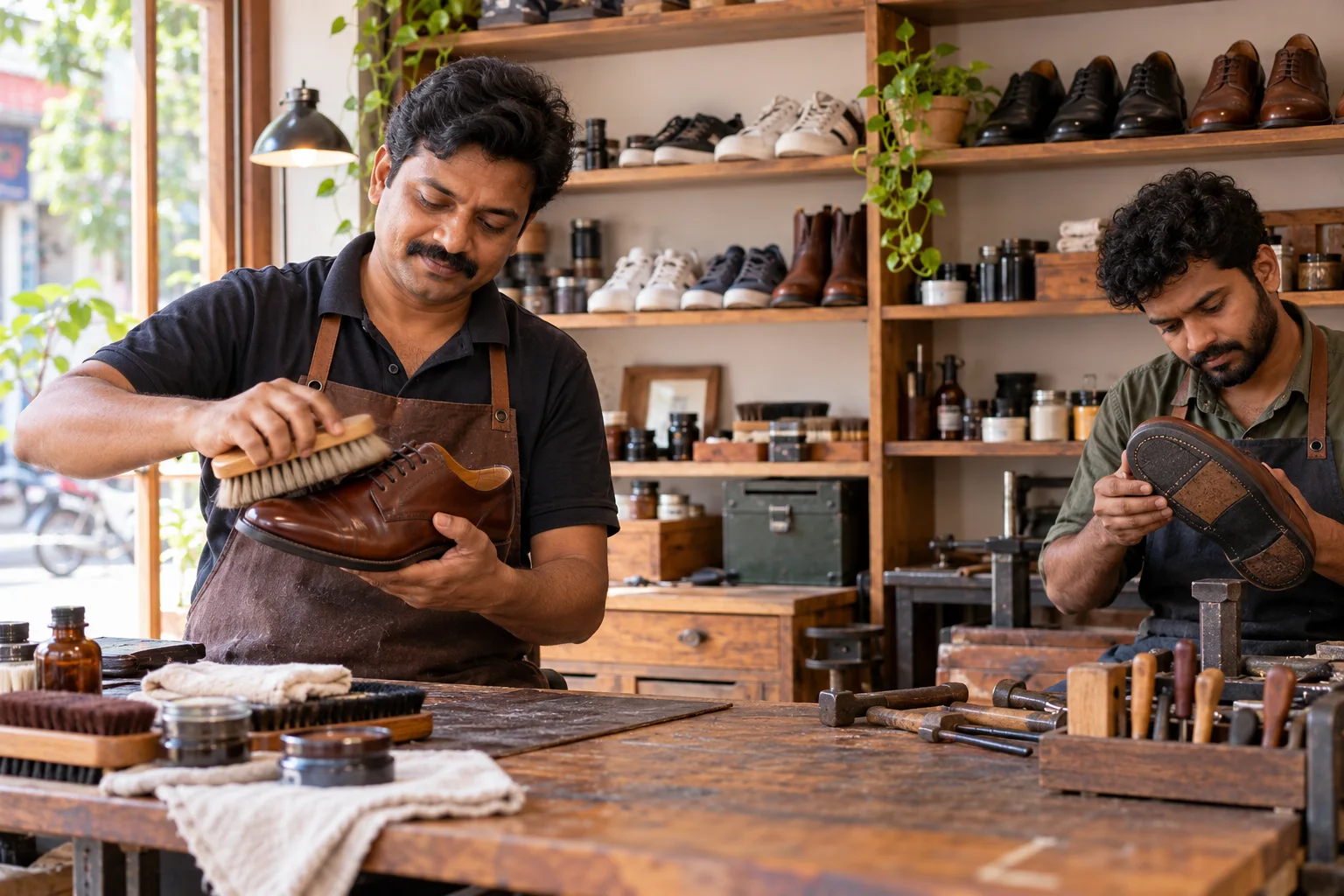
What lead generation means
Lead generation is the combined work of every channel that brings in a new enquiry, whether from search, adverts, referrals or a stall at an exhibition. GullySales runs these channels together and reports the number of enquiries each one produced, not the activity behind it.
Plan the next part of the work
Last updated 21 Nov 2026.
For shoe repair shops
Where it usually goes wrong, and what we would do.
“The urgent enquiry and the planned one are different leads”
A wedding guest with a flapping sole wants a shop that is open and near. The owner of a favourite leather pair wants to know whether it is worth saving. One call needs hours and a pin, the other needs photographs of past work, and a single message cannot serve both.
“Batch buyers never walk past your bench”
The school office, the stores in-charge at a plant and the office manager do not pass your counter. They ask whoever they already know. A named contact, a rate sheet and a collection day reach them; a signboard does not.
“A photo is the enquiry for a planned repair”
Owners of a good leather pair send a picture before they visit. They wait for a verdict, and the shop that answers with an honest view, including a plain no, is the one they carry the pair to.
“Footwear shops hold repair leads they cannot serve”
Every footwear shop meets a customer whose old pair needs a new sole and who has nowhere to send it. A referral card at that counter sends the customer to you instead of to the bin.
What we do
What we deliver for shoe repair shops.
The work available for this need. We agree the deliverables and responsibilities for your engagement in writing.
A list of where enquiries start
A written list of the sources: Maps, walk-ins, WhatsApp photos, schools, plants, offices and footwear counters, each with its own column in the register.
Result: You can say which source sent which job.
A Maps listing built for the urgent search
Hours, a pin at the exact bench, photographs and the repairs offered, set so that a person searching with a broken shoe in hand reaches a phone that is answered.
Result: The listing answers where, when and what in one look.
A photo-quote reply for planned repairs
A short message asking for two photographs, then an honest view on whether the pair is worth the work and what the repair involves.
Result: Every photo request has a name and your verdict beside it.
A batch offer for schools, offices and plants
A one-page rate sheet with a collection day and a bill, written for the person who files it, plus a list of the contacts to approach.
Result: An admin person holds something to compare and keep.
Referral cards for footwear shops and boutiques
A small card for the counter of shops that cannot repair, with your location and the repairs you take.
Result: A shop owner can hand a customer your card on the spot.
How the result is measured
- Relevant enquiries by source
- Duplicate and unsuitable enquiries
- Time to the first response
- Accepted enquiries reaching an agreed next step
Recorded as a baseline before work starts, so every later report has an honest comparison.
What to capture or send
What a repair shop should note when an enquiry reaches the bench.
- Photo of the shoe and the damage
- Ask for the broken part and the whole pair. Lets you give a verdict on whether it is worth repairing before the customer walks in.
- Urgent or planned
- A wedding guest with a flapping sole needs the shop open now, and the owner of a favourite pair can wait. Mark which, so the reply fits.
- Type of footwear or bag
- Leather formal, sports, sandal, boot, bag, belt or zip. Decides the repair, the material to stock and whether you take it.
- School, office or plant name
- For batch buyers, record the institution and the contact who orders. The next batch comes from a name you have on file.
- Who sent the customer
- Maps, a footwear shop's referral card, a neighbour or a school office. Shows where an enquiry starts and who deserves a thank-you.
- Pickup or drop
- Whether the customer will come to the bench. A pickup for an office batch needs a day fixed with the contact.
Who it is for
This is written for these shoe repair shops.
- Footpath and kiosk cobblers with long-standing local customers
- Shoe repair shops in markets and near railway or bus stations
- Repair counters in malls and commercial streets
- Resoling and restoration specialists for leather shoes
- Bag, belt and zip repair workshops
- Safety shoe and boot repair for factories
- School shoe repair near large schools
- Shoe repair shops that also polish, dye and clean
Before you decide
When this may not be the right fit.
- The shop is closed or unattended for long stretches, so more urgent enquiries would find no one at the bench
- You have no one to answer a WhatsApp photo, and more photo leads would only be left unread
- The shop has not decided its rate for a batch, so an approach to a school or plant would meet a blank
Before you decide
Agree the work. Know how to judge it.
Lead generation for shoe repair shops: use these checks to prepare, choose the scope, and review what changes.
Bring the right evidence
Define the organisations or buyers you can serve and the reasons they would consider a conversation. Bring examples of accepted and rejected prospects so the selection rule is visible.
Make the scope clear
Agree the research sources, contact approach, qualification rules, and handover. Clarify which meetings count as accepted and what happens to replies that are not ready to buy.
Check the work in use
Review why a prospect was selected and what was learned from the response. Count held, relevant conversations separately from contacts found, messages sent, or meetings booked.
Know when to change course
If the same objection appears repeatedly, adjust the offer or buyer group before increasing outreach. Respect a request to stop contact and keep the exclusion in the record.
These are discussion points, not a fixed package. GullySales confirms the deliverables, responsibilities, fee, and term in writing after reading your brief and speaking with you.
Before we start
What to have ready before the work starts.
The records, access and decisions this work needs from shoe repair shops. Anything missing is noted in the written scope, with who will supply it.
- The bench book or token stubs
- We need the record of recent jobs, even if it is a ruled notebook or a bundle of paper stubs. It shows what pairs arrive, which repairs repeat and who comes back. If nothing was written, we start a tally together and the baseline is simply thinner at the start.
- Owner access to the Maps listing
- Whoever created the listing must be able to sign in or add us as a manager. Without access we can only advise and cannot correct hours or the repair list, so the urgent search stays as weak as it is today.
- Names of two batch contacts
- Bring the name of one school or office admin and one factory or plant supervisor who might send pairs in bulk, even loosely known. A warm introduction works far better than a cold visit, and without one the batch offer waits until you have found a contact.
- Your honest list of repairs refused
- Write down the jobs you turn away because they cost more than the shoe is worth or fall outside your tools. This list shapes the photo reply, so customers get a straight answer and you stop spending time on enquiries you cannot convert.
- A phone number that staff answer
- Enquiries only count if someone picks up or replies on WhatsApp. Tell us which number the bench uses and who watches it during repairs. If it rings unanswered, we advise on call-back arrangements before sending any new enquiry your way.
How it works
How the lead generation work runs
The work itself, in order. How an engagement starts, from your brief to a written scope, is set out on our method page.
- 1
Sort last term's tokens by source
We sit with the bench book, the paper tokens and the WhatsApp chats and mark where each customer came from: a Maps tap, a passer-by, a school, a plant, a boutique. You tell us which jobs were urgent and which were planned. What exists afterwards is a plain tally of sources, which becomes the figure we measure against later.
- 2
Stand at the bench for a morning
We watch the real enquiries arrive: the walk-in holding one shoe, the phone call asking whether it can be done today, the photograph sent from home. We note which questions you answer every time and which pairs you turn away. You decide which jobs you want more of and which you would rather not take.
- 3
Write the batch rate with the admin office
We draft the offer for a school or factory contact with you: what is collected, on which day, how the bill is raised and who signs for the pairs. You set the rate from your own costs. We then speak to one school office and one plant supervisor to test the wording before it is printed.
- 4
Fix the Maps listing and photo reply
We correct the listing against the real bench, hours and repair list, then write the reply you send when a customer shares a photograph. You approve every line, including the honest answer for a pair beyond saving. Both are tried on a few real enquiries before anything is treated as settled.
- 5
Hand cards to footwear shops nearby
We print simple referral cards and you carry them to the footwear shops and boutiques that sell shoes they cannot mend. Each card carries a code or name so a returning customer can be traced to the shop that sent them. You decide which shops are worth the walk and what thanks you give.
- 6
Read the tally against the baseline
We open the same bench book and chat record and count enquiries by source again, urgent and planned apart, and batch accounts by name. Set against the first tally, you see which source brought genuine requests and which only brought calls. You decide which source gets more of your attention next.
Where this fits
Three pieces of sales work, in this order.
This work sits inside sales process design, at stage 1, prospecting and lead generation. The audit comes before it, and sales management keeps it running.
Step 1
Sales audit
Find where deals are being lost and what to fix first.
Start here if you cannot say where orders are lost.
Step 2 · you are here
Sales process design
One written way to sell, from first enquiry to repeat order.
Start here if every salesperson sells differently.
Step 3
Sales management
A target, a review routine and someone who owns the number.
Start here if the team has targets and no routine.
FAQ
Questions owners ask before they call.
Not here? More answers, or ask on WhatsApp.
Which source should a new shop start with?
How do we tell a good lead from a time-waster?
Can you promise how many jobs we will get?
What should the shop do about a pair that is not worth repairing?
Who talks to the schools and factories, you or us?
How much does it cost?
How long is the contract?
How soon will we see results?
Who will actually do the work?
What do you need from us?
More for shoe repair shops
Related work to consider.
Closest to this: leads and follow-up
Also for shoe repair shops
Or start from the overview: sales and marketing for shoe repair shops.
Your next practical step
Tell us what you are trying to grow, and we will read it before we call.
Eight short steps, mostly taps. Skip anything you would rather answer on the call.