Shoe repair shops · Social media
Let the before and after do the selling that a signboard cannot.
Social media marketing for a shoe repair shop is the habit of showing finished work: a resoled pair, a re-stitched strap, a polished boot. GullySales works on what to photograph, how to caption it and where to post so that neighbours who might use you see it.
Scope, fee, reporting and term are agreed in writing after we have read your brief and spoken to you.
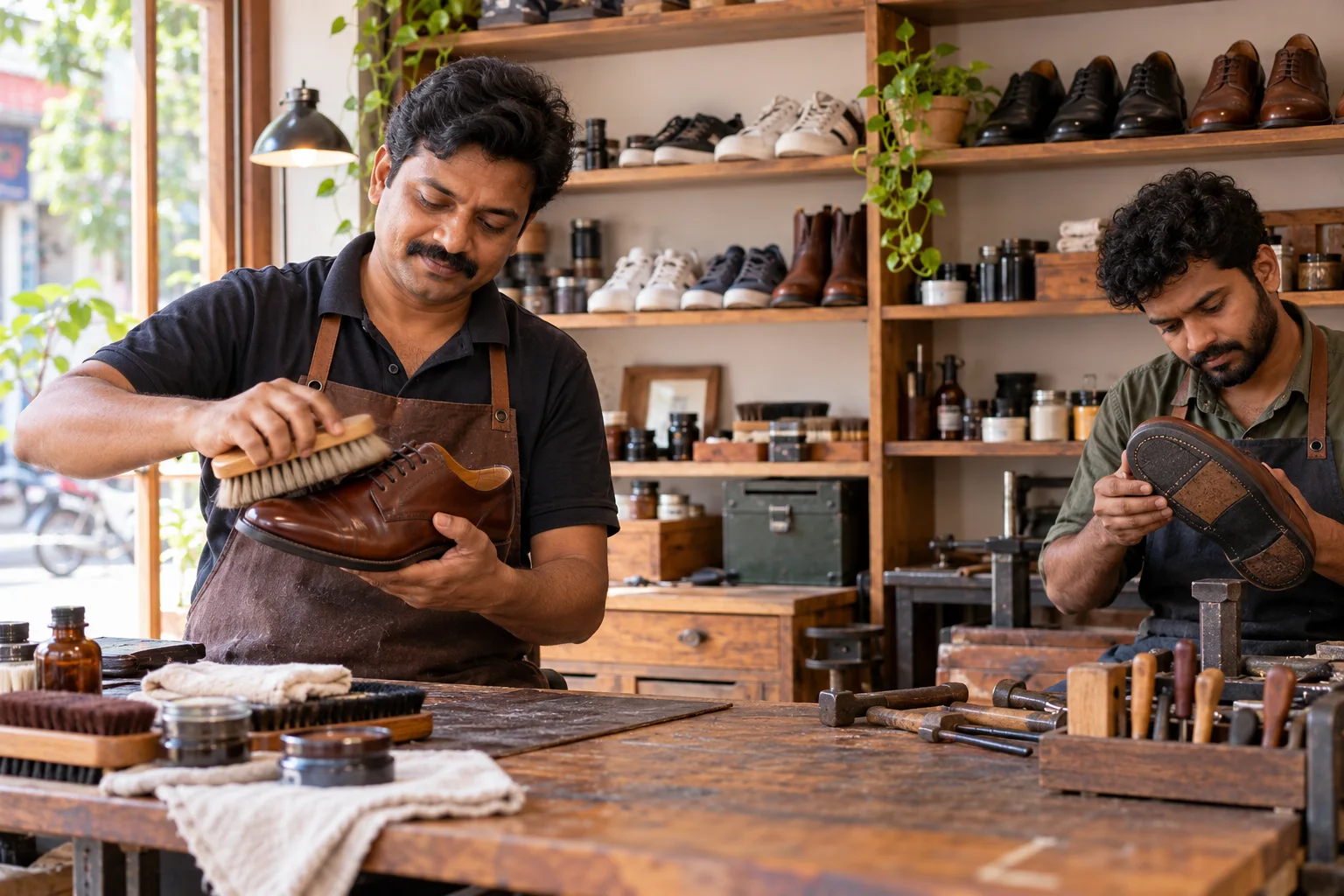
What social media means
Social media is the ongoing posting your business does on platforms such as Instagram, Facebook and LinkedIn to stay visible to customers and prospects between purchases. GullySales plans a posting calendar, writes captions and designs the images so the page looks active and answers what a visitor would ask.
Last updated 14 Nov 2026.
For shoe repair shops
Where it usually goes wrong, and what we would do.
“The repair is already a story in two frames”
A cracked leather shoe beside the same shoe restored needs little explaining. Shot on the bench in plain light, it answers the doubt in a customer's mind about whether a worn pair is worth saving.
“Posts must reach the lanes you serve”
A reel that travels to another city sends no one to your bench. A location tag, the neighbourhood group and the school parent group put the post in front of people who can walk in.
“The shoe belongs to the customer”
Show the work and leave out the owner. Ask before posting a recognisable pair with a name, a school badge or a company mark, and keep faces out of the frame. A shop that respects this is trusted with the next pair.
“The calendar writes half the posts”
School reopening, the rains and wedding season each bring a different fault to the bench. A post planned around each one reaches people just before the fault appears.
What we do
What we deliver for shoe repair shops.
The work available for this need. We agree the deliverables and responsibilities for your engagement in writing.
A corner of the bench set up for photographs
A plain background, daylight and a habit of taking one picture before and one after each interesting repair.
Result: Every good repair leaves two pictures behind.
A caption format you can repeat
The item, the fault, the repair done and, where true, what could not be fixed, in two or three lines.
Result: Posts read the same way and customers learn what to look for.
A seasonal post plan
Post ideas for school reopening, monsoon sole separation and wedding season, with the wording for each.
Result: The next season's posts are written before the season starts.
Local tagging and group posting
A list of the neighbourhood, parent and office groups where posts may be shared, checked against each group's rules.
Result: Posts reach people near the shop.
Short clips of one step
A short video of one stage, such as stitching a strap or pressing a new sole, taken from the bench.
Result: A viewer sees the skill behind the price.
Replies to comments and messages
Draft answers to the questions that come in on posts, with a nudge to move the conversation to WhatsApp.
Result: A comment ends in a photo quote.
How the result is measured
- Posts published
- Engagement rate
- Enquiries from social profiles
Recorded as a baseline before work starts, so every later report has an honest comparison.
Posts and pieces to plan
Posts a repair shop can make from jobs already on the bench.
- A sole before and after
- Two photographs from the same angle on a clear cloth. Needs the owner's agreement and a note of the shoe type.
- A torn strap, stitched
- A short clip of one step with a caption naming the repair. Shows people that sandals are worth saving.
- A bag zip replaced
- A post for an item people think is beyond repair. The caption says what it was and what was done.
- A pair we said no to
- A post explaining why a shoe was not worth repairing. Builds trust with owners of costly pairs.
- Term-start school shoe batch
- A post for parents, with a note on dropping pairs before school reopens. Show the shelf of finished pairs.
- Festival week hours
- A card with opening hours around a festival. Needed because a wrong time earns a bad review.
Who it is for
This is written for these shoe repair shops.
- Footpath and kiosk cobblers with long-standing local customers
- Shoe repair shops in markets and near railway or bus stations
- Repair counters in malls and commercial streets
- Resoling and restoration specialists for leather shoes
- Bag, belt and zip repair workshops
- Safety shoe and boot repair for factories
- School shoe repair near large schools
- Shoe repair shops that also polish, dye and clean
Before you decide
When this may not be the right fit.
- No one has a phone camera and a clear moment at the bench to take photographs
- Customers have not agreed to their shoes being shown, so the best before and after cannot be used
- The shop cannot answer comments and messages, and interest from the posts would go to the next shop
Before you decide
Agree the work. Know how to judge it.
Social media marketing for shoe repair shops: use these checks to prepare, choose the scope, and review what changes.
Bring the right evidence
Review the posts that produced useful conversations, not only the ones with the most views. Gather buyer questions and decide which team member can contribute credible material.
Make the scope clear
Choose the audience and channel before setting a posting volume. Agree who supplies material, approves posts, and handles messages, including complaints or questions the agency cannot answer.
Check the work in use
Follow a post through to the profile, website, and response. A useful report explains the quality of conversations and enquiries, alongside reach and engagement.
Know when to change course
If publishing takes time away from unanswered buyer messages, fix the response routine first. Do not expand to another channel without a clear reason for being there.
These are discussion points, not a fixed package. GullySales confirms the deliverables, responsibilities, fee, and term in writing after reading your brief and speaking with you.
Before we start
What to have ready before the work starts.
The records, access and decisions this work needs from shoe repair shops. Anything missing is noted in the written scope, with who will supply it.
- Login for the shop's social account
- The page or profile must belong to the shop, with a login you hold. If it sits on a former helper's phone, it has to be recovered first. Without access we can only write posts for you to publish by hand.
- A phone with a working camera
- A modern phone, a clean lens and daylight are enough. Fingerprints on the lens ruin the photograph. If the bench phone is old, we plan for fewer, simpler pictures rather than asking you to spend money.
- Written consent for showing a pair
- A customer's shoes are theirs, and some pairs carry names or marks. Decide a simple rule, such as asking at handover whether a photograph may be shared. Without it, we use only the shop's own samples and pairs left unclaimed for long.
- Three recent jobs worth showing
- Pick finished repairs you are proud of, with the before photograph if one was taken. They become the first captions and test the format. If you have none, we begin with the next three jobs and the calendar starts a little later.
- A person who answers comments
- Posts bring questions in comments and messages. Name who replies and the hours they check. If nobody is free, we turn comments to a short fixed reply that points to WhatsApp, so nothing sits unanswered.
How it works
How the social media work runs
The work itself, in order. How an engagement starts, from your brief to a written scope, is set out on our method page.
- 1
Agree which platform the shop uses
We look at where your customers already are: neighbourhood groups, a Facebook page, Instagram or only WhatsApp status. You tell us which account you can keep up while repairing. We pick one main platform and one helper, and write down the login holders so access never sits with a single phone.
- 2
Set up a photo corner on the bench
We choose a patch of the bench with good light and a plain background, and agree a simple routine: one shot before, one after. You decide where the corner goes and who takes the pictures. The result is a spot where finished work is photographed in seconds, without moving tools.
- 3
Write a caption format you repeat
We draft a pattern of three lines: the fault, the repair done, what the pair is made of. You try it on five recent jobs and rewrite anything that reads wrongly. Once the format feels like your voice, any person at the bench can write a caption without waiting for us.
- 4
Plan around festivals and school terms
We mark the points in your year when pairs flood in: the weeks before school reopens, monsoon, wedding season, Diwali. You tell us where the bench is busiest and when it is quiet. The calendar shows the posts for each point, and we leave room for jobs you cannot predict.
- 5
Join the groups your lane reads
We list the local groups, resident associations and market pages where a post would be seen by people who could walk to you. You decide which you are comfortable in and read the group rules. We draft the posts and note which to put up yourself, because a group may only accept posts from its own members.
- 6
Compare enquiries with last season's count
We count the messages and calls that say they saw a post, and set them against the enquiries tally recorded before posting began. You tell us which posts customers mention at the counter. Posts that brought a conversation are repeated, and the rest are dropped.
Where this fits
Three pieces of sales work, in this order.
This work sits inside sales process design, at stage 0, foundation. The audit comes before it, and sales management keeps it running.
Step 1
Sales audit
Find where deals are being lost and what to fix first.
Start here if you cannot say where orders are lost.
Step 2 · you are here
Sales process design
One written way to sell, from first enquiry to repeat order.
Start here if every salesperson sells differently.
Step 3
Sales management
A target, a review routine and someone who owns the number.
Start here if the team has targets and no routine.
FAQ
Questions owners ask before they call.
Not here? More answers, or ask on WhatsApp.
Which platform should a shoe repair shop use?
Do we have to pay for ads?
Do we need the customer's permission to post a pair?
Do customers have to give permission for a post?
Do we need to show our face or make videos?
What if a post gets rude comments?
How much does it cost?
How long is the contract?
How soon will we see results?
Who will actually do the work?
More for shoe repair shops
Related work to consider.
Closest to this: content and social
Also for shoe repair shops
Or start from the overview: sales and marketing for shoe repair shops.
Your next practical step
Tell us what you are trying to grow, and we will read it before we call.
Eight short steps, mostly taps. Skip anything you would rather answer on the call.