Shoe repair shops · Buyer persona
Know who hands over the shoe, and what each of them is afraid of.
A buyer persona for a shoe repair shop is a written description of one type of customer: what has broken, what worries them and what makes them say yes. GullySales builds yours from your own counter and phone conversations and not from a template.
Scope, fee, reporting and term are agreed in writing after we have read your brief and spoken to you.
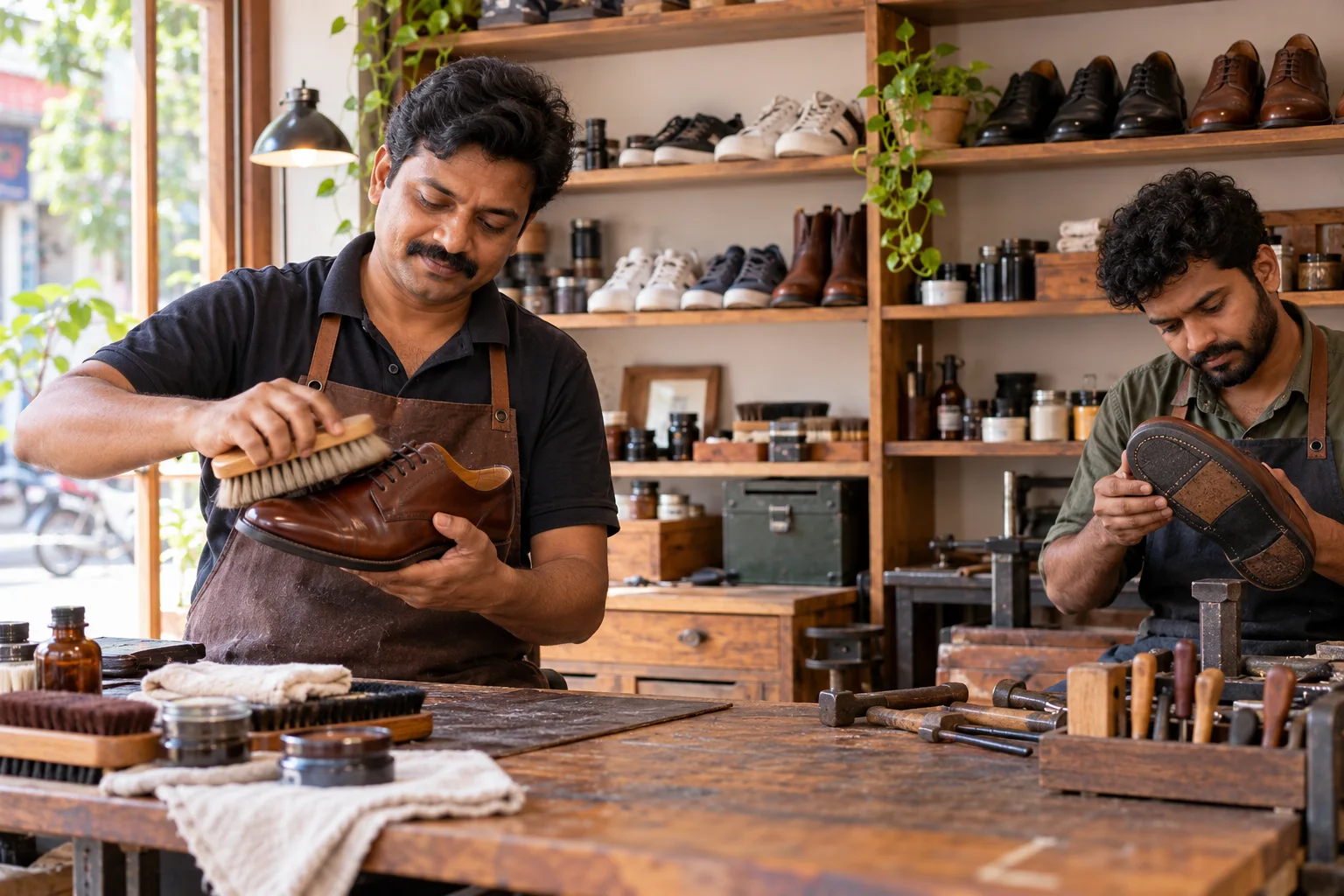
What buyer persona means
A buyer persona is a plain description of the kind of customer who actually buys from you. It includes what they search, what worries them and who else they ask before deciding. GullySales builds this from real enquiries and past sales rather than a generic template, then uses it to write every page and advert.
Last updated 14 Nov 2026.
For shoe repair shops
Where it usually goes wrong, and what we would do.
“The person in a hurry”
The wedding guest, the commuter or the interview candidate has one shoe and little time. The fear is that the shop is shut or will say come tomorrow. This buyer says yes to the first open shop that gives a price over the phone.
“The owner of a pair worth saving”
A leather pair bought with care is the subject here. The fear is that a rough repair will ruin it, or that the shop will say it is not worth the cost just to avoid the work. Photographs of past resoles and an honest verdict win this buyer.
“The parent before term”
A parent wants school shoes mended and polished before the first day. The fear is the pair failing within weeks, and the worry is the rate. A clear price and a stated collection day settle both.
“The person who files the bill”
The admin head of a school, plant or office buys for others. The fear is a vendor who disappears or sends a bill that will not pass accounts. This buyer says yes to a rate sheet, a named contact and a regular collection day.
What we do
What we deliver for shoe repair shops.
The work available for this need. We agree the deliverables and responsibilities for your engagement in writing.
A persona sheet for each buyer
One page for each type of customer, built from the counter notes: what is broken, what is feared and what closes the sale.
Result: Each type is described in the words customers use.
A list of objections and honest answers
The questions each persona asks, such as whether the repair will hold or whether it is worth the cost, with an answer you are comfortable giving.
Result: Staff answer the same objection the same way.
A first WhatsApp reply for each persona
An opening message written for each type, so the hurried buyer gets hours and a price and the careful buyer gets a request for photographs.
Result: The first reply matches the buyer.
A map of persona to channel
A note of where each type is found: Maps, parent groups, office managers, boutiques and plant stores.
Result: You know where to spend effort for each buyer.
A one-line description for the listing
A line on the listing and the poster that tells each type the shop is for them.
Result: A reader recognises their own need in a sentence.
How the result is measured
- Enquiry match to persona
- Conversion rate by persona
- Content aligned to persona
Recorded as a baseline before work starts, so every later report has an honest comparison.
Who is asking
The people who bring a damaged shoe to the bench, and what each fears.
- Wedding guest with a broken sole
- Needs the shop open and a repair done while they wait. Wants to know the price before leaving the shoe.
- Owner of a favourite leather pair
- Fears the repair will change the look. Wants to see a similar finished pair and hear an honest view of the cost.
- Parent before the school term
- Has several pairs and little time. Wants a clear price per pair and a day to collect.
- School or office admin
- Wants a rate for a batch, a named contact and a bill the accounts desk accepts.
- Stores in-charge at a plant
- Needs safety boots mended and wants to know which repairs the shop will not attempt.
- Owner of a bag or belt
- Does not know a shoe bench handles it. Wants a yes or no from a photograph.
Who it is for
This is written for these shoe repair shops.
- Footpath and kiosk cobblers with long-standing local customers
- Shoe repair shops in markets and near railway or bus stations
- Repair counters in malls and commercial streets
- Resoling and restoration specialists for leather shoes
- Bag, belt and zip repair workshops
- Safety shoe and boot repair for factories
- School shoe repair near large schools
- Shoe repair shops that also polish, dye and clean
Before you decide
When this may not be the right fit.
- You have not yet asked recent customers why they came, so the sheets would be built on guesses
- The shop has one counter script for every buyer, and a persona would not change what is said
- No record is kept of whether a customer is a walk-in, a parent or a batch buyer
Before you decide
Agree the work. Know how to judge it.
Buyer personas for shoe repair shops: use these checks to prepare, choose the scope, and review what changes.
Bring the right evidence
Write the decision the research must support, such as entering a market or choosing a buyer group. Separate what you know from sales records from what the team currently assumes.
Make the scope clear
Agree which buyers to speak to, which sources to review, and what access you can provide. Include lost enquiries and people who chose another supplier, where they are willing to take part.
Check the work in use
Look for source dates, sample limitations, and evidence that disagrees with the preferred answer. A recommendation should show how it follows from the findings.
Know when to change course
Do not treat a few positive conversations as proof of demand. Test the proposed offer with an actual buying decision before committing to a wider launch.
These are discussion points, not a fixed package. GullySales confirms the deliverables, responsibilities, fee, and term in writing after reading your brief and speaking with you.
Before we start
What to have ready before the work starts.
The records, access and decisions this work needs from shoe repair shops. Anything missing is noted in the written scope, with who will supply it.
- Recent job entries from the register
- Bring the bench book or token stubs for recent months. They show what actually comes in. Without them, personas rest on opinion, so we start with a counter tally and the sheets are marked as provisional.
- Permission to speak to regulars
- Pick three or four long-standing customers who would not mind a short chat, and ask them first. Their words are the best material. If no one is willing, we rely on chats and counter notes, and the sheets are thinner.
- A sample of WhatsApp chats
- Share a handful of recent enquiry chats, with numbers hidden if you prefer. They show how buyers phrase the problem. If chats are few, we use phone calls you recall and mark which ones came by phone.
- Your view of the best customer
- Tell us which kind of customer you like best to serve and which you find hardest. It decides which persona gets effort first. If you cannot choose, we let the register decide and ask you to confirm.
- A name for the batch buyer
- Give us the first name or role of any school, office or plant contact who sends pairs together. The admin buyer differs from a walk-in, and a real contact keeps that sheet honest. Without one, it stays a guess.
How it works
How the buyer persona work runs
The work itself, in order. How an engagement starts, from your brief to a written scope, is set out on our method page.
- 1
Decide which buyers to describe
We begin by naming the buyers you already see: the person in a hurry, the owner of a favourite pair, the parent before term, the admin clerk who files the bill. You tell us which bring in the bulk of the revenue at the bench. We limit the work to those few, so each sheet is built from real people.
- 2
Pull ten recent jobs from the register
We take a spread of recent entries from your bench book and mark who brought each job, what was wrong and how it was paid for. You help us read the shorthand. The sample shows who actually pays you, which can differ from who you expected to be your customer.
- 3
Hear what buyers said in their own words
We read WhatsApp chats and sit through a morning at the counter, noting the exact phrases people use. With your permission we speak to a few regular customers. What emerges is a set of quotes, because the words a buyer uses become the words of the replies.
- 4
Draft one sheet for each buyer
We write a sheet for each buyer covering what has broken, what worries them, what makes them say yes and who they ask. You correct anything that does not sound like the person you know. A sheet that you recognise on sight is kept, and the rest are rewritten.
- 5
Test the sheets on a live conversation
We use each sheet to draft a first reply, and you try it on the next real enquiry of that type. You tell us where the reply sounded wrong. The sheet and the reply are adjusted together, so the persona is tested against a customer and not left on paper.
- 6
Check which buyers the shop now serves
We return to the bench book and count the jobs by buyer type against the sample recorded at the start. You see whether the hurried passer-by, the batch contact or the keen owner is arriving more. The sheets are kept for the buyers who matter and merged where two proved the same.
Where this fits
Three pieces of sales work, in this order.
This work sits inside sales process design, at stage 0, foundation. The audit comes before it, and sales management keeps it running.
Step 1
Sales audit
Find where deals are being lost and what to fix first.
Start here if you cannot say where orders are lost.
Step 2 · you are here
Sales process design
One written way to sell, from first enquiry to repeat order.
Start here if every salesperson sells differently.
Step 3
Sales management
A target, a review routine and someone who owns the number.
Start here if the team has targets and no routine.
FAQ
Questions owners ask before they call.
Not here? More answers, or ask on WhatsApp.
Do we need to survey customers?
Is the footpath customer a different persona?
What do we do with the sheets?
Is the footpath customer a different persona?
Can one person fit two of the personas?
How often will the personas need updating?
How much does it cost?
How long is the contract?
How soon will we see results?
Who will actually do the work?
More for shoe repair shops
Related work to consider.
Closest to this: strategy and research
Also for shoe repair shops
Or start from the overview: sales and marketing for shoe repair shops.
Your next practical step
Tell us what you are trying to grow, and we will read it before we call.
Eight short steps, mostly taps. Skip anything you would rather answer on the call.