Tree service companies · Content marketing
Answer whether the tree has to come out, and the estimate visit follows.
Content marketing for a tree service is the writing that answers a homeowner standing under a tree they are worried about. GullySales writes the cost, safety and species pages they search for, and turns your own job photographs into the proof a property manager will read.
Scope, fee, reporting and term are agreed in writing after we have read your brief and spoken to you.
What content marketing means
Content marketing is writing articles, guides and pages that answer the questions buyers search before they are ready to enquire. This makes your business visible and trusted before the first call. GullySales plans this content from the first conversation onward, choosing topics that match real search demand rather than guesses.
Also for tree service companies
- Social media for tree service companies
- SEO for tree service companies
- PPC ads for tree service companies
- Lead generation for tree service companies
- Digital marketing for tree service companies
- Reputation management for tree service companies
- Local SEO for tree service companies
- Branding and identity for tree service companies
Sales and marketing for tree service companies, the overview.
Last updated 14 Nov 2026.
For tree service companies
Where it usually goes wrong, and what we would do.
“Saying a tree can be saved wins the removal later”
A page explaining when pruning is enough brings you the honest half of the enquiries, and the same homeowner calls again when the next tree is dead.
“Board members need a different document”
An HOA board voting on tree work wants one page on what an inspection covers and what it costs, not an article about mulch.
“The photographs are the content”
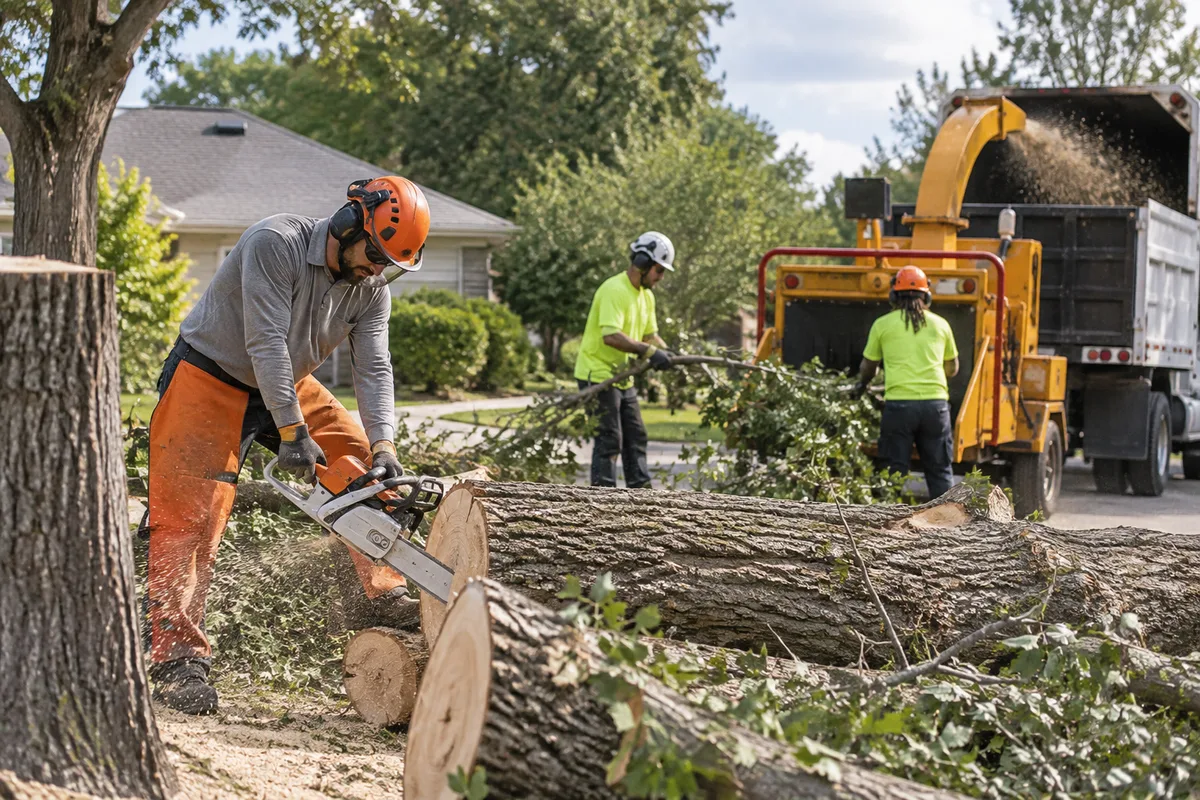
Every job produces a before, a rigging shot and a cleared yard, which is worth more than anything a writer could produce about tree care.
What we do
What we deliver for tree service companies.
The work available for this need. We agree the deliverables and responsibilities for your engagement in writing.
A does this tree have to come down guide
Written around your arborist's own judgement on lean, deadwood, fungus and root damage, including the cases where pruning is the right answer.
Result: Honest enquiries arrive instead of price shoppers.
A cost explainer for each kind of work
Removal, trimming, stump grinding and emergency response, each with the things that move the price and a range rather than a fixed figure.
Result: The estimate visit is no longer the first time price comes up.
Storm preparation writing published before the season
What a homeowner should have had looked at before the weather turns, and what to do with a hanging limb, put up months ahead of the storms.
Result: You are already the page they find.
An inspection paper for boards and managers
A short document explaining what a tree inspection covers, what the report looks like and how work would be scheduled around residents and parking.
Result: A board has something to circulate before a vote.
Species and pest pages for your region
Pages for the trees and pests homeowners near you look up by name, written to lead into a removal, a treatment or a health check.
Result: Work arrives from searches nobody local has written for.
Job photographs organised into proof
The crews' pictures sorted by job type and town, then placed on the pages, the listing and the estimate instead of sitting on phones.
Result: Every page shows work you actually did.
How the result is measured
- Pages published
- Organic traffic
- Enquiries from content pages
Recorded as a baseline before work starts, so every later report has an honest comparison.
Questions buyers ask first
What a homeowner asks before letting a crew near a tree, and the page that answers it.
- Is the company insured, and are the climbers trained?
- A credentials page. Show your insurance certificate, climbers' training and equipment, and how a customer can ask to see them. Make this the first thing a nervous homeowner reads.
- Do I need permission to cut this tree?
- A permission page. Explain that rules on large or protected trees differ by authority, say who applies, and send the owner to the local body. Do not give a ruling.
- What happens to the wood, the branches and the stump?
- A page on chipping, hauling logs, grinding or leaving the stump, cleanup and what the owner may keep. Quotes can differ only on what they leave behind.
- Will it damage my lawn, roof or fence?
- A how-we-work page. Explain rigging, ropes or a crane, drop zones, ground protection and what the owner should clear. Include photographs of a real job near a building.
- Whose problem is my neighbour's overhanging branch?
- A boundary page. Explain how to approach the neighbour, what a crew can do and when written consent is needed. Say it is general information and not legal advice.
- Can the tree be pruned without killing it?
- A pruning page. Say what is healthy to cut, which season suits, and what harms a tree, such as topping. Show the same tree before and after pruning, with the owner's agreement.
Who it is for
This is written for these tree service companies.
- Residential removal and pruning companies running one or two crews
- Climbing and crane removal specialists
- Stump grinding operations
- Plant health care and consulting arborist practices
- Storm response and emergency tree companies
- Land clearing contractors working for builders
- Utility line clearance contractors
- Tree divisions inside a landscape maintenance firm
- Companies bidding municipal and commercial contracts
Before you decide
When this may not be the right fit.
- Your arborist has no time to check the advice, and a wrong note on whether a tree can be saved would mislead owners.
- There is no estimate request route on the pages, so readers would learn and leave.
- You are unwilling to say what moves a price, and a cost piece that dodges the question is worse than none.
Before you decide
Agree the work. Know how to judge it.
Content marketing for tree service companies: use these checks to prepare, choose the scope, and review what changes.
Bring the right evidence
Bring questions from sales calls and examples of objections that delay a decision. Choose a subject expert who can check the substance, and identify evidence that can be published.
Make the scope clear
Agree the reader, buying question, format, and distribution route for each piece. Set the approval process and distinguish new research from rewriting material you already have.
Check the work in use
Ask a colleague to use the draft in a real buyer conversation. It should answer the question, support its claims, and make the next step clear without requiring a sales pitch to explain it.
Know when to change course
If the same unanswered question appears in several articles, improve the strongest page before commissioning another. More words are not a substitute for missing evidence.
These are discussion points, not a fixed package. GullySales confirms the deliverables, responsibilities, fee, and term in writing after reading your brief and speaking with you.
Before we start
What to have ready before the work starts.
The records, access and decisions this work needs from tree service companies. Anything missing is noted in the written scope, with who will supply it.
- Notes on species in your region
- A page from your arborist, even in point form, on the trees you meet in your towns and the pests that follow them. We write the regional pages from it. Without it we keep the guides general, and a homeowner can tell they were not written by a local.
- Job photographs with town noted
- Pictures from real jobs, each with the town and the work written beside it. Content that shows the job proves more than text. Where photographs lack a note, we sort them by sight and mark any we cannot place. Pictures of the problem before the cut are worth more than pictures of the clean lawn afterwards.
- A sample inspection report
- One past report with the customer's details taken out. It shows the board how your findings are laid out. If none exists, we draft a template with your arborist, and the first real inspection becomes the example.
- Your wording on credentials
- How you describe your arborist's qualifications and the bodies behind them. Pages must not claim more than the paper shows. Where wording is uncertain we leave the claim out and ask your own adviser to confirm what you may say.
How it works
How the content marketing work runs
The work itself, in order. How an engagement starts, from your brief to a written scope, is set out on our method page.
- 1
Collect the questions asked on the phone
The office lists the questions callers ask before they ask for a price: does it have to come down, will insurance pay, what is the permit, what happens to the stump. Those become the titles. You tell us which questions you are tired of answering, since each is a page that saves a call.
- 2
Interview the arborist on one tree
Your arborist talks us through a single tree from first look to the cut: signs of disease, why it might be saved, why it might not. We write from that conversation so the advice sounds like your company. The arborist reads every page for anything unsafe or wrong. We record the conversation so that the arborist's own turns of phrase, such as how a leaning tree is judged against its roots, survive into the finished page.
- 3
Write a cost explainer for each kind of work
Removal, pruning, stump grinding and storm clean-up each get a page that explains what moves the price. No figures appear unless you choose to publish them. Homeowners get to see why two estimates differ before they compare.
- 4
Assemble the inspection paper for boards
A short document for HOA boards and property managers explains what an inspection covers, what is reported and how a recommendation is made. You supply a sample of a past report with names removed. The board member can then pass it to the rest of the committee.
- 5
Read visits and calls against the pages
We compare the calls and form requests received now with those recorded at the start, and note which pages the callers visited first where the data shows it. Pages that bring nobody are rewritten or merged, and you choose the next topic from what the phone says.
Where this fits
Three pieces of sales work, in this order.
This work sits inside sales process design, at stage 0, foundation. The audit comes before it, and sales management keeps it running.
Step 1
Sales audit
Find where deals are being lost and what to fix first.
Start here if you cannot say where orders are lost.
Step 2 · you are here
Sales process design
One written way to sell, from first enquiry to repeat order.
Start here if every salesperson sells differently.
Step 3
Sales management
A target, a review routine and someone who owns the number.
Start here if the team has targets and no routine.
FAQ
Questions owners ask before they call.
Not here? More answers, or ask on WhatsApp.
Who writes this, our arborist or you?
Does a blog actually bring tree work?
Should we publish a price for each tree?
Can we say 'certified arborist' on the site?
Who writes this, our arborist or GullySales?
Do we need a page for every species?
How long is the contract?
How soon will we see results?
Who will actually do the work?
What do you need from us?
More for tree service companies
Related work to consider.
Closest to this: content and social
Also for tree service companies
Or start from the overview: sales and marketing for tree service companies.
Your next practical step
Tell us what you are trying to grow, and we will read it before we call.
Eight short steps, mostly taps. Skip anything you would rather answer on the call.