Tree service companies · Local SEO
Rank in the towns with the big oaks, not only around your yard.
Local SEO for a tree service is whether you appear in the map results when a homeowner in a particular town searches on a phone. GullySales sets the profile up as a service area business, gets the crane photographs onto it, and writes the town pages those results sit on.
Scope, fee, reporting and term are agreed in writing after we have read your brief and spoken to you.
What local SEO means
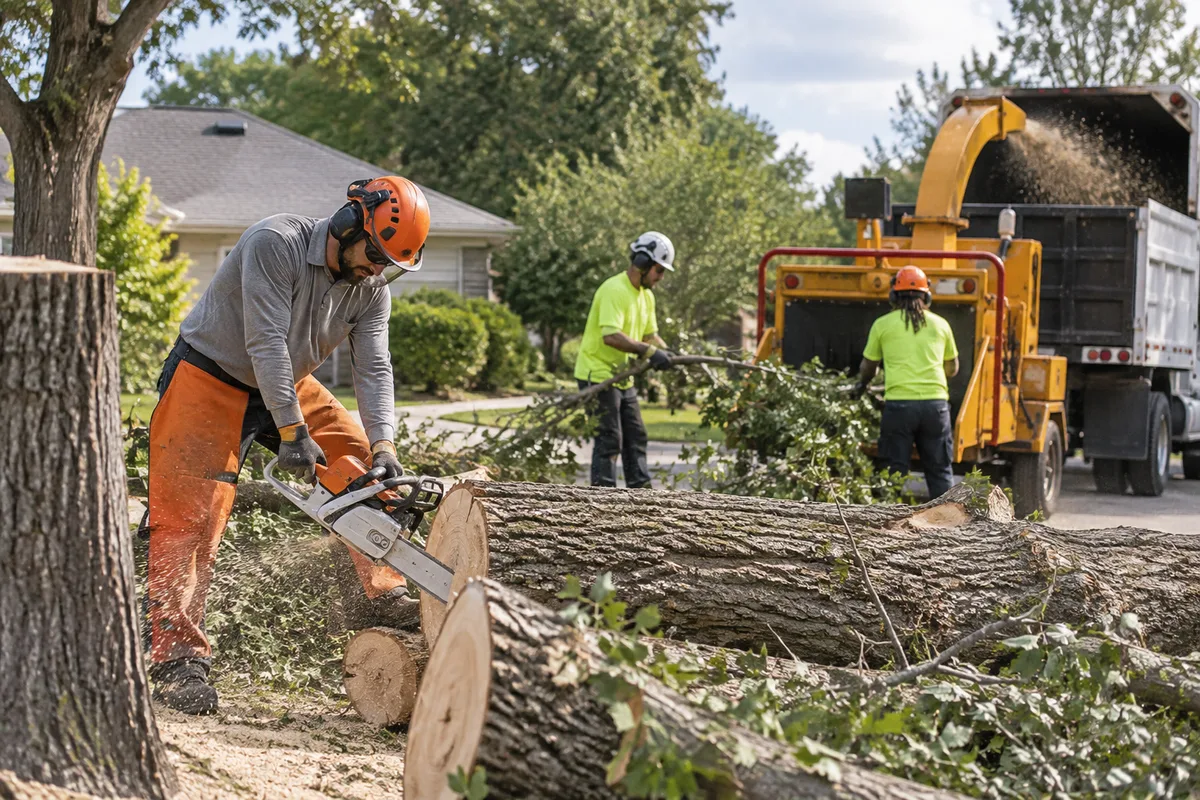
Local SEO is the work of making your business show up for searches that name your town or locality, such as a service plus an area name. GullySales sets up locality pages, local citations and map listings so nearby customers find you before a competitor across town.
Also for tree service companies
- SEO for tree service companies
- Websites for tree service companies
- PPC ads for tree service companies
- Lead generation for tree service companies
- Digital marketing for tree service companies
- Reputation management for tree service companies
- Branding and identity for tree service companies
- Social media for tree service companies
Sales and marketing for tree service companies, the overview.
Last updated 14 Nov 2026.
For tree service companies
Where it usually goes wrong, and what we would do.
“Your yard is in the wrong town for your best work”
Map results follow the pin, and the mature oaks stand in older neighbourhoods twenty minutes away where you have no address at all.
“A service area business hides the address on purpose”
Homeowners never visit a tree company, and a half-finished listing showing a yard on an industrial road reads as the wrong kind of business.
“Photographs of the equipment answer the real question”
A listing with a bucket truck over a roof and a stump grinder at work tells a homeowner you own the gear, which is what sits behind the bid.
What we do
What we deliver for tree service companies.
The work available for this need. We agree the deliverables and responsibilities for your engagement in writing.
The profile set up as a service area business
Ownership confirmed, the address hidden, the towns you actually drive to listed, and the categories set to tree work rather than general contracting.
Result: You appear in the towns you serve.
Services and equipment listed on the profile
Removal, trimming, stump grinding, emergency response and plant health care added as services, with the crane and bucket truck named where a homeowner reads.
Result: The whole job list is visible before anyone calls.
Photographs refreshed from real jobs
Crane picks, climbers, grinders and cleared yards uploaded from the crews' own phones, replacing a set of stock images from three years ago.
Result: The listing looks like a working company.
A page on your site for every town you serve
Each town given a page naming its neighbourhoods, the species common there and a job you have done, instead of a list of towns in the footer.
Result: The map result has something to sit on.
A review reply that names the job and the town
Every review answered from the office with a line about the work and where it was, which is the part of the page the next searcher reads.
Result: Your profile reads as local work across your whole area.
Profile calls and direction requests reported
What the listing produced, broken out by town and read against the baseline taken before anything on it was changed.
Result: You can see which town deserves a page of its own.
How the result is measured
- Map pack ranking
- Local search visibility
- Enquiries by locality
Recorded as a baseline before work starts, so every later report has an honest comparison.
What Google weighs here
How a household with a dangerous or overgrown tree finds a tree service nearby, and what to fix first.
- Primary category
- Choose Tree service as the primary. Add Landscaper or Garden service only for work you take. A crew that also clears dead branches after rain can add that to the services, not to the category.
- Service area, hidden address
- If customers do not visit the yard, list as a service area business and hide the address. Add the towns and the roads you work in, and keep the yard's location to the equipment photographs.
- Jobs named as customers say them
- List tree felling, pruning, dead branch removal, coconut and palm trimming, stump removal and chipping as services. A homeowner with a leaning tree wants a line that names the problem.
- Permission for felling
- In some cities felling needs the local tree officer's permission. Say so on the profile and say whether you help apply. A customer who learns this after the quote blames the contractor.
- Safety and equipment photographs
- Show harnesses, ropes, the chipper and the crew working with protective gear. A homeowner judging safety wants to see a crew that looks like it knows how to bring a tree down.
Who it is for
This is written for these tree service companies.
- Residential removal and pruning companies running one or two crews
- Climbing and crane removal specialists
- Stump grinding operations
- Plant health care and consulting arborist practices
- Storm response and emergency tree companies
- Land clearing contractors working for builders
- Utility line clearance contractors
- Tree divisions inside a landscape maintenance firm
- Companies bidding municipal and commercial contracts
Before you decide
When this may not be the right fit.
- You do not want your yard address shown and the profile is not set up as a service area business, so publishing it would expose it.
- Your crews work in towns where you could not honestly claim a location, so a listing there would be flagged.
- Nobody will keep photographs and hours current, so the profile would show last season's work.
Before you decide
Agree the work. Know how to judge it.
Local SEO for tree service companies: use these checks to prepare, choose the scope, and review what changes.
Bring the right evidence
Confirm the real business address, service area, contact details, and who controls the business listings. Keep examples of calls that came from the wrong location or asked for a service you do not provide.
Make the scope clear
Choose the locations you actually serve and the information each needs. Agree who approves listing changes, responds to enquiries, and keeps opening hours accurate.
Check the work in use
Check the journey from a local search to a call or enquiry on a phone. The address, service area, and description should agree across your website and listings.
Know when to change course
Do not create an office claim for a place where you only serve customers remotely. Clear service coverage is more useful than a misleading local presence.
These are discussion points, not a fixed package. GullySales confirms the deliverables, responsibilities, fee, and term in writing after reading your brief and speaking with you.
Before we start
What to have ready before the work starts.
The records, access and decisions this work needs from tree service companies. Anything missing is noted in the written scope, with who will supply it.
- Owner access to the Maps listing
- Owner or manager rights to the Google Business Profile, not a staff login borrowed from someone who left. Without them we cannot edit services or photographs. If a former agency claimed the listing, the first task is getting ownership back, and nothing else changes until that is done.
- The yard address and your wish about it
- The place the trucks start from and whether you want it public. A service area business can hide it, and plenty of yards sit at a home. Missing a decision, we leave the address visible only if you already show it elsewhere online.
- Photographs of trucks, chipper and crane
- Clear pictures of the equipment, with the logo visible, taken in daylight. Phone quality is acceptable. If none exist, the first crew task becomes a photography session, and the profile shows stock images until it is done.
- A list of towns with their tree rules
- The towns you cover and what each requires for a removal, whether a permit, a notice or nothing at all. The town pages carry a short note on it. Missing facts are left out rather than guessed, and we tell homeowners to check with the town.
How it works
How the local SEO work runs
The work itself, in order. How an engagement starts, from your brief to a written scope, is set out on our method page.
- 1
Choose the service area before the listing
We lay your jobs of the past year on a map and draw the area you want calls from, not the area your yard happens to sit in. You decide whether the yard address stays visible. A service area business can hide the street, which is how a crew working from an industrial estate keeps its home safe. We also check each town name against the way homeowners type it, since a profile naming a district nobody searches by wastes its best line.
- 2
Photograph the equipment where it stands
A crew lead photographs the truck, chipper, bucket truck or crane, and the climbing gear laid out, in the yard and at a job. Homeowners look at these to judge whether you can handle their tree. Photographs showing customers' houses or number plates are left out.
- 3
Write services and equipment onto the profile
Removal, pruning, stump grinding and storm clean-up go in as separate services, each with a line in your words. The equipment is named so that a search for crane removal can find you. You read every line for work you do not actually do.
- 4
Build a page for each town on the list
Each town on your list gets a page on the site with its own jobs, photographs and local note. The profile links to the town page nearest the searcher where it can. Towns where you have no finished job wait until a crew has worked there.
- 5
Read calls and directions against the start
We note the calls, direction requests and message taps the profile shows now, then compare them after the changes. Reviews are read for the town names they mention. You see which towns return calls and which only return views.
Where this fits
Three pieces of sales work, in this order.
This work sits inside sales process design, at stage 1, prospecting and lead generation. The audit comes before it, and sales management keeps it running.
Step 1
Sales audit
Find where deals are being lost and what to fix first.
Start here if you cannot say where orders are lost.
Step 2 · you are here
Sales process design
One written way to sell, from first enquiry to repeat order.
Start here if every salesperson sells differently.
Step 3
Sales management
A target, a review routine and someone who owns the number.
Start here if the team has targets and no routine.
FAQ
Questions owners ask before they call.
Not here? More answers, or ask on WhatsApp.
We work in nine towns. Do we need nine listings?
Why are we below a company with fewer reviews?
Can we use emergency or 24 hours on the profile?
Which photographs help most, trees coming down or the cleared site?
Can we change the service area after the listing is live?
Why does a rival with fewer reviews sit above us?
How much does it cost?
How long is the contract?
How soon will we see results?
Who will actually do the work?
More for tree service companies
Related work to consider.
Closest to this: search and visibility
Also for tree service companies
Or start from the overview: sales and marketing for tree service companies.
Your next practical step
Tell us what you are trying to grow, and we will read it before we call.
Eight short steps, mostly taps. Skip anything you would rather answer on the call.