Tree service companies · Website
Put the insurance certificate and a real removal where the homeowner lands.
A website for a tree service company is the page a nervous homeowner checks to decide whether to let a stranger climb their tree. GullySales builds the pages around proof of cover, real work and a way to ask for an estimate from a phone.
Scope, fee, reporting and term are agreed in writing after we have read your brief and spoken to you.
What website means
A website is the page a customer lands on after searching, clicking an advert or scanning a code, and it decides whether they call or leave. GullySales builds and maintains sites that load quickly, explain the offer plainly and make the enquiry form or phone number easy to find.
Also for tree service companies
- SEO for tree service companies
- Local SEO for tree service companies
- PPC ads for tree service companies
- Lead generation for tree service companies
- Digital marketing for tree service companies
- Reputation management for tree service companies
- Branding and identity for tree service companies
- Social media for tree service companies
Sales and marketing for tree service companies, the overview.
Last updated 14 Nov 2026.
For tree service companies
Where it usually goes wrong, and what we would do.
“The visitor is on a phone, looking at the tree”
The homeowner stands in the yard with the problem in view. They want a number to tap, a form that takes a photograph and a clear sign that you serve their town. A page that needs a long scroll to find the phone is closed.
“Stock photographs of climbers undo the trust you need”
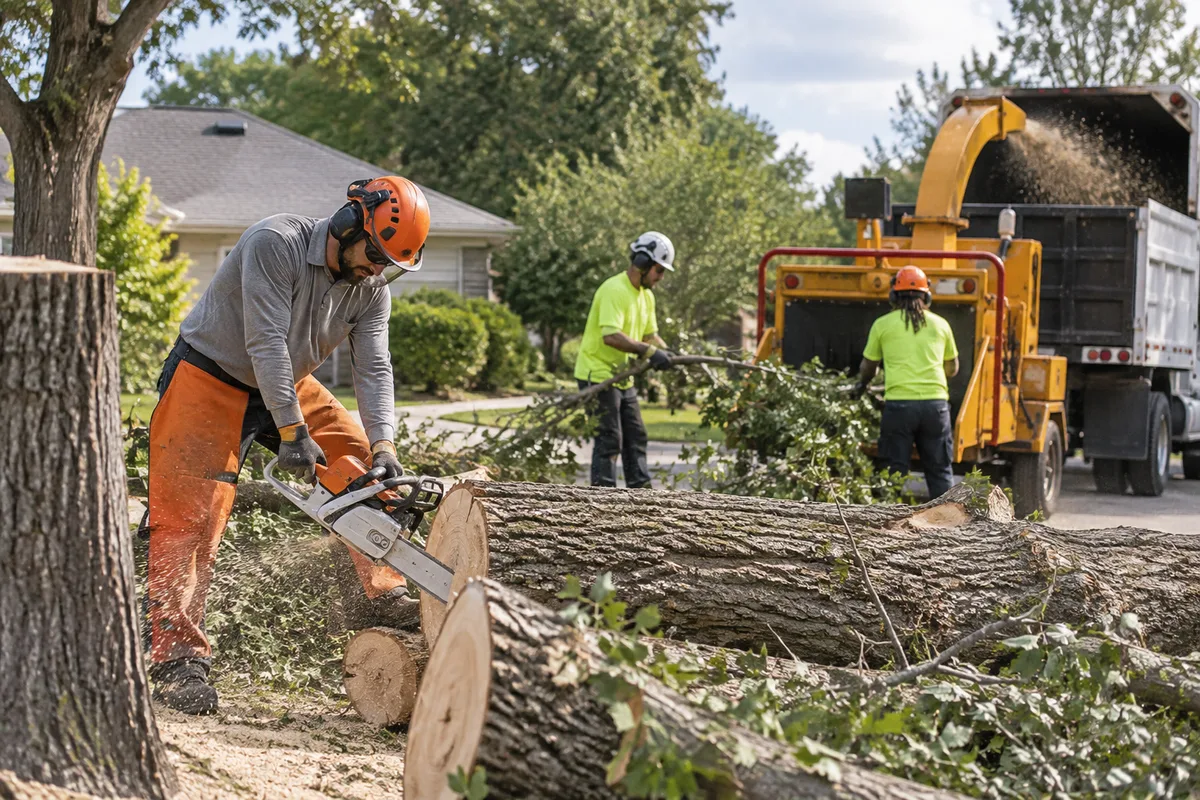
A catalogue picture of a smiling arborist says nothing about your crew. Real photographs of your trucks, your rigging and a finished yard with no ruts show that the work is done carefully, by people the owner could meet.
“One page for tree removal cannot serve every search”
Someone typing storm damage, stump grinding or hazardous tree has a different worry from someone seeking plant health care. A page for each service and each town you cover answers the exact question and lets the search engine match it.
“Commercial buyers check the site before they reply”
A property manager or board member who receives your outreach will open the website. They look for insurance, the kinds of property you serve and a clear way to request a bid. A homeowner-only site tells them you are not for them.
What we do
What we deliver for tree service companies.
The work available for this need. We agree the deliverables and responsibilities for your engagement in writing.
A proof section above the fold
Your insurance certificate, arborist credentials and safety record set near the top of the home page, with a note on how to request the document.
Result: A visitor sees you are insured before reading a single price.
Service pages for removal, pruning, stumps and storm work
A page per service, each describing the job, the equipment and what the clean-up includes, using your own photographs.
Result: A visitor searching for one job reaches the page written for it.
Town pages with the local permit note
A page for each town you cover, with what residents should check on permits, protected trees and HOA rules, pointing to the town or county for the rule.
Result: The local searcher finds a page that knows their town.
An estimate form that accepts photographs
A short form asking for the address, the tree and a picture, which also records where the enquiry came from.
Result: You can judge the job before a truck goes out.
A page for HOAs and property managers
A separate page describing annual inspections, contract work and the paperwork you supply, with a bid request form for managers.
Result: Contract buyers see that you serve properties like theirs.
Storm banner ready to switch on
A notice and emergency number prepared in advance, so it can be shown after a storm and taken down once the crews are booked.
Result: The site matches the week the phone is ringing.
How the result is measured
- Page load time
- Bounce rate
- Enquiries from the website
Recorded as a baseline before work starts, so every later report has an honest comparison.
Questions the site must answer
What a homeowner or board wants settled on a tree company's site, and the page that settles it.
- Are you insured?
- A proof section above the fold with the current certificate of insurance and credentials, since the visitor is comparing you with a man with a pickup.
- What will it cost?
- A cost page naming height, lean, closeness to the house, crane access and disposal as what moves the price.
- Can I send a photo of the tree?
- An estimate form that accepts photographs and the address, because the visitor is looking at the tree on a phone.
- Do you work in my town?
- A town page for each place you cover, with real jobs there and a line telling the visitor to check local permit rules.
- Can you handle our community?
- A page for HOAs and property managers listing contract work, insurance, references and who the board contacts.
- Are you working after the storm?
- A storm banner kept ready to switch on, giving how to reach you and what you make safe first.
Who it is for
This is written for these tree service companies.
- Residential removal and pruning companies running one or two crews
- Climbing and crane removal specialists
- Stump grinding operations
- Plant health care and consulting arborist practices
- Storm response and emergency tree companies
- Land clearing contractors working for builders
- Utility line clearance contractors
- Tree divisions inside a landscape maintenance firm
- Companies bidding municipal and commercial contracts
Before you decide
When this may not be the right fit.
- Nobody can update the site after storms or when insurance papers renew, and a stale certificate does harm.
- You have no job photographs of your own, so the site would use stock climbers and undo the trust it needs.
- Your estimate requests would go to a mailbox nobody checks, so the form would collect names that go nowhere.
Before you decide
Agree the work. Know how to judge it.
Websites for tree service companies: use these checks to prepare, choose the scope, and review what changes.
Bring the right evidence
List the pages that support a buying decision and the actions visitors must complete. Keep examples of failed forms, unclear product information, and questions your team answers repeatedly.
Make the scope clear
Agree the page list, content ownership, integrations, and who controls the domain and hosting. Include redirects and existing search traffic in a redesign brief, before changing addresses.
Check the work in use
Complete a real enquiry journey on a phone and a laptop. Check that the confirmation appears, the enquiry reaches the right person, and tracking records the action once.
Know when to change course
If visitors can enquire but the team does not follow up, start with the sales handover. A larger website will not resolve that delay.
These are discussion points, not a fixed package. GullySales confirms the deliverables, responsibilities, fee, and term in writing after reading your brief and speaking with you.
Before we start
What to have ready before the work starts.
The records, access and decisions this work needs from tree service companies. Anything missing is noted in the written scope, with who will supply it.
- Insurance certificate and licences
- Current documents, readable and complete. The proof section above the fold depends on them. If a certificate is out of date, the line stays off the site until the new one is in hand.
- Job photographs you own
- Pictures from your own jobs, with the town noted. Pictures taken by a former employee are acceptable if you hold the rights. If none exist, the site carries a photography task before launch rather than stock images.
- Login to the domain and hosting
- Where the domain is registered and where the site is held. Without it we cannot point the new site, and a former web person's account may need recovering first. We check ownership before any design work begins.
- A contact for each town's permit rules
- The office or page of each town that explains tree removal rules. We link to it. If you do not know it, we search, but you confirm that it is the right one.
- Names the crew agrees to show
- Which climbers and crew leads are happy to be named or photographed. Showing a face builds trust, but only with consent. If no one agrees, the site shows hands, kit and finished work.
How it works
How the website work runs
The work itself, in order. How an engagement starts, from your brief to a written scope, is set out on our method page.
- 1
Collect the proof before drawing a page
We gather what a nervous homeowner wants to see: the certificate of insurance, licences, the arborist's credentials, and job photographs with towns. The layout is built around what exists. You tell us what is missing so we do not draw a section for proof you cannot show.
- 2
Photograph a crew at work
A photographer or crew lead takes pictures on a real job: the climber in a harness, the rigging, the tidy site. These replace the stock photographs that undo trust. You decide which customers allow their property to appear.
- 3
Draft service pages from the estimate talk
We sit with your estimator and write removal, pruning, stump grinding and storm work as separate pages, each in the words the estimator uses on site. A visitor on a phone should see what happens next and what to send, and the estimator reads each page before it goes up.
- 4
Write the town pages with the permit note
Each town on your list gets a page with local jobs and a short note about what the town asks of a homeowner before removal. We tell visitors to check with the town for the current rules. Pages for towns where you have never worked wait. The page also names the nearest town you have worked in.
- 5
Build the estimate form and test it
The form accepts photographs and asks for the street and the tree. We test it from a phone with a real picture and watch where it reaches in the office. A separate page for HOAs and managers is built last and checked with a manager.
- 6
Compare form entries and calls with the start
After launch we count form entries, tracked calls and photographs received and set them beside the counts taken before. You see which pages the callers came through. Pages that carry visitors but no enquiries are reworked first.
Where this fits
Three pieces of sales work, in this order.
This work sits inside sales process design, at stage 1, prospecting and lead generation. The audit comes before it, and sales management keeps it running.
Step 1
Sales audit
Find where deals are being lost and what to fix first.
Start here if you cannot say where orders are lost.
Step 2 · you are here
Sales process design
One written way to sell, from first enquiry to repeat order.
Start here if every salesperson sells differently.
Step 3
Sales management
A target, a review routine and someone who owns the number.
Start here if the team has targets and no routine.
FAQ
Questions owners ask before they call.
Not here? More answers, or ask on WhatsApp.
Should the website show prices?
Do we need a separate page for every town?
Can we keep our existing website?
Should the site name the arborists on the crew?
Who keeps the site current once it is built?
How long is the contract?
How soon will we see results?
Who will actually do the work?
What do you need from us?
What if we are not happy with the work?
More for tree service companies
Related work to consider.
Closest to this: search and visibility
Also for tree service companies
Or start from the overview: sales and marketing for tree service companies.
Your next practical step
Tell us what you are trying to grow, and we will read it before we call.
Eight short steps, mostly taps. Skip anything you would rather answer on the call.