Quick-service restaurants · Website
Build a site where the menu, the nearest outlet and the order button sit together.
A website for a quick-service restaurant is the owned page that holds the menu, every outlet, the order route and the franchise information. GullySales works on its structure, its text and its link to listings and chat, without promising traffic or orders.
Scope, fee, reporting and term are agreed in writing after we have read your brief and spoken to you.
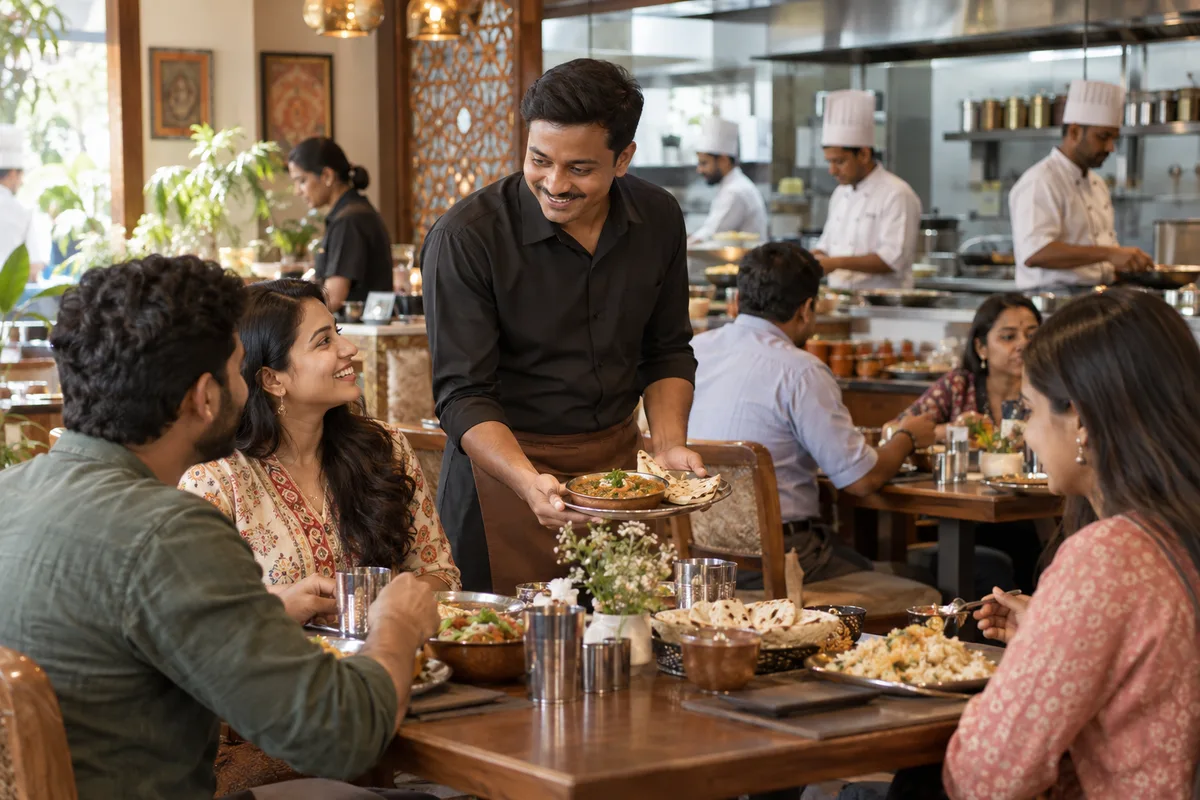
What website means
A website is the page a customer lands on after searching, clicking an advert or scanning a code, and it decides whether they call or leave. GullySales builds and maintains sites that load quickly, explain the offer plainly and make the enquiry form or phone number easy to find.
Also for quick-service restaurants
- SEO for quick-service restaurants
- Local SEO for quick-service restaurants
- Lead generation for quick-service restaurants
- Social media marketing for quick-service restaurants
- Content marketing for quick-service restaurants
- Buyer persona for quick-service restaurants
- CRM for quick-service restaurants
- Follow-up systems for quick-service restaurants
Sales and marketing for quick-service restaurants, the overview.
Last updated 18 Oct 2026.
For quick-service restaurants
Where it usually goes wrong, and what we would do.
“The first thing a phone user wants is the nearest outlet”
Someone arriving from a search needs the address, the timing and the order button within a moment. A home page that opens on a long brand video makes them go back.
“A site built for the brand, not the outlet”
A single page for the whole chain cannot say where to park at the highway outlet or that the food-court counter shuts with the mall. Outlet pages hold that detail.
“Ordering through a third party hides the customer”
If the order button leads only to an app, the site never learns who ordered. A direct order route, even through chat, keeps the contact and avoids repeated platform charges.
“Franchise visitors are lost on a diner's site”
A property holder landing on a menu-first home page cannot find the business case. A clear franchise entry, with formats and support, belongs in the main navigation.
What we do
What we deliver for quick-service restaurants.
Every deliverable, what it covers for you, and the result it is there to produce. Nothing here is an extra.
A menu as readable text
The full menu with combos, veg marks and descriptions, laid out for a phone and not as a picture.
Result: Anyone can read the menu on a phone.
An outlet page for each branch
Address, map pin, timings, seating, parking, photographs and order link for every outlet.
Result: Each branch has a page a searcher can land on.
A direct order route
A button leading to WhatsApp or the outlet's own order page, shown on every page.
Result: The site has an order route you own.
A franchise section
Formats, floor area, staffing, support and an enquiry form that reaches the brand head.
Result: A franchise buyer finds the business case at once.
Pages that load on a weak connection
Image sizes and layout set so pages open on a mobile network in a food court or on a highway.
Result: The site opens where the customer is standing.
Links with listings and social profiles
The site, the map listings and the social profiles carry the same names, timings and links.
Result: Every channel gives the same details.
How the result is measured
- Page load time
- Bounce rate
- Enquiries from the website
Recorded as a baseline before work starts, so every later report has an honest comparison.
Who it is for
This is written for these quick-service restaurants.
- Burger, sandwich and wrap chains
- Biryani and rice-bowl counters
- South Indian tiffin and dosa counters
- Pizza and pasta quick-service brands
- Fried chicken and snack outlets
- Food-court outlets inside malls and tech parks
- Highway and fuel-station outlets
- Franchise brands selling their next outlets
How it works
How the website work runs
The work itself, in order. How an engagement starts, from your brief to a written scope, is set out on our method page.
- 1
Confirm structure and content
We agree the site's pages and content needs before design begins, drawing on website strategy where it exists.
- 2
Design the site
Every page is designed against your brand identity and checked for how it should convert a visitor.
- 3
Build and test
The site is developed and tested across devices and browsers before anything goes live.
- 4
Load real content
Actual copy, images and information about your business replace placeholder content before launch.
- 5
Launch and hand over access
The site goes live with domain, hosting and content management access clearly handed to you.
Where this fits
Three pieces of sales work, in this order.
This work sits inside sales process design, at stage 1, prospecting and lead generation. The audit comes before it, and sales management keeps it running.
Step 1
Sales audit
Find where deals are being lost and what to fix first.
Start here if you cannot say where orders are lost.
Step 2 · you are here
Sales process design
One written way to sell, from first enquiry to repeat order.
Start here if every salesperson sells differently.
Step 3
Sales management
A target, a review routine and someone who owns the number.
Start here if the team has targets and no routine.
FAQ
Questions owners ask before they call.
Not here? More answers, or ask on WhatsApp.
Do we need our own site if we are on delivery apps?
Should the site take online orders itself?
How many pages do we need?
How much does it cost?
How long is the contract?
How soon will we see results?
Who will actually do the work?
What do you need from us?
What if we are not happy with the work?
More for quick-service restaurants
Everything else we would do for you.
Closest to this: search and visibility
Also for quick-service restaurants
Or start from the overview: sales and marketing for quick-service restaurants.
Your next practical step
Tell us what you are trying to grow, and we will read it before we call.
Eight short steps, mostly taps. Skip anything you would rather answer on the call.