Wildlife tour companies · Lead generation
Bring in guests who already know which park they want to visit.
Lead generation for a wildlife tour company means attracting guests who are planning a specific park, zone and month, rather than anyone curious about animals. GullySales works on park-led pages, enquiry capture and the reply that goes out when a planner asks about Tadoba, Kabini or Kaziranga.
Scope, fee, reporting and term are agreed in writing after we have read your brief and spoken to you.
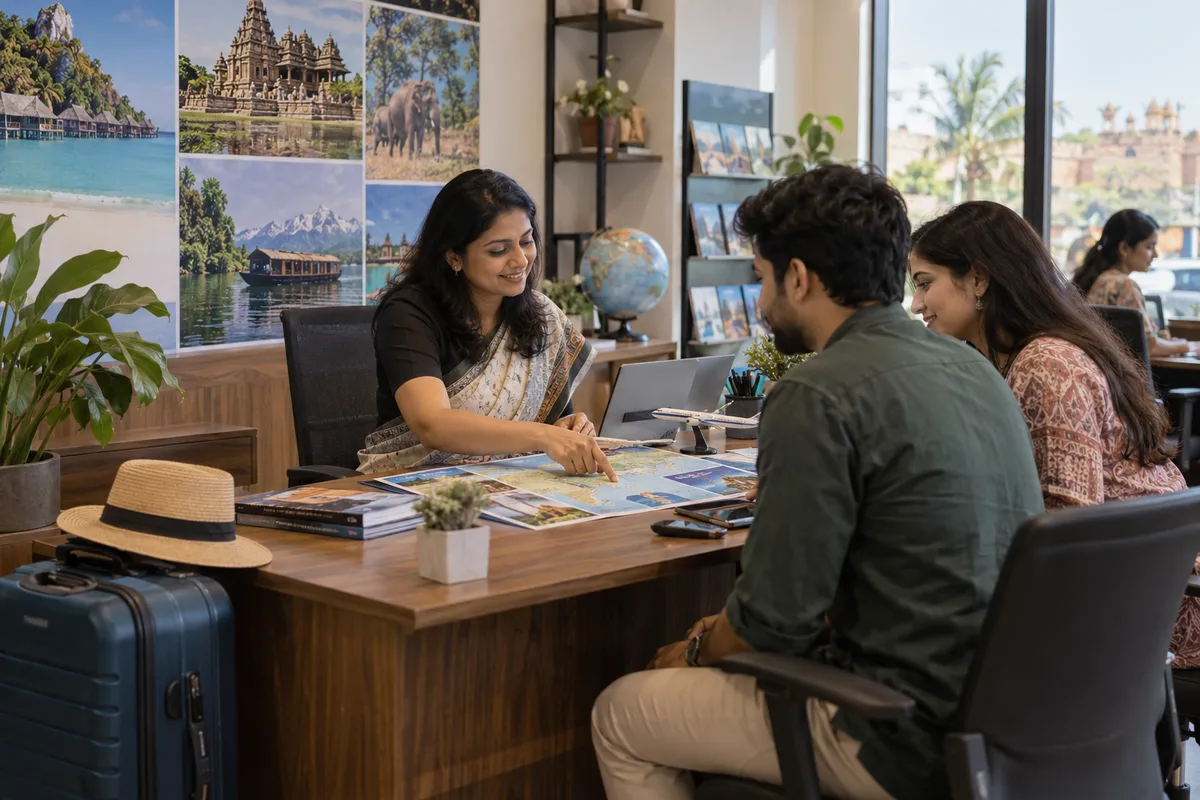
What lead generation means
Lead generation is the combined work of every channel that brings in a new enquiry, whether from search, adverts, referrals or a stall at an exhibition. GullySales runs these channels together and reports the number of enquiries each one produced, not the activity behind it.
Also for wildlife tour companies
- CRM for wildlife tour companies
- Follow-up systems for wildlife tour companies
- SEO for wildlife tour companies
- Local SEO for wildlife tour companies
- Social media marketing for wildlife tour companies
- Content marketing for wildlife tour companies
- Buyer personas for wildlife tour companies
- WhatsApp marketing for wildlife tour companies
Sales and marketing for wildlife tour companies, the overview.
Last updated 18 Oct 2026.
For wildlife tour companies
Where it usually goes wrong, and what we would do.
“A park name is a stronger signal than the word safari”
A guest typing Bandhavgarh in February is weeks from paying an advance. A guest typing jungle safari is browsing. Spend the effort on pages and ads that answer the park-specific search, because that buyer is choosing an operator now.
“Photographers and families are two different leads”
A photographer asks about zones, vehicle seating and the naturalist. A family asks about child age rules, lodge food and drive length. One enquiry form and one reply for both loses each of them to an operator who spoke to their question.
“The group leader is the lead, and the group is the sale”
In a friends or office trip, one person collects the questions and carries the quote to everyone else. Capture that person's name, the group size and the dates, and write the quote so it can be forwarded without edits.
“Overseas agents are leads that never search for you”
A foreign agent selling India wildlife trips looks for a ground operator through contacts and capability notes, not a Google search. Treat the agent as a lead with its own list, its own note and its own follow-up.
What we do
What we deliver for wildlife tour companies.
Every deliverable, what it covers for you, and the result it is there to produce. Nothing here is an extra.
Park enquiry pages
A page for each park you run, with the zones, stay options and closed season, ending in an enquiry box that asks for month and group size.
Result: Each enquiry arrives already tagged with a park and a travel month.
Photographer and family enquiry forms
Two short forms that ask different questions, one on gear and group size, one on children and food.
Result: The owner can see at a glance which kind of guest wrote in.
Search campaigns by park
Google Ads built around park names and stay searches, each pointing to the matching park page instead of the home page.
Result: Every ad has its own landing page that you can open and read.
A forwardable quote for the group leader
A one-page plan with drives, zone, naturalist and stay, written so the group leader can send it to the rest of the group unchanged.
Result: The quote reads clearly in a family or friends WhatsApp group.
Overseas agent capability note
A short document that says which parks you run yourselves, how groups are handled on the ground and who answers an agent's query.
Result: An agent receives one note instead of a long email thread.
Lead source record
A simple record of where each enquiry came from: search, Instagram, referral, lodge or agent.
Result: You can read off which source brought each paid booking.
How the result is measured
- Enquiries generated
- Cost per enquiry
- Enquiries by source
Recorded as a baseline before work starts, so every later report has an honest comparison.
Who it is for
This is written for these wildlife tour companies.
- Tiger reserve safari packagers
- Bird watching and birding tour leaders
- Photography tour organisers for wildlife photographers
- Jungle lodge and resort tour desks
- Family wildlife holiday planners
- School and nature club trip operators
- Elephant, rhino and Kaziranga specialists
- Corporate off-site operators using jungle lodges
How it works
How the lead generation work runs
The work itself, in order. How an engagement starts, from your brief to a written scope, is set out on our method page.
- 1
Understand your capacity
We agree how many enquiries your sales team can actually handle well, so the system is not built to overwhelm it.
- 2
Audit current sources
We check what already brings in enquiries today, even informally, before adding anything new.
- 3
Strategise the channel mix
Content, search and paid channels are chosen based on where your buyers already look.
- 4
Implement capture and follow-up
Pages, forms and a follow-up process are built and connected end to end.
- 5
Measure and optimise
We track enquiry volume and quality and adjust the channel mix to match.
Where this fits
Three pieces of sales work, in this order.
This work sits inside sales process design, at stage 1, prospecting and lead generation. The audit comes before it, and sales management keeps it running.
Step 1
Sales audit
Find where deals are being lost and what to fix first.
Start here if you cannot say where orders are lost.
Step 2 · you are here
Sales process design
One written way to sell, from first enquiry to repeat order.
Start here if every salesperson sells differently.
Step 3
Sales management
A target, a review routine and someone who owns the number.
Start here if the team has targets and no routine.
FAQ
Questions owners ask before they call.
Not here? More answers, or ask on WhatsApp.
Should we pay for ads or build park pages first?
How do we tell a serious guest from a browser?
Do we need leads from every park we run?
How much does it cost?
How long is the contract?
How soon will we see results?
Who will actually do the work?
What do you need from us?
What if we are not happy with the work?
More for wildlife tour companies
Everything else we would do for you.
Closest to this: leads and follow-up
Also for wildlife tour companies
Or start from the overview: sales and marketing for wildlife tour companies.
Your next practical step
Tell us what you are trying to grow, and we will read it before we call.
Eight short steps, mostly taps. Skip anything you would rather answer on the call.