Camping and glamping operators · Lead generation
Turn the reel viewer into a group that sends the advance for Saturday.
Lead generation for a camping or glamping operator means finding the organisers who book tents for a weekend: friend groups, couples, families and office teams. GullySales builds the pages, the enquiry route and the source tracking that move a viewer from a reel to a paid advance.
Scope, fee, reporting and term are agreed in writing after we have read your brief and spoken to you.
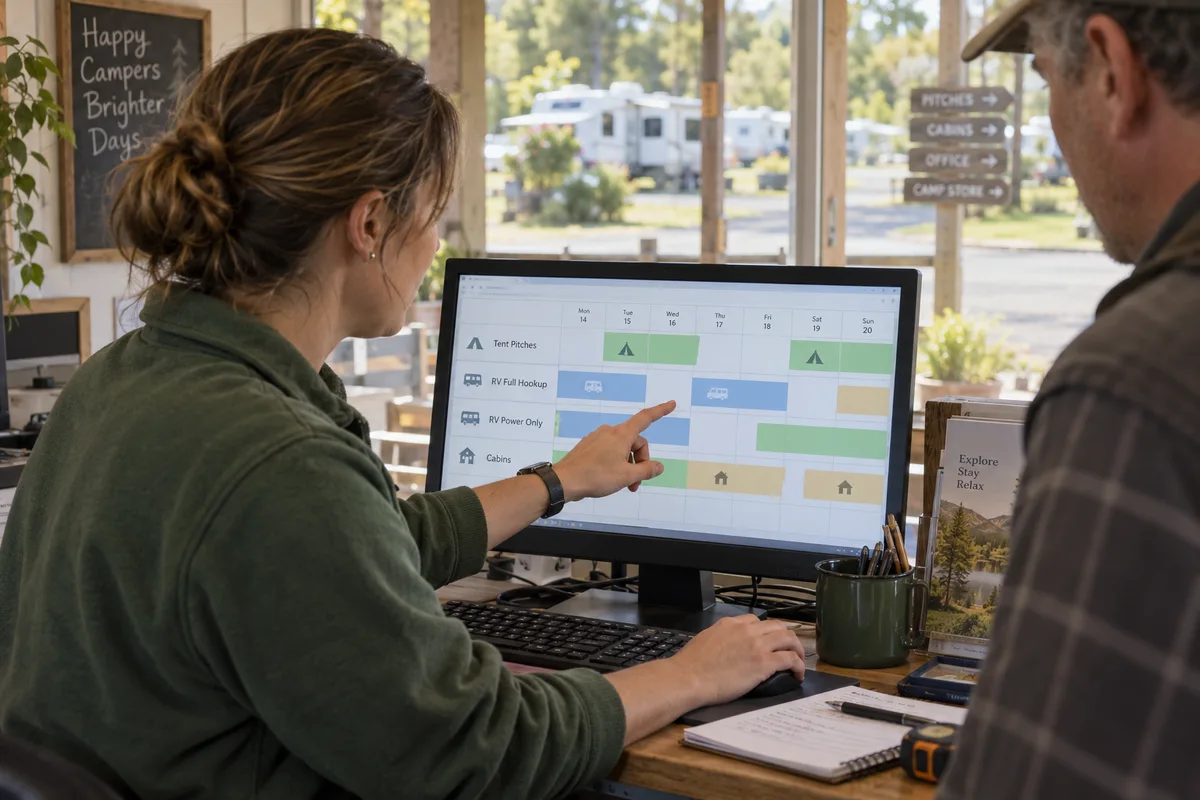
What lead generation means
Lead generation is the combined work of every channel that brings in a new enquiry, whether from search, adverts, referrals or a stall at an exhibition. GullySales runs these channels together and reports the number of enquiries each one produced, not the activity behind it.
Also for camping and glamping operators
- CRM for camping and glamping operators
- Follow-up systems for camping and glamping operators
- SEO for camping and glamping operators
- Local SEO for camping and glamping operators
- Social media marketing for camping and glamping operators
- Content marketing for camping and glamping operators
- Buyer personas for camping and glamping operators
- WhatsApp marketing for camping and glamping operators
Sales and marketing for camping and glamping operators, the overview.
Last updated 13 Nov 2026.
For camping and glamping operators
Where it usually goes wrong, and what we would do.
“The organiser books for the whole tent group”
One person in a friend group asks for dates, tents and the price, and then shares your reply. That reply has to carry the answers the others will ask.
“A reel creates interest, not an enquiry”
People like the video, scroll on and forget the name. An enquiry exists only when the viewer has a clear button for dates and price.
“Corporate teams plan well ahead”
A human resources coordinator needs activities, headcount limits, meals and a written quote. Treating that enquiry like a weekend couple loses it.
“Aggregators hide the guest from you”
A booking through a platform may leave you without a number. A direct route lets you invite the same guests back without paying commission again.
What we do
What we deliver for camping and glamping operators.
The work available for this need. We agree the deliverables and responsibilities for your engagement in writing.
Dates and price enquiry form
A form asking dates, group size, tent type and a number, with the camp's rules shown above it.
Result: Each enquiry arrives ready to quote.
Group and corporate page
A page covering headcount, activities, meals, safety and how to request a written quote.
Result: Organisers have what they need to decide.
Source labels
Instagram, Google, referral and aggregator enquiries tagged on arrival.
Result: You can see where paying guests came from.
Direct booking route
A WhatsApp or website option for repeat guests so they book without a platform.
Result: Returning guests keep their contact with you.
Season list of organisers
A record of the people who booked groups, to be invited back in the next season.
Result: Past organisers are asked before new ones.
How the result is measured
- Enquiries generated
- Cost per enquiry
- Enquiries by source
Recorded as a baseline before work starts, so every later report has an honest comparison.
What to capture or send
Note what a group organiser tells you the first time they ask.
- Dates and number of guests
- Saturday night or a weekday, adults and children, so the quote and the tent count are right at the first reply.
- Who is the organiser
- The person who will pay the advance, which may differ from the person messaging, so the reply goes to the decider.
- Tent type or experience wanted
- Dome, Swiss tent or bonfire night. It sets the price quoted and the photograph sent with it.
- Where they found the camp
- A reel, a friend, an aggregator or Maps. One word in the chat is enough to count the source.
- Pickup point or own vehicle
- Their city or station. It tells you whether to send the road-in note and the last stretch directions.
Who it is for
This is written for these camping and glamping operators.
- Lakeside tent camps near Pune and Mumbai
- Glamping domes and luxury tents in the hills
- River rafting and riverside camps in Rishikesh
- Desert camps in Rajasthan
- Coffee estate and forest campsites in Coorg and Chikmagalur
- Himalayan camps in Himachal and Uttarakhand
- Caravan and bonfire sites near cities
- Corporate team camps and school outbound campsites
Not for
It is not the right fit if.
- No one answers enquiries on a Thursday, when weekend groups ask, so more reel viewers would go to another camp.
- The tent prices and the advance rule are not fixed, and each reply would quote something different.
- You hope to fill monsoon weekends, when the camp itself cannot promise road access.
Before you decide
Agree the work. Know how to judge it.
Lead generation for camping and glamping operators: use these checks to prepare, choose the scope, and review what changes.
Bring the right evidence
Define the organisations or buyers you can serve and the reasons they would consider a conversation. Bring examples of accepted and rejected prospects so the selection rule is visible.
Make the scope clear
Agree the research sources, contact approach, qualification rules, and handover. Clarify which meetings count as accepted and what happens to replies that are not ready to buy.
Check the work in use
Review why a prospect was selected and what was learned from the response. Count held, relevant conversations separately from contacts found, messages sent, or meetings booked.
Know when to change course
If the same objection appears repeatedly, adjust the offer or buyer group before increasing outreach. Respect a request to stop contact and keep the exclusion in the record.
These are discussion points, not a fixed package. GullySales confirms the deliverables, responsibilities, fee, and term in writing after reading your brief and speaking with you.
Before we start
What to have ready before the work starts.
The records, access and decisions this work needs from camping and glamping operators. Anything missing is noted in the written scope, with who will supply it.
- The booking register for the last season
- Lead work is judged against what actually happened, so we need your register or notebook of confirmed bookings with dates, group sizes and advances. A photographed notebook is acceptable if the entries can be read. Without it we cannot say which source brought paying groups, and the plan falls back on guesses about reels rather than evidence.
- Access to the Instagram and map listing
- We need owner or admin access to the Instagram account, the Google Maps listing and any aggregator dashboard, so that links and buttons can be labelled by source. View-only access is acceptable for the dashboards. If only a former agency holds the login, we cannot label those sources and their enquiries stay uncounted until access returns.
- Your tent capacity and weekend limits
- An enquiry form that asks for twenty guests is cruel when you can host twelve. Bring the number of tents, beds per tent, and the largest group you can seat for dinner on one night. A rough figure agreed with the manager works. Without it the form invites groups you must later refuse.
- A decision on who answers the enquiry
- Someone must reply to a weekend enquiry arriving on a Tuesday. Name that person, and a back-up for when the manager is at the camp without signal. This is a decision only you can make, and it can be a single name written on paper. If it is missing, every enquiry waits for whoever happens to look.
- Rules for groups, alcohol and bonfires
- The corporate and group page must state what you allow, and you set those rules, after checking local permissions with your own adviser. Bring them as a short note in your own words. If the rules are missing, the page stays silent, and organisers phone with the same questions, which is the delay this work removes.
How it works
How the lead generation work runs
The work itself, in order. How an engagement starts, from your brief to a written scope, is set out on our method page.
- 1
Sort last season's booking chats by organiser
We start with the WhatsApp chats, call notes and booking register from your busy weekends, and sort each confirmed group by who organised it and how they first found you. You tell us which groups paid the advance and which went quiet. When the step is over you hold a plain list of organisers, marked friend group, couple, family or office team, with a first guess at the reel or listing that brought each one.
- 2
Count enquiries against paid advances
Before anything changes we record how many enquiries reached you from each place, how many named a date, and how many turned into an advance. You supply the figures from your own register and the bank or UPI entries, and we do not estimate any of them. The result is a starting sheet, one row for each source, which every later change is read against, so a new reel gets judged fairly.
- 3
Write the dates and price enquiry form
We draft the questions an organiser must answer before you can quote: dates, number of guests, tent type, and whether the group includes children or elders. You decide which of them are compulsory and which a nervous first-time visitor can skip. The form is kept short enough to finish on a weak signal at the roadside, and it opens on the screen the reel link lands on.
- 4
Build the page for office and school groups
Corporate and outbound groups plan ahead, so we write one page for them with the activities, the sleeping arrangement, the food options and what a facilitator or teacher needs to know. You supply the group sizes you can host and the rules on alcohol and bonfires. A team lead can forward this page to a manager for approval without calling you first.
- 5
Label each source and test the route
We put a source label on the reel link, the map listing button, the aggregator referral and the direct booking number. Then we send test enquiries from a phone, check that each lands in your sheet with the right label, and see who on your team replies. You confirm who owns the reply for a weekend enquiry, including when the manager is at the camp with no signal.
- 6
Read the season against the starting sheet
After the first set of weekends we put the new counts beside the starting sheet: enquiries by source, dates asked, advances received. You tell us which groups genuinely arrived. We separate organisers who came from reels, from the map listing and from aggregators, and agree which source gets more effort next. We report what the record shows, never a promise of full weekends.
Where this fits
Three pieces of sales work, in this order.
This work sits inside sales process design, at stage 1, prospecting and lead generation. The audit comes before it, and sales management keeps it running.
Step 1
Sales audit
Find where deals are being lost and what to fix first.
Start here if you cannot say where orders are lost.
Step 2 · you are here
Sales process design
One written way to sell, from first enquiry to repeat order.
Start here if every salesperson sells differently.
Step 3
Sales management
A target, a review routine and someone who owns the number.
Start here if the team has targets and no routine.
FAQ
Questions owners ask before they call.
Not here? More answers, or ask on WhatsApp.
Should we stay on aggregator platforms?
How do we get leads from companies?
Can you promise full weekends?
Does a campsite need a lead form on its website?
Who answers the enquiry form when it arrives?
Do we need to stop listing on aggregators to use this?
How much does it cost?
How long is the contract?
How soon will we see results?
Who will actually do the work?
More for camping and glamping operators
Related work to consider.
Closest to this: leads and follow-up
Also for camping and glamping operators
Or start from the overview: sales and marketing for camping and glamping operators.
Your next practical step
Tell us what you are trying to grow, and we will read it before we call.
Eight short steps, mostly taps. Skip anything you would rather answer on the call.