Camping and glamping operators · Search engine optimisation
Be found for the camp near the city, the lake and the weekend.
SEO for a camping or glamping operator shapes your pages so people searching for a campsite near a city, a lake or a hill find yours. GullySales works on page structure, wording, photographs and the practical details that decide a booking.
Scope, fee, reporting and term are agreed in writing after we have read your brief and spoken to you.
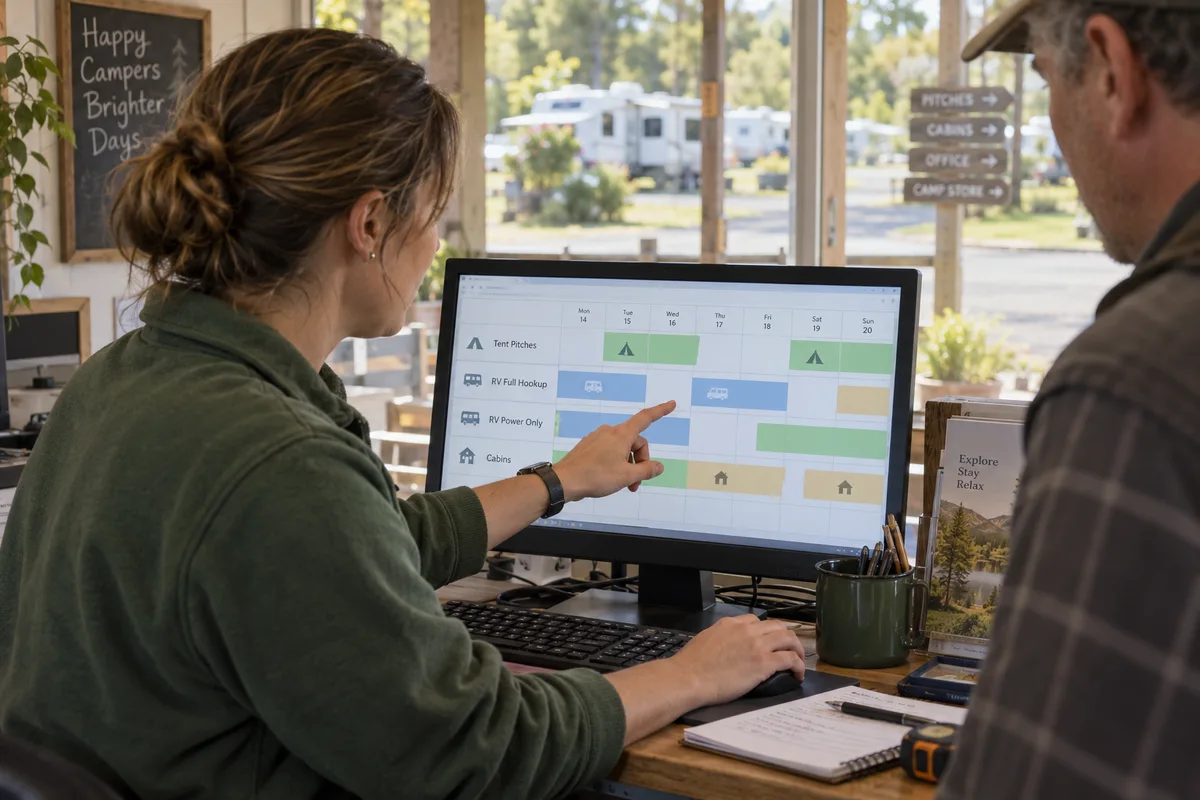
What search engine optimisation means
Search engine optimisation (SEO) is the work of getting your website to appear when a buyer searches Google for what you sell. GullySales builds pages around real search terms, fixes technical issues that block ranking, and tracks which searches actually bring enquiries.
Also for camping and glamping operators
- Local SEO for camping and glamping operators
- Website for camping and glamping operators
- Lead generation for camping and glamping operators
- Social media marketing for camping and glamping operators
- Content marketing for camping and glamping operators
- Buyer personas for camping and glamping operators
- CRM for camping and glamping operators
- Follow-up systems for camping and glamping operators
Sales and marketing for camping and glamping operators, the overview.
Last updated 13 Nov 2026.
For camping and glamping operators
Where it usually goes wrong, and what we would do.
“People search by place and by type”
A search for lakeside camping near a city names both the setting and the style. A page for each tent type and location matches those words better than one general page.
“The last stretch of road is part of the search”
Guests look for how to reach the site, where to leave the car and whether the road suits a small car. A page that covers the route answers a question competitors skip.
“A reel cannot be searched”
Video on social media brings viewers but cannot be read by a search engine. Text on your site is what lets a search match your camp.
What we do
What we deliver for camping and glamping operators.
The work available for this need. We agree the deliverables and responsibilities for your engagement in writing.
Location and tent-type pages
Separate pages for each site and stay type, with capacity, bedding, washrooms and rates written as text.
Result: A searcher lands on the page that matches the trip.
Route and arrival page
Directions from the nearest town, the last stretch, parking and the usual time to allow for travel, written with a map.
Result: A late arrival is less likely.
Seasons and weather page
What the camp is like in each season, how rain is handled and what to pack.
Result: Guests plan with the right expectations.
Photographs with descriptions
Images of tents, washrooms, the camp area and the view, each with a plain description.
Result: Pictures support the text and the search.
Technical check
Page speed, mobile layout and address data reviewed so the site works on weak signal.
Result: The site opens on a phone in the hills.
How the result is measured
- Ranking positions
- Organic traffic
- Enquiries from organic search
Recorded as a baseline before work starts, so every later report has an honest comparison.
Searches your buyers type
Match each search a city group types to the page that answers it.
- camping near Pune for the weekend
- A page for the camp stating the drive from the city, the tent types and the dates open, with a booking link.
- lakeside tent stay near [lake name]
- A page naming the lake, what can be seen from the tent and the shore access rules, with true photographs.
- glamping dome in [hill area]
- A page on the dome with the bed, the bathroom and the heater or fan, shown as the guest will find them.
- campsite with bonfire and washroom
- A page that answers the practical side: attached or shared washroom, bonfire rules and bedding supplied.
- corporate team outing camp
- A group page for offices and schools, with the activity list, capacity and an enquiry form.
Who it is for
This is written for these camping and glamping operators.
- Lakeside tent camps near Pune and Mumbai
- Glamping domes and luxury tents in the hills
- River rafting and riverside camps in Rishikesh
- Desert camps in Rajasthan
- Coffee estate and forest campsites in Coorg and Chikmagalur
- Himalayan camps in Himachal and Uttarakhand
- Caravan and bonfire sites near cities
- Corporate team camps and school outbound campsites
Not for
It is not the right fit if.
- The camp is not yet legally or locally cleared to run, and pages would promote a stay the operator may not offer.
- Road access changes with the season and nobody can keep the arrival page honest.
- You expect a first-page ranking for a city name against travel sites, which no page can promise.
Before you decide
Agree the work. Know how to judge it.
SEO for camping and glamping operators: use these checks to prepare, choose the scope, and review what changes.
Bring the right evidence
Bring the pages for the products or services you want to sell, the search queries available in your reports, and examples of enquiries from search. Separate branded searches from buyers discovering you for the first time.
Make the scope clear
Agree which pages and technical fixes come first, who can publish changes, and who supplies subject knowledge. Link search work to a relevant enquiry route on each priority page.
Check the work in use
Follow the trail from a relevant query to its landing page and then to an enquiry. Review whether those enquiries fit your offer, alongside indexing and search visibility.
Know when to change course
A ranking movement alone is not a buying signal. If traffic grows but relevant enquiries do not, revisit page intent and the offer before producing more pages.
These are discussion points, not a fixed package. GullySales confirms the deliverables, responsibilities, fee, and term in writing after reading your brief and speaking with you.
Before we start
What to have ready before the work starts.
The records, access and decisions this work needs from camping and glamping operators. Anything missing is noted in the written scope, with who will supply it.
- Search Console and analytics access
- These two tools show which searches already reach the site and what visitors do next. Add us as a user, or share a screenshot of the main reports if access is awkward. If the site has never been connected, we start the record from the day we connect it, and early comparisons will be thinner.
- A list of the cities your guests come from
- Search work is written around where guests live, so bring the cities from your register or the home towns guests mention on arrival. A rough ranking from the manager is enough. Without it we write for the nearest big city only and may miss a second city sending more weekend groups.
- Unedited photographs of every tent type
- We need current pictures of each tent type, the washroom with the door and light visible, the bedding, the dining area and the road in. Phone photographs are acceptable if they are recent and not filtered. Without them we cannot describe the stay truthfully and the pages would carry stock-style images guests distrust.
- The season and closure dates you will keep
- The seasons page must say when the camp is open, closed for monsoon or full of school groups. Bring the dates you actually plan to keep this year, decided by you. If they are undecided, we publish the page without dates and mark it for later, because a wrong closure date costs a booking.
- A person who knows the road in
- The route page depends on someone who has driven the last stretch repeatedly, such as a driver or the caretaker. Put them on a call with us for the length of one conversation. If nobody is available, the page stays generic, and guests keep calling for directions, which the page is meant to stop. Ask them to name the landmarks in the order a visitor passes them, including the point where phone signal drops.
How it works
How the search engine optimisation work runs
The work itself, in order. How an engagement starts, from your brief to a written scope, is set out on our method page.
- 1
List the searches around your nearest city
We begin with how people actually look for a camp: the city they live in, the lake, hill or river near you, the tent type and the weekend. You tell us which cities your guests travel from, and we check the search suggestions and the map results for each. When the step is over you hold a short list of searches by place and by type, with the page that should answer each one marked beside it.
- 2
Check what Google already shows for the camp
We search your camp name and the place names on a phone, as a guest would, and note which of your pages, listings and reels appear, and which competitor camps or aggregators sit above them. You give us read access to Search Console and analytics if they exist. We record the starting position of each key page in writing, so improvement is measured against a real baseline and not a feeling.
- 3
Decide which pages deserve to exist
A camp with one tent type and one lake needs fewer pages than a group of three sites. We propose the pages in a plain list, location, tent type, route, season, and you strike out any that describe something you do not offer. Only pages you can honestly stand behind go forward, and each is given one search it is meant to answer, so none of them competes with another.
- 4
Write the route page with the driver's eye
The last stretch of road decides whether a guest arrives calm or lost, so we write the route page using what your driver or manager tells us: the turn after the temple, the stretch without signal, the gate that looks closed. You check every landmark. We add a note for night arrivals, so the page answers the question a guest types while still in the car.
- 5
Pair the photographs with honest descriptions
You send unedited photographs of the tents, washroom, bedding, dining area and the view from the tent door. We write the descriptions and file names, and flag any image that promises something the camp does not offer, such as a lake view from a tent that faces the road. You approve each caption, because a guest will compare it with what they find on arrival.
- 6
Compare the search record after publishing
Once the pages are live we return to the starting record: which searches now show your pages, how many guests reached the enquiry form from them, and which of those paid an advance. You tell us what the booking register shows. We name the pages that carry weight and those that need rewriting, and we do not claim a ranking we cannot see in your own figures.
Where this fits
Three pieces of sales work, in this order.
This work sits inside sales process design, at stage 1, prospecting and lead generation. The audit comes before it, and sales management keeps it running.
Step 1
Sales audit
Find where deals are being lost and what to fix first.
Start here if you cannot say where orders are lost.
Step 2 · you are here
Sales process design
One written way to sell, from first enquiry to repeat order.
Start here if every salesperson sells differently.
Step 3
Sales management
A target, a review routine and someone who owns the number.
Start here if the team has targets and no routine.
FAQ
Questions owners ask before they call.
Not here? More answers, or ask on WhatsApp.
Do we need a separate page for each campsite?
Can you promise page-one results?
Is a blog useful for a campsite?
Should a campsite write about the nearby town or trek?
Will a page for the nearby trek help the camp?
Do we have to change our website to start SEO?
How much does it cost?
How long is the contract?
Who will actually do the work?
What do you need from us?
More for camping and glamping operators
Related work to consider.
Closest to this: search and visibility
Also for camping and glamping operators
Or start from the overview: sales and marketing for camping and glamping operators.
Your next practical step
Tell us what you are trying to grow, and we will read it before we call.
Eight short steps, mostly taps. Skip anything you would rather answer on the call.