Camping and glamping operators · Buyer persona
Know who books the tents, who pays and who worries about the night.
A buyer persona for a camping or glamping operator describes the people who book: the weekend friend group, the couple, the family, the office team. GullySales builds them from your bookings and enquiries so that pages and replies address a recognisable guest.
Scope, fee, reporting and term are agreed in writing after we have read your brief and spoken to you.
What buyer persona means
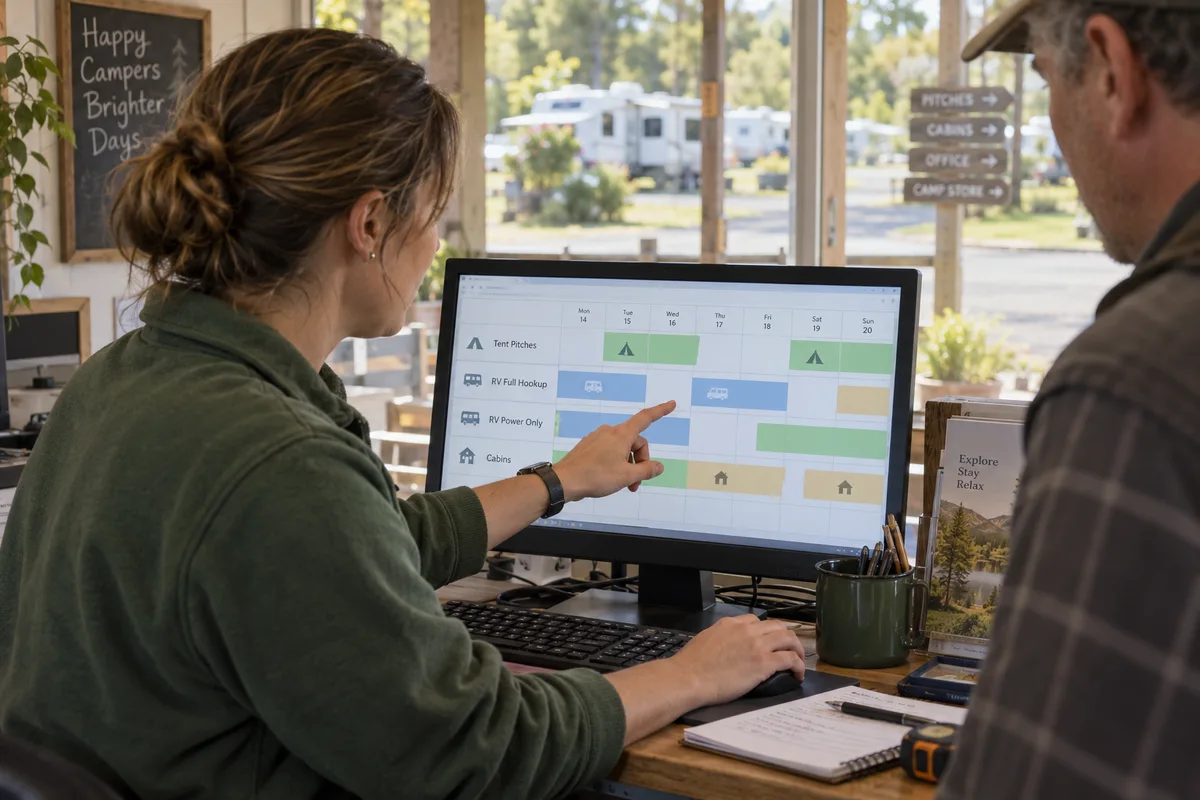
A buyer persona is a plain description of the kind of customer who actually buys from you. It includes what they search, what worries them and who else they ask before deciding. GullySales builds this from real enquiries and past sales rather than a generic template, then uses it to write every page and advert.
Also for camping and glamping operators
- Digital marketing for camping and glamping operators
- Lead generation for camping and glamping operators
- SEO for camping and glamping operators
- Local SEO for camping and glamping operators
- Social media marketing for camping and glamping operators
- Content marketing for camping and glamping operators
- CRM for camping and glamping operators
- Follow-up systems for camping and glamping operators
Sales and marketing for camping and glamping operators, the overview.
Last updated 13 Nov 2026.
For camping and glamping operators
Where it usually goes wrong, and what we would do.
“The couple looks for privacy and comfort”
A couple books a tent, a view and a quiet night. Their questions concern the bed, the washroom and the distance from other tents.
“The family looks for safety first”
Parents ask about water, fire, wildlife and what a child can do. Answer the safety question before the price.
“The friend group wants activities and a bonfire”
The organiser asks about music rules, the fire, meals and late checkout. The group decides together, so your reply should be easy to forward.
“The office team wants a plan”
A coordinator asks for headcount limits, activities, meals and a written quote. The decision involves a manager who has never seen the camp.
What we do
What we deliver for camping and glamping operators.
The work available for this need. We agree the deliverables and responsibilities for your engagement in writing.
Persona sheets from bookings
Short descriptions of the couples, families, groups and teams who book, drawn from your records.
Result: Your team writes for actual guests.
Question list per persona
What each persona asks before paying, in their own words.
Result: Replies start with the real concern.
Message openers
Distinct first lines for couples, families, groups and teams.
Result: The reply fits the reader.
Tent and package match
A note on which tent and activities suit each persona.
Result: Staff recommend what fits the guest.
Season review
A look at which personas booked and which did not, and what they asked.
Result: The next season's plan reflects who came.
How the result is measured
- Enquiry match to persona
- Conversion rate by persona
- Content aligned to persona
Recorded as a baseline before work starts, so every later report has an honest comparison.
Who is asking
Describe each booker by what they worry about before they pay the advance.
- The couple on a weekend away
- Wants privacy, a clean bed and a bathroom that works, and decides on the photograph of the tent interior.
- The parent planning a family trip
- Wants to know the camp is safe for children, the washroom is clean and the food is plain and hot.
- The friend group of six or eight
- Wants a bonfire, music rules and activities, and one person pays the advance for everyone.
- The office team organiser
- Wants a quote, a plan for the day and a fixed capacity, and needs an invoice for the company.
- The first-time camper
- Wants to know what the night is like, what to carry and whether the camp will help if something goes wrong.
Who it is for
This is written for these camping and glamping operators.
- Lakeside tent camps near Pune and Mumbai
- Glamping domes and luxury tents in the hills
- River rafting and riverside camps in Rishikesh
- Desert camps in Rajasthan
- Coffee estate and forest campsites in Coorg and Chikmagalur
- Himalayan camps in Himachal and Uttarakhand
- Caravan and bonfire sites near cities
- Corporate team camps and school outbound campsites
Not for
It is not the right fit if.
- The camp has too few past bookings to learn from, and personas would be invented.
- You plan to write to couples, families and offices in the same words, so the profiles would change nothing.
- The team has not agreed which guests the camp is for, and a persona would just reopen that argument.
Before you decide
Agree the work. Know how to judge it.
Buyer personas for camping and glamping operators: use these checks to prepare, choose the scope, and review what changes.
Bring the right evidence
Write the decision the research must support, such as entering a market or choosing a buyer group. Separate what you know from sales records from what the team currently assumes.
Make the scope clear
Agree which buyers to speak to, which sources to review, and what access you can provide. Include lost enquiries and people who chose another supplier, where they are willing to take part.
Check the work in use
Look for source dates, sample limitations, and evidence that disagrees with the preferred answer. A recommendation should show how it follows from the findings.
Know when to change course
Do not treat a few positive conversations as proof of demand. Test the proposed offer with an actual buying decision before committing to a wider launch.
These are discussion points, not a fixed package. GullySales confirms the deliverables, responsibilities, fee, and term in writing after reading your brief and speaking with you.
Before we start
What to have ready before the work starts.
The records, access and decisions this work needs from camping and glamping operators. Anything missing is noted in the written scope, with who will supply it.
- The booking register with group details
- Personas are built from who actually booked, so bring the register with names, dates, group sizes and tent types. A notebook photograph works if legible. Without it we would describe guests from general ideas, and the sheets would read like any camp's. The register should include the month and weekday of each stay, since the type of guest follows the calendar.
- Permission to speak with past organisers
- Interviews need guests who agree to talk. You make the first contact and share only those who say yes. If none are willing, we rely on chats and call notes, and the sheets carry less of the guest's own words. Offer a small thank-you of your own choosing if you wish, but never make an interview a condition of a future booking.
- A sample of enquiry and complaint chats
- The questions and complaints show what each type worries about. Bring recent chats with names removed. Without them the question list for each persona is thin and the openers lose their point. Chats that show a guest hesitating over safety or rain are the ones we read closely.
- Your view of which guests to grow
- Only you can say whether the camp wants more families, more corporate groups or more weekday guests. Bring that decision, even if rough. Without it the sheets treat all guests alike, and the plan cannot choose where pages and posts should aim. Say also which group you would politely decline, such as a late-night party group, because the sheets then warn the team early.
- Tent and package details with capacity
- The pairing step needs the tents, packages, extras and group limits you actually offer. A short list from the manager is enough. Without it the matching is guesswork and may suggest a package you cannot deliver on the weekend a group wants. Include the extras guests pay for, such as bonfire wood or guided walks, because a persona's package depends on them.
How it works
How the buyer persona work runs
The work itself, in order. How an engagement starts, from your brief to a written scope, is set out on our method page.
- 1
Decide which guests to describe first
We open with the question of who books, and agree with you on the few types worth describing: couples, families, friend groups, office teams, school groups. You tell us which type you want more of, and which you could do without. We set the scope at the groups your tents and activities can really serve, so no sheet is written for a guest you cannot host.
- 2
Read the booking register by group type
We go through your register or notebook and mark each booking by who organised it, group size, tent type, weekday or weekend, and the month. You help with the names we cannot interpret. When the step is over there is a count of how many bookings of each type you have, written from your own records and not from general ideas. Anything we cannot read from your records is marked as unknown on the sheet, never filled by assumption.
- 3
Talk to a handful of past organisers
With your permission, we speak to a few people who booked, chosen to include a couple, a family and an office organiser. We ask how they found you, what worried them, and what made them pay the advance. You supply the names and make the first introduction. Notes are kept without names, and nobody is pushed to talk. We also ask each person what nearly made them choose another camp, since that answer shows the competitor the sheet must be written against.
- 4
Write one sheet per type from the evidence
Each persona sheet states who books, who pays, what they ask first, what they fear and what closes the sale, quoting only what the records and conversations support. Where we have a single data point, the sheet says so. You read each sheet and cross out anything that does not match the guests you know. The sheets are short enough for the manager to keep beside the booking phone.
- 5
Match tents and replies to each sheet
We pair each persona with the tent, the package and the first message that suit it, such as a safety note and a washroom photograph for a family, or an activity list for a friend group. You decide which pairings you can honestly offer, and we write the openers for your team to use. Pairings that need a tent you do not have are listed separately as gaps for you to consider, not hidden.
- 6
Check the sheets against the next bookings
As new enquiries arrive we compare each organiser with the sheets and note where the sheet was right and where it missed. You tell us which messages worked. We correct the sheets after the first set of weekends and agree which persona your pages and posts should speak to next.
Where this fits
Three pieces of sales work, in this order.
This work sits inside sales process design, at stage 0, foundation. The audit comes before it, and sales management keeps it running.
Step 1
Sales audit
Find where deals are being lost and what to fix first.
Start here if you cannot say where orders are lost.
Step 2 · you are here
Sales process design
One written way to sell, from first enquiry to repeat order.
Start here if every salesperson sells differently.
Step 3
Sales management
A target, a review routine and someone who owns the number.
Start here if the team has targets and no routine.
FAQ
Questions owners ask before they call.
Not here? More answers, or ask on WhatsApp.
How do we describe guests without making them up?
Should couples, families and groups each get their own page?
How do personas help with weekdays?
How can a camp build personas without inventing them?
What if we have only a few bookings to work from?
Will the sheets name or describe real guests?
How much does it cost?
How long is the contract?
How soon will we see results?
Who will actually do the work?
More for camping and glamping operators
Related work to consider.
Closest to this: strategy and research
Also for camping and glamping operators
Or start from the overview: sales and marketing for camping and glamping operators.
Your next practical step
Tell us what you are trying to grow, and we will read it before we call.
Eight short steps, mostly taps. Skip anything you would rather answer on the call.