Camping and glamping operators · Digital marketing
One plan for the map, the site, the reels and the booking chat.
Digital marketing for a camping or glamping operator joins your map profile, website, reels and WhatsApp into a plan built around the season. GullySales builds each piece, sets the order of work and reads results with you after each season.
Scope, fee, reporting and term are agreed in writing after we have read your brief and spoken to you.
What digital marketing means
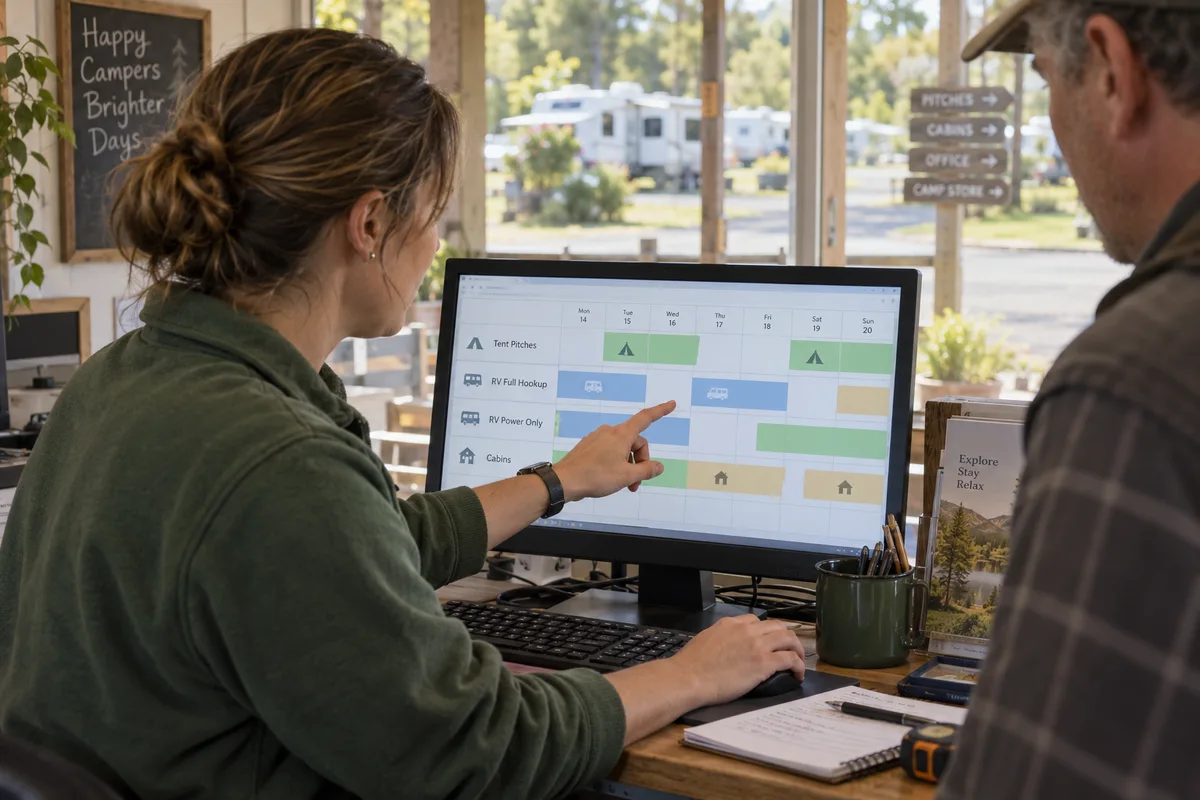
Digital marketing is the combined work of search, social media, advertising and website channels running together rather than as separate projects with separate people. GullySales runs these as one connected system so a change in one channel, such as a new offer, is reflected everywhere at once.
Also for camping and glamping operators
- Buyer personas for camping and glamping operators
- Lead generation for camping and glamping operators
- SEO for camping and glamping operators
- Local SEO for camping and glamping operators
- Social media marketing for camping and glamping operators
- Content marketing for camping and glamping operators
- CRM for camping and glamping operators
- Follow-up systems for camping and glamping operators
Sales and marketing for camping and glamping operators, the overview.
Last updated 13 Nov 2026.
For camping and glamping operators
Where it usually goes wrong, and what we would do.
“Each channel does one thing”
The map helps a nearby guest find you, search answers a question, reels show the place and WhatsApp takes the booking. A plan that asks every channel to do everything leaves gaps.
“The season is the calendar”
Long weekends, winter, monsoon and school breaks decide when guests plan. Work that starts after the weekend sells nothing.
“Paid ads need a landing page”
An advertisement that opens the home page loses the viewer. Send it to the tent page with the price, the policy and the booking button.
“The map listing answers the night-before search”
A group driving towards Kamshet on Friday searches for camping near me on the phone. A correct pin, current photographs, a working number and a reply to every review decide whether the camp is called or skipped.
What we do
What we deliver for camping and glamping operators.
The work available for this need. We agree the deliverables and responsibilities for your engagement in writing.
Season calendar
A dated plan placing work before each long weekend, festival and break.
Result: Each push reaches guests while they plan.
Channel roles
A written note of what each channel is for and who looks after it.
Result: Each channel is judged only on its own job.
Landing pages for each tent type
Pages that paid and organic visitors both reach, with price basis, rules and booking.
Result: Every click lands on the details.
Tracking set-up
Calls, forms and chat clicks tagged by source.
Result: You can see which channel produced bookings.
Season review
A review of bookings, sources and questions guests asked, written for the next plan.
Result: Next season starts with what you learned.
Map profile clean-up
Name, pin, entrance photograph, phone number and booking link checked against the real gate, with a courteous reply written to each review.
Result: The listing matches what a guest finds on arrival.
Reel-to-page route
Each reel carries one link, to the page for the tent or package it shows, so the viewer lands on price basis, rules and the booking button and not on a general home page.
Result: A viewer who taps arrives at the right tent.
How the result is measured
- Enquiries across channels
- Cost per enquiry overall
- Channel mix by contribution
Recorded as a baseline before work starts, so every later report has an honest comparison.
Searches your buyers type
Assign each channel to the search or moment where a camper decides.
- weekend camping near [city]
- The camp page and the Maps listing, with the same tent prices and dates.
- glamping stay [hill area] booking
- The tent-type page with a booking button, reached from the reel or the map.
- camp in rain what happens
- A weather policy page that the guest finds before paying, and reads again the night before.
- corporate outing campsite
- A group page with an enquiry form, found by an HR head or a school coordinator.
- [camp name] reviews
- The Maps listing with recent reviews and replies, and the camp's own site as the second result.
Who it is for
This is written for these camping and glamping operators.
- Lakeside tent camps near Pune and Mumbai
- Glamping domes and luxury tents in the hills
- River rafting and riverside camps in Rishikesh
- Desert camps in Rajasthan
- Coffee estate and forest campsites in Coorg and Chikmagalur
- Himalayan camps in Himachal and Uttarakhand
- Caravan and bonfire sites near cities
- Corporate team camps and school outbound campsites
Not for
It is not the right fit if.
- The camp has not decided its dates and prices for the season, and ads would point to pages with nothing to book.
- There is no landing page, and paid clicks would arrive on the home page with no tent or price.
- The camp cannot track which enquiry came from which channel, so spend could not be judged.
Before you decide
Agree the work. Know how to judge it.
Digital marketing for camping and glamping operators: use these checks to prepare, choose the scope, and review what changes.
Bring the right evidence
Bring a recent won order and an enquiry that went nowhere. Trace how each buyer found you, what they asked, and who handled the next step. A channel list alone will not explain the difference.
Make the scope clear
Choose one offer and one buyer group first. Agree which part needs attention: being found, getting a useful enquiry, or turning an enquiry into an order. Separate recommendations from the work required to carry them out.
Check the work in use
A useful plan names the first change, its owner, the evidence behind it, and the number that will show whether it worked. Ask what has deliberately been left out and why.
Know when to change course
If your team cannot answer the enquiries it already receives, improve that handover before buying more traffic. If the offer itself is unclear, test it with buyers before adding channels.
These are discussion points, not a fixed package. GullySales confirms the deliverables, responsibilities, fee, and term in writing after reading your brief and speaking with you.
Before we start
What to have ready before the work starts.
The records, access and decisions this work needs from camping and glamping operators. Anything missing is noted in the written scope, with who will supply it.
- A rough calendar of your open months
- The plan is built around the season, so bring the months you open, close and expect school or corporate groups. A rough sketch with the manager is enough. Without it we plan for a flat year, and effort may land on weekends that are already sold.
- Current photographs of every tent type
- Landing pages need pictures that match what guests find. Recent phone photographs work. Without them the pages show old or borrowed images, and guests who compare the page with the camp complain on arrival. Phone photographs are acceptable if they were taken this season and show the real tent floor, bedding and washroom.
- Access to the website, map and Instagram
- Setting the links and labels needs editing rights on each place. Share through the platform's own permission settings. Where a former vendor holds access, say so early, since recovering it can take time and delay the plan.
- A ceiling for what you will spend on ads
- Only you decide how much money to risk. Bring a figure for a trial, even a small one, and the amount you are comfortable losing. Without it we plan the unpaid channels first and leave paid ads off until you decide.
- Your sales record of the last season
- Results are read against your register of enquiries and advances. Bring it in any state. Without it we cannot say what changed after the work, and the review becomes opinion. Notebook pages and UPI statements are fine, provided the enquiries and advances can be matched by date.
How it works
How the digital marketing work runs
The work itself, in order. How an engagement starts, from your brief to a written scope, is set out on our method page.
- 1
Mark the busy and thin stretches on a calendar
We start with your year as the camp lives it: the long weekends, school holidays, monsoon, winter and any closure. You mark the stretches when the camp is full and those when it sits empty. The calendar shows where marketing should push, where it should wait, and where a weekday or corporate group could fill gaps. We also note the weekdays that stay empty, since a corporate or school group could fill them with the right page.
- 2
Assign one job to each channel
We list every place the camp shows up: the map listing, Instagram, the website, WhatsApp and any aggregator, and give each a single job. The map answers the night-before search, reels create interest, the website holds the answer, WhatsApp closes. You approve the list, and any channel with no job is paused. A channel that only repeats another one's message is merged into it, so effort is not split across three accounts.
- 3
Build the landing page for each tent type
Each tent type gets its own page, with photographs, capacity, rules and the booking form, so a paid ad or reel link lands on the tent it promised. You supply current pictures and the list of what is included. The pages are tested on a weak phone signal before any ad is switched on.
- 4
Connect the reel to the booking route
We set the link from each reel and ad to the right landing page and give it a source label. Then we send a test enquiry from each and check that it reaches your sheet. You confirm who answers. A viewer who taps the link must reach a person, not a dead page.
- 5
Clean the map profile before the busy stretch
Before the season we correct the pin, hours, photographs and the arrival note on the map listing, because that is where the night-before search ends. You supply the closure dates. We check the profile on a phone as a guest would, and fix anything that disagrees with the website. Hours, photographs and the closure months are checked line by line, because a wrong detail there sends a guest to a locked gate.
- 6
Compare each season against the starting count
When a busy stretch ends we set the figures beside the starting count: enquiries by source, advances, weekdays filled. You give the register. We keep the channels that brought paying groups and cut the others, then draw up the plan for the thin months that follow, without promising occupancy. Weekdays that stayed empty are reviewed separately, because their groups need different pages from the weekend guests.
Where this fits
Three pieces of sales work, in this order.
This work sits inside sales process design, at stage 0, foundation. The audit comes before it, and sales management keeps it running.
Step 1
Sales audit
Find where deals are being lost and what to fix first.
Start here if you cannot say where orders are lost.
Step 2 · you are here
Sales process design
One written way to sell, from first enquiry to repeat order.
Start here if every salesperson sells differently.
Step 3
Sales management
A target, a review routine and someone who owns the number.
Start here if the team has targets and no routine.
FAQ
Questions owners ask before they call.
Not here? More answers, or ask on WhatsApp.
Where do we start if we have nothing?
How much should we spend on ads?
Can you run it for us in peak season?
How should a campsite divide its marketing between peak and off season?
Should a camp market differently in the off season?
Can you run the marketing for us in peak season?
How long is the contract?
How soon will we see results?
Who will actually do the work?
What do you need from us?
More for camping and glamping operators
Related work to consider.
Closest to this: strategy and research
Also for camping and glamping operators
Or start from the overview: sales and marketing for camping and glamping operators.
Your next practical step
Tell us what you are trying to grow, and we will read it before we call.
Eight short steps, mostly taps. Skip anything you would rather answer on the call.