Hotels · Brand perception research
Find out how guests, wedding families and travel desks describe your hotel.
Brand perception research for a hotel records how past guests, banquet clients, corporate travel desks and the staff describe the property, in their own words. GullySales gathers those descriptions from short interviews, OTA and Maps reviews and search results, then writes a plain report of the gap between how you describe the hotel and how others do.
Scope, fee, reporting and term are agreed in writing after we have read your brief and spoken to you.
What brand perception research means
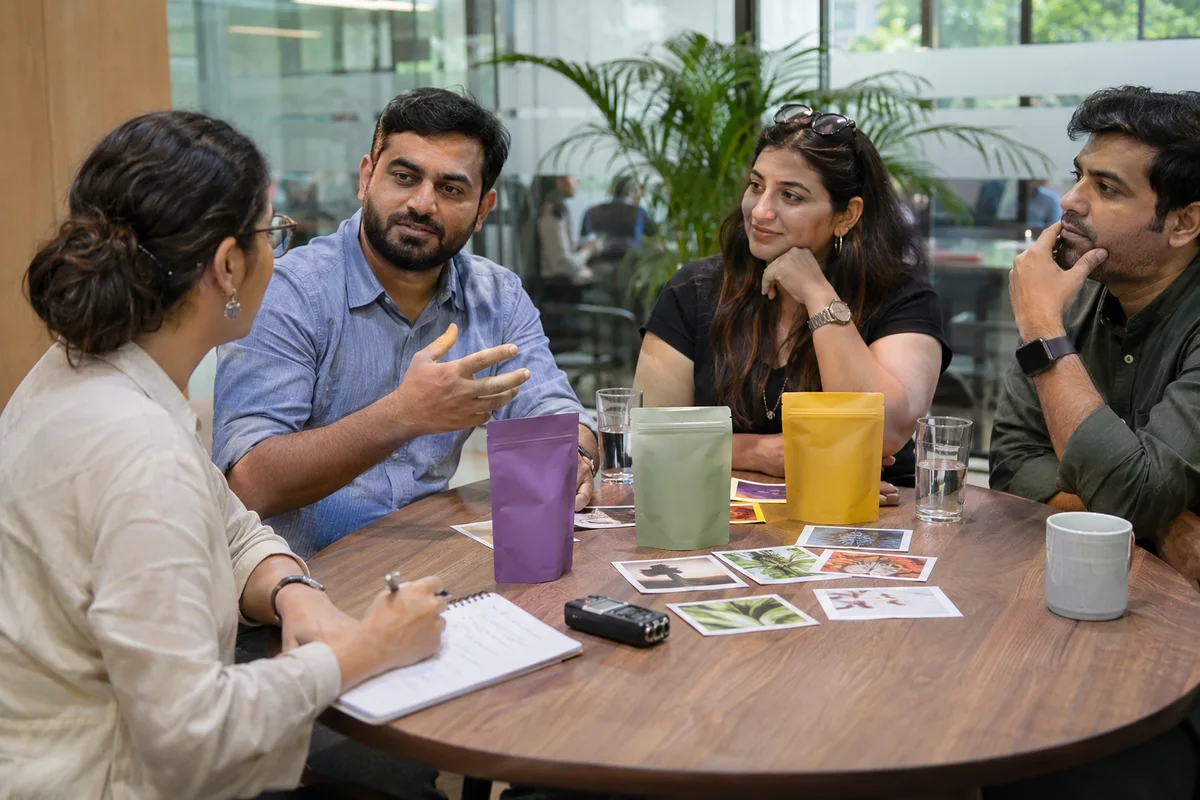
Brand perception research records how customers, dealers, staff and local people describe your business, in their own words. GullySales gathers those descriptions through short interviews, review reading and search-result checks, then writes a plain report of the gap between how you describe the brand and how others do.
Last updated 14 Nov 2026.
For hotels
Where it usually goes wrong, and what we would do.
“Different buyers describe different hotels”
A business traveller calls the property convenient for the station. A wedding family calls it the hall with parking. A travel desk calls it the one that invoices correctly. Treating these as one brand hides which description is winning which booking.
“Review text says more than the review score”
The score is a number, but the sentences beneath it name what guests noticed first: the lobby, the breakfast, the lift, the staff at check-in. Reading those sentences across platforms shows what the hotel is known for, without inventing a figure.
“Staff describe the hotel a third way”
The front desk, the banquet captain and the housekeeping supervisor each tell a guest something slightly different about the property. Where the story told in the lobby differs from the one on the website, the guest notices before the owner does.
“A search for your own hotel name tells a story”
What appears when someone types the hotel's name, the OTA listings, the old photographs, a blog post from years back, shapes the first impression. Checking those results takes little effort and can change what the owner fixes first.
What we do
What we deliver for hotels.
The work available for this need. We agree the deliverables and responsibilities for your engagement in writing.
A short interview round
Open conversations with a small number of past guests, banquet clients and a corporate contact, with their agreement, asking how they would describe the hotel to a friend.
Result: Quotes in the guests' own words, grouped by what they were choosing between.
A reading of your reviews
A sorted reading of OTA and Maps review text, grouped by the thing guests mention, with praise and complaint kept apart.
Result: A list of recurring words you can check against the reviews yourself.
A staff description exercise
A short, private question to the team about how they describe the hotel to a new guest.
Result: A page showing where staff and website language differ.
A search-result check
A record of what appears for the hotel's name and for the searches a guest would make, with screenshots.
Result: A dated set of screenshots you keep for comparison.
A plain gap report
A written comparison of your own description with everyone else's, with no scores invented from a handful of conversations.
Result: A report that names what to say, what to stop saying and what to look into next.
How the result is measured
- Recurring words and phrases, by speaker group
- Points where owner and outside descriptions match or differ
- Misunderstandings about what you sell or who you serve
Recorded as a baseline before work starts, so every later report has an honest comparison.
Who it is for
This is written for these hotels.
- Business and transit hotels
- Boutique and heritage properties
- Resort and destination hotels
- Budget and mid-market chains
- Banquet and wedding-focused properties
- Serviced apartments and long-stay properties
Before you decide
Agree the work. Know how to judge it.
Brand perception research for hotels: use these checks to prepare, choose the scope, and review what changes.
Bring the right evidence
Collect the sales presentation, website, quotations, and other material buyers actually see. Mark where the description of the business changes or where a claim has no supporting evidence.
Make the scope clear
Agree whether the work concerns the offer, the words, the visual identity, or all of them. List the formats that need updating and who owns the final approval.
Check the work in use
Test the proposed direction on a real sales page or proposal. A buyer should be able to tell who the offer is for, what is different, and what evidence supports it.
Know when to change course
A new identity will not fix an unresolved service problem. Put the delivery issue right before making a stronger public promise about it.
These are discussion points, not a fixed package. GullySales confirms the deliverables, responsibilities, fee, and term in writing after reading your brief and speaking with you.
Before we start
What to have ready before the work starts.
The records, access and decisions this work needs from hotels. Anything missing is noted in the written scope, with who will supply it.
- Guests willing to be spoken to
- A short list of guests, banquet hosts and corporate bookers who might agree to a conversation, with a way to reach them and a line on how each came to the hotel. Variety matters more than numbers, so include a happy guest, a lapsed one and a booker who chose another hotel. Without the list, the research rests on reviews alone, which favour the very happy and the very angry.
- The owner's description in a paragraph
- A paragraph on what the hotel stands for, who it serves and what the owner would like guests to say, written before the owner hears from anyone else. It is the yardstick for the whole report. Without it, there is nothing for the findings to be compared with, and the report becomes a list of opinions with no gaps to point at.
- Links to every review page the hotel holds
- Every listing and review page of the hotel on the OTAs, the map and any travel site, with a login where replies must be read in full. We read the reviews for the same words that guests use in conversation. Without the links, we read what we can find and miss some, and the reading of reviews is partial.
- A short conversation with some staff
- A few staff across front desk, housekeeping, restaurant and banquets, released for a talk of their own, away from their supervisor. Staff know what guests complain about before the owner does. Without them, the staff view is missing and the internal picture is the owner's alone.
- Corporate booker contacts and consent
- Names of travel desk or company contacts, with their agreement to be approached by us, introduced by someone at the hotel. Their view of the property differs from a leisure guest's, since they compare rates and reliability. Without them, the corporate view is missing and the report speaks only for leisure guests and wedding families.
- A person who can act on the findings
- The owner or general manager who will meet us for the decision and has the authority to change a listing, retrain a desk or leave a gap alone. Without one, the report is read once, agreed with and left on a shelf, and the gaps that guests described remain.
How it works
How the brand perception research work runs
The work itself, in order. How an engagement starts, from your brief to a written scope, is set out on our method page.
- 1
Agree the questions and who is heard
We agree with the owner what the research must find out: how past guests, banquet clients and corporate travel desks describe the property, and how staff do. The people to be heard are listed by kind. The questions are written so that nobody is led, and the owner reads them before any conversation starts. Anything the owner does not want asked is removed here, not halfway through.
- 2
Record the owner's own description
Before anyone else is asked, we record how the owner and general manager would describe the hotel in their own words, who it is for and what it does better than the one down the road. That description is the yardstick against which what others say is read, and it is written down before the owner hears anything that could change it.
- 3
Arrange introductions and invitations
You choose the guests, banquet hosts, travel desk contacts and staff to be invited, and you make the first approach or approve ours. Nobody is contacted who has not been approved. A short note explains the purpose and tells the person they may decline, and a person who declines is not approached again. The owner sees the list of invitees before any message is sent, and can remove a name without giving a reason.
- 4
Listen to guests, bookers and staff
We hold short conversations with those who agreed, asking them to describe the property to a friend and what they would warn that friend about. Staff are asked separately from guests and from each other. We record words and not conclusions, and we keep confidential what a person asks us to keep confidential, including from the owner. Banquet hosts are asked what they told their relatives about the hall, and corporate bookers what they told their own colleagues about the stay.
- 5
Read the reviews and check the search results
We read the public reviews on the platforms for the same words and compare them with what people told us. We also search the hotel's name to see what a stranger meets first. Differences between what guests say and what the listing and the website claim are marked, with the exact phrases beside them. The review reading is kept to the words guests repeat, not to the star score, since a score hides what was actually said.
- 6
Write the gap report and decide with the owner
The report sets the owner's description beside what guests, bookers and staff said, and lists the gaps in plain words, with the exact phrases that point to each gap. We meet the owner to decide which gaps matter and what to do about each, such as correcting a listing, retraining the desk or leaving a difference alone. The decisions are written down beside each gap.
Proof
Published examples of our work.
Real clients and the work recorded for each engagement. These examples may cover related services or industries. They show the method, not a guaranteed result.
Hotel Felicity Inn
- Situation
- A traveller compares three hotels on a phone and books one. The website was not built for that.
- What we did
- The site rebuilt around booking
- Photography and one look
- Search work for destination searches
- Content a traveller reads
- Result
- Online bookings increased 35%
- Organic traffic increased 50% within six months
- Positive reviews on Google and TripAdvisor increased 30%
Also worked with
Chord Road Hospital · Curtain Label · Difesa Security Services · Hands On CSR · Implevista · Kambar Group · Kalessi · Kerur Pain Clinic · LL Trust · Lucky Deals · Natural Gases · NavaShakthi Souhardha · NewCom Logistics · Proton Technical Services · SB Engineering · Shakthi Foundation · Shakthi Group · Urbanest · Insyde Studio · Venkateshwara Laser Tech · Vivara Studios
Where this fits
Three pieces of sales work, in this order.
This work sits inside sales process design, at stage 1, prospecting and lead generation. The audit comes before it, and sales management keeps it running.
Step 1
Sales audit
Find where deals are being lost and what to fix first.
Start here if you cannot say where orders are lost.
Step 2 · you are here
Sales process design
One written way to sell, from first enquiry to repeat order.
Start here if every salesperson sells differently.
Step 3
Sales management
A target, a review routine and someone who owns the number.
Start here if the team has targets and no routine.
FAQ
Questions owners ask before they call.
Not here? More answers, or ask on WhatsApp.
Will you contact our guests directly?
Will the report tell us what share of travellers think a certain thing?
Who sees the findings and the guests' words?
Do you read competitors' reviews as well?
How much does it cost?
How long is the contract?
How soon will we see results?
Who will actually do the work?
What do you need from us?
What if we are not happy with the work?
From the blog
Further reading for hotels.
 6 min read · 14 Oct 2026Building an off-season plan for a hotel, resort or venueHow to fill the quiet weeks with local residents, corporate meetings and low-cost packages, using a sheet that sets the floor price first.
 5 min read · 6 Oct 2026What buyers check before they book a stay or a catererGuests, tenants and event families judge hotels, homestays, PGs, serviced apartments and caterers on the same checks. What each looks like.
 8 min read · 21 Sept 2026Premium audience advertising strategyNo platform in India sells verified income. Affluence targeting is inference, and the cheapest filter you own is putting the price in the first frame.
More for hotels
Related work to consider.
Closest to this: brand and design
Also for hotels
Or start from the overview: sales and marketing for hotels.
Your next practical step
Tell us what you are trying to grow, and we will read it before we call.
Eight short steps, mostly taps. Skip anything you would rather answer on the call.