Hotels · Online travel agency listings
Rank higher on Booking.com and MakeMyTrip without giving away more commission than you have to.
OTA marketing for a hotel is the work of getting listed well and ranked high on platforms such as Booking.com, MakeMyTrip and Goibibo. Many first-time guests find a hotel there. GullySales manages the listing content and review response while building the direct channel that reduces how much commission you pay over time.
Scope, fee, reporting and term are agreed in writing after we have read your brief and spoken to you.
What online travel agency listings means
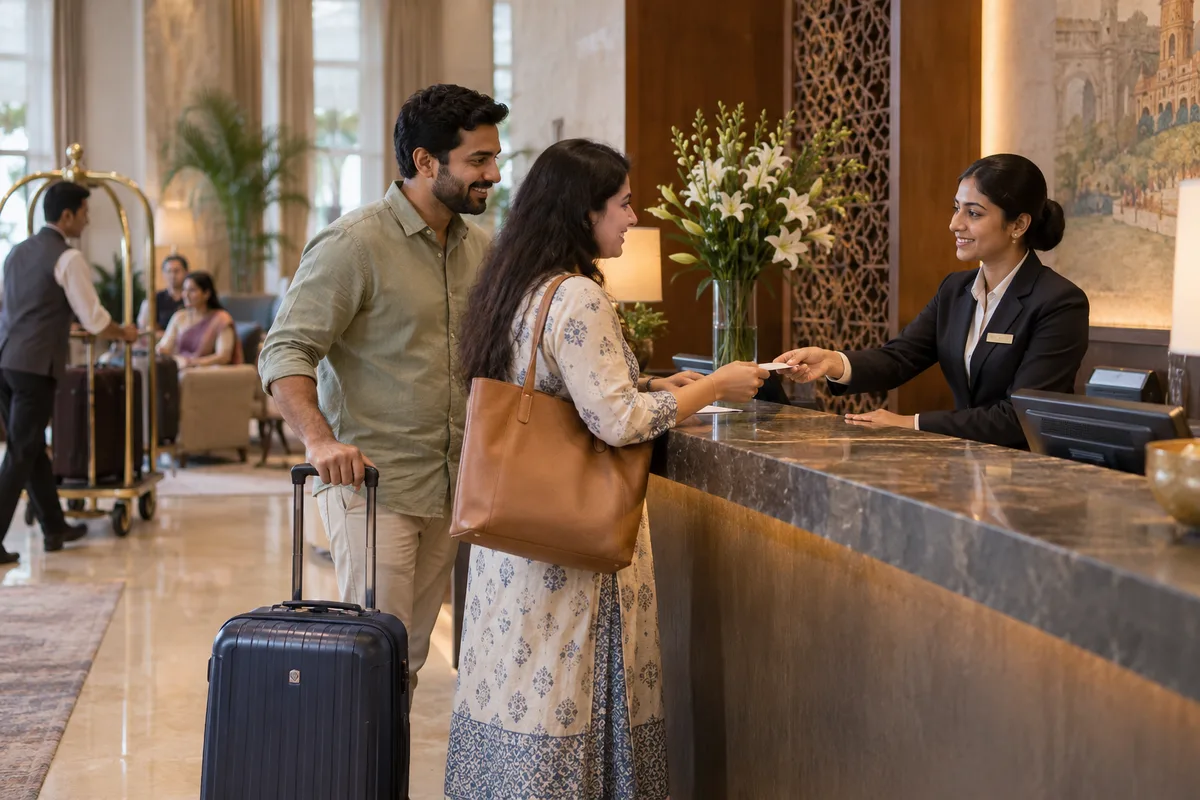
OTA stands for online travel agency. It refers to listings on sites such as MakeMyTrip and Goibibo, where many hotel and travel bookings start before a guest ever visits your own website. GullySales manages these listings, photos and rates so they stay consistent with your direct booking channel.
Last updated 5 Oct 2026.
For hotels
Where it usually goes wrong, and what we would do.
“The OTA's own system rewards recent activity”
Frequent rate updates, fast review replies and current photographs improve ranking on the platform's own terms, separate from anything done on your own website.
“Parity rules mean the fight is over presentation, not price”
When your rates are the same on every OTA and on your own site, guests stop shopping on price. The listing with better photographs and fresher reviews wins the booking instead.
“Every OTA guest is a chance to earn a direct one next time”
A card in the room or a message after checkout inviting a guest to book directly next time turns a commissioned booking into a direct one, without commission, next time.
What we do
What we deliver for hotels.
Every deliverable, what it covers for you, and the result it is there to produce. Nothing here is an extra.
OTA listing refreshed on Booking.com and MakeMyTrip
Photographs, descriptions and rates brought current on each platform you use, matched to what a guest actually finds on arrival.
Result: The listing looks as good as the property it describes.
Review reply routine for every OTA platform
A written routine for replying to reviews on Booking.com, MakeMyTrip and Goibibo within your team's own working hours.
Result: A guest reading reviews sees a hotel that responds.
Platform focus recommendation
A recommendation on which two or three OTAs to manage properly, based on where your bookings actually come from.
Result: Effort goes into listings that are actually bringing guests.
Post-stay message inviting a direct booking
A message sent after checkout to every OTA guest, inviting them to book directly on their next visit.
Result: An OTA guest gets a real reason to come back without the commission.
OTA performance report
A report against your baseline on ranking position, review score and bookings by platform.
Result: The owner sees which OTA is actually earning its commission.
How the result is measured
- Bookings by platform
- Commission cost
- Direct booking share against OTA share
Recorded as a baseline before work starts, so every later report has an honest comparison.
OTA listing checks
Check each OTA listing against the property itself with this list.
- Photographs by room type
- Each room category needs its own recent photographs, plus the bathroom, the entrance and the breakfast area. Replace any image that no longer matches the room as it is today.
- Inclusions match what the front desk gives
- Check that breakfast, parking, Wi-Fi and airport pickup are listed as the property actually provides them. A guest who finds a promised item missing writes a review about it.
- Cancellation terms match the property's own policy
- Read the cancellation and no-show terms on the listing against what your front desk will honour. A gap between the two causes arguments at check-in.
- Same rate on every channel
- Look at one future date on each OTA and on your own site. Rate parity means a guest has no price reason to prefer one channel, which leaves photographs and reviews to decide.
- Reply to every review, low scores first
- Answer each low review with the facts and what was done, and thank the good ones. Future guests read the replies as much as the complaint.
- Paid visibility and promotion settings
- List which promotions or paid placement programmes are switched on, and what each costs in commission. Check the platform's current rules, and switch off any that no longer earn their cost.
Who it is for
This is written for these hotels.
- Business and transit hotels
- Boutique and heritage properties
- Resort and destination hotels
- Budget and mid-market chains
- Banquet and wedding-focused properties
- Serviced apartments and long-stay properties
Not for
It is not the right fit if.
- Your rooms are already full on the dates the listing serves, so higher placement would only add commission on rooms you would have sold
- The inclusions and cancellation terms on the listing do not match what the front desk gives, which needs fixing before any ranking effort
- You plan to use the OTA to replace your own website, which leaves every guest as the platform's contact
How it works
How the online travel agency listings work runs
The work itself, in order. How an engagement starts, from your brief to a written scope, is set out on our method page.
- 1
Search your name as a stranger would
We search the business, its main product names and the owner's name, on a phone and a laptop, and record what appears.
- 2
Catalogue every mention
Reviews, news, listings, social posts and forum threads are sorted into accurate and positive, accurate and negative, and wrong. Each group gets a different action.
- 3
Agree the replies and the owner of each
Replies are drafted and approved by you. Anything involving a refund, a clinical matter, a legal claim or a named employee goes to the right person in your business before anything is posted.
- 4
Fix what you control
Listings, profile details and your own pages are corrected, and pages worth ranking for your name are strengthened with accurate information.
- 5
Monitor and report
The agreed places are checked on the agreed schedule. The name search is repeated and compared with the first record.
Proof
What happened when owners fixed this.
Real clients, the work we did, and the result as it was recorded. Where no number was recorded, none is claimed.
Hotel Felicity Inn
- Situation
- A traveller compares three hotels on a phone and books one. The website was not built for that.
- What we did
- The site rebuilt around booking
- Photography and one look
- Search work for destination searches
- Content a traveller reads
- Result
- Online bookings increased 35%
- Organic traffic increased 50% within six months
- Positive reviews on Google and TripAdvisor increased 30%
Also worked with
Chord Road Hospital · Curtain Label · Difesa Security Services · Hands On CSR · Implevista · Kambar Group · Kalessi · Kerur Pain Clinic · LL Trust · Lucky Deals · Natural Gases · NavaShakthi Souhardha · NewCom Logistics · Proton Technical Services · SB Engineering · Shakthi Foundation · Shakthi Group · Urbanest · Insyde Studio · Venkateshwara Laser Tech · Vivara Studios
Where this fits
Three pieces of sales work, in this order.
This work sits inside sales process design, at stage 1, prospecting and lead generation. The audit comes before it, and sales management keeps it running.
Step 1
Sales audit
Find where deals are being lost and what to fix first.
Start here if you cannot say where orders are lost.
Step 2 · you are here
Sales process design
One written way to sell, from first enquiry to repeat order.
Start here if every salesperson sells differently.
Step 3
Sales management
A target, a review routine and someone who owns the number.
Start here if the team has targets and no routine.
FAQ
Questions owners ask before they call.
Not here? More answers, or ask on WhatsApp.
Should we be on every OTA?
Can this replace our own website?
Should we join the OTA's paid visibility or discount programme?
A guest left a review we think is unfair. Can we have it removed?
How much does it cost?
How long is the contract?
How soon will we see results?
Who will actually do the work?
What do you need from us?
What if we are not happy with the work?
From the blog
Further reading for hotels.
 6 min read · 20 Dec 2025How to respond to a hospitality review, good or badShort, specific public replies to hotel, restaurant and venue reviews, with wording for praise, a fair complaint and a disputed one, and a rule for what never goes in public.
 6 min read · 14 Oct 2026Building an off-season plan for a hotel, resort or venueHow to fill the quiet weeks with local residents, corporate meetings and low-cost packages, using a planning sheet that sets the floor price before the offer goes out.
 5 min read · 6 Oct 2026What buyers check before they book a stay or a catererGuests, tenants and event families judge hotels, homestays, PGs, serviced apartments and caterers on the same four checks. Here is what each check looks like and how to pass it.
More for hotels
Everything else we would do for you.
Or start from the overview: sales and marketing for hotels.
Your next practical step
Tell us what you are trying to grow, and we will read it before we call.
Eight short steps, mostly taps. Skip anything you would rather answer on the call.