Restaurants · Local SEO
Win the search that happens in a car park two streets away.
Local SEO decides whether you are among the three places Maps shows to somebody standing nearby with an hour to spare. GullySales completes the Business Profile with current photographs, prices and parking, and keeps it saying the same thing as Zomato and Swiggy.
Scope, fee, reporting and term are agreed in writing after we have read your brief and spoken to you.
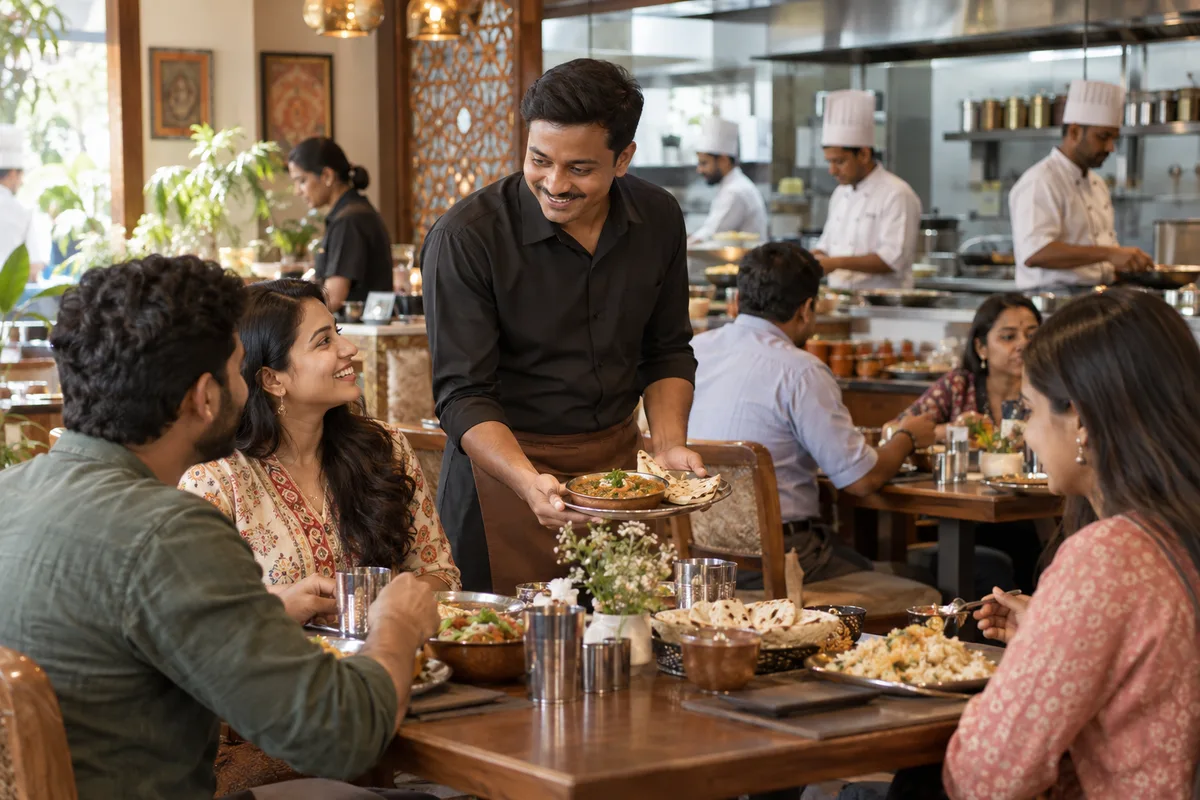
What local SEO means
Local SEO is the work of making your business show up for searches that name your town or locality, such as a service plus an area name. GullySales sets up locality pages, local citations and map listings so nearby customers find you before a competitor across town.
Last updated 5 Oct 2026. Rules for this trade differ by state and professional body, and they change. We describe restrictions in general terms, so check the current position with your own council or adviser before you publish anything.
For restaurants
Where it usually goes wrong, and what we would do.
“The three-pack is the whole shortlist”
Nobody scrolls past the first three on Maps when they are hungry and already in the car.
“Parking decides more than the menu”
In most of Bengaluru, a listing that says where to park beats one with better photographs of the food.
“Your hours are wrong on a festival day”
Closed for Ugadi while the listing still says open is a one-star review you have earned for free.
What we do
What we deliver for restaurants.
Every deliverable, what it covers for you, and the result it is there to produce. Nothing here is an extra.
The Business Profile filled in completely
Cuisine categories, hours including festival closures, price for two, dine-in, takeaway and delivery flags, parking, and whether a cake may be brought in.
Result: The questions that lose a walk-in get answered.
Photographs shot this season, not at the opening
The current dishes at current prices, the interiors as they look now, the entrance and the parking, uploaded in a batch and refreshed every few months.
Result: People choose the restaurant that exists today.
The same details on Maps, Zomato and Swiggy
Name, address, hours, phone and menu prices made to match across all three, since a mismatch confuses the customer and the listing alike.
Result: One restaurant, one set of facts.
Maps posts for the festival menu and the weekday offer
Short posts published a week before Ugadi, Onam or Ramzan and again for the weekday offer, because a post reaches somebody searching now.
Result: The offer arrives at the moment people are choosing.
Questions on the listing answered by you
The questions section seeded with your real answers on parking, jain food, high chairs and the private area, rather than left to strangers.
Result: A guest gets your answer instead of a guess.
Maps reporting on searches, calls and directions
The count of discovery searches, calls, direction requests and website clicks, read against the baseline recorded at the start.
Result: You know how many covers Maps actually sends.
How the result is measured
- Map pack ranking
- Local search visibility
- Enquiries by locality
Recorded as a baseline before work starts, so every later report has an honest comparison.
What Google weighs here
How a hungry customer finds a restaurant nearby, and what to fix first.
- Primary category
- Choose the most specific one: South Indian restaurant, Biryani restaurant, Family restaurant. Add Takeaway and Delivery restaurant as secondary where true. A vague primary loses the diner who types a dish.
- Menu and dish photographs
- Add the menu and photographs of your best-selling dishes, with the names written the way diners say them. Photographs from this season replace the ones from opening week.
- Parking and entry details
- Add attributes such as parking, family-friendly seating and outdoor seating only if true, and photograph the entrance. A diner who cannot park or find the stairs drives on to the next result.
- Hours for festivals and Mondays
- Set special hours for every festival day and the day you are shut. A diner who arrives at a shut door writes a review about it, and the review lasts longer than the closed day.
- Zomato, Swiggy and Maps agree
- Match name, address, phone and opening hours across Maps and the delivery apps. A delivery app listing at an old address, or a wrong phone number, sends orders and complaints to the wrong place.
Who it is for
This is written for these restaurants.
- Family restaurants and multi-cuisine dining
- South Indian vegetarian restaurants and darshinis
- Biryani, kebab and non-vegetarian specialists
- Regional cuisine restaurants
- Casual dining and bar restaurants
- Quick service restaurants and food courts
- Cloud kitchens and delivery-only brands
- Office canteens and food service operators
- Multi-outlet restaurant groups
Not for
It is not the right fit if.
- The outlet cannot open at the hours shown on the listing, so showing as open would send guests to a closed door.
- Your parking and entrance are going to change, so a listing described now would send guests to the wrong place.
How it works
How the local SEO work runs
The work itself, in order. How an engagement starts, from your brief to a written scope, is set out on our method page.
- 1
Write down what is true
Each branch's real address, signboard name, phone, hours and owning Google account go into one record you sign off. Every later listing is copied from it.
- 2
Search as your buyer does
We search each branch on a phone from points around it, in your buyers' words, and note who appears with what reviews and photos.
- 3
Fix the profile first
Ownership first, then name, address, pin, phone, hours and business type. Google can suspend a profile with extra words in its name or an address that is not a real premises.
- 4
Build the branch pages and match the listings
Each real branch gets its own page, and the other listings are changed to agree with it. We write none for towns without a branch, because Google treats near-identical pages as doorway pages.
- 5
Ask, reply and measure
We agree with each branch who asks for reviews, when and how. Results are set against the baseline recorded before work began, and the branch that is behind gets the next round.
Where this fits
Three pieces of sales work, in this order.
This work sits inside sales process design, at stage 1, prospecting and lead generation. The audit comes before it, and sales management keeps it running.
Step 1
Sales audit
Find where deals are being lost and what to fix first.
Start here if you cannot say where orders are lost.
Step 2 · you are here
Sales process design
One written way to sell, from first enquiry to repeat order.
Start here if every salesperson sells differently.
Step 3
Sales management
A target, a review routine and someone who owns the number.
Start here if the team has targets and no routine.
FAQ
Questions owners ask before they call.
Not here? More answers, or ask on WhatsApp.
How do we get into the top three on Maps?
We have three outlets. One listing or three?
We are a cloud kitchen with no seating. Can we have a Maps listing?
A customer photo makes our dish look bad. Can we have it taken down?
How much does it cost?
How long is the contract?
How soon will we see results?
Who will actually do the work?
What do you need from us?
What if we are not happy with the work?
From the blog
Further reading for restaurants.
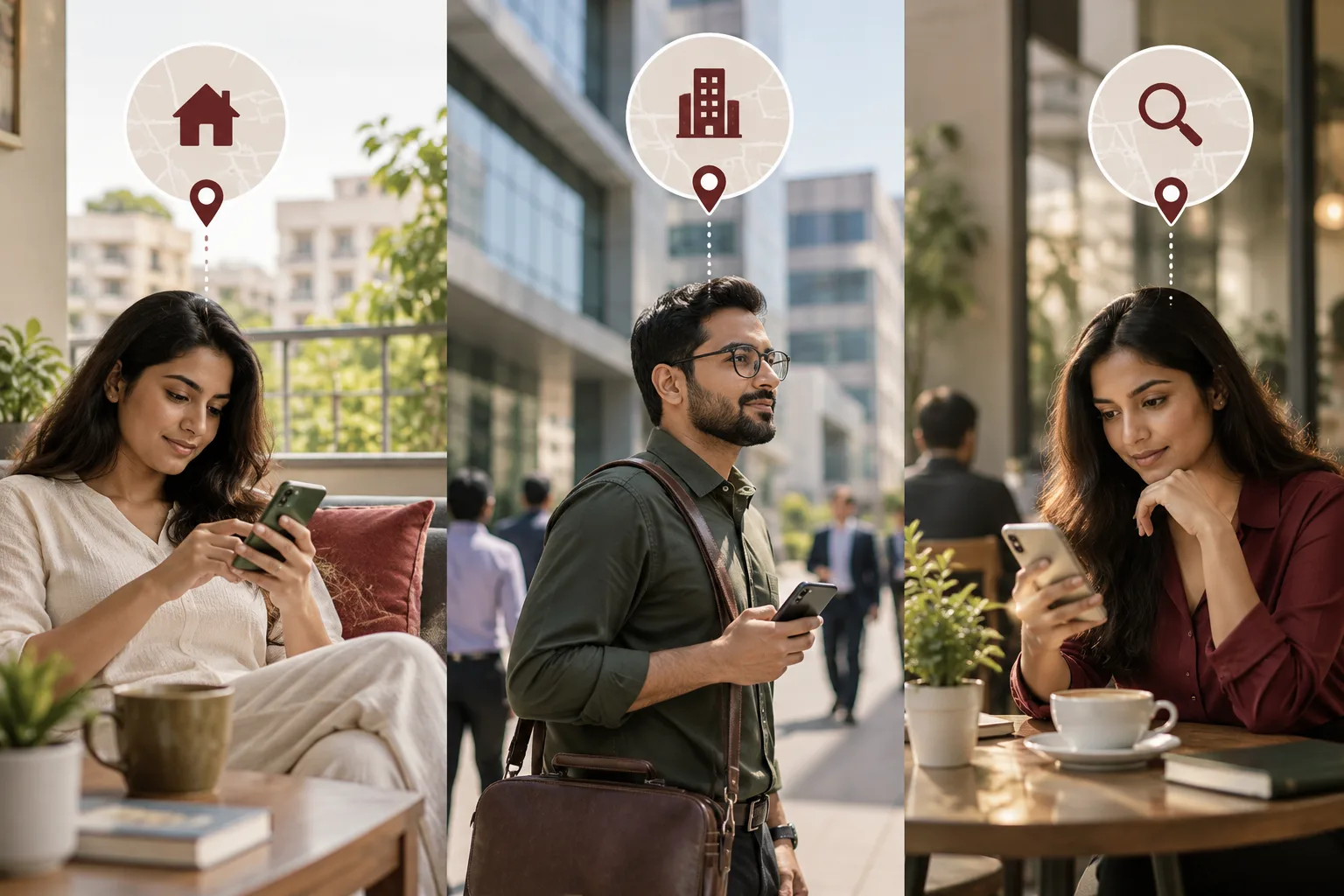 7 min read · 21 Sept 2026Local audience targeting strategyThree different people are local to you: the one who lives near you, the one who works near you, and the one searching near you. The settings that reach each are different.
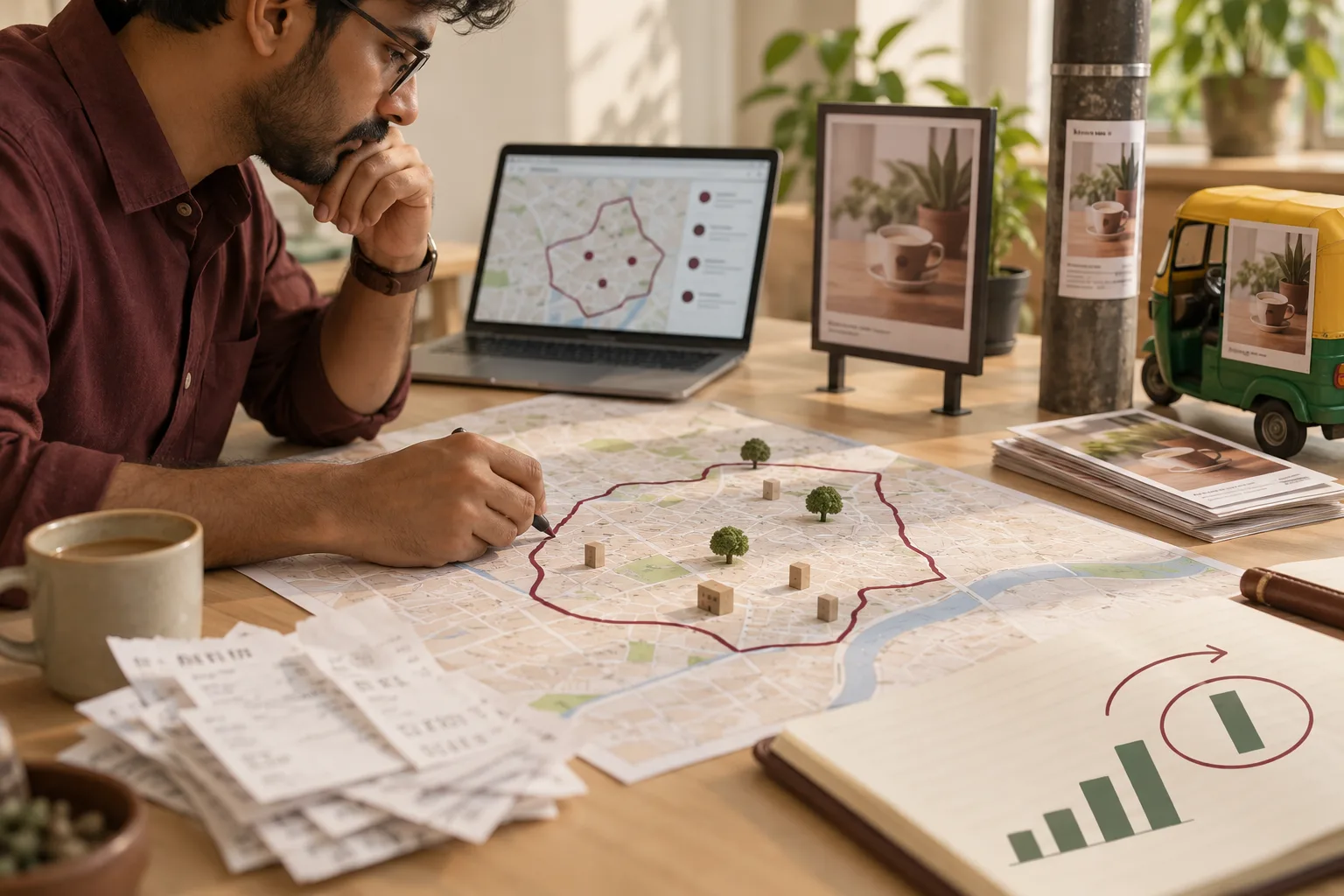 6 min read · 19 Mar 2026How to plan a hyperlocal advertising campaignDraw the catchment from your own bills first. Then buy only the media that stops at the same boundary, and measure it with a number nobody else uses.
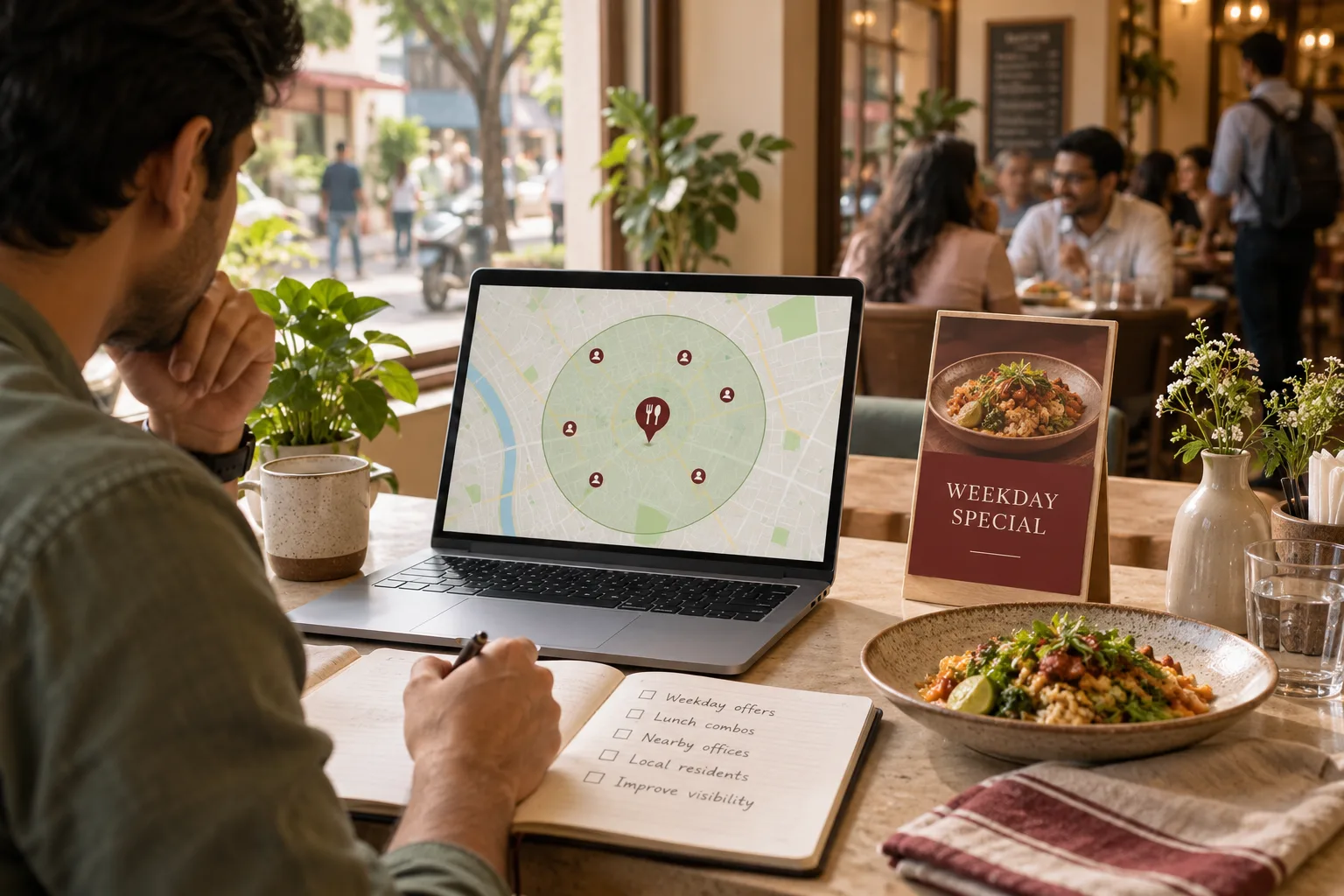 7 min read · 3 Jun 2025How to increase restaurant footfallAlmost everyone who eats at your restaurant lives or works within a few kilometres. Draw that circle, win the Maps search inside it, and give the people already in it a reason to come on a weekday.
More for restaurants
Everything else we would do for you.
Closest to this: search and visibility
Also for restaurants
Or start from the overview: sales and marketing for restaurants.
Your next practical step
Tell us what you are trying to grow, and we will read it before we call.
Eight short steps, mostly taps. Skip anything you would rather answer on the call.