Restaurants · Branding
Decide what you are the place for, and put it on the board outside.
Branding for a restaurant is the reason somebody names you when a friend asks where to eat. GullySales settles what you want to be the place for, then applies it to the board outside, the menu card, the delivery packaging and the photographs on your listing.
Scope, fee, reporting and term are agreed in writing after we have read your brief and spoken to you.
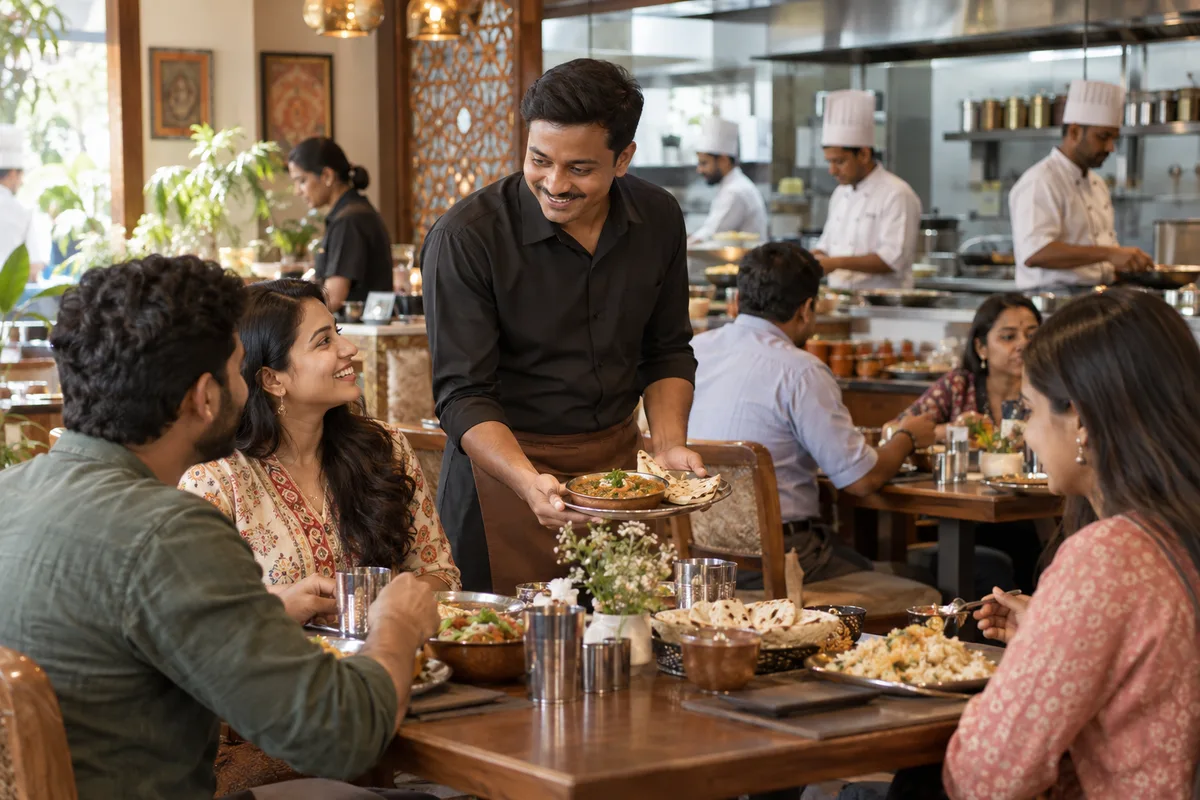
What branding means
Branding is what a customer remembers about your business beyond the product, including your name, colours, tone of voice and what you are known for locally. GullySales sets or corrects this once and applies it consistently across your website, signage and adverts so the business looks like one company everywhere.
Last updated 5 Oct 2026. Rules for this trade differ by state and professional body, and they change. We describe restrictions in general terms, so check the current position with your own council or adviser before you publish anything.
For restaurants
Where it usually goes wrong, and what we would do.
“Multi-cuisine is not a position”
A menu carrying Chinese, north Indian and continental tells a guest you are nobody's first choice for any of them.
“The packaging is seen by people who did not order”
A delivery box sits on an office desk for an hour. Most restaurants print nothing on it.
“The board outside is your worst-spent money”
It has been there eleven years, it lists eleven things, and nobody reads it at thirty kilometres an hour.
What we do
What we deliver for restaurants.
Every deliverable, what it covers for you, and the result it is there to produce. Nothing here is an extra.
A decision on what you want to be the place for
The one or two dishes or occasions you want named for, agreed with the kitchen, including what comes off the menu to make room.
Result: People have a reason to say your name.
A menu card built around that decision
The dishes you want ordered placed where eyes land, the tail of items nobody orders cut, and prices set out so a table can read them in dim light.
Result: The kitchen cooks what it is good at.
Delivery packaging that carries your name
A sticker, a printed box or an insert card with the name, the WhatsApp ordering number and one line about what you are known for.
Result: The box on an office desk advertises you for an hour.
One board, one name and one set of colours
The signage, the menu, the bill book and the listing photographs brought to one look, replacing whatever each printer decided over the years.
Result: The place looks like somebody runs it.
Listing photographs shot to match the room
Dishes photographed as they are actually served and interiors as they look on a normal evening, so the listing and the visit agree.
Result: Nobody walks in disappointed by the room.
A short note for the floor on what to recommend
One page for the servers on the dishes to suggest, the party menus, and how to answer the usual questions about spice and jain food.
Result: The floor tells the same story as the board.
How the result is measured
- Recognition in customer feedback
- Consistency across channels
- Repeat enquiries by name
Recorded as a baseline before work starts, so every later report has an honest comparison.
Positioning in one sentence
We are the place for this occasion and this food, and here is the proof a guest can see.
- Who it is for: one occasion, not everyone
- Pick the table you want to fill, for example family lunch after a temple visit, a birthday for twenty, or a quick office dinner. 'Everyone is welcome' is true of every restaurant and tells nobody why to choose yours.
- What you do: the dish you would be known for
- Name the three dishes a regular would order for a visitor, such as a ghee roast, a dum biryani or a thali. A cuisine label like 'multi-cuisine' is not a position. A dish a guest can ask for by name is.
- What a guest gets that the next place does not
- Look for something you already do: the filter coffee that comes with the bill, a kitchen you can see, a family recipe held for decades. Say it in the words the waiter uses at the table.
- The proof you can show
- Your FSSAI licence number on the menu and board, a photograph of the plate as it is actually served, and Google reviews that name a dish. Do not use stock photos of food you do not cook.
- Words every menu card repeats
- 'Authentic', 'finest ingredients' and 'taste of tradition' are on the menu at the next shop too. Replace each with a fact about your kitchen, like who grinds the masala or where the rice comes from.
Who it is for
This is written for these restaurants.
- Family restaurants and multi-cuisine dining
- South Indian vegetarian restaurants and darshinis
- Biryani, kebab and non-vegetarian specialists
- Regional cuisine restaurants
- Casual dining and bar restaurants
- Quick service restaurants and food courts
- Cloud kitchens and delivery-only brands
- Office canteens and food service operators
- Multi-outlet restaurant groups
Not for
It is not the right fit if.
- You have not yet decided what the restaurant is the place for, so a new board and menu card would only repaint the confusion.
- The lease or the owners are likely to change the premises soon, so signs and packaging made now would be thrown away.
How it works
How the branding work runs
The work itself, in order. How an engagement starts, from your brief to a written scope, is set out on our method page.
- 1
Interview customers and team
We talk to real buyers, won and lost, and to people inside the business who deal with customers daily.
- 2
Review the competitive field
We look at how the nearest competitors present themselves so the position is not accidentally identical.
- 3
Draft the position
A first version of the positioning statement and messaging pillars is written and checked against what customers actually said.
- 4
Test it against real conversations
The draft is tried out in a real sales call or two before it is finalised, since a position that does not survive a real conversation needs rework.
- 5
Hand over the rollout brief
The final position, pillars and not-for list are documented for your team and any agency to apply consistently.
Where this fits
Three pieces of sales work, in this order.
This work sits inside sales process design, at stage 1, prospecting and lead generation. The audit comes before it, and sales management keeps it running.
Step 1
Sales audit
Find where deals are being lost and what to fix first.
Start here if you cannot say where orders are lost.
Step 2 · you are here
Sales process design
One written way to sell, from first enquiry to repeat order.
Start here if every salesperson sells differently.
Step 3
Sales management
A target, a review routine and someone who owns the number.
Start here if the team has targets and no routine.
FAQ
Questions owners ask before they call.
Not here? More answers, or ask on WhatsApp.
If we cut the menu down, do we lose customers?
Do we need a designer for this?
Should we put the cuisine in the restaurant's name?
Should the name be in English or in our local language?
How much does it cost?
How long is the contract?
How soon will we see results?
Who will actually do the work?
What do you need from us?
What if we are not happy with the work?
From the blog
Further reading for restaurants.
 6 min read · 17 Jun 2025How to build brand awarenessAwareness is repetition in the places your buyers already are. Measuring it needs a baseline, a separate number per medium and a question asked at the counter.
 6 min read · 21 Sept 2026Radio advertising vs social media advertising: where should your money go?Radio reaches a driver who cannot click. Social reaches a thumb that can. One buys a name people remember, the other buys the enquiry itself.
 7 min read · 21 Sept 2026Local audience targeting strategyThree different people are local to you: the one who lives near you, the one who works near you, and the one searching near you. The settings that reach each are different.
More for restaurants
Everything else we would do for you.
Or start from the overview: sales and marketing for restaurants.
Your next practical step
Tell us what you are trying to grow, and we will read it before we call.
Eight short steps, mostly taps. Skip anything you would rather answer on the call.