Restaurants · Reputation management
Push the three-month-old complaint off the top of your listing.
Reputation management for a restaurant is the rating and the recent reviews that decide who walks in tonight. GullySales builds the review ask into the bill, writes the replies to the complaints you keep getting, and watches Zomato and Swiggy as well as Maps.
Scope, fee, reporting and term are agreed in writing after we have read your brief and spoken to you.
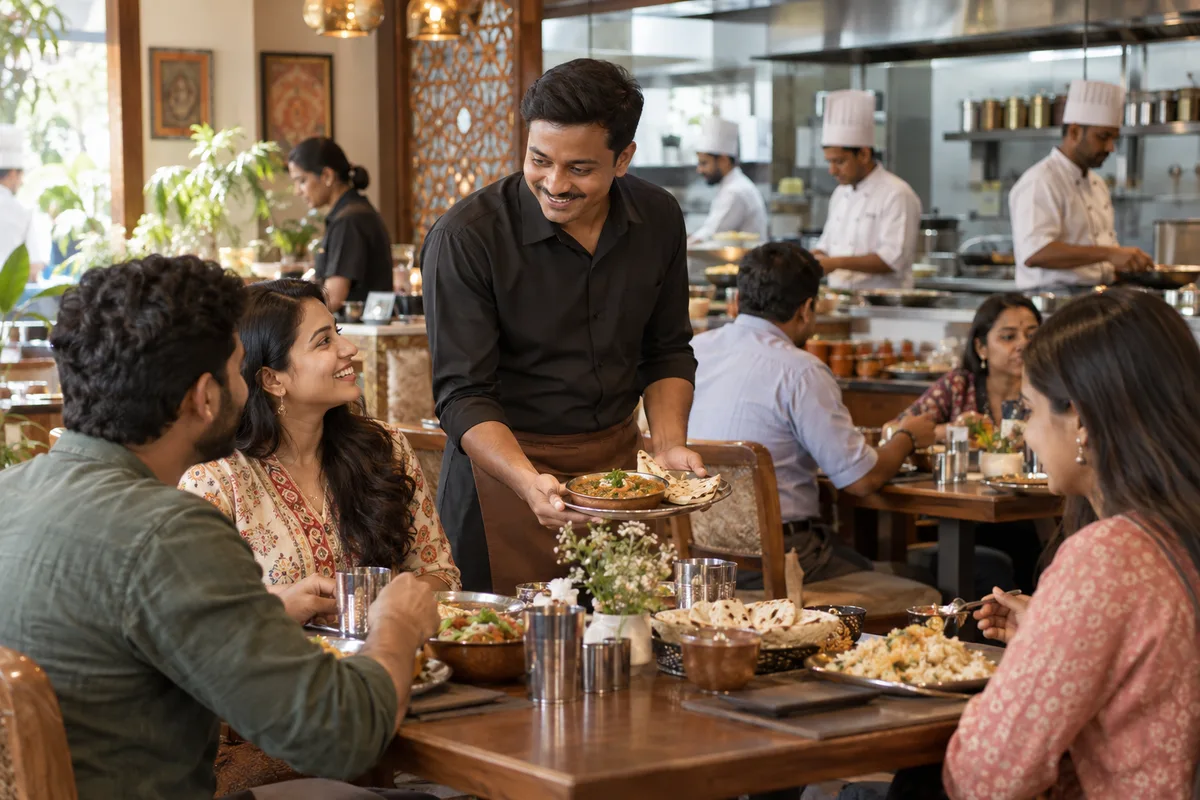
What reputation management means
Reputation management is watching what is said about your business across Google, social media and review sites, and responding to it before it changes a buyer's mind. GullySales monitors mentions, drafts responses to negative reviews and flags recurring complaints back to your team.
Last updated 5 Oct 2026. Rules for this trade differ by state and professional body, and they change. We describe restrictions in general terms, so check the current position with your own council or adviser before you publish anything.
For restaurants
Where it usually goes wrong, and what we would do.
“Recent beats good”
A four point one with reviews from this week outsells a four point five whose last review was in March.
“Half the complaints are about waiting”
Slow service on a Saturday, a table held for a no-show, a delivery that arrived cold. A reply naming the fix reads differently.
“The reviewer is not the reader”
You are writing for the next hundred people scrolling past, not for somebody who was angry three months ago.
What we do
What we deliver for restaurants.
Every deliverable, what it covers for you, and the result it is there to produce. Nothing here is an extra.
A review ask the staff can actually do
A short line for the server at the bill and a code on the receipt, with whoever is on the floor responsible rather than the owner remembering.
Result: New reviews arrive steadily instead of in bursts.
Replies written for the complaints you keep getting
Prepared wording for slow service, a wrong order, parking and price, adapted each time and posted within the week, naming what changed in the kitchen or on the floor.
Result: The old complaint stops being the first thing read.
Zomato and Swiggy reviews watched as well as Maps
The app ratings, the delivery complaints and the photographs customers upload, checked on the same schedule as the Google listing.
Result: A falling app rating is caught before it costs you the listing.
Photographs on the listing replaced this season
Current dishes, current prices, the interiors as they look now and the parking, shot and uploaded over the pictures from the week you opened.
Result: People arrive expecting what they get.
A note of what each complaint was really about
Every critical review logged with the day, the shift and the cause, so a problem with Saturday service shows up as a pattern.
Result: You fix the kitchen, not the review.
Rating and review counts in the report
New reviews, the rating on each platform, how fast each was answered and the complaints grouped by cause, read against the baseline.
Result: You see whether the floor is actually improving.
How the result is measured
- Average rating
- Response time to reviews
- Negative mentions resolved
Recorded as a baseline before work starts, so every later report has an honest comparison.
What to do with each review
How to answer each kind of review a restaurant gets.
- Praise for a dish
- Thank the guest and name the dish they mentioned. Tell the kitchen the same day, because cooks rarely hear praise. Invite them back without offering a free item for the review.
- Slow service on a busy night
- Apologise for the wait and say one thing you changed, such as a second billing counter or a rota on weekends. Then check the rota for the rush hour that guest described.
- Cold or spilt food on Swiggy or Zomato
- Say packaging and the ride are shared with the platform. Note which dishes travel badly and change the box or the item. If the fault was clearly the rider's, raise it through the platform's own partner process.
- Hair or hygiene allegation
- Do not argue. Apologise, say the manager will call, and ask for the order or table detail. Inside, check caps and aprons, and that your food licence number is displayed as the rules require.
- Price or portion complaint
- Point to the menu price the guest saw, and say if a portion or price changed. Check that the printed menu, the app menu and the Maps menu photograph all match.
- One star from someone who never ate
- Ask politely for the order number or date. If no record exists, say so in the reply. If it breaks the platform's rules, report it through the platform's own process.
Who it is for
This is written for these restaurants.
- Family restaurants and multi-cuisine dining
- South Indian vegetarian restaurants and darshinis
- Biryani, kebab and non-vegetarian specialists
- Regional cuisine restaurants
- Casual dining and bar restaurants
- Quick service restaurants and food courts
- Cloud kitchens and delivery-only brands
- Office canteens and food service operators
- Multi-outlet restaurant groups
Not for
It is not the right fit if.
- The complaints on your listing are true and unfixed, so replies and review requests would only bring more of them.
- No one has authority to answer a reviewer, so replies would sit in drafts or contradict one another.
How it works
How the reputation management work runs
The work itself, in order. How an engagement starts, from your brief to a written scope, is set out on our method page.
- 1
Search your name as a stranger would
We search the business, its main product names and the owner's name, on a phone and a laptop, and record what appears.
- 2
Catalogue every mention
Reviews, news, listings, social posts and forum threads are sorted into accurate and positive, accurate and negative, and wrong. Each group gets a different action.
- 3
Agree the replies and the owner of each
Replies are drafted and approved by you. Anything involving a refund, a clinical matter, a legal claim or a named employee goes to the right person in your business before anything is posted.
- 4
Fix what you control
Listings, profile details and your own pages are corrected, and pages worth ranking for your name are strengthened with accurate information.
- 5
Monitor and report
The agreed places are checked on the agreed schedule. The name search is repeated and compared with the first record.
Where this fits
Three pieces of sales work, in this order.
This work sits inside sales management. A target, a review routine and someone who owns the number.
Step 1
Sales audit
Find where deals are being lost and what to fix first.
Start here if you cannot say where orders are lost.
Step 2
Sales process design
One written way to sell, from first enquiry to repeat order.
Start here if every salesperson sells differently.
Step 3 · you are here
Sales management
A target, a review routine and someone who owns the number.
Start here if the team has targets and no routine.
FAQ
Questions owners ask before they call.
Not here? More answers, or ask on WhatsApp.
Somebody left a one-star review and never ate here. What now?
Should we reply to the good reviews too?
A guest wrote the review in Kannada. Do we reply in English?
A waiter is named in a bad review. What do we do with the staff?
How much does it cost?
How long is the contract?
How soon will we see results?
Who will actually do the work?
What do you need from us?
What if we are not happy with the work?
From the blog
Further reading for restaurants.
 6 min read · 21 Sept 2026Radio advertising vs social media advertising: where should your money go?Radio reaches a driver who cannot click. Social reaches a thumb that can. One buys a name people remember, the other buys the enquiry itself.
 7 min read · 21 Sept 2026Local audience targeting strategyThree different people are local to you: the one who lives near you, the one who works near you, and the one searching near you. The settings that reach each are different.
 6 min read · 21 Sept 2026Influencer marketing vs social media advertising: which one should you pay for?An ad is a message you control, shown to people you choose. A creator post is a recommendation you do not control, shown to people who chose the creator.
More for restaurants
Everything else we would do for you.
Or start from the overview: sales and marketing for restaurants.
Your next practical step
Tell us what you are trying to grow, and we will read it before we call.
Eight short steps, mostly taps. Skip anything you would rather answer on the call.