FMCG distributors · Lead generation
Find the next outlets to cover and the next company to represent.
Lead generation for an FMCG distributor means finding the shops, wholesalers and institutional buyers that are not on your beat yet, and finding the companies about to open a territory. GullySales works on the outlet map, the capability profile and the enquiry log that turn those names into first orders and appointments.
Scope, fee, reporting and term are agreed in writing after we have read your brief and spoken to you.
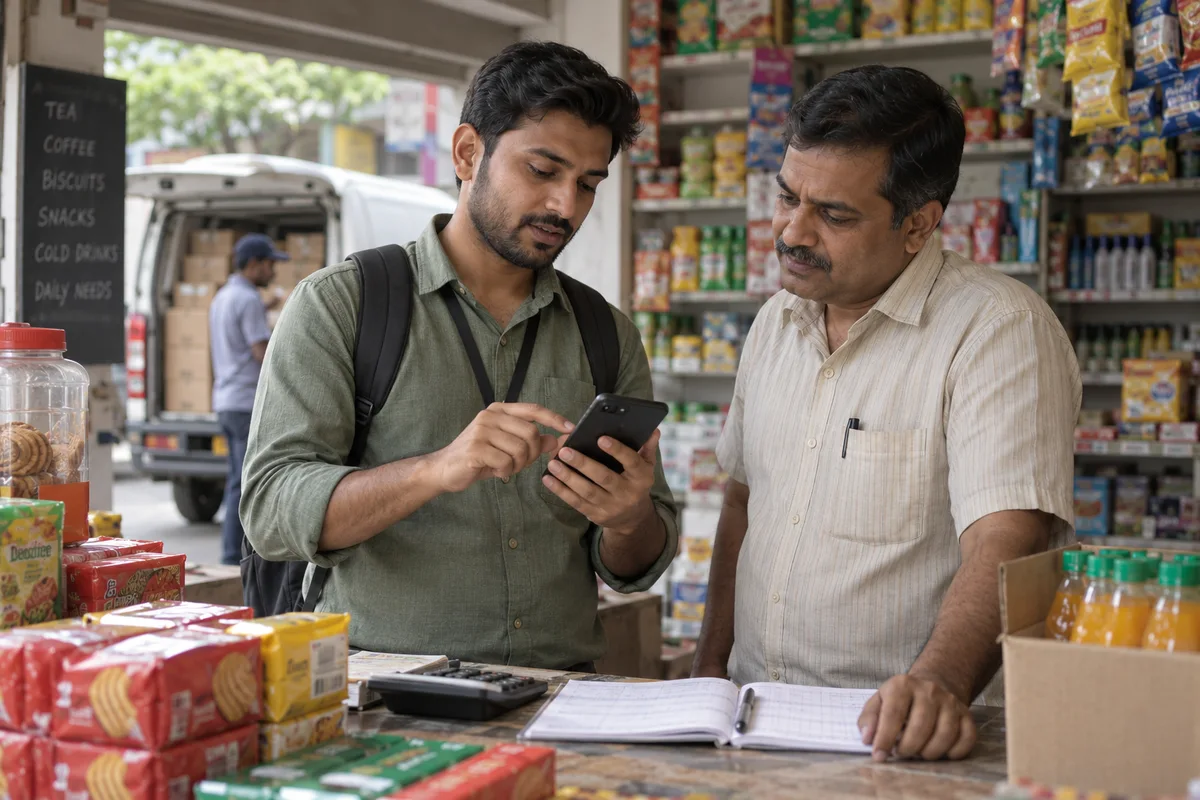
What lead generation means
Lead generation is the combined work of every channel that brings in a new enquiry, whether from search, adverts, referrals or a stall at an exhibition. GullySales runs these channels together and reports the number of enquiries each one produced, not the activity behind it.
Last updated 18 Oct 2026.
For FMCG distributors
Where it usually goes wrong, and what we would do.
“An uncovered street is a lead list already”
Every locality on the town map has shops your salesmen have never entered. Setting the beat routes against the map shows which lanes, markets and new colonies sit outside coverage, and each uncovered shop is a prospect with an address and a phone to call.
“A company announcing a territory is a lead with a deadline”
Brands tell their regional managers first and the trade press later. A distributor who hears late sends a profile after the shortlist is made, so watching which companies are expanding in your district matters more than a general mailer to every brand.
“Institutional buyers search for a supplier, not a salesman”
A hostel warden or a caterer looks for a bulk supplier on Google and WhatsApp and does not see your kirana beat. Without a listing and a rate sheet, that enquiry goes to the wholesaler who picked up the phone.
“A lead with no named salesman goes nowhere”
A shop owner mentioned at the godown counter, a caterer's call to the owner's phone and a sub-distributor's message all vanish unless one person is assigned and one register records them.
What we do
What we deliver for FMCG distributors.
Every deliverable, what it covers for you, and the result it is there to produce. Nothing here is an extra.
Uncovered outlet map
Beat routes marked on a town map, with shops outside coverage listed by locality so each salesman holds a named set to visit.
Result: A list of uncovered shops by locality, each assigned to a salesman.
Brand watch list
A list of companies expanding in your district, with the regional manager's role and the date you last wrote to them.
Result: You can see which companies you have written to and which you have not.
Capability profile
Outlet count, towns, vehicles, godown space, brands held and collection record in one file, ready to attach to a message.
Result: One file that answers a sales manager's first questions.
Enquiry log
One sheet where every call, WhatsApp message and counter enquiry is entered with its source, its owner and its next step.
Result: Every enquiry carries a name and a next step.
Institutional rate sheet
A catalogue and rate sheet for hostels, canteens and caterers, with a Google Business Profile so a buyer searching for a supplier finds you.
Result: A rate sheet you can send straight back to a bulk enquiry.
How the result is measured
- Enquiries generated
- Cost per enquiry
- Enquiries by source
Recorded as a baseline before work starts, so every later report has an honest comparison.
What to capture or send
What the beat register should record about a shop before it becomes an outlet.
- Shop name and lane
- Write the shop name with the lane or market it sits in, so two shops called Sri Lakshmi Stores are never merged and a salesman can find the right one.
- Brands the shop already stocks
- Record which company codes are on the shelf. It tells you which of your lines the shop does not carry yet and which rival distributor supplies it.
- Who places the order
- Note whether the owner, a son or a counter boy decides. The person who counts stock on a Sunday is the one your salesman should speak to.
- Cash or credit asked
- Capture what the shop expects on first order. A request for thirty days on day one is a collection risk the owner should see before the van loads.
- Company contact for a territory
- For a brand lead, note the area sales manager's name and the territory under review, so your coverage details reach the right desk when it opens.
Who it is for
This is written for these FMCG distributors.
- Distributors for packaged food, biscuits and snacks brands
- Home and personal care distributors for soaps, detergents and toiletries
- Beverage and bottled water distributors with chilled-outlet coverage
- Staples and edible oil distributors serving wholesalers and kiranas
- Dairy and ice cream distributors with cold-chain vehicles
- Multi-brand FMCG distributors holding four or five company codes
- Super stockists who supply sub-distributors in several towns
- Modern trade and institution suppliers to supermarkets, canteens and hotels
Not for
It is not the right fit if.
- You have no salesman free to visit a new shop within the beat, so new leads would only sit in a list.
- You hold only one company code and have no credit policy yet, so every new outlet would arrive without terms.
How it works
How the lead generation work runs
The work itself, in order. How an engagement starts, from your brief to a written scope, is set out on our method page.
- 1
Understand your capacity
We ask how many enquiries your team can answer well, who answers after hours, and what a good enquiry looks like. Without this, the system fills a funnel nobody is watching.
- 2
Audit current sources
We read your call log, WhatsApp chats, enquiry sheet and platform dashboards. The baseline is recorded: enquiries by source, reply time, conversion and cost per order.
- 3
Strategise the channel mix
Search and maps are chosen for people ready to buy, ads for people who are not yet looking, and content and referrals for trust.
- 4
Implement capture and follow-up
Pages, forms, tags, the lead record and the first-reply message are built and tested end to end. We submit test enquiries ourselves before any media money is spent.
- 5
Measure and optimise
Enquiries are traced to source and judged by what became orders, not by volume alone. Channels that fill the sheet with poor enquiries are cut back. How often you are reported to is agreed in writing.
Where this fits
Three pieces of sales work, in this order.
This work sits inside sales process design, at stage 1, prospecting and lead generation. The audit comes before it, and sales management keeps it running.
Step 1
Sales audit
Find where deals are being lost and what to fix first.
Start here if you cannot say where orders are lost.
Step 2 · you are here
Sales process design
One written way to sell, from first enquiry to repeat order.
Start here if every salesperson sells differently.
Step 3
Sales management
A target, a review routine and someone who owns the number.
Start here if the team has targets and no routine.
FAQ
Questions owners ask before they call.
Not here? More answers, or ask on WhatsApp.
Where do new retailer leads come from?
Can you find us brands that want a distributor?
Should we pay for online ads to get retailers?
Should we count a shop as a lead before it orders?
How much does it cost?
How long is the contract?
How soon will we see results?
Who will actually do the work?
What do you need from us?
What if we are not happy with the work?
More for FMCG distributors
Everything else we would do for you.
Closest to this: leads and follow-up
Also for FMCG distributors
Or start from the overview: sales and marketing for FMCG distributors.
Your next practical step
Tell us what you are trying to grow, and we will read it before we call.
Eight short steps, mostly taps. Skip anything you would rather answer on the call.