FMCG distributors · Digital marketing
Spend digital effort where the buyers who pick distributors actually look.
Digital marketing for an FMCG distributor is a small mix of website, Google listing, LinkedIn, WhatsApp and email that reaches company managers, wholesalers and institutional buyers. GullySales picks the channels that suit a firm whose retailers are served by a beat, and drops the rest.
Scope, fee, reporting and term are agreed in writing after we have read your brief and spoken to you.
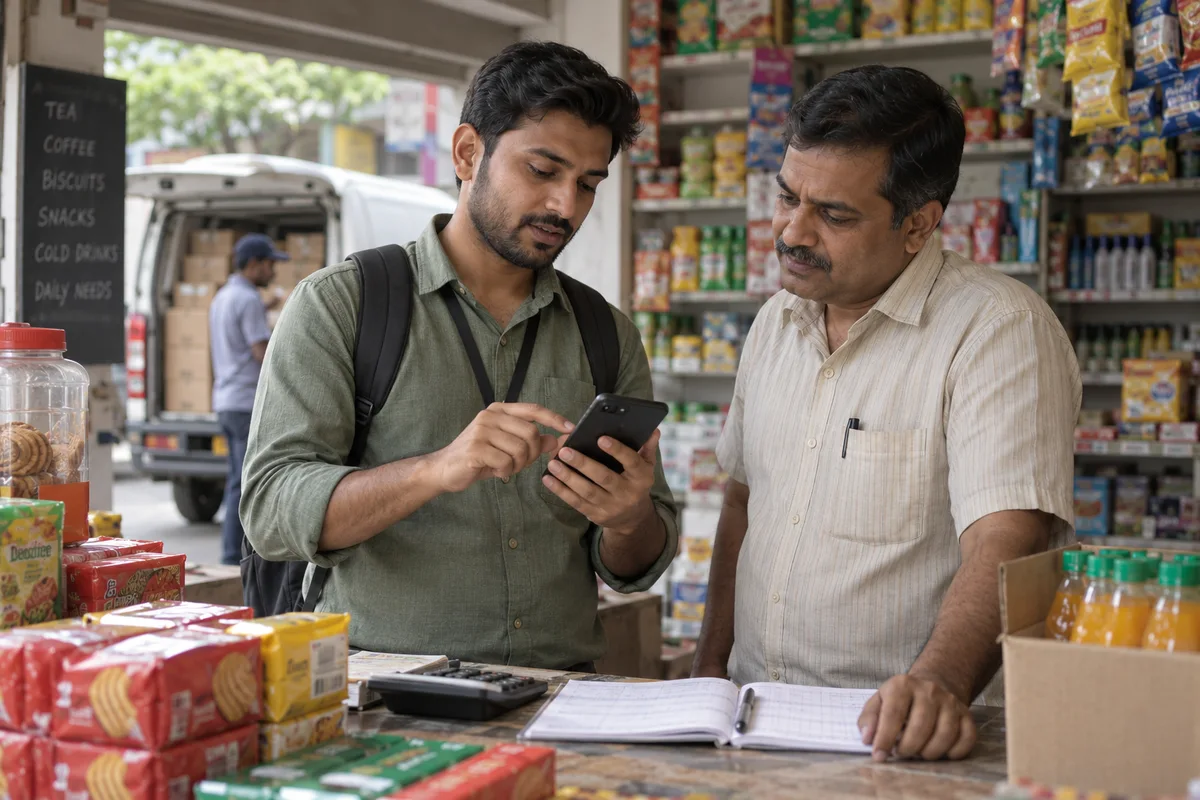
What digital marketing means
Digital marketing is the combined work of search, social media, advertising and website channels running together rather than as separate projects with separate people. GullySales runs these as one connected system so a change in one channel, such as a new offer, is reflected everywhere at once.
Last updated 18 Oct 2026.
For FMCG distributors
Where it usually goes wrong, and what we would do.
“The brand already pays for consumer advertising”
Shoppers see the company's own advertisements. A distributor who buys the same space repeats a spend that belongs to someone else. Your digital work faces trade buyers, not shoppers.
“Paid ads suit bulk supply, not the beat”
A Google ad for a supplier search can bring a hostel or caterer in your town, but retailers do not arrive through ads. Test a small budget on bulk buyers once the page and the phone line are ready.
“Email reaches managers at their desks”
A short email with the capability document attached suits a sales manager who wants to look at a distributor without taking a call. A cold call gives them nothing to forward to a colleague.
“A channel with no owner decays”
A profile nobody updates shows an old phone number. Give each channel one named person and drop a channel nobody will look after.
What we do
What we deliver for FMCG distributors.
Every deliverable, what it covers for you, and the result it is there to produce. Nothing here is an extra.
Channel plan by buyer
A table naming each buyer, the channel that reaches them and the person who runs it.
Result: One page that matches buyer to channel.
Website and profile baseline
The website, Google listing and LinkedIn page checked so the same facts appear on all three.
Result: The firm's name, phone and towns match everywhere.
Trade outreach email set
A short email and capability document for company managers, with follow-ups written to match the reply.
Result: Emails ready to send as each territory is announced.
Small paid test for bulk supply
A search ad aimed at institutional buyers in your towns, with a budget you set and a stop rule agreed first.
Result: A test with a budget, a stop rule and a count of enquiries.
Enquiry source tagging
Every enquiry tagged with where it came from, entered in the enquiry log.
Result: You can see which channel brought which enquiry.
How the result is measured
- Enquiries across channels
- Cost per enquiry overall
- Channel mix by contribution
Recorded as a baseline before work starts, so every later report has an honest comparison.
Searches your buyers type
Where brands, bulk buyers and retailers look for a distributor, and what each should find.
- distributor appointment in my district
- The firm's page and map listing, so a company executive checking your name finds the towns, vehicles and codes in one place.
- wholesale grocery supplier near me
- A map listing and a short page for small traders and canteens, with a number that reaches a person who can quote.
- company codes held by distributor
- A plain list on the site of the codes you hold. It serves a retailer who wants a particular brand and a manager who wants to see your spread.
- how to become a sub-distributor
- A page for the next tier, stating the towns you supply and how orders and credit work, so enquiries come in with the right details.
- trade directory entry
- A claimed and corrected listing in the directories buyers actually check, so a wrong phone number or old address stops costing orders.
Who it is for
This is written for these FMCG distributors.
- Distributors for packaged food, biscuits and snacks brands
- Home and personal care distributors for soaps, detergents and toiletries
- Beverage and bottled water distributors with chilled-outlet coverage
- Staples and edible oil distributors serving wholesalers and kiranas
- Dairy and ice cream distributors with cold-chain vehicles
- Multi-brand FMCG distributors holding four or five company codes
- Super stockists who supply sub-distributors in several towns
- Modern trade and institution suppliers to supermarkets, canteens and hotels
Not for
It is not the right fit if.
- Your phone is answered only when the owner is at the godown, so the enquiries would meet a missed call.
- The beat is fully covered and the company is not opening new territory, so extra visibility would find no new use.
How it works
How the digital marketing work runs
The work itself, in order. How an engagement starts, from your brief to a written scope, is set out on our method page.
- 1
Agree the one aim
We settle what the campaign must achieve, such as enquiries for a launch or footfall for an event, and the date it must be live.
- 2
Check what is ready
We list the channels you already run, who runs them, and what each can produce in the time available. Anything that cannot be done properly is left out.
- 3
Write the idea and the message sheet
We draft the one-sentence idea, test it against each planned format, and fix the wording that all channels will copy.
- 4
Brief every channel from the same sheet
Your agency, freelancer or in-house person receives the message sheet and calendar. Their work is checked against the sheet before it goes out.
- 5
Run on the shared calendar
Channels go live together. If the offer changes, every channel is changed on the same day from the same sheet.
- 6
Measure as one campaign
Enquiries and orders are read against the baseline. The reporting schedule is agreed in writing with the scope.
Where this fits
Three pieces of sales work, in this order.
This work sits inside sales process design, at stage 0, foundation. The audit comes before it, and sales management keeps it running.
Step 1
Sales audit
Find where deals are being lost and what to fix first.
Start here if you cannot say where orders are lost.
Step 2 · you are here
Sales process design
One written way to sell, from first enquiry to repeat order.
Start here if every salesperson sells differently.
Step 3
Sales management
A target, a review routine and someone who owns the number.
Start here if the team has targets and no routine.
FAQ
Questions owners ask before they call.
Not here? More answers, or ask on WhatsApp.
Should we spend on Facebook or Instagram ads?
What will it cost?
How do we judge digital work?
Should the digital effort reach retailers or brands first?
How long is the contract?
How soon will we see results?
Who will actually do the work?
What do you need from us?
What if we are not happy with the work?
More for FMCG distributors
Everything else we would do for you.
Closest to this: strategy and research
Also for FMCG distributors
Or start from the overview: sales and marketing for FMCG distributors.
Your next practical step
Tell us what you are trying to grow, and we will read it before we call.
Eight short steps, mostly taps. Skip anything you would rather answer on the call.