FMCG distributors · Buyer persona
Describe the people who decide whether you grow, in their own words.
A buyer persona for an FMCG distributor is a written description of one person who decides on an order or an appointment: what they want, what they fear and how they like to be reached. GullySales builds the personas from your owner's and salesmen's conversations, not from guesses.
Scope, fee, reporting and term are agreed in writing after we have read your brief and spoken to you.
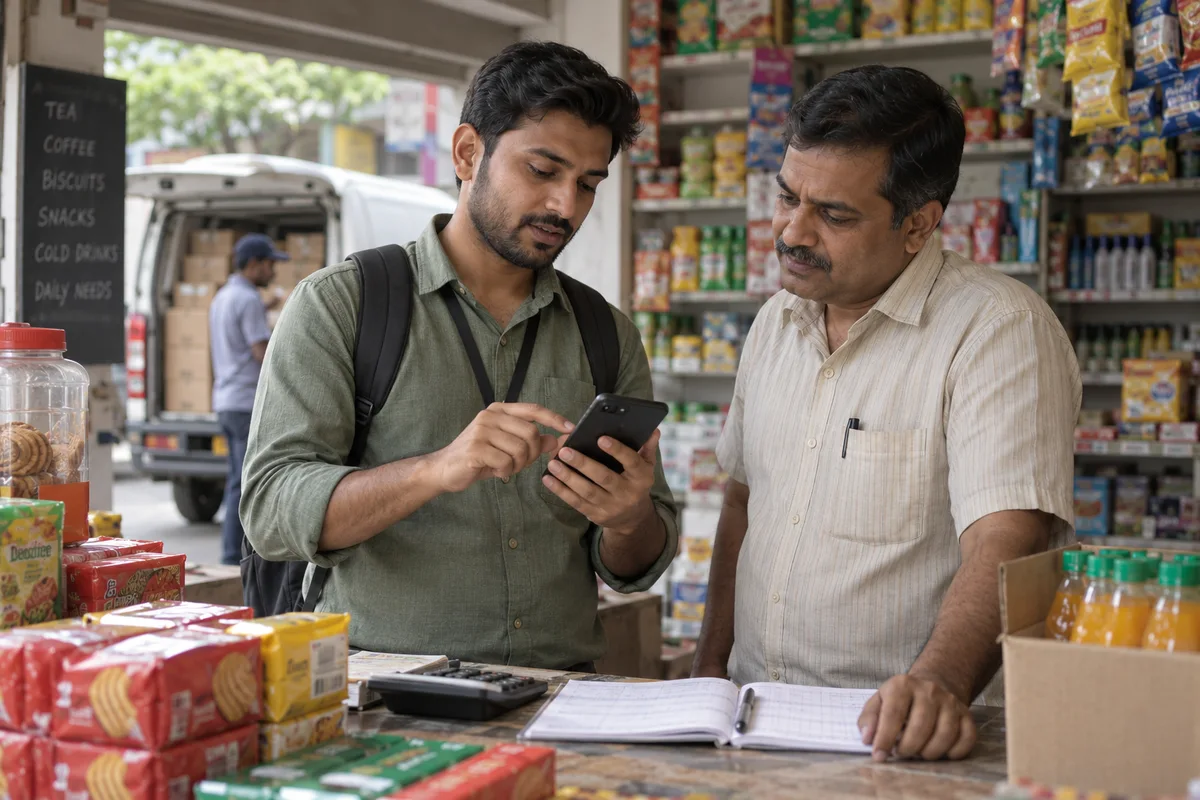
What buyer persona means
A buyer persona is a plain description of the kind of customer who actually buys from you. It includes what they search, what worries them and who else they ask before deciding. GullySales builds this from real enquiries and past sales rather than a generic template, then uses it to write every page and advert.
Last updated 18 Oct 2026.
For FMCG distributors
Where it usually goes wrong, and what we would do.
“The kirana owner buys on an empty shelf and on trust”
The shopkeeper orders when stock runs out and wants the delivery in the promised slot and the scheme as printed. Credit terms and an uncomplicated return of damaged cartons weigh more than a small price difference.
“The regional sales manager judges risk”
The manager wants a distributor who funds stock, covers outlets and files claims without chasing. A persona for this reader lists the proofs the manager looks for and the colleagues who will be asked.
“The wholesaler is both customer and rival”
A wholesaler in the next town buys from you at one rate and competes for some of the same shops. That persona records what the wholesaler needs and where the territory line sits, so the talk does not become a dispute.
“The canteen or hostel buyer signs but does not shop”
A warden, mess contractor or caterer orders from a list someone else approves and pays against an invoice. The persona notes who approves, who pays and who receives the delivery.
What we do
What we deliver for FMCG distributors.
Every deliverable, what it covers for you, and the result it is there to produce. Nothing here is an extra.
Persona sheets
One page each for the kirana owner, wholesaler, sub-distributor, company manager and institutional buyer you deal with.
Result: A sheet for every kind of buyer you serve.
Beat interview questions
A short set of questions the salesman asks on the beat, with a place to record the answers in the buyer's words.
Result: Answers recorded against the outlet, not left in memory.
Objection and reply list
The doubts each buyer raises, such as late delivery or a damaged carton, with a reply agreed by the owner.
Result: Salesmen answer the same doubt the same way.
Message map
Which message goes to which persona, by WhatsApp, call or visit, and in which language.
Result: A table of buyer, message and channel.
Persona tag on the register
A column on the outlet register marking each retailer's buyer type, so lists can be cut by persona.
Result: Any list of outlets can be filtered by buyer type.
How the result is measured
- Enquiry match to persona
- Conversion rate by persona
- Content aligned to persona
Recorded as a baseline before work starts, so every later report has an honest comparison.
Who is asking
The people around the godown who decide whether an outlet orders or a territory is awarded.
- Kirana owner at the counter
- Wants to know whether you will deliver on the day the shelf empties, what the scheme is this time and whether a credit note will really arrive.
- Wholesaler buying for sub-retail
- Compares your rate list with the next distributor's and asks about minimum order, delivery to the shop and how returns of damaged stock are handled.
- Canteen or hotel purchase head
- Needs one invoice a delivery, pack sizes that match the menu and a person to call when a carton is short. Brand names matter less than reliability.
- Area sales manager of a company
- Looks for coverage count, vehicles, godown space and collection record. Wants to see that the territory will be served before recommending an appointment.
- Owner's son joining the business
- Asks which records can be read without the old notebook, and what must be fixed before an expansion to a second company code.
Who it is for
This is written for these FMCG distributors.
- Distributors for packaged food, biscuits and snacks brands
- Home and personal care distributors for soaps, detergents and toiletries
- Beverage and bottled water distributors with chilled-outlet coverage
- Staples and edible oil distributors serving wholesalers and kiranas
- Dairy and ice cream distributors with cold-chain vehicles
- Multi-brand FMCG distributors holding four or five company codes
- Super stockists who supply sub-distributors in several towns
- Modern trade and institution suppliers to supermarkets, canteens and hotels
Not for
It is not the right fit if.
- You have not spoken to ten of your own outlets recently, so a persona would repeat what you assume.
- Your only buyers are two sub-distributors, so separate roles would add paper without changing anything.
How it works
How the buyer persona work runs
The work itself, in order. How an engagement starts, from your brief to a written scope, is set out on our method page.
- 1
Understand the current view
We start with how your team currently describes the customer, since the gap between belief and reality is the finding itself.
- 2
Audit past enquiries and sales
We look at recent enquiries and closed deals to see who actually bought, not who was assumed to buy.
- 3
Interview customers and staff
Structured conversations with recent buyers, held as talk about the last purchase and not a questionnaire. We ask what happened before they called, who else was involved and what they compared. Customers agree before we contact them, and their answers are reported without names.
- 4
Build the personas
Findings are written into short, usable persona documents rather than a long report.
- 5
Apply to your marketing
We show where each persona should change a page, an ad or a script you already have. The sales team reads the drafts and says which ring true. A persona they do not recognise is rewritten.
Where this fits
Three pieces of sales work, in this order.
This work sits inside sales process design, at stage 0, foundation. The audit comes before it, and sales management keeps it running.
Step 1
Sales audit
Find where deals are being lost and what to fix first.
Start here if you cannot say where orders are lost.
Step 2 · you are here
Sales process design
One written way to sell, from first enquiry to repeat order.
Start here if every salesperson sells differently.
Step 3
Sales management
A target, a review routine and someone who owns the number.
Start here if the team has targets and no routine.
FAQ
Questions owners ask before they call.
Not here? More answers, or ask on WhatsApp.
How many personas do we need?
Where does the information come from?
Do personas change?
Should a persona include the retailer's age and income?
How much does it cost?
How long is the contract?
How soon will we see results?
Who will actually do the work?
What do you need from us?
What if we are not happy with the work?
More for FMCG distributors
Everything else we would do for you.
Closest to this: strategy and research
Also for FMCG distributors
Or start from the overview: sales and marketing for FMCG distributors.
Your next practical step
Tell us what you are trying to grow, and we will read it before we call.
Eight short steps, mostly taps. Skip anything you would rather answer on the call.