Rice mills · Manufacturing
Sell your rice by the bag to buyers who already trust your name.
A trader in the grain market opens a sample bag on the counter, rubs a handful between the palms and puts one question to the mill's agent: is this the same rice as last lot? If the answer is a pause, the order goes to the next mill. Your mill can lose the order in that pause, long before price is discussed.
Scope, fee, reporting and term are agreed in writing after we have read your brief and spoken to you.
In one paragraph
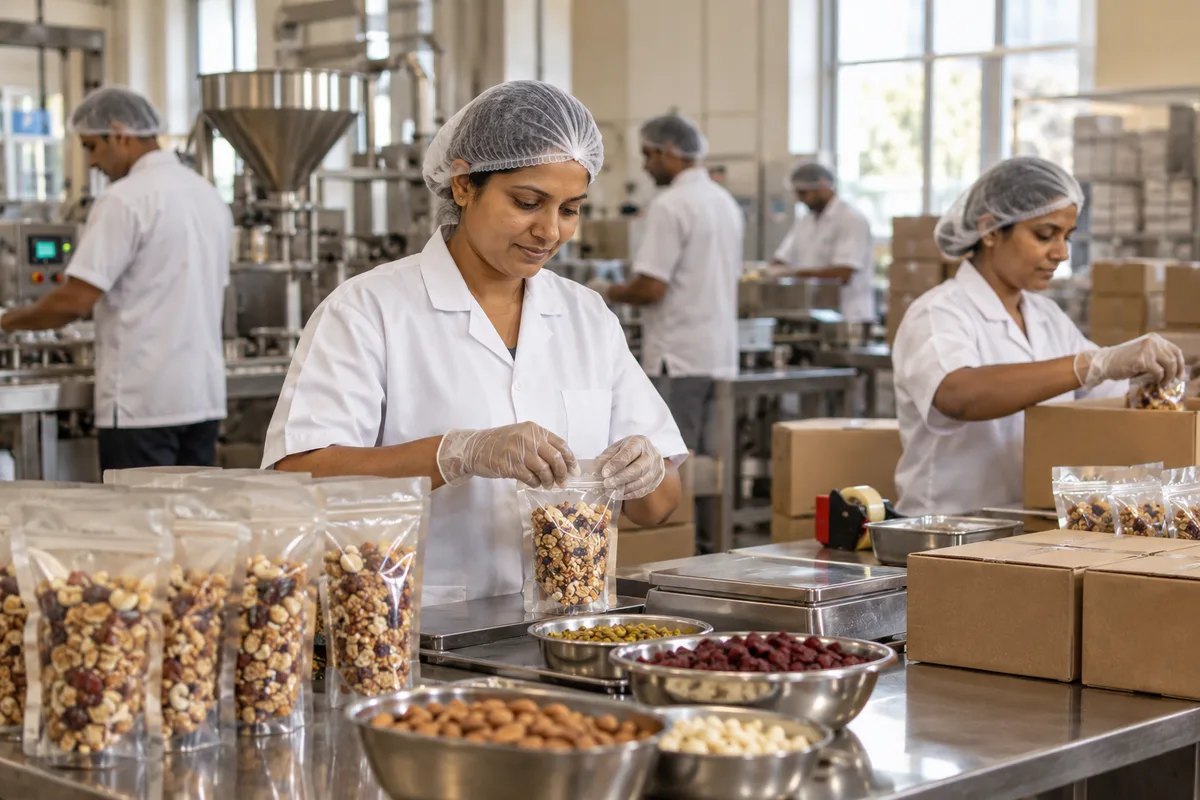
Rice mill sales and marketing is the work of getting a mill's raw, parboiled and steamed rice onto the shelves of wholesalers, retailers and caterers. It covers brand packs, loose bags and bulk lots. GullySales builds the enquiry register, grade sheets and sample log, so a trader's phone call is recorded and followed up.
The mill that wins repeat orders is the one whose grade, bag size and rate are easy to find and whose enquiries are not lost between a landline, three WhatsApp groups and a notebook. Selling rice is a relationship trade, but the relationship needs a record behind it.
Last updated 18 Oct 2026.
How buyers decide
How rice mills are chosen.
Wholesale buyers in the mandi and the town grain market decide on a sample. They check grain length, breakage, colour and how the rice cooks, then ask for the rate per quintal or per 25 kg and 50 kg bag. A trader who has been shorted once on quality does not come back, so consistency from lot to lot counts for more than a low rate.
Brand distributors and supermarket buyers look at the pack. They want clean bag printing, a barcode, a stated grade and a mill that can supply the same pack month after month. Hostels, caterers and temple kitchens buy in bulk and look for steady supply and a fair credit period.
Exporters and larger packers go through quality checks and visit the mill. For them, the mill's records and the cleanliness of the floor are part of the sale. Food safety rules and licences apply to a rice mill, differ by state and change, so check your own licence position with your FSSAI consultant or adviser.
The problem
What usually goes wrong for rice mills.
What owners tell us on the first call, in their words.
“Buyers ask for the rate on WhatsApp and we answer after the competitor has”
Rate enquiries arrive on three phones at once. By the time the owner replies from the mill floor, the trader has already booked from someone else.
“We sell through two agents and do not know who our real customers are”
The agents hold the traders' numbers. If one leaves or changes mills, the customers go along and we have no list of our own.
“Our rice is good but our bag looks like everyone else's”
A plain printed bag with a grade name gives a retailer no reason to stock it ahead of the next mill's, so we sell on rate alone.
“Parboiled and raw rice buyers are different people and we treat them the same”
The southern household buyer, the hotel kitchen and the export agent want different grades and pack sizes, but we send everyone the same price list.
“Payment delays make us wary of new buyers”
We do not know which new traders pay on time, so we refuse good orders or take bad ones, and the credit book decides sales instead of our team.
“Nobody outside our district knows our mill exists”
Buyers in the next state search for a mill that supplies their variety and find only a listing with an old phone number.
What we do
What we do for rice mills.
Everything included for rice mills.
A grade and pack catalogue buyers can forward
One clear sheet per grade showing variety, grain description, bag sizes and how to order, built so a trader can forward it on WhatsApp to the shops that buy from that trader.
A rate and stock broadcast list
A list of traders, distributors and caterers grouped by what they buy, with a simple way to send a rate and stock update to the right group instead of the whole list.
An enquiry register for the office
Every call, WhatsApp message and mandi visit recorded with the buyer, grade, quantity and the next call date.
A sample routine
A set way to send sample packs, note the buyer's reaction and call back, so each sample leads to a conversation rather than a forgotten parcel.
Pack and label design for brand rice
Bag artwork that states the variety and grade plainly and stands out on a distributor's stack, with a clean layout for the barcode and mandatory label details.
Google Business Profile and IndiaMART listings
Profiles for the mill and its brand with real photographs of the floor, the stock and the packing line, and a routine for answering every enquiry that comes through.
How the result is measured
- Enquiries by source and by grade
- Samples sent against trial orders placed
- New buyers added to the register
- Repeat orders from existing traders
- Rate enquiries answered and how quickly
- Orders by buyer type
Recorded as a baseline before work starts, so every later report has an honest comparison.
Every service, written for rice mills
Each has its own page: what it involves for rice mills, what you get, and what it is measured on.
- Lead generationFind the traders and distributors who will buy your grade, bag after bag.
- SEOAppear when a buyer searches for the rice variety you mill.
- Social media marketingShow the grain, the floor and the bag so a trader trusts the next sample.
- Content marketingWrite what a trader needs to judge your rice before the sample arrives.
- Buyer personasKnow whether you are selling to a trader, a cook or a procurement desk.
- CRMKeep every trader, rate and sample in one record that belongs to the mill.
- Follow-up systemsTurn each sample bag and rate quote into a call that actually gets made.
- WhatsApp marketingSend rate and stock updates to the right buyers, not to every contact.
- Digital marketingUse search, listings and messages to reach buyers your agents never visit.
- WebsiteBuild a mill website that a trader can read, trust and forward in a minute.
Worth a page and a campaign of their own
Wholesale and mandi trader orders · Brand packs for distributors and supermarkets · Bulk supply to hostels, caterers and canteens · Export enquiries and agent introductions · Sorted and polished grades at a better rate · A customer list the mill owns · Rate and stock updates sent to buyers on WhatsApp · Repeat orders from existing traders
Priority campaigns
Campaigns for what rice mills most want to sell.
Each one planned around when your buyers decide, and measured against the baseline.
New crop launch to the trade
A WhatsApp and phone round to existing traders at the start of the milling season, with the new lot's sample, grades and starting rates.
Distributor recruitment for brand packs
A short pitch and pack sample sent to grocery distributors in towns where you have no presence, followed up by phone.
Festival and wedding season supply push
A note to caterers, temple trusts and function halls before Ugadi, Pongal, Dasara and the wedding months, when rice is bought in large lots.
Hostel and canteen supply drive
Outreach to hostels, college canteens and catering contractors with a standing supply offer and a sample for the cook to test.
Export agent introductions
A mill profile, grade sheet and packing details sent to export agents and merchant exporters you choose.
Beyond search
Where we reach buyers of rice mills, beyond Google.
Search matters, but it is rarely the only way this industry's buyers find a supplier.
Grain merchants and mandi traders
Traders in your district and the next two, grouped by the grades they buy, each with a first call written and a rate-update group to join.
Grocery and kirana distributors
Distributors who already handle packed rice, shortlisted town by town, with a pack sample and margin sheet for each.
Caterers, hostels and temple kitchens
Catering contractors, hostel wardens and temple kitchen managers, who buy by the bag and want the cook to test a sample first.
Supermarket and wholesale club buyers
Category buyers at chains and cash-and-carry stores, who need a supplier introduction, barcoded pack details and a sample.
Export agents and merchant exporters
Merchant exporters and agents who handle the varieties you mill, approached with a mill profile and grade sheet.
Who it is for
This is written for these rice mills.
- Raw rice mills supplying town grain markets
- Parboiled rice mills for southern and eastern households
- Basmati and steamed rice processors
- Brand pack rice mills selling to supermarkets and kirana distributors
- Custom milling units working on a farmer or trader's paddy
- Modern rice mills with sorting and polishing lines
- Mills supplying hostels, caterers and institutional kitchens
- Mills selling rice bran and by-products alongside rice
Not for
It is not the right fit if.
- You want a guaranteed Google ranking or a guaranteed number of leads. Nobody honest can promise either.
- You need enquiries by next week and have nobody to answer them.
- You want posts and reach reported, not enquiries and orders.
How it works
From your first message to the first report.
No open-ended retainer. Every step gives you something in writing.
First
Your brief
You tell us what you need in a few short steps: your business, what you want, where enquiries come from and how they are handled.
After the brief
A conversation and a written scope
We read it, then talk with whoever handles your enquiries. If you want our help, the scope, the fee and the reporting come in writing, and nothing starts before you have read them.
Before work starts
Baseline recorded
The numbers this work is meant to move, such as enquiries, quotations, orders, visits or renewals, written down so every later report has an honest comparison.
After the baseline
The first fix goes live
The fix we agreed to start with is put in place and measured against the baseline, whether that is a reply, a follow-up, a page, a listing or the handover between marketing and sales.
As agreed
Report against the baseline
What moved, what did not, and what changes next, in plain words. How often you get it is set in writing before work starts.
At renewal
Renew on the numbers
The term ends and you decide whether to continue from the results. The length is agreed in writing before anything starts.
How the work runs for rice mills
- 1
Look at the book
Last season's buyers, grades, rates and unpaid bills, read together to show who buys again and where enquiries slipped away.
- 2
Set up the register
The enquiry register and buyer groups are built, and you decide who in the office replies to a rate request.
- 3
Build the catalogue and pages
Grain length, breakage and bag size lead each grade sheet, because that is the order in which a trader judges a sample.
- 4
Reach new buyers
Outreach to distributors, caterers and agents chosen with you, with samples sent through the routine.
- 5
Repeat orders
Buyers who ordered once get a call, each rate broadcast goes to the group that buys that grade, and traders who pay on time are asked who else they know.
Proof
What happened when owners fixed this.
Real clients, the work we did, and the result as it was recorded. Where no number was recorded, none is claimed.
HOPO Hardware
- Situation
- There was no website or online platform of any kind, so nothing showed the products, their features or their technical specifications. A dealer who wanted a specification had to ask for it every time.
- What we did
- Website and product catalogue
- Logo and colour palette
- Printed stationery
- Social accounts opened
- Result
- No numbers were recorded for this engagement. The work is described in full in the case study.
Also worked with
Chord Road Hospital · Curtain Label · Difesa Security Services · Felicity Inn · Hands On CSR · Implevista · Kambar Group · Kalessi · Kerur Pain Clinic · LL Trust · Lucky Deals · Natural Gases · NavaShakthi Souhardha · NewCom Logistics · Proton Technical Services · SB Engineering · Shakthi Foundation · Shakthi Group · Urbanest · Insyde Studio · Venkateshwara Laser Tech · Vivara Studios
Why us
Why owners pick GullySales over an agency.
Marketing and sales, as one job
Most agencies stop at the enquiry. We also fix what happens after it: the reply, the follow-up, the quote and the CRM.
The person on the first call does the work
No account managers in between. You are never handed to someone you have not met.
A baseline before anything starts
Your numbers are written down on day one, so every later report compares against something honest.
The fee in writing, split three ways
Our time, your media spend and production on separate lines. You always see what goes to us.
No guarantees we cannot keep
The term is agreed in writing and never a default twelve months. We never promise a ranking or a lead count, because nobody controls those.
One office, and we say so
Nagarbhavi, Bengaluru. We work across India by call and WhatsApp and travel when a session needs to be in person.
#257, 3rd floor, Sri Nanjundeshwara Complex, Nagarbhavi 8th Block, Outer Ring Road. How we work.
Engagement options
Ways to work with us.
Pick the size of commitment that fits. Every option starts with your brief and a conversation.
Option 1
The conversation on its own
A call after you send your brief. It says honestly whether you need outside help, and many fixes are ones your own team can make.
Option 2
One fix, scoped
Start with the fix that matters most, such as reply time or follow-up. The fee is in writing before anything starts.
Option 3
An ongoing programme
We run the work, report against the baseline, and you renew on the numbers. The term and the reporting are agreed in writing first.
Option 4
Guidance for your own team or agency
We plan, brief and check the work of your in-house team or current agency, instead of replacing them.
Your brief
Tell us what you need, and we will read it before we call.
Eight short steps about your business, what you want and who decides. Most questions are a tap, and you can skip any you would rather answer on the call.
FAQ
Questions rice mills ask before they call.
Not here? More answers, or ask on WhatsApp.
Can you help a small mill that sells only to local traders?
Do you create rice brand packs and labels?
Will online marketing work for loose bulk rice?
Can you get us export orders?
We depend on two agents. Is that a problem for you?
How much does it cost?
How long is the contract?
How soon will we see results?
Who will actually do the work?
What do you need from us?
Part of Manufacturing. See the other industries in the sector.
Your next practical step
Tell us what you are trying to grow, and we will read it before we call.
Eight short steps, mostly taps. Skip anything you would rather answer on the call.