Tool and die manufacturers · Social media
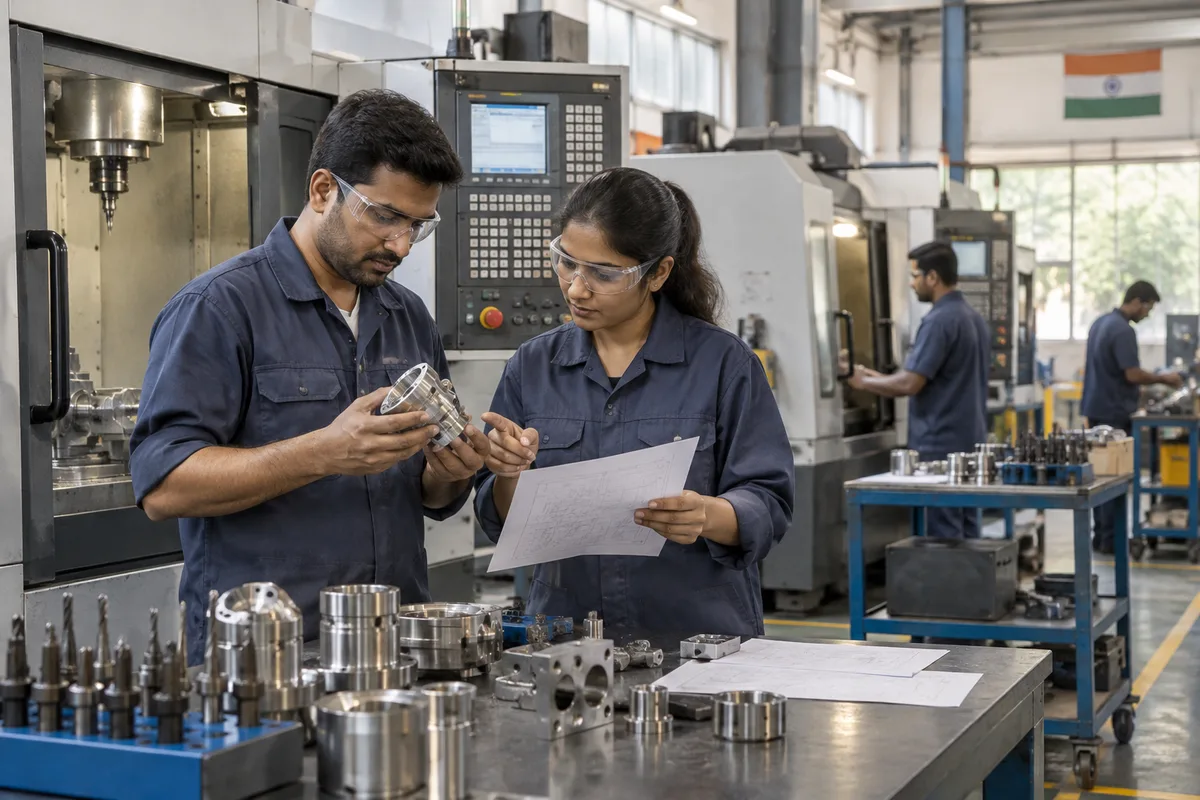
Show a die being built and tried out, so owners see the work before asking.
Social media for a tool room means short posts of dies in progress, tried-out parts and the people who design and fit them, aimed at owners and tooling heads who scroll LinkedIn and watch engineering videos. GullySales plans the post types and the review step that keeps customer details private.
Scope, fee, reporting and term are agreed in writing after we have read your brief and spoken to you.
What social media means
Social media is the ongoing posting your business does on platforms such as Instagram, Facebook and LinkedIn to stay visible to customers and prospects between purchases. GullySales plans a posting calendar, writes captions and designs the images so the page looks active and answers what a visitor would ask.
Also for tool and die manufacturers
- Content marketing for tool and die manufacturers
- Lead generation for tool and die manufacturers
- SEO for tool and die manufacturers
- Buyer personas for tool and die manufacturers
- CRM for tool and die manufacturers
- Follow-up systems for tool and die manufacturers
- WhatsApp marketing for tool and die manufacturers
- Digital marketing for tool and die manufacturers
Sales and marketing for tool and die manufacturers, the overview.
Last updated 18 Oct 2026.
For tool and die manufacturers
Where it usually goes wrong, and what we would do.
“Process posts hold an engineer's attention”
A strip layout beside the finished die and the stamped part tells a story in three images. Tooling engineers follow these because they show decisions, not slogans. A general post about quality gives them nothing to remember.
“Customer parts need permission”
Some parts belong to an auto or appliance customer who has not agreed to be shown. A post that reveals a part number or shape costs trust. A review step before posting protects the relationship.
“The audience is small and specific”
A tool room does not need a large following. It needs the stamping unit owners, tooling heads and sourcing engineers of its region to see the work. Following and tagging them matters more than reach.
“Try-out clips answer the biggest worry”
The buyer cannot judge a die until it runs. A short clip of the press stroking a tool, with the part dropping clean, speaks to that worry when a brochure cannot.
What we do
What we deliver for tool and die manufacturers.
Every deliverable, what it covers for you, and the result it is there to produce. Nothing here is an extra.
A post plan by tool stage
Posts keyed to design, machining, hardening, assembly and try-out, so one die gives a short series.
Result: One tool builds a run of posts.
A permission checklist
A short sheet that records whether the customer agreed to show the part, the name or only the design view.
Result: No post goes out without a recorded answer.
Caption templates in engineering terms
Captions that state tool type, part material, press tonnage and what was solved, written without slogans.
Result: Captions read like a note between engineers.
A LinkedIn profile for the tool room
A company page and owner profile with the tool types, press facility and gallery arranged for a purchase engineer.
Result: The profile answers a buyer's first check.
A short video routine
A simple way to capture try-out clips on a phone and label them with the part family.
Result: Try-out footage is gathered as part of the job.
How the result is measured
- Posts published
- Engagement rate
- Enquiries from social profiles
Recorded as a baseline before work starts, so every later report has an honest comparison.
Who it is for
This is written for these tool and die manufacturers.
- Progressive die makers for brackets, clips and terminals
- Draw and form die makers for deep drawn covers and housings
- Blanking and piercing tool makers for laminations
- Auto press tool rooms supplying Tier-1 and Tier-2 stampers
- Appliance and white goods tool rooms
- Jig, fixture and gauge makers within a general tool room
- Tool rooms offering die maintenance and repair
- Tool rooms with their own press line for try-outs and small lots
How it works
From your first message to the first report.
No open-ended retainer. Every step gives you something in writing.
First
Your brief
You tell us what you need in a few short steps: your business, what you want, where enquiries come from and how they are handled.
After the brief
A conversation and a written scope
We read it, then talk with whoever handles your enquiries. If you want our help, the scope, the fee and the reporting come in writing, and nothing starts before you have read them.
Before work starts
Baseline recorded
The numbers this work is meant to move, such as enquiries, quotations, orders, visits or renewals, written down so every later report has an honest comparison.
After the baseline
The first fix goes live
The fix we agreed to start with is put in place and measured against the baseline, whether that is a reply, a follow-up, a page, a listing or the handover between marketing and sales.
As agreed
Report against the baseline
What moved, what did not, and what changes next, in plain words. How often you get it is set in writing before work starts.
At renewal
Renew on the numbers
The term ends and you decide whether to continue from the results. The length is agreed in writing before anything starts.
How the social media work runs
- 1
Understand your audience and platforms
We identify which platforms your specific buyers actually use and what kind of content they respond to.
- 2
Audit current presence
We review existing pages, past content performance and any gaps in consistency.
- 3
Build the content calendar
A plan is created, balancing genuine value with occasional direct offers.
- 4
Implement and post
Content is created and published consistently on the agreed schedule.
- 5
Measure and optimise
We track enquiries alongside engagement and adjust the content mix based on what actually performs.
Why us
Why owners pick GullySales over an agency.
Marketing and sales, as one job
Most agencies stop at the enquiry. We also fix what happens after it: the reply, the follow-up, the quote and the CRM.
The person on the first call does the work
No account managers in between. You are never handed to someone you have not met.
A baseline before anything starts
Your numbers are written down on day one, so every later report compares against something honest.
The fee in writing, split three ways
Our time, your media spend and production on separate lines. You always see what goes to us.
No guarantees we cannot keep
The term is agreed in writing and never a default twelve months. We never promise a ranking or a lead count, because nobody controls those.
One office, and we say so
Nagarbhavi, Bengaluru. We work across India by call and WhatsApp and travel when a session needs to be in person.
#257, 3rd floor, Sri Nanjundeshwara Complex, Nagarbhavi 8th Block, Outer Ring Road. How we work.
Your brief
Tell us what you need, and we will read it before we call.
Eight short steps about your business, what you want and who decides. Most questions are a tap, and you can skip any you would rather answer on the call.
FAQ
Questions owners ask before they call.
Not here? More answers, or ask on WhatsApp.
Which platform matters for a tool room?
Should we show our machines?
Can employees post about their work?
How much does it cost?
How long is the contract?
How soon will we see results?
Who will actually do the work?
What do you need from us?
What if we are not happy with the work?
More for tool and die manufacturers
Everything else we would do for you.
Closest to this: content and social
Also for tool and die manufacturers
Or start from the overview: sales and marketing for tool and die manufacturers.
Your next practical step
Tell us what you are trying to grow, and we will read it before we call.
Eight short steps, mostly taps. Skip anything you would rather answer on the call.