Welding fabrication companies · CRM
Keep every enquiry, site visit and quote in one place so nothing waits unseen.
A CRM for a fabrication shop is one shared record of each buyer, drawing, site visit and quote, with a named owner and a next step. GullySales works on setting up a simple system your estimators will use and on the stages that match how your quotes move.
Scope, fee, reporting and term are agreed in writing after we have read your brief and spoken to you.
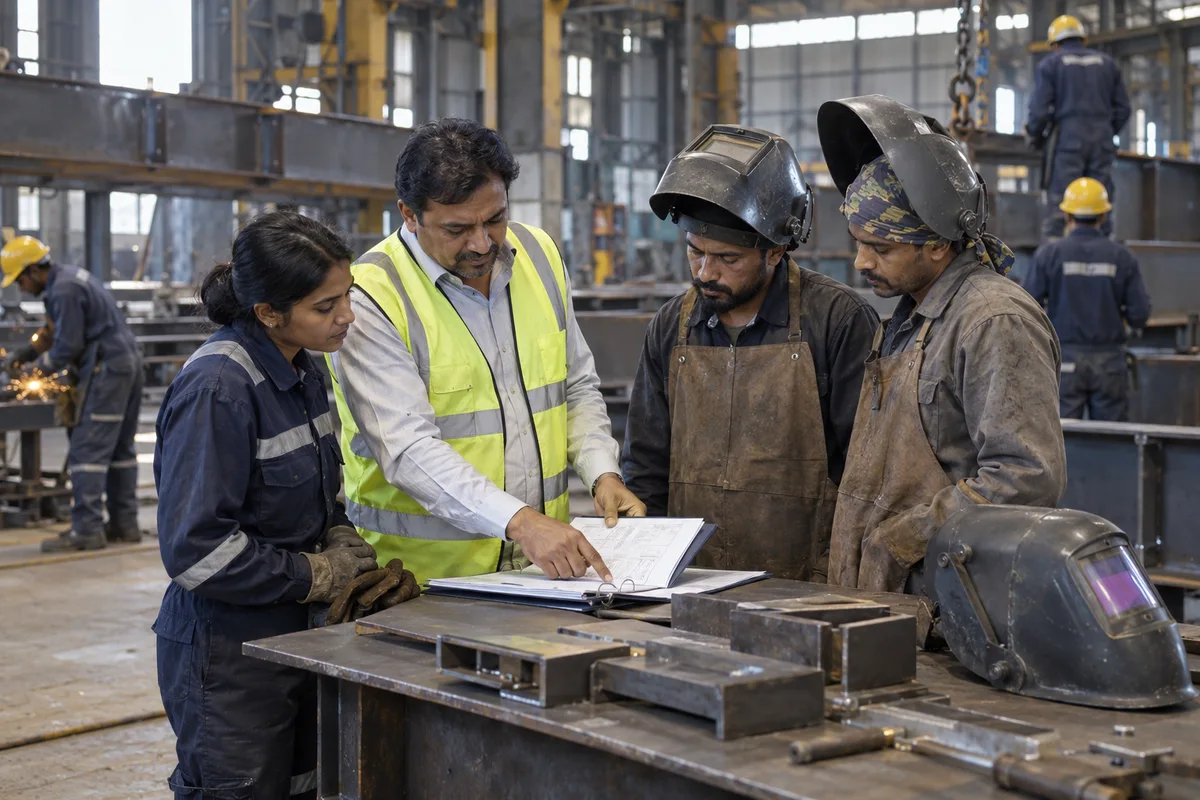
What CRM means
A CRM is the record where every enquiry, call and quote is kept against a customer, replacing separate notebooks, spreadsheets and memory. GullySales sets up or cleans an existing CRM and reports from it by enquiry outcome rather than by activity logged.
Also for welding fabrication companies
- Lead generation for welding fabrication companies
- Follow-up systems for welding fabrication companies
- SEO for welding fabrication companies
- Local SEO for welding fabrication shops
- Social media marketing for welding fabrication companies
- Content marketing for welding fabrication companies
- Buyer personas for welding fabrication companies
- WhatsApp marketing for welding fabrication companies
Sales and marketing for welding fabrication companies, the overview.
Last updated 18 Oct 2026.
For welding fabrication companies
Where it usually goes wrong, and what we would do.
“Quotes sit while the engineer is busy”
The site visit happens, the notes go into a notebook and the estimate waits. By the time it goes out, the plant has called someone else. A record that shows quotes waiting on one person exposes the delay.
“Drawings and revisions get lost in chats”
A drawing arrives on WhatsApp, a revision on email and a call changes the thickness. A record kept against the enquiry holds the latest drawing and the changes in one place.
“Repeat buyers are forgotten between jobs”
A plant that ordered a platform last year may need a handrail extension now. Without a history, nobody remembers to call. The record keeps what was built, for whom and when.
“A heavy CRM goes unused”
A system with many fields that estimators skip is worse than a clear spreadsheet. Stages and fields must fit how your shop works: enquiry, drawing received, visit, quote sent, follow-up, order.
What we do
What we deliver for welding fabrication companies.
Every deliverable, what it covers for you, and the result it is there to produce. Nothing here is an extra.
Stage design
Stages for enquiry, drawing received, site visit, quote sent, negotiation, order and lost, named in your shop's own words.
Result: Every enquiry sits at a clear stage.
Set-up of the system
A simple CRM or sheet configured with the fields estimators need, such as material, quantity, site and drawing link.
Result: Estimators enter the same details for every enquiry.
Owner and next-step rule
Each quote has one named person and a dated next step, visible to the owner.
Result: No quote lacks an owner or a next step.
Import of old quotes
Past quotes and customers loaded so repeat buyers show their history.
Result: Old customers appear with what was built for them.
Short training for the team
A practical session for estimators and the owner on entering and reading the record.
Result: The team can use the system without a manual.
How the result is measured
- Enquiries logged in the CRM
- Data completeness
- Reports generated from CRM data
Recorded as a baseline before work starts, so every later report has an honest comparison.
Who it is for
This is written for these welding fabrication companies.
- Structural steel and platform fabricators
- Stainless steel tank and vessel fabricators for food, dairy and pharma
- Pipe spool and piping fabrication shops
- Machine frame and base fabricators for OEMs
- Heavy fabrication for cement, steel and power plants
- Aluminium and stainless welding for kitchens and architectural work
- Maintenance and shutdown fabrication contractors
- Trailer, tipper and truck body builders
How it works
From your first message to the first report.
No open-ended retainer. Every step gives you something in writing.
First
Your brief
You tell us what you need in a few short steps: your business, what you want, where enquiries come from and how they are handled.
After the brief
A conversation and a written scope
We read it, then talk with whoever handles your enquiries. If you want our help, the scope, the fee and the reporting come in writing, and nothing starts before you have read them.
Before work starts
Baseline recorded
The numbers this work is meant to move, such as enquiries, quotations, orders, visits or renewals, written down so every later report has an honest comparison.
After the baseline
The first fix goes live
The fix we agreed to start with is put in place and measured against the baseline, whether that is a reply, a follow-up, a page, a listing or the handover between marketing and sales.
As agreed
Report against the baseline
What moved, what did not, and what changes next, in plain words. How often you get it is set in writing before work starts.
At renewal
Renew on the numbers
The term ends and you decide whether to continue from the results. The length is agreed in writing before anything starts.
How the CRM work runs
- 1
Map the sales process
We record how a deal actually moves from enquiry to close in your business today.
- 2
Configure stages and fields
The CRM's pipeline and fields are built to match that process exactly, not a generic template.
- 3
Set up automations
Reminders, assignment rules and follow-up triggers are configured so routine steps happen without manual effort.
- 4
Test with real deals
We run the configuration against actual current deals to catch gaps before the whole team relies on it.
Why us
Why owners pick GullySales over an agency.
Marketing and sales, as one job
Most agencies stop at the enquiry. We also fix what happens after it: the reply, the follow-up, the quote and the CRM.
The person on the first call does the work
No account managers in between. You are never handed to someone you have not met.
A baseline before anything starts
Your numbers are written down on day one, so every later report compares against something honest.
The fee in writing, split three ways
Our time, your media spend and production on separate lines. You always see what goes to us.
No guarantees we cannot keep
The term is agreed in writing and never a default twelve months. We never promise a ranking or a lead count, because nobody controls those.
One office, and we say so
Nagarbhavi, Bengaluru. We work across India by call and WhatsApp and travel when a session needs to be in person.
#257, 3rd floor, Sri Nanjundeshwara Complex, Nagarbhavi 8th Block, Outer Ring Road. How we work.
Your brief
Tell us what you need, and we will read it before we call.
Eight short steps about your business, what you want and who decides. Most questions are a tap, and you can skip any you would rather answer on the call.
FAQ
Questions owners ask before they call.
Not here? More answers, or ask on WhatsApp.
Do we need paid software?
What if our estimators will not enter data?
Can the CRM take IndiaMART leads?
How much does it cost?
How long is the contract?
How soon will we see results?
Who will actually do the work?
What do you need from us?
What if we are not happy with the work?
More for welding fabrication companies
Everything else we would do for you.
Closest to this: leads and follow-up
Also for welding fabrication companies
Or start from the overview: sales and marketing for welding fabrication companies.
Your next practical step
Tell us what you are trying to grow, and we will read it before we call.
Eight short steps, mostly taps. Skip anything you would rather answer on the call.