Auto parts manufacturers · Buyer persona
Know whether the person asking for your part is a purchaser, a distributor or a workshop.
A buyer persona for an auto parts maker is a written profile of each person who decides to order a component, covering what they check, who else signs off and what makes them walk away. GullySales builds one profile per buyer type from your own enquiry history, so the catalogue, quotes and follow-up speak to the person reading them.
Scope, fee, reporting and term are agreed in writing after we have read your brief and spoken to you.
What buyer persona means
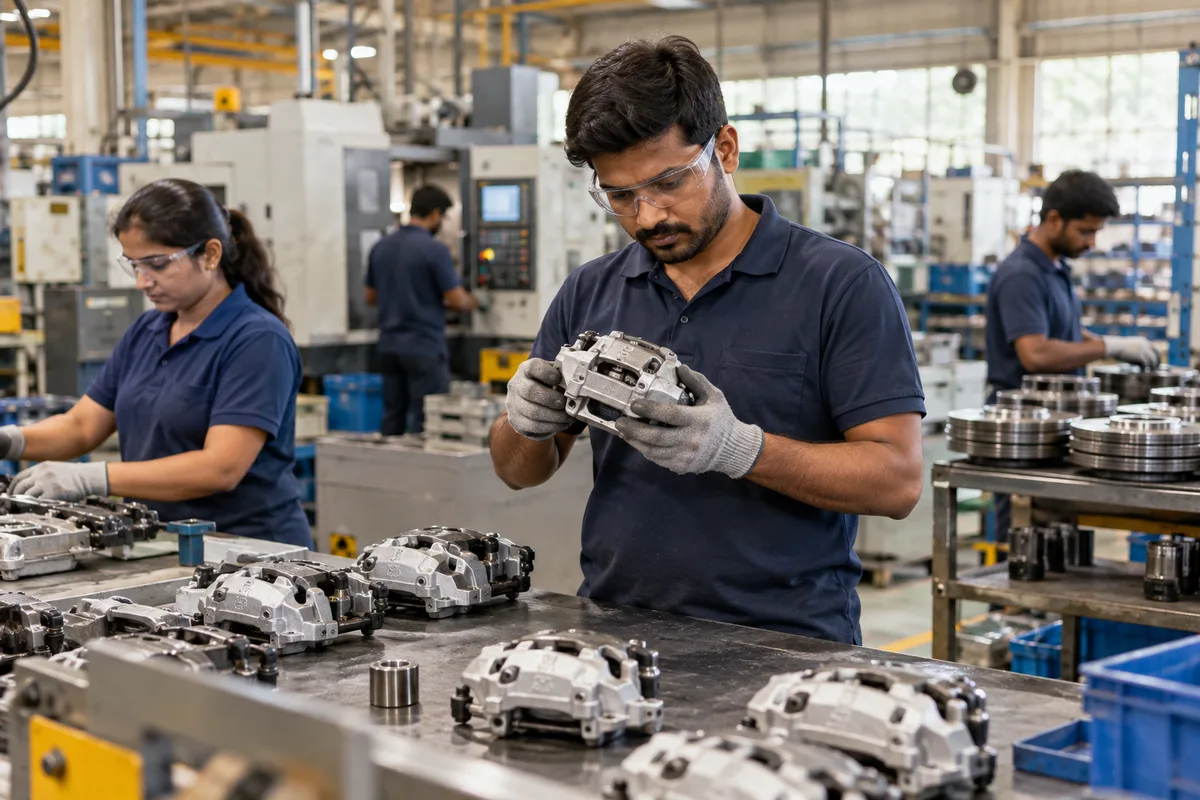
A buyer persona is a plain description of the kind of customer who actually buys from you. It includes what they search, what worries them and who else they ask before deciding. GullySales builds this from real enquiries and past sales rather than a generic template, then uses it to write every page and advert.
Also for auto parts manufacturers
- Digital marketing for auto parts manufacturers
- Marketing strategy for auto parts manufacturers
- Answer engine optimisation for auto parts manufacturers
- Branding and identity for auto parts manufacturers
- Content marketing for auto parts manufacturers
- Email marketing for auto parts manufacturers
- Google Business Profile for auto parts manufacturers
- Influencer marketing for auto parts manufacturers
Sales and marketing for auto parts manufacturers, the overview.
Last updated 5 Oct 2026.
For auto parts manufacturers
Where it usually goes wrong, and what we would do.
“The OEM purchaser is judged on their own audit trail”
A purchase officer at a vehicle maker has to defend every approved vendor to quality and finance colleagues. They look for certification, process documents and a sample history they can file, and they avoid a supplier whose paperwork they would have to chase.
“A distributor buys on fit, margin and the reorder risk”
The distributor wants to know which models the part fits, what margin the price list leaves and whether supply will hold when the workshops they serve ask again. A glossy brochure answers none of that.
“The workshop mechanic decides on the counter, not the website”
A mechanic rarely visits a manufacturer's site. They accept the brand the counter person recommends, so the persona that matters is the dealer who stocks your part and what they need to feel safe recommending it.
“An export buyer needs reassurance across distance”
A buyer abroad cannot visit the plant on a whim. They read for compliance papers, sample terms and how clearly your team writes, and they treat vague or slow replies as a sign of how the supply would behave.
What we do
What we deliver for auto parts manufacturers.
Every deliverable, what it covers for you, and the result it is there to produce. Nothing here is an extra.
One profile per buyer type
Separate written profiles for the OEM purchaser, distributor, workshop owner and export buyer, built from the enquiries and orders you already hold.
Result: Your team can say who a given enquiry is from and what they will ask next.
A question list for each profile
The questions each buyer type asks before ordering, such as IATF certification, MOQ, vehicle fit or sample terms, listed in the order they arise.
Result: Every common question has an answer ready on a page or in a template.
Catalogue wording matched to the reader
Part pages and spec sheets rewritten so that a distributor finds fit and margin basis and a purchaser finds certification and process detail.
Result: Each buyer type finds their own proof without searching for it.
A decision-chain map for OEM accounts
A simple chart of who raises the need, who audits, who approves and who places the purchase order at an account you are chasing.
Result: Your representative knows whom to write to at each stage.
Lost-order notes added to the profiles
Reasons given when a quote did not convert, grouped by buyer type and written back into the profile.
Result: The profile reflects what buyers actually said, not what the team assumed.
How the result is measured
- Enquiry match to persona
- Conversion rate by persona
- Content aligned to persona
Recorded as a baseline before work starts, so every later report has an honest comparison.
Who is asking
Each buyer of a component asks a different thing before ordering.
- Purchase officer at a vehicle maker
- Wants certificates, process documents and a sample history they can file, since they must defend every approved vendor.
- Quality engineer reviewing a new vendor
- Wants the control plan, inspection records and audit access before agreeing to a sample lot.
- Aftermarket distributor adding a brand
- Wants the fitment list, the margin on the price list and a view of whether supply will hold when workshops reorder.
- Counter staff at a dealer
- Wants a part number lookup, a clearly labelled box and a brand they feel safe recommending to a mechanic.
- Importer abroad comparing Indian makers
- Wants compliance papers, sample terms and a reply that is clear, since the way you write shows how supply would behave.
Who it is for
This is written for these auto parts manufacturers.
- Component manufacturers supplying OEMs
- Aftermarket spare parts manufacturers
- Export-focused parts manufacturers
- Tier 2 and Tier 3 component suppliers
- Two-wheeler parts manufacturers
- Commercial vehicle parts manufacturers
- Casting and forging units supplying parts
- Manufacturers with an in-house aftermarket brand
Not for
It is not the right fit if.
- You have no record of who ordered and who walked away, so a profile would be guesses written as findings.
- You sell one part to a single buyer on a standing contract, so separate profiles would describe people you never meet.
How it works
How the buyer persona work runs
The work itself, in order. How an engagement starts, from your brief to a written scope, is set out on our method page.
- 1
Understand the current view
We start with how your team currently describes the customer, since the gap between belief and reality is the finding itself.
- 2
Audit past enquiries and sales
We look at recent enquiries and closed deals to see who actually bought, not who was assumed to buy.
- 3
Interview customers and staff
Structured conversations with recent buyers, held as talk about the last purchase and not a questionnaire. We ask what happened before they called, who else was involved and what they compared. Customers agree before we contact them, and their answers are reported without names.
- 4
Build the personas
Findings are written into short, usable persona documents rather than a long report.
- 5
Apply to your marketing
We show where each persona should change a page, an ad or a script you already have. The sales team reads the drafts and says which ring true. A persona they do not recognise is rewritten.
Where this fits
Three pieces of sales work, in this order.
This work sits inside sales process design, at stage 0, foundation. The audit comes before it, and sales management keeps it running.
Step 1
Sales audit
Find where deals are being lost and what to fix first.
Start here if you cannot say where orders are lost.
Step 2 · you are here
Sales process design
One written way to sell, from first enquiry to repeat order.
Start here if every salesperson sells differently.
Step 3
Sales management
A target, a review routine and someone who owns the number.
Start here if the team has targets and no routine.
FAQ
Questions owners ask before they call.
Not here? More answers, or ask on WhatsApp.
We sell to OEMs, distributors and exporters. Do we need three profiles?
Where does the information for a profile come from?
Does the mechanic need a profile if they never visit our site?
How does a profile change a quote to an OEM purchaser?
How much does it cost?
How long is the contract?
How soon will we see results?
Who will actually do the work?
What do you need from us?
What if we are not happy with the work?
From the blog
Further reading for auto parts manufacturers.
 6 min read · 10 Oct 2026How manufacturers can generate enquiries from relevant business buyersRelevant RFQs come from buyers who can verify you: product pages with real specifications, listings that match what you make, and a way to screen requests quickly.
 6 min read · 6 Oct 2026How buyers choose a showroom, workshop or parts counterCar, bike, repair and parts buyers send one enquiry to several sellers and pick the first clear answer. This post lists what each buyer checks, and where a dealer or workshop quietly loses them.
 5 min read · 26 Sept 2026Certifications buyers ask for: ISO, test reports and what to show on the websiteShow each certificate with its number, scope, issuing body and validity date, and link the PDF, so a buyer's quality team can check you before they ring.
More for auto parts manufacturers
Everything else we would do for you.
Closest to this: strategy and research
Also for auto parts manufacturers
Or start from the overview: sales and marketing for auto parts manufacturers.
Your next practical step
Tell us what you are trying to grow, and we will read it before we call.
Eight short steps, mostly taps. Skip anything you would rather answer on the call.