Auto parts manufacturers · Pay per click advertising
Advertise the part category with idle capacity, not the whole catalogue.
PPC for an auto parts manufacturer works best aimed at a specific part category or an export market where you have spare capacity. It beats a broad campaign covering the whole catalogue. GullySales runs search ads for the part number searches that already happen and tracks enquiries to orders.
Scope, fee, reporting and term are agreed in writing after we have read your brief and spoken to you.
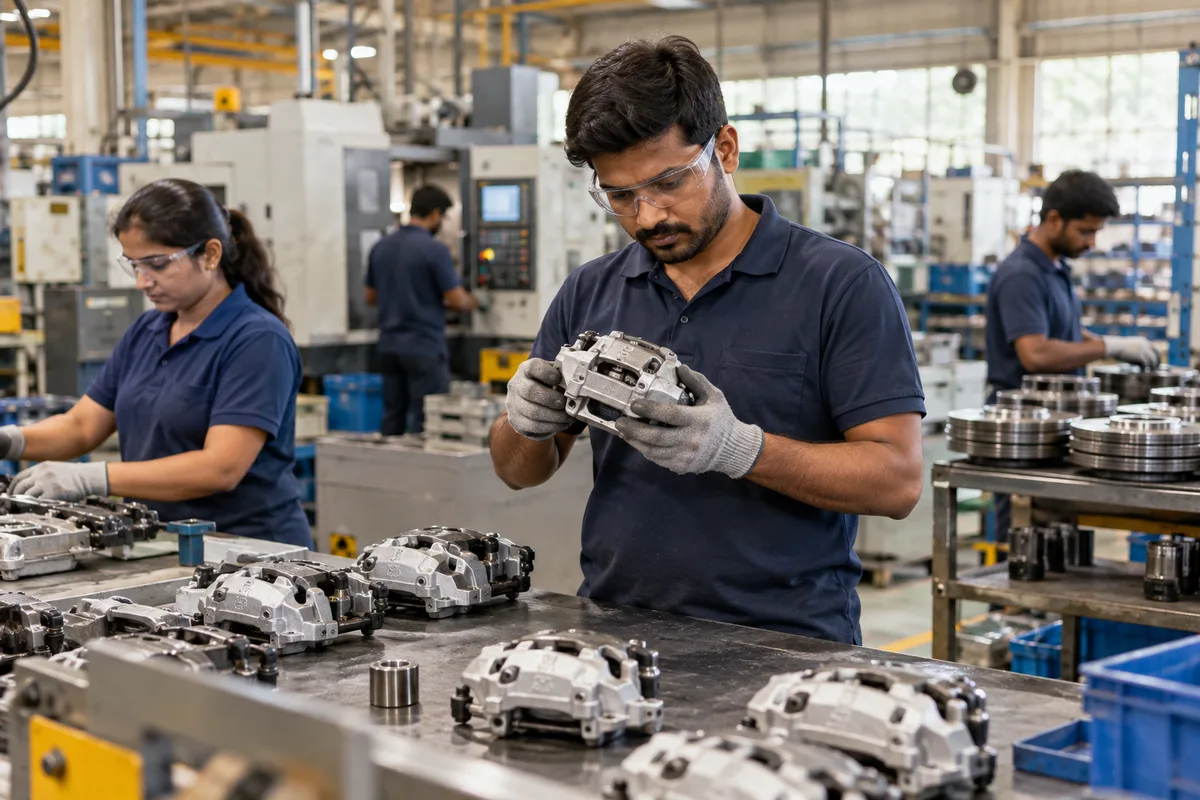
What pay per click advertising means
Pay per click advertising (PPC) is paying a fee each time someone clicks your advert on Google or another platform. It puts you at the top of a search page immediately, instead of waiting for ranking to build. GullySales sets the targeting, writes the ad text and checks spend against enquiries received.
Also for auto parts manufacturers
- Answer engine optimisation for auto parts manufacturers
- Branding and identity for auto parts manufacturers
- Content marketing for auto parts manufacturers
- Digital marketing for auto parts manufacturers
- Email marketing for auto parts manufacturers
- Google Business Profile for auto parts manufacturers
- Influencer marketing for auto parts manufacturers
- Lead generation for auto parts manufacturers
Sales and marketing for auto parts manufacturers, the overview.
Last updated 5 Oct 2026.
For auto parts manufacturers
Where it usually goes wrong, and what we would do.
“Part number searches convert better than category searches”
An ad matched to an exact part number reaches a buyer already committed to that purchase, unlike a broad component ad.
“Export ads need country-specific targeting”
An ad aimed at a specific export market should mention the certification that market actually asks for, not a generic claim.
“Marketplace ads and search ads serve different buyers”
A marketplace ad reaches a buyer already comparing suppliers, while a search ad can reach one who has not yet found the marketplace.
What we do
What we deliver for auto parts manufacturers.
Every deliverable, what it covers for you, and the result it is there to produce. Nothing here is an extra.
Search ads for exact part number queries
Ads matched to the exact part number and vehicle model a buyer already searches, rather than a broad component category term.
Result: The ad reaches a buyer who has already decided to buy that part.
Country-specific export campaigns
A separate campaign per export market naming the certification that market actually asks for, instead of one generic international ad.
Result: An overseas buyer sees the certification relevant to their own country's requirement.
Marketplace ad and search ad split
A clear division between marketplace advertising, reaching buyers already comparing suppliers, and search ads reaching those who have not.
Result: You are not paying twice to reach the same buyer through two channels.
Landing page per advertised part category
A page matching the exact part or category advertised, instead of sending every click to a general catalogue page.
Result: A buyer who clicks the ad lands on the part they were searching for.
Spend and enquiry report against the baseline
A report of enquiries and cost by campaign and part category, checked against the baseline agreed at the start.
Result: You can see which campaign is worth the spend and which is not.
How the result is measured
- Cost per click
- Cost per enquiry
- Enquiries from paid search
Recorded as a baseline before work starts, so every later report has an honest comparison.
Searches to bid on and block
The searches worth paying for as a parts manufacturer, and the ones to keep out.
- Part number and cross-reference searches
- Bid. A buyer who types a part number or an OEM reference knows what is needed. Send each to a page that lists that part, its fitment and the material, not to a general catalogue.
- Component plus process, such as aluminium die casting for two-wheelers
- Bid on the process and component pairs where you have idle capacity. Engineers search in these words, so use the same words in the advert and on the page.
- Supplier or exporter searches from a named country
- Bid only in countries you can ship to now, and only if your packing, test reports and certificates are ready. A buyer abroad who finds nothing to download will not write again.
- Retail, buy online, second hand and price per piece
- Block. Add buy online, used, second hand, MRP and Amazon as negatives. You want fleet owners, distributors and procurement desks, not one-off retail buyers.
- Where the click lands
- Send the click to the part family page with specification, material and standard, and a form taking a drawing or part number and the annual quantity. Make the upload easy on a phone.
- Counting a real enquiry
- Count a form with a part number and quantity, or a call from a procurement person, as an RFQ. Then mark sample, trial order and approved vendor, because the order comes long after the click.
Who it is for
This is written for these auto parts manufacturers.
- Component manufacturers supplying OEMs
- Aftermarket spare parts manufacturers
- Export-focused parts manufacturers
- Tier 2 and Tier 3 component suppliers
- Two-wheeler parts manufacturers
- Commercial vehicle parts manufacturers
- Casting and forging units supplying parts
- Manufacturers with an in-house aftermarket brand
Not for
It is not the right fit if.
- Your site has no page for the advertised part number, so a click would land on a general home page and the spend would be wasted.
- Nobody tracks which enquiry became an order, so you could not tell whether the advertising paid for itself.
How it works
How the pay per click advertising work runs
The work itself, in order. How an engagement starts, from your brief to a written scope, is set out on our method page.
- 1
Agree the whole budget
We fix the total paid budget across platforms, who owns each ad account, and how much is open to moving.
- 2
Audit tracking and accounts
We check that conversions fire once, that calls and WhatsApp chats are counted, and that your enquiry sheet matches what the platforms say.
- 3
Set one definition of success
You and we agree what a qualified enquiry is and what an order is, so every platform is judged the same way.
- 4
Build and launch the plan
Campaigns are structured across platforms with shared naming and tags from day one.
- 5
Read search terms and lead quality
We review the queries that triggered ads and the enquiries that arrived, and remove waste before moving money.
- 6
Reallocate and report
Budget moves toward what is earning, within agreed limits. Results are reported against the baseline, at the frequency agreed in writing.
Where this fits
Three pieces of sales work, in this order.
This work sits inside sales process design, at stage 1, prospecting and lead generation. The audit comes before it, and sales management keeps it running.
Step 1
Sales audit
Find where deals are being lost and what to fix first.
Start here if you cannot say where orders are lost.
Step 2 · you are here
Sales process design
One written way to sell, from first enquiry to repeat order.
Start here if every salesperson sells differently.
Step 3
Sales management
A target, a review routine and someone who owns the number.
Start here if the team has targets and no routine.
FAQ
Questions owners ask before they call.
Not here? More answers, or ask on WhatsApp.
Do B2B manufacturers really need PPC?
How much should we spend?
Should we bid on vehicle makers' names such as Bajaj or Maruti?
Is Google Ads or LinkedIn better for reaching OEM buyers?
How long is the contract?
How soon will we see results?
Who will actually do the work?
What do you need from us?
What if we are not happy with the work?
From the blog
Further reading for auto parts manufacturers.
 6 min read · 10 Oct 2026How manufacturers can generate enquiries from relevant business buyersRelevant RFQs come from buyers who can verify you: product pages with real specifications, listings that match what you make, and a way to screen requests quickly.
 6 min read · 6 Oct 2026How buyers choose a showroom, workshop or parts counterCar, bike, repair and parts buyers send one enquiry to several sellers and pick the first clear answer. This post lists what each buyer checks, and where a dealer or workshop quietly loses them.
 5 min read · 26 Sept 2026Certifications buyers ask for: ISO, test reports and what to show on the websiteShow each certificate with its number, scope, issuing body and validity date, and link the PDF, so a buyer's quality team can check you before they ring.
More for auto parts manufacturers
Everything else we would do for you.
Or start from the overview: sales and marketing for auto parts manufacturers.
Your next practical step
Tell us what you are trying to grow, and we will read it before we call.
Eight short steps, mostly taps. Skip anything you would rather answer on the call.