Auto parts manufacturers · Sales training
Train the sales team on quoting, certification and MOQ conversations.
Sales training for an auto parts manufacturer covers the conversations the team has daily. That means quoting a price against a competitor, explaining certification to an export buyer, and handling an MOQ objection. GullySales builds this training from the manufacturer's own lost and won enquiries.
Scope, fee, reporting and term are agreed in writing after we have read your brief and spoken to you.
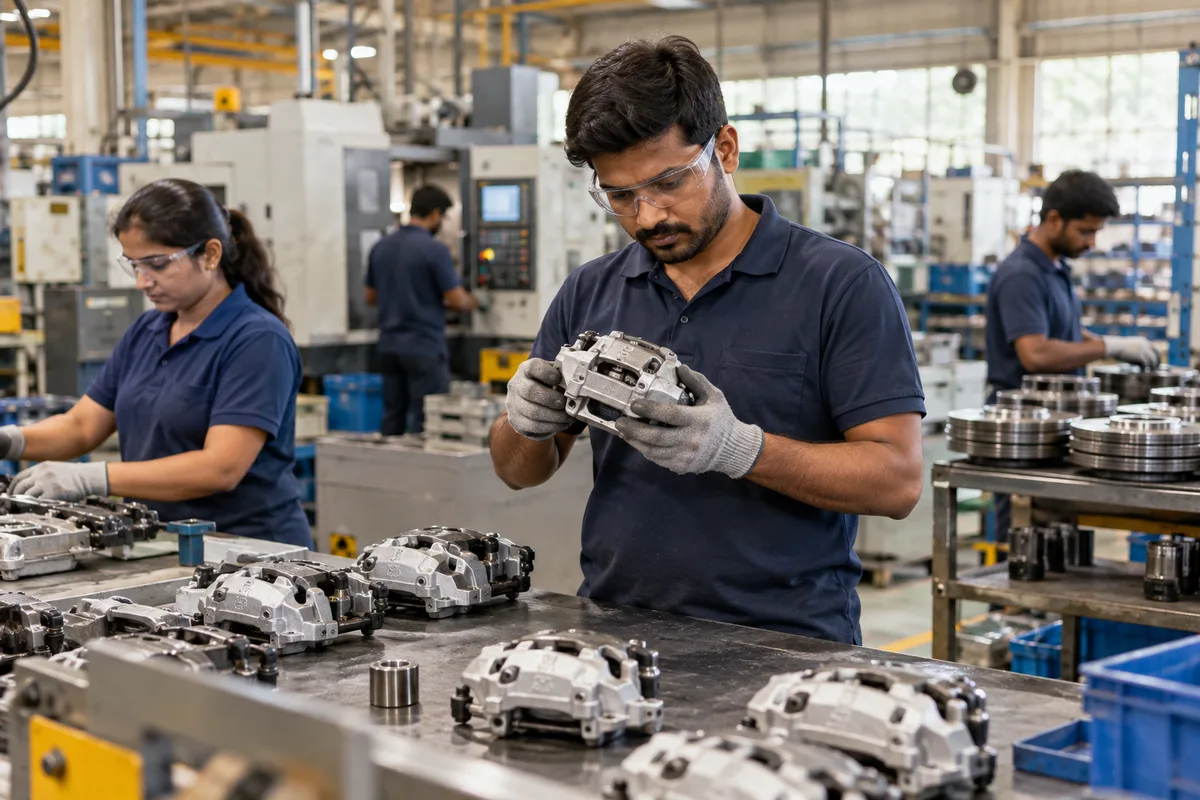
What sales training means
Sales training teaches a sales team a skill it does not yet have, such as handling a specific objection or running a proper site visit, usually through a structured session. GullySales runs these sessions around real objections and calls from your business rather than generic sales theory.
Also for auto parts manufacturers
- Sales management for auto parts manufacturers
- Sales metrics for auto parts manufacturers
- Sales strategy for auto parts manufacturers
- Answer engine optimisation for auto parts manufacturers
- Branding and identity for auto parts manufacturers
- Content marketing for auto parts manufacturers
- Digital marketing for auto parts manufacturers
- Email marketing for auto parts manufacturers
Sales and marketing for auto parts manufacturers, the overview.
Last updated 5 Oct 2026.
For auto parts manufacturers
Where it usually goes wrong, and what we would do.
“Certification questions need a confident, specific answer”
A vague answer about quality standards loses an export buyer checking a specific certification against a checklist.
“MOQ objections need a real alternative, not a refusal”
A distributor asking for a smaller trial order should be offered a genuine option, not simply told the minimum stands.
“Training uses this manufacturer's real lost deals”
Reviewing why a specific enquiry went to a competitor teaches the team more than a generic sales course.
What we do
What we deliver for auto parts manufacturers.
Every deliverable, what it covers for you, and the result it is there to produce. Nothing here is an extra.
Certification and quality conversation training
Practice sessions on answering an export buyer's specific certification question clearly, drawn from your actual certification scope.
Result: The team answers a certification question without sounding unsure.
MOQ objection handling with real alternatives
A set of genuine alternatives to offer a distributor asking for a smaller trial order, agreed with your production team beforehand.
Result: A hesitant distributor is offered an option instead of a flat refusal.
Review of your own lost enquiries
A session working through recent enquiries that went to a competitor, using your actual quote and reply records.
Result: The team learns from a real lost deal, not a generic sales scenario.
Quoting and price conversation practice
Training on explaining a quoted price against a cheaper competitor, using your real cost and quality points.
Result: The team can defend a price with a specific reason, not a general claim.
Written reference sheet for common questions
A short, standing document covering MOQ, certification and lead time answers, for anyone new who joins the enquiry desk.
Result: A new team member answers correctly from their first enquiry.
How the result is measured
- Skill assessment scores
- Objection handling improvement
- Conversion rate after training
Recorded as a baseline before work starts, so every later report has an honest comparison.
Situations to practise
Six conversations an auto parts sales team should practise, and what good looks like.
- The OEM buyer asks for the approval documents
- Name the document set before the call ends: PPAP level, control plan, material certificates, calibration records. Say who sends what, and ask which revision the buyer's plant already holds.
- A distributor wants your best rate on a fast-moving part number
- Ask for the part numbers and the volume before naming a rate, then quote against those. Practise turning down a flat discount across the whole price list.
- The MOQ is too high for a new buyer
- Offer a trial lot, a mixed pack of related part numbers or a stocking plan instead of a refusal. Role-play with your real MOQ for three actual parts.
- An export buyer's first email asks for a quote and price list
- Answer exactly what was asked: packing, Incoterms, certification, sample charges. Name one contact. Practise reading the email for what is missing before replying.
- A trade fair contact has gone cold
- Call and refer to the exact part discussed at your stand. Take the visiting cards from the drawer and rehearse the first two sentences of that call.
- A workshop reports a fitment failure
- Ask for part number, batch code and vehicle model before defending anything. Log it and name who will respond. Practise staying factual when the caller is angry.
Who it is for
This is written for these auto parts manufacturers.
- Component manufacturers supplying OEMs
- Aftermarket spare parts manufacturers
- Export-focused parts manufacturers
- Tier 2 and Tier 3 component suppliers
- Two-wheeler parts manufacturers
- Commercial vehicle parts manufacturers
- Casting and forging units supplying parts
- Manufacturers with an in-house aftermarket brand
Not for
It is not the right fit if.
- Your price and discount rules are not written down, so training the team to quote would teach different answers to the same question.
- The team is stretched across the plant and has no time to practise, so a session would be missed by those who most need it.
How it works
How the sales training work runs
The work itself, in order. How an engagement starts, from your brief to a written scope, is set out on our method page.
- 1
Assess current skill levels
We listen to a sample of calls, read CRM records and talk to managers and reps. Each person is placed against the skills map, so we know who needs what.
- 2
Build the curriculum
Content is written around your product, customers and sales cycle. We agree the order of modules with you before any session runs.
- 3
Schedule and deliver
Sessions run on a calendar agreed with you, short enough that reps are not pulled off the phones for a whole day. Each ends with practice.
- 4
Check on the job
Knowledge checks show what was learned. A manager then checks a real call against the skills map, because passing a quiz does not show a rep can sell.
- 5
Review and refresh
The curriculum is revisited when a product, price or competitor changes, and the manager is shown how to keep running short practice sessions after we step back.
Where this fits
Three pieces of sales work, in this order.
This work sits inside sales management. A target, a review routine and someone who owns the number.
Step 1
Sales audit
Find where deals are being lost and what to fix first.
Start here if you cannot say where orders are lost.
Step 2
Sales process design
One written way to sell, from first enquiry to repeat order.
Start here if every salesperson sells differently.
Step 3 · you are here
Sales management
A target, a review routine and someone who owns the number.
Start here if the team has targets and no routine.
FAQ
Questions owners ask before they call.
Not here? More answers, or ask on WhatsApp.
How long before training shows results?
Who should be trained?
Should we role-play with our own lost enquiries or with made-up cases?
Should the trainer be our plant head or an outsider?
How much does it cost?
How long is the contract?
Who will actually do the work?
What do you need from us?
What if we are not happy with the work?
From the blog
Further reading for auto parts manufacturers.
 6 min read · 10 Oct 2026How manufacturers can generate enquiries from relevant business buyersRelevant RFQs come from buyers who can verify you: product pages with real specifications, listings that match what you make, and a way to screen requests quickly.
 6 min read · 6 Oct 2026How buyers choose a showroom, workshop or parts counterCar, bike, repair and parts buyers send one enquiry to several sellers and pick the first clear answer. This post lists what each buyer checks, and where a dealer or workshop quietly loses them.
 5 min read · 26 Sept 2026Certifications buyers ask for: ISO, test reports and what to show on the websiteShow each certificate with its number, scope, issuing body and validity date, and link the PDF, so a buyer's quality team can check you before they ring.
More for auto parts manufacturers
Everything else we would do for you.
Closest to this: sales craft
Also for auto parts manufacturers
Or start from the overview: sales and marketing for auto parts manufacturers.
Your next practical step
Tell us what you are trying to grow, and we will read it before we call.
Eight short steps, mostly taps. Skip anything you would rather answer on the call.