Chemical manufacturers · Events and exhibitions
Turn an exhibition stall into a list of technical enquiries your team can chase.
Event and trade show marketing, for a chemical manufacturer, is the planning of an exhibition visit or stall so that plant engineers, formulators and distributors leave with the right sheets and your team leaves with usable enquiries. GullySales prepares the invitations, stall material, capture form and follow-up, and records cost against the orders that follow.
Scope, fee, reporting and term are agreed in writing after we have read your brief and spoken to you.

What events and exhibitions means
Events and exhibitions are trade shows, stalls or hosted gatherings where you meet many prospects in one place at one time. They suit industries where buyers still expect a face to face introduction. GullySales plans the stall, the material and the follow-up so contacts made there are not lost afterward.
Also for chemical manufacturers
- Channel partner recruitment for chemical manufacturers
- Channel sales strategy and route to market execution for chemical manufacturers
- Channel territory planning for chemical manufacturers
- Dealer and distributor audits for chemical manufacturers
- Distributor development for chemical manufacturers
- Distributor sales force effectiveness for chemical manufacturers
- Export and international market development for chemical manufacturers
- Partner compensation and incentive design for chemical manufacturers
Sales and marketing for chemical manufacturers, the overview.
Last updated 14 Nov 2026.
For chemical manufacturers
Where it usually goes wrong, and what we would do.
“Visitors who read the board, not the sheet”
A busy stall in a chemical fair draws people who stop at the banner, collect a brochure and walk on. The ones who matter, a formulator with a defined problem or a procurement officer with a live requirement, need a grade, a specification sheet and a name to call. Planning the stall around those buyers, not the passing crowd, decides whether the fair is worth the cost.
“Samples at a venue with its own rules”
Showing a product means showing a sample, and chemical samples carry handling and transport rules that differ by material, venue and route. A stall that carries a sample without the safety data sheet, or one that ships hazardous material by an unsuitable route, creates a problem larger than the fair. Check the organiser's rules and your own adviser before packing.
“Cards that say nothing about the requirement”
A visiting card names a company and a person. It does not say which grade the visitor wants, in what quantity, for which application or by when. Two weeks later nobody remembers who asked for what. A capture form that records the grade, use and timing at the stall gives the follow-up call something to stand on.
“Distributors at the fair, as an opportunity”
A fair is where existing and prospective distributors walk the aisles. A stall team built only for end users has no answer for a distributor asking about territory, support and margins. Deciding in advance who speaks to which visitor, and what is said, avoids promising terms that your sales head has not approved.
What we do
What we deliver for chemical manufacturers.
The work available for this need. We agree the deliverables and responsibilities for your engagement in writing.
Event suitability note
A short review of the organiser's visitor profile, exhibitor list and any information from earlier editions, set against the buyers you want to reach. You check whether the people who attend are those who specify or buy your grades. If the match is weak, the note says so before money is committed.
Result: A written note states which of your buyer types the event is likely to bring, and what evidence supports that.
Stall brief and exhibitor checklist
The exhibitor manual is turned into one checklist covering signage, power, passes, sample display and the organiser's deadlines. Your event owner and contractor confirm each line. Rules on showing or carrying chemical samples are copied as the organiser states them, and checked with your own adviser where they affect you.
Result: Every deadline and rule in the manual appears on the checklist with an owner and a status.
Invitations and contact list
Email and WhatsApp invitations for the customers, distributors and prospects you approve, naming the stall, the grades on show and the reason to visit. You decide who receives them. Messages go only to people you are entitled to contact, and the list shows where each name came from.
Result: Each invitation recipient has a recorded source, and every message was approved by your named reviewer before sending.
Stall messages and technical material
Fascia wording, one-page grade sheets and a short demonstration outline that your stall team can follow. Content is drawn from your approved specification and safety documents. Your technical owner reviews each sheet so that a visitor's question is answered with the same words the plant uses.
Result: Each grade on display has a one-page sheet approved by your technical owner, with a QR link to the full sheets.
Visitor capture form and priority rules
A phone form, or the organiser's scanner where offered, records the visitor's company, grade of interest, application, quantity range, timing and the team member who spoke to them. Priority rules are agreed in advance. A sample entry is tested before the fair opens.
Result: A test entry reaches the sales owner with every field filled and a priority marked.
Follow-up record and cost reconciliation
Prepared messages that refer to the stall conversation, a call list with owners, and a record bringing the cost of attendance beside enquiries, samples sent, quotations and orders. Missing costs and unlinked enquiries are listed. The record helps you decide whether to exhibit again.
Result: Each enquiry carries an event source, and the cost record shows what is counted and what is still missing.
How the result is measured
- Leads captured
- Follow-up completion rate
- Enquiries converted after the event
Recorded as a baseline before work starts, so every later report has an honest comparison.
Who it is for
This is written for these chemical manufacturers.
- Specialty chemical manufacturers
- Industrial solvent producers
- Adhesives and sealants manufacturers
- Water treatment chemical manufacturers
- Agrochemical and pesticide formulators
- Paints and coatings raw material suppliers
- Construction chemical manufacturers
- Textile processing and dye chemical manufacturers
- Food-grade and pharmaceutical excipient manufacturers
Before you decide
Agree the work. Know how to judge it.
Event and trade show marketing for chemical manufacturers: use these checks to prepare, choose the scope, and review what changes.
Bring the right evidence
Name the buyers you want to meet and the reason for them to speak with you. Bring a product or service story that can lead to a useful next conversation after the event.
Make the scope clear
Agree the event activity, demonstration material, enquiry capture, and follow-up responsibilities. Separate venue or sponsorship spend from production and sales preparation.
Check the work in use
Review the conversations that had a recorded need and agreed next step. Track them through proposals and orders instead of treating badge scans as qualified opportunities.
Know when to change course
If nobody can follow up after the event, reduce the activity to what the team can handle. A full contact list with no next action is not a sales pipeline.
These are discussion points, not a fixed package. GullySales confirms the deliverables, responsibilities, fee, and term in writing after reading your brief and speaking with you.
Before we start
What to have ready before the work starts.
The records, access and decisions this work needs from chemical manufacturers. Anything missing is noted in the written scope, with who will supply it.
- Organiser's exhibitor manual
- The manual holds deadlines, passes, power, display limits and any rules on chemical samples. Without it, the checklist is guesswork and a missed deadline can cost the stall position. If the organiser's rules on samples are unclear, ask in writing and keep the reply with the manual.
- Approved grade sheets and safety data
- Specification sheets and safety data sheets for each grade on show must be current. A visitor who reads an outdated figure and later finds a different one doubts everything else. Your technical owner should confirm the sheets before printing, and the QR links should lead to the same versions.
- Contact lists with their source
- Customer, distributor and prospect lists should say where each name came from and whether you may contact it. Invitations sent to people with no connection to you waste the fair and can harm your reputation. Your approver decides who receives each message, and unclear names are left out.
- Named stall team and roles
- Decide who speaks to buyers, who handles distributors and who answers technical questions. A stall where everyone talks to everyone leaves visitors with conflicting answers. The team should include someone who can speak about the grade's use, not only sales staff, and each person should know the capture form.
- A salesperson ready for follow-up
- Someone must own each captured enquiry afterwards, with time set aside to call and send material. If no one has that time, the form fills a spreadsheet no one opens. Agree owners and the sample dispatch route before the fair, not after the stall is packed away.
How it works
How the events and exhibitions work runs
The work itself, in order. How an engagement starts, from your brief to a written scope, is set out on our method page.
- 1
Buyers and objective for the fair
You tell us which buyers and grades matter and what the fair is for: new plant enquiries, distributor meetings, a new grade or visibility. We review what is known about the event and agree the objective in writing. A fair chosen only because competitors attend is questioned at this stage.
- 2
Organiser rules and sample handling
We read the exhibitor manual with your event owner and list what the organiser requires. Rules on displaying, carrying and shipping chemical samples are noted exactly as given. Your own adviser decides what is permitted for your material. Anything unclear goes to the organiser in writing before the stall is planned.
- 3
Material and invitation approval
Your nominated approver checks the contact list, the grade sheets and the invitation wording. The stall brief goes to your contractor with the organiser's requirements attached. Nothing is sent to a visitor or printed for the stall until the approver has signed off the wording.
- 4
Capture test and team briefing
Your stall team practises the form on a sample conversation. We agree what makes an enquiry urgent, who checks incomplete entries and how the records reach each salesperson. Distributor conversations are briefed separately, with the terms your sales head has actually approved.
- 5
Follow-up release
Captured records are checked for missing requirements and assigned to a salesperson with the agreed message. Sample dispatch and technical questions go to the people who own them. Follow-up copy refers to the stall conversation, not a generic brochure. Response expectations are those agreed before the fair opened.
- 6
Cost record and decision to repeat
Your accounts team supplies the costs of attendance, and your sales team supplies the later movement of each enquiry. We read the results against the objective written at the start and record whether to return, change the stall or choose a different event. The decision stays with you.
Where this fits
Three pieces of sales work, in this order.
This work sits inside sales process design, at stage 0, foundation. The audit comes before it, and sales management keeps it running.
Step 1
Sales audit
Find where deals are being lost and what to fix first.
Start here if you cannot say where orders are lost.
Step 2 · you are here
Sales process design
One written way to sell, from first enquiry to repeat order.
Start here if every salesperson sells differently.
Step 3
Sales management
A target, a review routine and someone who owns the number.
Start here if the team has targets and no routine.
FAQ
Questions owners ask before they call.
Not here? More answers, or ask on WhatsApp.
How do we choose which chemical exhibition to attend?
Can we show chemical samples at the stall?
What should the capture form ask?
Do you run the stall for us?
How do we treat distributors who visit?
Will the exhibition pay for itself?
How much does it cost?
How long is the contract?
How soon will we see results?
Who will actually do the work?
From the blog
Further reading for chemical manufacturers.
 6 min read · 13 Jun 2026Trade fair or targeted outreach: where a manufacturer's money goes furtherCompare a trade fair and targeted outreach on cost per qualified conversation, with a worksheet where you enter your own figures.
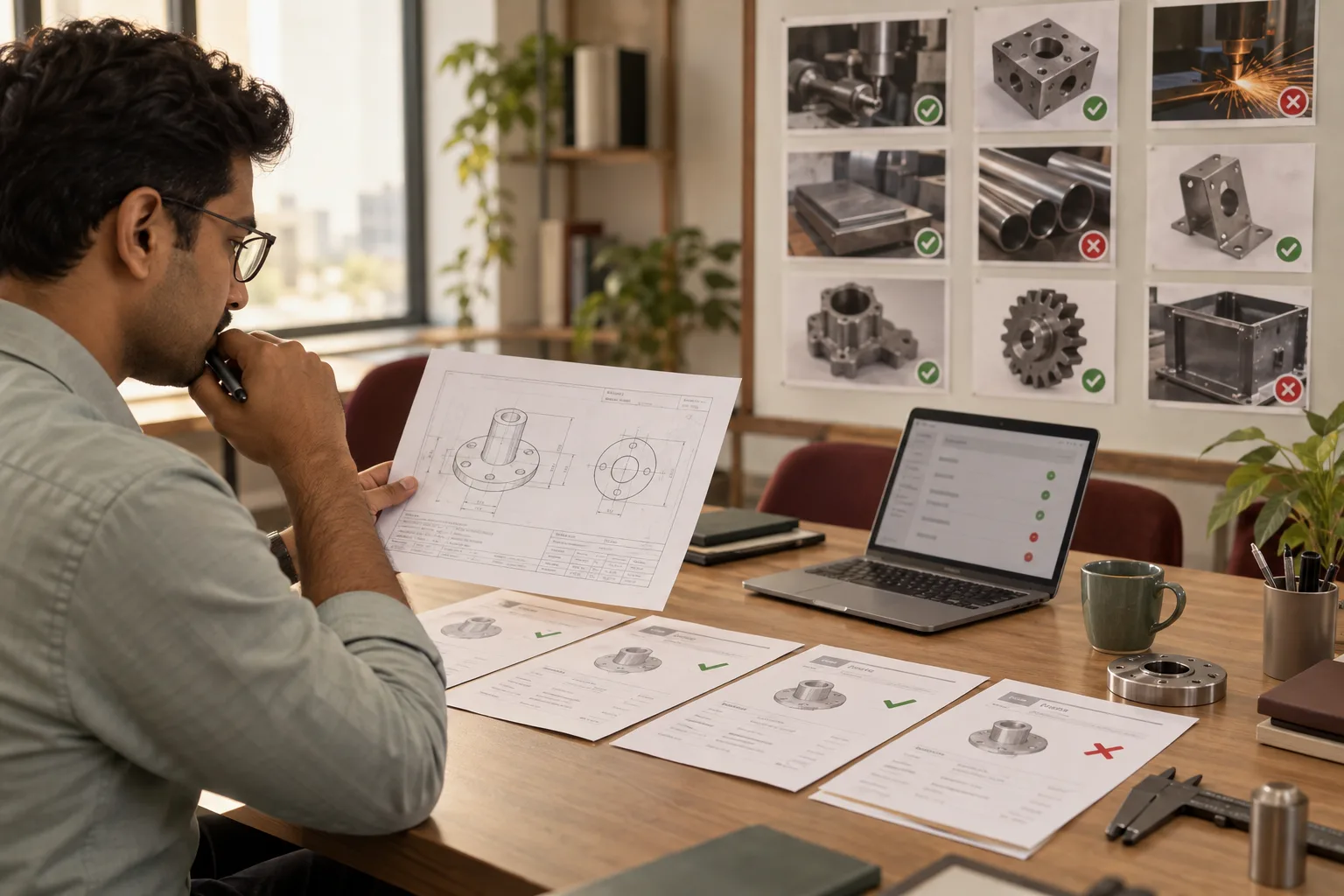 6 min read · 6 Oct 2026How industrial buyers decide which unit gets the RFQWhat industrial buyers check before sending an RFQ, across nine manufacturing trades, and where a unit drops off the shortlist.
 5 min read · 3 Nov 2025Sample approved, no order: how to follow up when quality says yes and purchase says nothingYour sample is approved but no purchase order follows. What purchase is waiting for, who to ask, and the next step that turns approval into an order.
More for chemical manufacturers
Related work to consider.
Closest to this: channels and partners
- Channel partner recruitment for chemical manufacturers
- Channel sales strategy and route to market execution for chemical manufacturers
- Channel territory planning for chemical manufacturers
- Dealer and distributor audits for chemical manufacturers
- Distributor development for chemical manufacturers
- Distributor sales force effectiveness for chemical manufacturers
- Export and international market development for chemical manufacturers
- Partner compensation and incentive design for chemical manufacturers
Also for chemical manufacturers
Or start from the overview: sales and marketing for chemical manufacturers.
Your next practical step
Tell us what you are trying to grow, and we will read it before we call.
Eight short steps, mostly taps. Skip anything you would rather answer on the call.