Dairy producers · Field sales
Your field team should spend the morning at outlets and not the evening on reports.
Field sales support for a dairy producer is the planning and recording work behind a team that calls on booths, kiranas, sweet shops, hotels and caterers, from beat plans and appointment confirmation to the order and report that follow each call. GullySales builds that routine around your existing sheet or software, while your team keeps selling and your manager keeps the decisions.
Scope, fee, reporting and term are agreed in writing after we have read your brief and spoken to you.
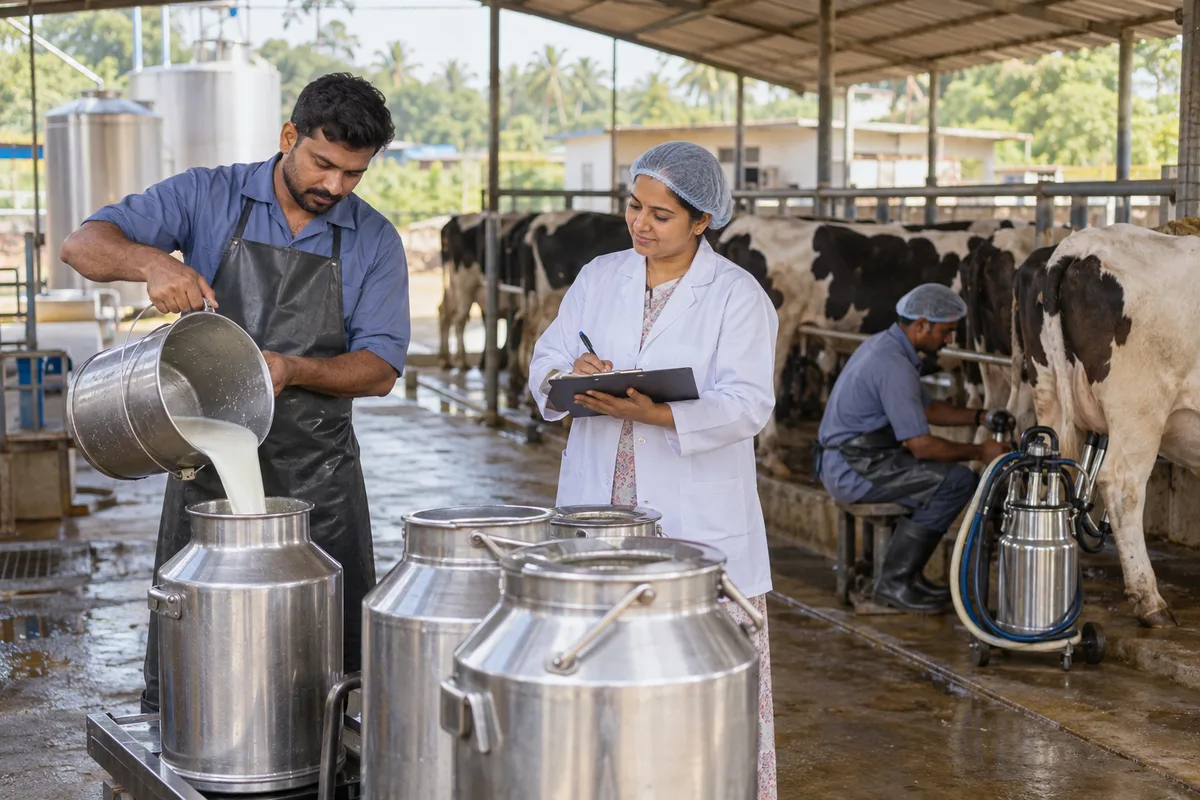
What field sales means
Field sales is a salesperson visiting the customer's premises in person, still the norm for deals that need a site inspection, a demonstration or a relationship built face to face. GullySales plans visit routes and equips the field team with the material they need at the customer's door.
Last updated 14 Nov 2026. Rules for this trade differ by state and professional body, and they change. We describe restrictions in general terms, so check the current position with your own council or adviser before you publish anything.
For dairy producers
Where it usually goes wrong, and what we would do.
“Two kinds of buyer share one route plan”
A rep on a milk-product beat meets shopkeepers who decide on the spot at the counter and purchase managers at hotels who want a sample, a rate and a meeting time. The same plan treats both alike. The counter visit is squeezed, the hotel visit is rushed, and the hotel buyer who needed an appointment finds the manager out.
“The report is written from memory after the van returns”
By evening the rep recalls that a booth wanted a different pack size and that a sweet shop might order for a festival. The detail has faded and none of it is in a form the manager can act on. A short report filled in at the outlet, with a named next step, keeps the request alive until someone answers it.
“Enquiries from kitchens wait for a rep who is not in town”
A caterer asks for a paneer rate and the call lands with a rep who is on a distant route. Nobody else sees the message. The caterer, who needs an answer before an event, orders from the supplier who replied first. A shared record of who owns each enquiry and what was promised stops requests falling between routes.
“Orders live in three places and agree in none”
A booth owner tells the rep the order, the rep texts it to the depot, and a clerk copies it into the sales sheet. Quantities change slightly at each step. When the delivery is short, nobody can say whether the shopkeeper, the rep or the clerk made the error, and the argument costs more goodwill than the order was worth.
What we do
What we deliver for dairy producers.
The work available for this need. We agree the deliverables and responsibilities for your engagement in writing.
Outlet and kitchen register by buying potential
A list of booths, kiranas, sweet shops, hotels and caterers grouped by what each buys now and could buy, using the records you hold. Your manager reviews the group assigned to each account, because that group sets how frequently the account is visited.
Result: The manager can explain why any account is given the visit frequency it has.
Beat plan that respects the dairy day
A route and visit schedule that accounts for delivery windows, market and festival days, shop opening hours and known closures. Reps test the sequence on the ground, and the plan is adjusted before it becomes the working version.
Result: Each rep holds a route the whole team has walked at least once.
Appointment confirmation record
A call or message routine that confirms hotel and caterer meetings before the rep travels, with the buyer's reply logged against the planned visit. An unanswered message is shown as unanswered, not as a booked meeting.
Result: A planned visit is marked confirmed, unconfirmed or cancelled, never blank.
Short DSR for the counter
A sales report format kept for each working day reduced to what a manager acts on: visit outcome, order, stock seen on the shelf, any promised payment and the next step with an owner. Reps try it on live visits, and fields nobody uses are removed.
Result: Every DSR line carries a next step or a stated reason for none.
Order entry to one record
Agreed order details entered once into your CRM or sales sheet, keeping the account reference and the rep's original note beside the clerk's entry. Your team can check a short delivery against what the shopkeeper actually asked for.
Result: A disputed order can be traced from the shopkeeper's words to the invoice.
Manager's coverage view
A sheet or screen comparing planned visits with recorded ones and their outcomes. Missed accounts are listed with the reason given, so the manager sees which outlet went unvisited and why, and not a single completion figure.
Result: Missed outlets are named, with a reason, on one page.
How the result is measured
- Visits made
- Conversion rate per visit
- Time per visit to close
Recorded as a baseline before work starts, so every later report has an honest comparison.
Who it is for
This is written for these dairy producers.
- Milk producers and processors
- Paneer, curd and ghee manufacturers
- Flavoured and UHT milk brands
- Co-operative dairy societies
- Bulk suppliers to hotels and sweet shops
- Milk booth and kirana distribution networks
Before you decide
Agree the work. Know how to judge it.
Field sales support for dairy producers: use these checks to prepare, choose the scope, and review what changes.
Bring the right evidence
Map the accounts, travel pattern, and purpose of each visit. Distinguish a useful buyer meeting from a visit recorded only to meet an activity target.
Make the scope clear
Agree territory coverage, visit priorities, and how notes reach the rest of the team. Include the handover for quotations or technical questions that cannot be resolved on site.
Check the work in use
Review what changed after the visit: a requirement clarified, an agreed trial, or a next decision. Compare time spent with account potential and the quality of follow-up.
Know when to change course
If a routine update can be handled remotely, reserve travel for work that needs a visit. Do not expand coverage beyond the team's ability to follow through.
These are discussion points, not a fixed package. GullySales confirms the deliverables, responsibilities, fee, and term in writing after reading your brief and speaking with you.
Before we start
What to have ready before the work starts.
The records, access and decisions this work needs from dairy producers. Anything missing is noted in the written scope, with who will supply it.
- Recent DSRs, in whatever form they exist
- Notebook pages, messages and sheets all show how reports are written now. We read them to see what is captured and what is lost. If nothing is kept, tell us; the starting record then comes from a ride-along and the first weeks of the new format.
- Your account list with last known orders
- To group accounts by potential we need to know who buys what. If the list sits in several rep notebooks, bring them together first. A partial list is acceptable when we know which accounts it leaves out, because the grouping is then labelled as incomplete.
- Your current CRM or sales sheet
- We build the routine around the tool you already use, so we need to see it and its limits. If there is none, a shared sheet is enough to start. Introducing new software before the routine is settled would give reps two things to learn instead of one.
- One rep willing to be followed
- A ride-along only works when the rep has agreed to it and understands it is not an inspection. Pick someone respected by the team who sells on a typical route. Their honesty about what slows a morning shapes the whole routine.
- A manager with time to review
- Someone must read the coverage view and answer the questions it raises, such as why an outlet was missed. If nobody does, the records fill up and no decision follows. Name the manager and agree a slot, because a report nobody reads soon stops being filled in.
How it works
How the field sales work runs
The work itself, in order. How an engagement starts, from your brief to a written scope, is set out on our method page.
- 1
Following a rep through a working morning
We read recent reports and spend a morning with a rep on a real beat, watching how stops are chosen, how orders are noted and how long each call takes. Your manager confirms where time is lost. The reports we read become part of the starting record.
- 2
Agreeing account groups and routes
We propose how accounts are grouped and how routes might run. The sales manager reviews both with the reps, who know which shop shuts at midday and which road floods. Account ownership stays with your team, and a route is approved before any confirmation routine begins.
- 3
Deciding who receives what after a visit
We agree the report fields and where each piece of information goes. Your manager names who takes orders, who handles payment promises and who answers a hotel's request for a rate. Each handoff has the detail it needs written down, so nothing relies on a rep remembering to phone.
- 4
Trying it with a small group of reps
A few reps use the beat plan and report on live visits while the rest carry on as before. We change whatever slows them at the counter. The group reports what confused them, and the manager decides whether the routine is ready for the whole team.
- 5
Handing the routine to the whole team
The written working instructions show who confirms appointments, who records each outcome and who owns each next action. We brief the team with sample entries from their own beats. After handover, your manager runs the routine and we step back to measuring it.
- 6
Comparing outcomes with the earlier record
We set recorded visits, orders and missed calls against the position noted before the work began, using the same definitions. Changes in season, supply or product mix that affect the figures are written beside them, so the manager reads the comparison with its limits.
Where this fits
Three pieces of sales work, in this order.
This work sits inside sales process design, at stage 1, prospecting and lead generation. The audit comes before it, and sales management keeps it running.
Step 1
Sales audit
Find where deals are being lost and what to fix first.
Start here if you cannot say where orders are lost.
Step 2 · you are here
Sales process design
One written way to sell, from first enquiry to repeat order.
Start here if every salesperson sells differently.
Step 3
Sales management
A target, a review routine and someone who owns the number.
Start here if the team has targets and no routine.
FAQ
Questions owners ask before they call.
Not here? More answers, or ask on WhatsApp.
Is this the same as hiring more reps?
Will reps accept filling in a report at every outlet?
Can this handle both shop calls and hotel or caterer calls?
Do you need our CRM, or do you bring one?
Can you improve how our reps talk to shopkeepers?
How will we know the routine is working?
How much does it cost?
How long is the contract?
How soon will we see results?
Who will actually do the work?
From the blog
Further reading for dairy producers.
 5 min read · 6 Oct 2026How food brands win the trade and the shopperA food or household brand is chosen twice, by the distributor or retailer who stocks it and by the shopper who picks it up. What each buyer checks.
 8 min read · 22 Jul 2026What a dairy brand's website must do for distributors and bulk buyersA dairy website is read by distributors and bulk buyers. Here are the pages, the FSSAI details and the cold chain answers they look for.
 6 min read · 16 Mar 2026How to get on a company's approved vendor list without the file stallingVendor registration runs through four or five desks inside the buyer, each waiting on you. Send complete papers and keep your sponsor informed.
More for dairy producers
Related work to consider.
Closest to this: sales craft
Also for dairy producers
Or start from the overview: sales and marketing for dairy producers.
Your next practical step
Tell us what you are trying to grow, and we will read it before we call.
Eight short steps, mostly taps. Skip anything you would rather answer on the call.