Dairy producers · Local SEO
Show up on the map when a household or kitchen searches for a dairy nearby.
Local SEO for a dairy is the work of making your plant, sales office and stockists findable in map and area searches, for households looking for where to buy and kitchens looking for a supplier. GullySales sets up and maintains the profiles and area pages that those searches read.
Scope, fee, reporting and term are agreed in writing after we have read your brief and spoken to you.
What local SEO means
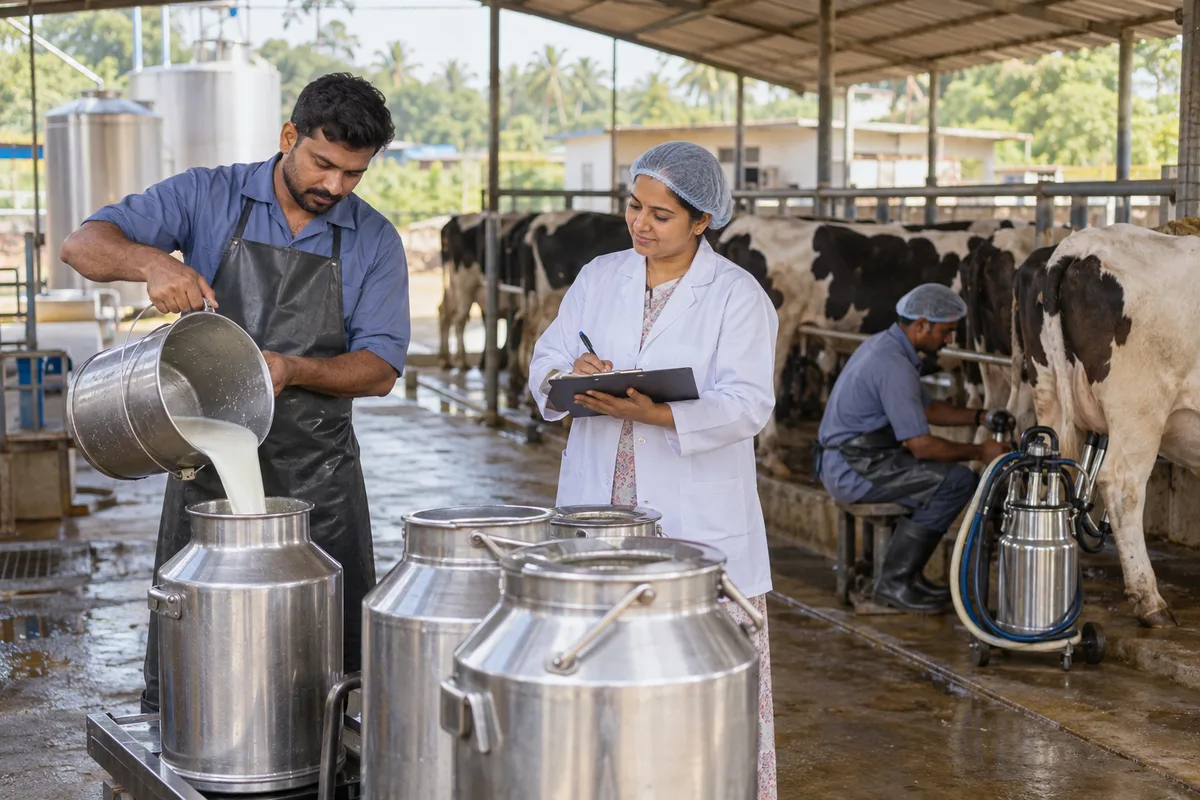
Local SEO is the work of making your business show up for searches that name your town or locality, such as a service plus an area name. GullySales sets up locality pages, local citations and map listings so nearby customers find you before a competitor across town.
Last updated 14 Nov 2026. Rules for this trade differ by state and professional body, and they change. We describe restrictions in general terms, so check the current position with your own council or adviser before you publish anything.
For dairy producers
Where it usually goes wrong, and what we would do.
“The household searches for the nearest place to buy”
A family that tasted your milk at a neighbour's home types the brand name and the locality to find a booth. If your profile lists no stockists, or points to a plant on an industrial road, the search ends there and the old brand keeps the routine.
“A plant address invites the wrong visitors”
A profile showing a processing unit as an open shop sends walk-in customers to a gate that does not sell. Say plainly on the profile whether the plant sells directly, and point the household to the stockist list instead.
“Kitchens search for a supplier by city”
A hotel or sweet shop looking for a milk supplier in its own city compares the dairies that appear. A profile with no bulk contact line, no product list and no service area gives the purchase manager no reason to call.
“Reviews are read by the cautious”
A parent worried about adulteration reads reviews before switching pouches. A complaint left unanswered looks like indifference, while a factual reply about testing and sourcing shows how the dairy treats a problem.
What we do
What we deliver for dairy producers.
The work available for this need. We agree the deliverables and responsibilities for your engagement in writing.
Google Business Profile for the plant and sales office
Name, address, service area, product list and a bulk enquiry contact set up and kept consistent.
Result: A searcher sees where to buy and whom to call.
Stockist list page by locality
A page on your website listing booths and kiranas that carry the pouch, added only with each shopkeeper's agreement.
Result: A household finds the nearest outlet without phoning the office.
Local bulk supply page
A page for hotels, sweet shops and caterers in the cities you deliver to, with product range and a sample request form.
Result: A kitchen searching for a supplier lands on a page built for it.
Consistent listings across directories
The same dairy name, address and phone line checked across local directories and B2B listings.
Result: The owner can compare every listing and find no mismatch.
Review reply guide
Plain wording for answering praise, delay complaints and quality worries, without defensive language or health claims.
Result: The front desk replies in one voice to every review.
How the result is measured
- Map pack ranking
- Local search visibility
- Enquiries by locality
Recorded as a baseline before work starts, so every later report has an honest comparison.
Searches your buyers type
Match the plant, the sales office and the stockist list to the short searches a kitchen or household types.
- milk supplier near me for a hotel
- Answered by a listing for the sales office with a bulk supply description and a number that a purchase manager can reach.
- paneer manufacturer in a named city
- Answered by a local bulk supply page that lists the products, pack sizes and the city's delivery range.
- where to buy a dairy brand's milk near me
- Answered by a stockist list page by locality, each with the booth name and the market it sits in.
- curd and ghee wholesale in a named area
- Answered by a trade page naming the areas the vans cover and how a shop opens an account.
- dairy plant visit
- Answered, or declined, by a listing note on whether visitors are received, since a plant address invites the wrong guests.
- sweet shop milk supplier
- Answered by a page for sweet shops with the delivery hour, fat levels offered and the credit terms the plant allows.
Who it is for
This is written for these dairy producers.
- Milk producers and processors
- Paneer, curd and ghee manufacturers
- Flavoured and UHT milk brands
- Co-operative dairy societies
- Bulk suppliers to hotels and sweet shops
- Milk booth and kirana distribution networks
Before you decide
When this may not be the right fit.
- The plant address is also a working yard and you do not want visitors, so the listing needs a service area set up before it goes live.
- You have no stockist list to publish yet, since a locality page with no names would only repeat the plant's address.
Before you decide
Agree the work. Know how to judge it.
Local SEO for dairy producers: use these checks to prepare, choose the scope, and review what changes.
Bring the right evidence
Confirm the real business address, service area, contact details, and who controls the business listings. Keep examples of calls that came from the wrong location or asked for a service you do not provide.
Make the scope clear
Choose the locations you actually serve and the information each needs. Agree who approves listing changes, responds to enquiries, and keeps opening hours accurate.
Check the work in use
Check the journey from a local search to a call or enquiry on a phone. The address, service area, and description should agree across your website and listings.
Know when to change course
Do not create an office claim for a place where you only serve customers remotely. Clear service coverage is more useful than a misleading local presence.
These are discussion points, not a fixed package. GullySales confirms the deliverables, responsibilities, fee, and term in writing after reading your brief and speaking with you.
Before we start
What to have ready before the work starts.
The records, access and decisions this work needs from dairy producers. Anything missing is noted in the written scope, with who will supply it.
- Owner access to every existing listing
- We cannot correct a listing we cannot reach. Give us the Google account that created it, or the papers needed to claim it, such as a licence or utility bill in the dairy's name. If an old agency or former employee holds it, we start by recovering ownership, because every other local step depends on it.
- A decision on which address is public
- A plant is not a shop, and visitors on a processing floor are a hygiene problem. Tell us which address the public should see and which is for supplier enquiries only. Without a decision, we show the sales office alone and keep the plant address out of the listings.
- Outlet permission to be named as a stockist
- Each booth, kirana or sweet shop must agree before it appears on your stockist page. A phone call or message from the route salesperson is enough, and we keep the reply. Where consent is missing, we list the locality only and leave the outlet name off.
- Your delivery area list by locality
- The local supply page must state where you actually deliver, down to the locality names a kitchen would search. A route sheet from dispatch gives us that. If the list is vague, we name only the city and add localities later, once dispatch confirms each one can be reached on a regular run.
How it works
How the local SEO work runs
The work itself, in order. How an engagement starts, from your brief to a written scope, is set out on our method page.
- 1
Claim the plant and sales office listings
We search Maps for every address your dairy uses and find which listings exist, who holds them and which are duplicates. You show us the accounts or help prove ownership with a licence or utility bill. What exists afterwards is one listing per real address, in your control. The owner also decides which address the public should see, since a plant floor is not a shop and visitors there disturb hygiene.
- 2
Search by locality the way a kitchen would
We try searches such as paneer supplier near me and milk supplier for hotels in your city, then note which competitors appear and what they show. You tell us which of those are real rivals. A short note records where you are missing.
- 3
Build the stockist page from your route sheets
Households ask where to buy, so we list stockists by locality using your route sheets, after you confirm each outlet agrees to be named. The page links to Maps. Outlets that decline are left off, and the list is checked by your sales head. We also note which competitors show a stockist list.
- 4
Write the local supply page for kitchens
A page for hotels, caterers and canteens in your area states what you supply, the delivery range and how to request a sample. Your sales head checks every claim about coverage. The page links to the listing so both support each other.
- 5
Compare calls and direction requests with before
We read the calls, direction requests and form fills from the listing and compare them with the figures noted before the work started. You tell us which calls were buyers and which were wrong numbers. Listings that bring wrong visitors are corrected.
Where this fits
Three pieces of sales work, in this order.
This work sits inside sales process design, at stage 1, prospecting and lead generation. The audit comes before it, and sales management keeps it running.
Step 1
Sales audit
Find where deals are being lost and what to fix first.
Start here if you cannot say where orders are lost.
Step 2 · you are here
Sales process design
One written way to sell, from first enquiry to repeat order.
Start here if every salesperson sells differently.
Step 3
Sales management
A target, a review routine and someone who owns the number.
Start here if the team has targets and no routine.
FAQ
Questions owners ask before they call.
Not here? More answers, or ask on WhatsApp.
Should each booth have its own Google profile?
Can we call our milk pure or the best on the profile?
How is local SEO different from general SEO for a dairy?
Should the listing show the plant or the sales office?
Can we ask customers for Google reviews?
What if a booth uses our name on its own listing?
How much does it cost?
How long is the contract?
How soon will we see results?
Who will actually do the work?
From the blog
Further reading for dairy producers.
- 7 min read · 28 Nov 2026Why dairy enquiries from shops and hotels do not turn into ordersWhere a dairy loses a booth, a sweet shop or a hotel between the first rate enquiry and the first paid delivery, what to do instead, and a test to run.
- 7 min read · 28 Nov 2026How households, shopkeepers and hotels choose a dairyHouseholds buy what the booth stocks, shops stock what sells without waste, and hotels pick the dairy whose trial week went right. What each one weighs.
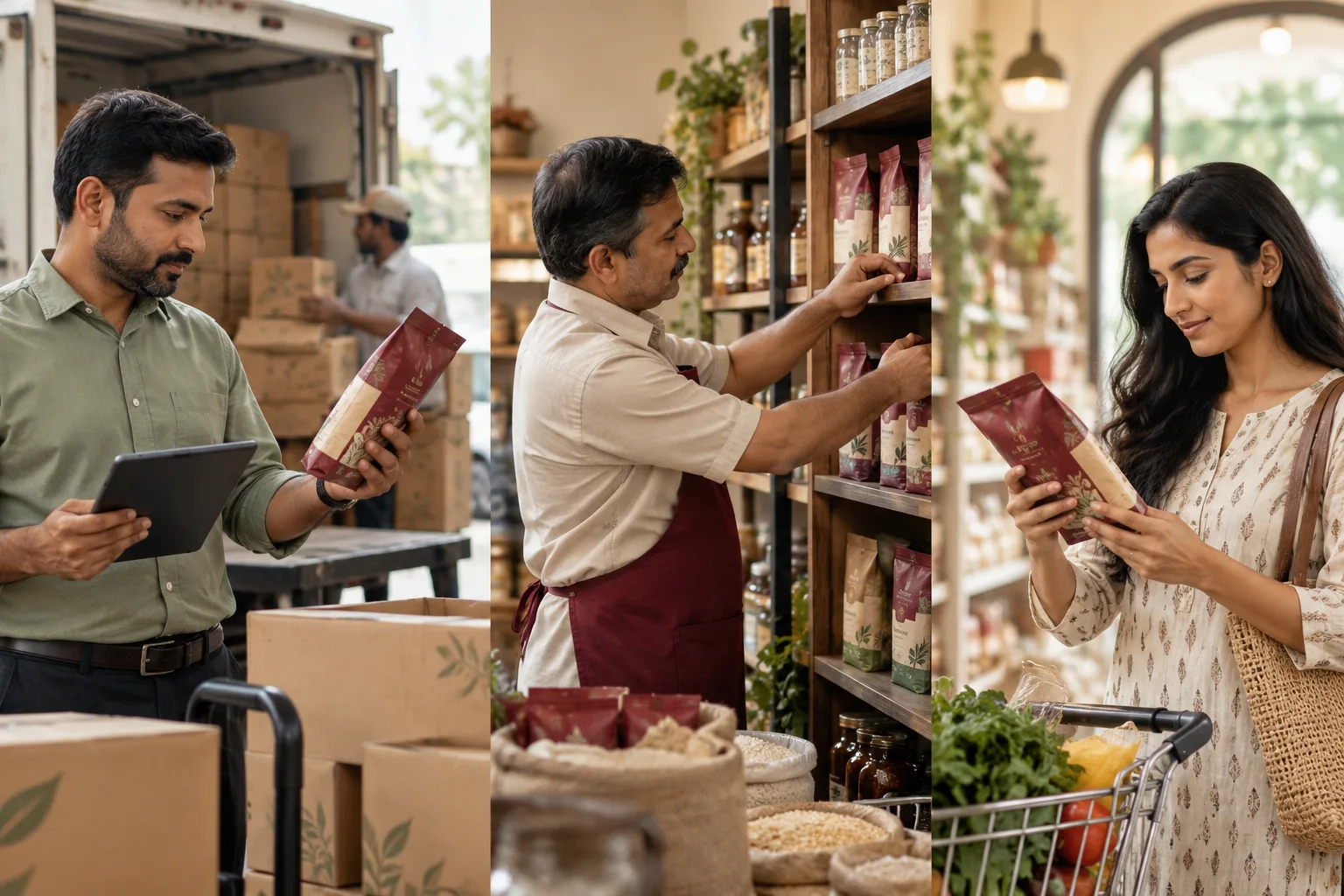 5 min read · 6 Oct 2026How food brands win the trade and the shopperA food or household brand is chosen twice, by the distributor or retailer who stocks it and by the shopper who picks it up. What each buyer checks.
More for dairy producers
Related work to consider.
Closest to this: search and visibility
Also for dairy producers
Or start from the overview: sales and marketing for dairy producers.
Your next practical step
Tell us what you are trying to grow, and we will read it before we call.
Eight short steps, mostly taps. Skip anything you would rather answer on the call.