Dairy producers · Sampling and product demonstration
Let buyers taste the product where they can also buy it.
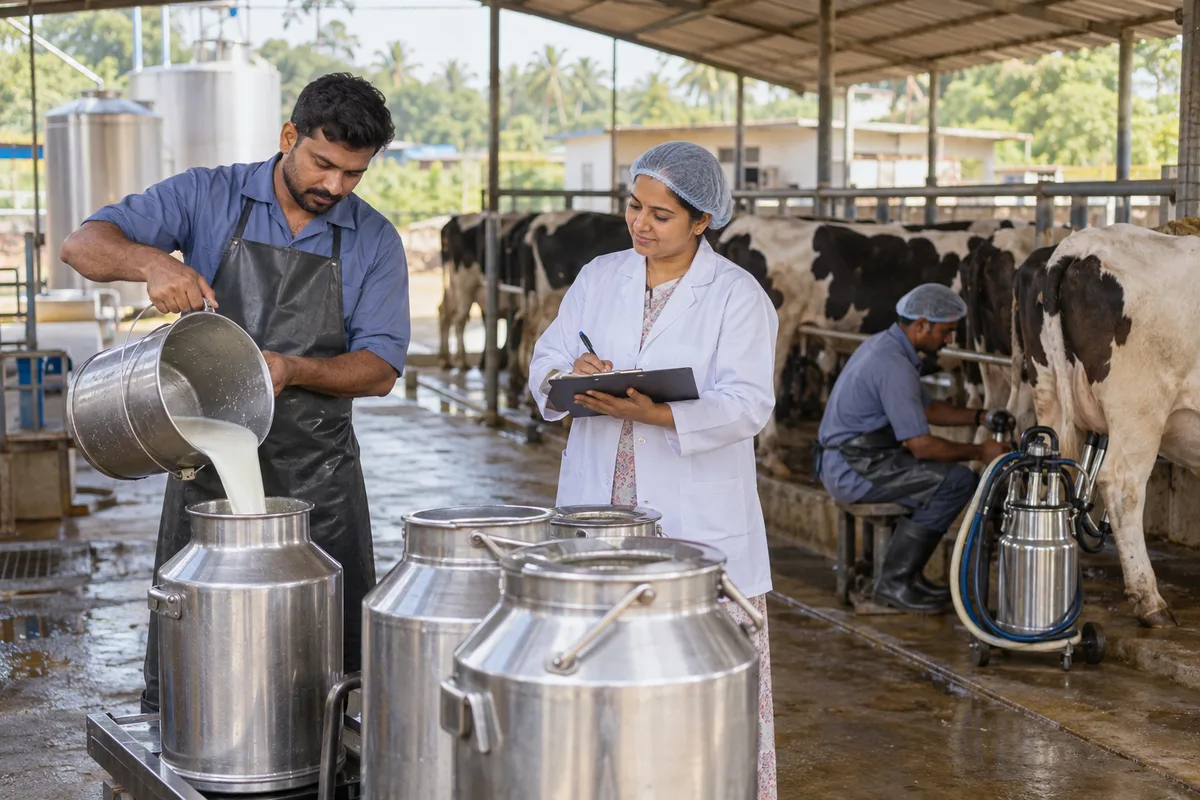
Sampling and product demonstration for a dairy producer puts a taste of flavoured milk, paneer, curd or ghee in front of a household buyer or a kitchen buyer, then connects the taste to a place to buy it. GullySales plans the venue, the handling rules and the stock record, and ties each tasting to a booth, a kirana shop or a quoted rate.
Scope, fee, reporting and term are agreed in writing after we have read your brief and spoken to you.
What sampling and product demonstration means
Sampling and product demonstration lets a buyer try a product or see it working before deciding to purchase, at a dealer counter, retail outlet, or approved venue. GullySales plans the location and permissions, prepares promoters and stock records, and connects the activity to enquiries, counter sales, and dealer follow-up.
Last updated 14 Nov 2026. Rules for this trade differ by state and professional body, and they change. We describe restrictions in general terms, so check the current position with your own council or adviser before you publish anything.
For dairy producers
Where it usually goes wrong, and what we would do.
“A taste means nothing without a shelf”
A family tries the flavoured milk at a society gate and likes it, then finds no booth nearby stocks it. The interest is gone by the time anyone looks for the pack. Before a table opens, the nearest outlets must hold the product, the price on the pouch must be visible, and the promoter must be able to name the closest place to buy.
“Hygiene is part of the product”
A tasting for a dairy is judged on cleanliness in a way a biscuit tasting is not. Cold boxes, clean cups, hand washing and a promoter in a clean uniform are what the buyer notices first. A dairy that cuts corners here teaches the buyer to doubt the pouch. The handling rules come from your own food safety adviser and must be written down.
“A kitchen buyer needs a different tasting”
A hotel chef or sweet shop owner does not taste a cup at a gate. They want a sample of paneer or ghee cooked in their own kitchen, with a quoted rate and delivery terms alongside. A demonstration for them is an appointment, with a named contact and a follow-up call, and a table at a public place does not serve it.
“Allergy and dietary questions arrive at the table”
Milk is itself a common allergen, and some buyers avoid lactose or fat. A promoter who answers loosely creates a risk for the buyer and for your name. The script must say what the pack label states, direct health questions to a doctor, and let the promoter decline to answer beyond it.
What we do
What we deliver for dairy producers.
The work available for this need. We agree the deliverables and responsibilities for your engagement in writing.
Venue shortlist and permission record
Society gates, school events, supermarket aisles and market stalls matched to the buyer you want, with the person who grants permission named for each. Written permission records the space, timing and any fee before stock moves.
Result: Each venue has a signed or written permission on file before the first tasting.
Handling and hygiene sheet
A one-page set of handling rules for the table: how samples are kept cold, how cups and spoons are supplied and discarded, what the promoter wears and where waste goes. The rules are drafted for your food safety adviser to approve.
Result: Your adviser has read and approved the sheet before any tasting begins.
Promoter script and answer card
A short script covering what the product is, what is on the label and where it is sold nearby. A card of plain answers to common questions, including what to say when a buyer raises an allergy or a health concern.
Result: Every promoter carries the same card and gives the same answers.
Stock issue and count sheet
A sheet showing stock drawn, samples poured, packs sold at the nearest outlet and stock returned. Repeat visitors are limited by a simple rule the supervisor checks. The count shows what was used, not only what was set out.
Result: Stock out minus stock back matches samples given and packs sold, line by line.
Buyer response record
A note of the people who asked where to buy, who wanted a quote or who left a number. Kitchen buyers are logged separately, with the product they tried and the rate they asked about, for your sales team's call.
Result: Your team holds a named list of follow-up calls after each tasting.
Outlet readiness check
Before each tasting, the nearest booths and kiranas are called or visited to confirm stock, price and chiller space. If an outlet has none, the date is moved or the venue is changed.
Result: A written list names the outlets confirmed to hold stock on the tasting date.
How the result is measured
- Samples distributed against stock issued and returned
- Consented enquiries, with qualified requirements identified separately
- Sales response time and enquiry-to-order conversion
Recorded as a baseline before work starts, so every later report has an honest comparison.
Who it is for
This is written for these dairy producers.
- Milk producers and processors
- Paneer, curd and ghee manufacturers
- Flavoured and UHT milk brands
- Co-operative dairy societies
- Bulk suppliers to hotels and sweet shops
- Milk booth and kirana distribution networks
Before you decide
Agree the work. Know how to judge it.
Sampling and product demonstration for dairy producers: use these checks to prepare, choose the scope, and review what changes.
Bring the right evidence
Name the buyers you want to meet and the reason for them to speak with you. Bring a product or service story that can lead to a useful next conversation after the event.
Make the scope clear
Agree the event activity, demonstration material, enquiry capture, and follow-up responsibilities. Separate venue or sponsorship spend from production and sales preparation.
Check the work in use
Review the conversations that had a recorded need and agreed next step. Track them through proposals and orders instead of treating badge scans as qualified opportunities.
Know when to change course
If nobody can follow up after the event, reduce the activity to what the team can handle. A full contact list with no next action is not a sales pipeline.
These are discussion points, not a fixed package. GullySales confirms the deliverables, responsibilities, fee, and term in writing after reading your brief and speaking with you.
Before we start
What to have ready before the work starts.
The records, access and decisions this work needs from dairy producers. Anything missing is noted in the written scope, with who will supply it.
- The product and its label
- The exact pack, its printed label and a sample of the flavour or variety to be tried. Promoters can only answer from what the label says, and an unlabelled test batch cannot be given to the public without your adviser's agreement.
- Cold storage for the table
- A cold box or small chiller that keeps the product at the temperature your quality team requires for the whole session. Without it the tasting has to be cancelled, since a warm sample is worse than no sample at all.
- A food safety adviser's approval
- Someone who can read the handling sheet and say yes or no, whether an in-house quality head or an outside adviser. Food rules differ by place and by product, so this approval is yours to obtain and ours to wait for.
- Nearby outlets and van schedule
- The list of outlets near each venue and the van team's plan to stock them before the date. If stock cannot reach them, we need to know early, because the tasting then has no place to send the buyer afterwards.
- A name for kitchen buyers
- One person in your sales team who will take the call from a chef or sweet shop owner and quote a rate. A sample left with a kitchen and no call behind it is a free gift, not a sales step.
How it works
How the sampling and product demonstration work runs
The work itself, in order. How an engagement starts, from your brief to a written scope, is set out on our method page.
- 1
Fix the product and the buyer
We begin by asking which product you want tried and who should try it: a household in a particular neighbourhood, or a chef at a hotel kitchen. Different buyers need different venues and scripts. This is the first decision we ask for, because a tasting planned for everyone reaches nobody in particular.
- 2
Check where it can be bought
We list the booths and kiranas near each proposed venue and check whether they stock the product, at what price. A venue with no nearby stock is dropped from the shortlist. Your van team confirms what can be delivered before the date, since a promised delivery that does not happen undoes the tasting.
- 3
Write the handling rules with your adviser
The hygiene sheet is drafted from your own quality practice and sent to your food safety adviser, who decides what is acceptable. We do not set food safety rules. The promoters are briefed on the approved sheet, and any change your adviser makes is reflected before the next tasting.
- 4
Brief the promoters and the supervisor
Promoters learn the script, the answer card and the count sheet. A supervisor is named for each tasting to check the count and the cleanliness during the session. We run through the questions a buyer might ask, including the awkward ones about allergies, and agree what a promoter says and when they stop.
- 5
Run the tasting and record responses
The tasting takes place at the agreed venue and time. The promoter fills the count sheet as stock is used and notes each person who wants to buy or be called. A photograph of the table, the cold box and the stock sheet is taken at the start and the end, so the record can be checked.
- 6
Read the result against the first figures
Afterwards the stock count is reconciled, and the nearest outlets are asked what they sold of the product compared with the figures recorded before the tasting. Kitchen buyers are called by your sales team. The comparison is written plainly, including venues where the product did not move, and the owner decides which to repeat.
Where this fits
Three pieces of sales work, in this order.
This work sits inside sales process design, at stage 1, prospecting and lead generation. The audit comes before it, and sales management keeps it running.
Step 1
Sales audit
Find where deals are being lost and what to fix first.
Start here if you cannot say where orders are lost.
Step 2 · you are here
Sales process design
One written way to sell, from first enquiry to repeat order.
Start here if every salesperson sells differently.
Step 3
Sales management
A target, a review routine and someone who owns the number.
Start here if the team has targets and no routine.
FAQ
Questions owners ask before they call.
Not here? More answers, or ask on WhatsApp.
Do we need permission to give out samples?
Can children be given samples at a school event?
How do you stop the same people returning for more?
Should we sample paneer or ghee at a public table?
Will a tasting increase our sales?
What do promoters say about health claims?
How much does it cost?
How long is the contract?
How soon will we see results?
Who will actually do the work?
From the blog
Further reading for dairy producers.
- 7 min read · 28 Nov 2026Why dairy enquiries from shops and hotels do not turn into ordersWhere a dairy loses a booth, a sweet shop or a hotel between the first rate enquiry and the first paid delivery, what to do instead, and a test to run.
- 7 min read · 28 Nov 2026How households, shopkeepers and hotels choose a dairyHouseholds buy what the booth stocks, shops stock what sells without waste, and hotels pick the dairy whose trial week went right. What each one weighs.
 5 min read · 6 Oct 2026How food brands win the trade and the shopperA food or household brand is chosen twice, by the distributor or retailer who stocks it and by the shopper who picks it up. What each buyer checks.
More for dairy producers
Related work to consider.
Closest to this: paid and media
Also for dairy producers
Or start from the overview: sales and marketing for dairy producers.
Your next practical step
Tell us what you are trying to grow, and we will read it before we call.
Eight short steps, mostly taps. Skip anything you would rather answer on the call.