Electronic component manufacturers · Search engine optimisation
Let an engineer searching for a rating reach your datasheet before a distributor's page.
SEO for a component maker is the work of making each part family findable by the ratings, dimensions and part numbers an engineer types. GullySales works on the page structure, datasheet naming and technical setup so that your own pages answer those searches.
Scope, fee, reporting and term are agreed in writing after we have read your brief and spoken to you.
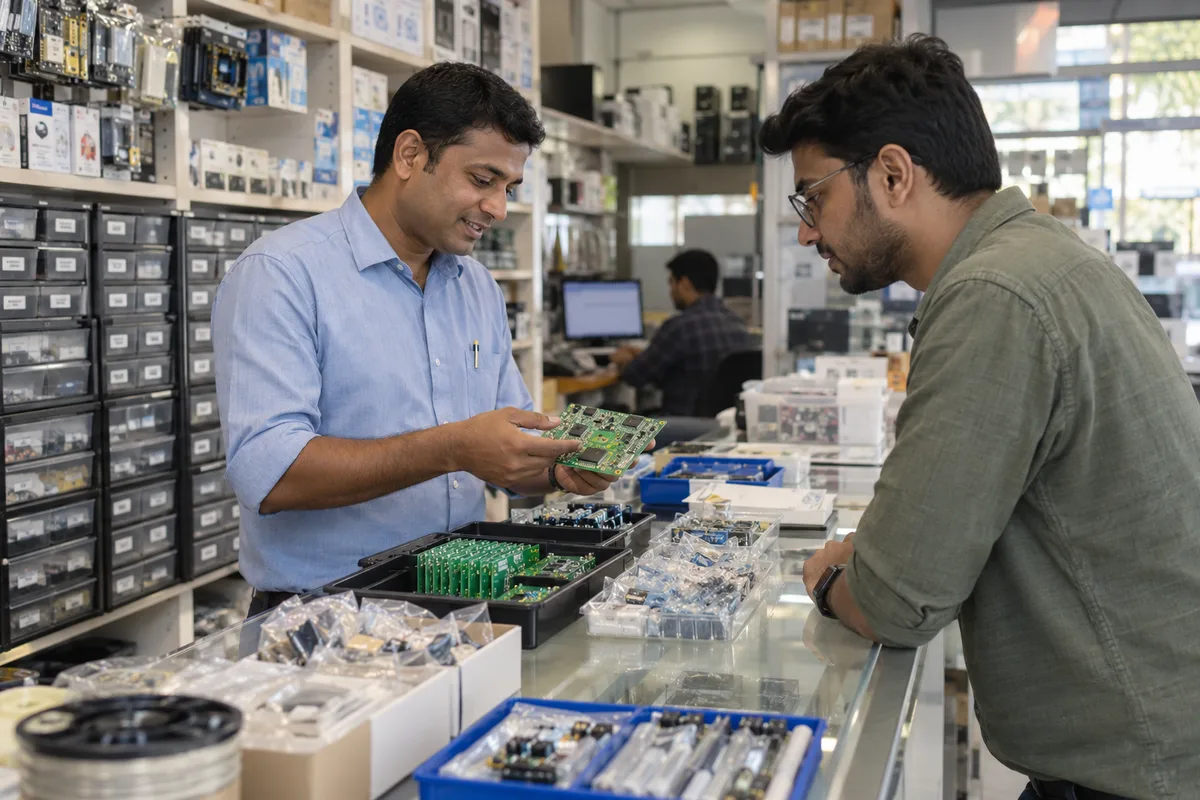
What search engine optimisation means
Search engine optimisation (SEO) is the work of getting your website to appear when a buyer searches Google for what you sell. GullySales builds pages around real search terms, fixes technical issues that block ranking, and tracks which searches actually bring enquiries.
Also for electronic component manufacturers
- Website for electronic component makers
- Lead generation for electronic component makers
- Social media marketing for electronic component makers
- Content marketing for electronic component makers
- Buyer personas for electronic component makers
- CRM for electronic component makers
- Follow-up systems for electronic component makers
- WhatsApp marketing for electronic component makers
Sales and marketing for electronic component manufacturers, the overview.
Last updated 14 Nov 2026.
For electronic component manufacturers
Where it usually goes wrong, and what we would do.
“Engineers search by specification”
The search is a rating, a package size or a part code, not a company name. A site with one page titled Products gives the search engine nothing to match, so the distributor listing wins the result.
“PDF datasheets need a page around them”
A datasheet sitting alone as a file has no heading, no description and no link to the related parts. Wrapping it in a family page with the key ratings in text lets the search engine read what the PDF contains.
“Part numbers change across revisions”
Older codes are still printed on boards and in service manuals. Pages that mention superseded numbers and point to the current part catch the engineer maintaining an old design.
“Application searches reach the buyer earlier”
An engineer who does not yet know the part searches for the problem, such as a filter for a motor drive. A short application note linked to the right family meets that person before the shortlist is drawn.
What we do
What we deliver for electronic component manufacturers.
The work available for this need. We agree the deliverables and responsibilities for your engagement in writing.
Part-family page structure
One page per family with ratings in a table, dimensions, approvals and a sample link, written in plain text.
Result: Each family can be found by its own specification.
Datasheet file naming and indexing
Files renamed to part numbers with readable titles, each linked from its family page.
Result: The final2 style of file name disappears from your library.
Superseded-part notes
A short section on each page listing earlier codes and the current replacement.
Result: Searches for old codes land on a page that helps.
Application notes
Plain pages describing how a part is used in a power supply, a meter or a charger, linked to the families involved.
Result: Problem-led searches have a page of yours to reach.
Technical SEO check
A review of site speed, page indexing and structured data on the product pages.
Result: A list of fixes, in order, for your web team.
Search enquiry tracking
A record of which pages bring sample and datasheet requests.
Result: You see which part pages earn their place.
How the result is measured
- Ranking positions
- Organic traffic
- Enquiries from organic search
Recorded as a baseline before work starts, so every later report has an honest comparison.
Searches your buyers type
Match each specification search with a page and a datasheet.
- X7R capacitor 100nF 50V datasheet
- A part-family page holding the rating table with the datasheet linked, so the engineer reaches your file and not a reseller's copy.
- PCB mount relay 12V 10A manufacturer
- A relay page with coil and contact ratings in a table, the footprint and the approvals the part carries, as stated on the datasheet.
- replacement for obsolete connector part number
- A superseded-part note naming the old number, the current one and the differences, which a buyer searching a discontinued part needs.
- ferrite core inductor for power supply
- An application note linking a use, such as a switching supply, to the parts that suit it, written by your application engineer.
- component manufacturer in Bengaluru
- A page naming your plant location and the product families made there, matching the Business Profile and the company listing.
Who it is for
This is written for these electronic component manufacturers.
- Capacitor and resistor makers
- Connector, terminal and cable assembly makers
- Transformer, inductor and magnetics makers
- Relay, switch and contactor makers
- Crystal, oscillator and filter makers
- Sensor and thermistor element makers
- Fuse, surge protection and circuit protection component makers
- Semiconductor packaging and assembly units
Before you decide
When this may not be the right fit.
- Your datasheets exist only as scanned images, and search work would index files an engineer cannot read.
- Part numbers and ratings change between revisions and nobody owns the page updates, so old data would stay live.
- You expect to outrank the distributors for your own part numbers outright, which the pages cannot promise.
Before you decide
Agree the work. Know how to judge it.
SEO for electronic component makers: use these checks to prepare, choose the scope, and review what changes.
Bring the right evidence
Bring the pages for the products or services you want to sell, the search queries available in your reports, and examples of enquiries from search. Separate branded searches from buyers discovering you for the first time.
Make the scope clear
Agree which pages and technical fixes come first, who can publish changes, and who supplies subject knowledge. Link search work to a relevant enquiry route on each priority page.
Check the work in use
Follow the trail from a relevant query to its landing page and then to an enquiry. Review whether those enquiries fit your offer, alongside indexing and search visibility.
Know when to change course
A ranking movement alone is not a buying signal. If traffic grows but relevant enquiries do not, revisit page intent and the offer before producing more pages.
These are discussion points, not a fixed package. GullySales confirms the deliverables, responsibilities, fee, and term in writing after reading your brief and speaking with you.
Before we start
What to have ready before the work starts.
The records, access and decisions this work needs from electronic component manufacturers. Anything missing is noted in the written scope, with who will supply it.
- Current datasheets with revision records
- The latest file for each part and the history of revisions, as they stand on the shared drive. We build pages and naming from them. If revisions are unrecorded, we mark the pages as pending until your design team confirms the current version.
- Login to the website and its file storage
- Access to the editor and to the place where datasheets are held. Without it we cannot rename files or place pages. If an outside vendor controls the site, we need their agreement before any change.
- The list of superseded and replaced part numbers
- Which numbers have been replaced, by what, and whether the replacement is a direct fit. These notes protect the customer from a wrong redesign. If the list is missing, we leave the notes out instead of guessing.
- An application engineer's time
- A named engineer who can check each note for accuracy. Content that no engineer has read is not published. If the engineer is stretched, we write fewer notes and publish them one by one.
- Your enquiry log from search and portals
- A record of enquiries with the source marked, even if rough. The final comparison rests on it. Without it, search enquiries start being counted from the first page published.
How it works
How the search engine optimisation work runs
The work itself, in order. How an engagement starts, from your brief to a written scope, is set out on our method page.
- 1
Read the datasheet library as an engineer would
We open your datasheets and look at file names, titles, revision marks and the first page, the way a search engine and an engineer both would. You tell us which are current and which are superseded. The list that results shows which files are findable and which are only stored. We also note files stored as scanned images, which a search engine cannot read and which need a text version beside them.
- 2
Type the specifications engineers search for
From your parametric tables we list the ratings, dimensions and standards an engineer might type, then search them and note who appears: you, a distributor or a marketplace. You see where your own part is outranked on its own number.
- 3
Give each part family a page around its datasheet
We agree the page for each family, with a short description, the key specification table, the datasheet link and the sample route. You decide which families come first by the orders you want to win, and each page gets one clear owner on your side.
- 4
Rename files and mark superseded parts
We set a naming rule for datasheet files so a revision is clear in the name, and write a short note on each superseded part pointing to its replacement. Your design team confirms each replacement, since a wrong pointer costs a customer a redesign.
- 5
Write application notes in the searcher's words
With your application engineer we draft notes on the problems customers describe, such as choosing a relay for an inductive load or a capacitor for a high ripple current. The engineer checks every figure, and we phrase the note around the question an engineer types.
- 6
Check the pages and count the enquiries
We check that the pages can be indexed, load properly on a phone and carry the sample form, then track enquiries that come from search. You compare them with the enquiry log we recorded before the work, and decide which families to extend.
Where this fits
Three pieces of sales work, in this order.
This work sits inside sales process design, at stage 1, prospecting and lead generation. The audit comes before it, and sales management keeps it running.
Step 1
Sales audit
Find where deals are being lost and what to fix first.
Start here if you cannot say where orders are lost.
Step 2 · you are here
Sales process design
One written way to sell, from first enquiry to repeat order.
Start here if every salesperson sells differently.
Step 3
Sales management
A target, a review routine and someone who owns the number.
Start here if the team has targets and no routine.
FAQ
Questions owners ask before they call.
Not here? More answers, or ask on WhatsApp.
Can we rank above the distributors for our own part numbers?
Should datasheets stay as PDFs?
Does SEO matter when our sales go through distributors?
How do we handle part number changes in search?
Should we block distributors from copying our datasheets?
Do we need a page for every part number?
How much does it cost?
How soon will we see results?
Who will actually do the work?
What do you need from us?
More for electronic component manufacturers
Related work to consider.
Closest to this: search and visibility
Also for electronic component manufacturers
Or start from the overview: sales and marketing for electronic component manufacturers.
Your next practical step
Tell us what you are trying to grow, and we will read it before we call.
Eight short steps, mostly taps. Skip anything you would rather answer on the call.