Electronic component manufacturers · Social media
Show engineers the factory floor and the test bench where your parts are tested.
Social media for a component maker is a place to show process control, test results and new part releases to the engineers and buyers who follow the trade. GullySales plans the posts around your plant, your tests and your engineers, and the platforms where design people spend time.
Scope, fee, reporting and term are agreed in writing after we have read your brief and spoken to you.
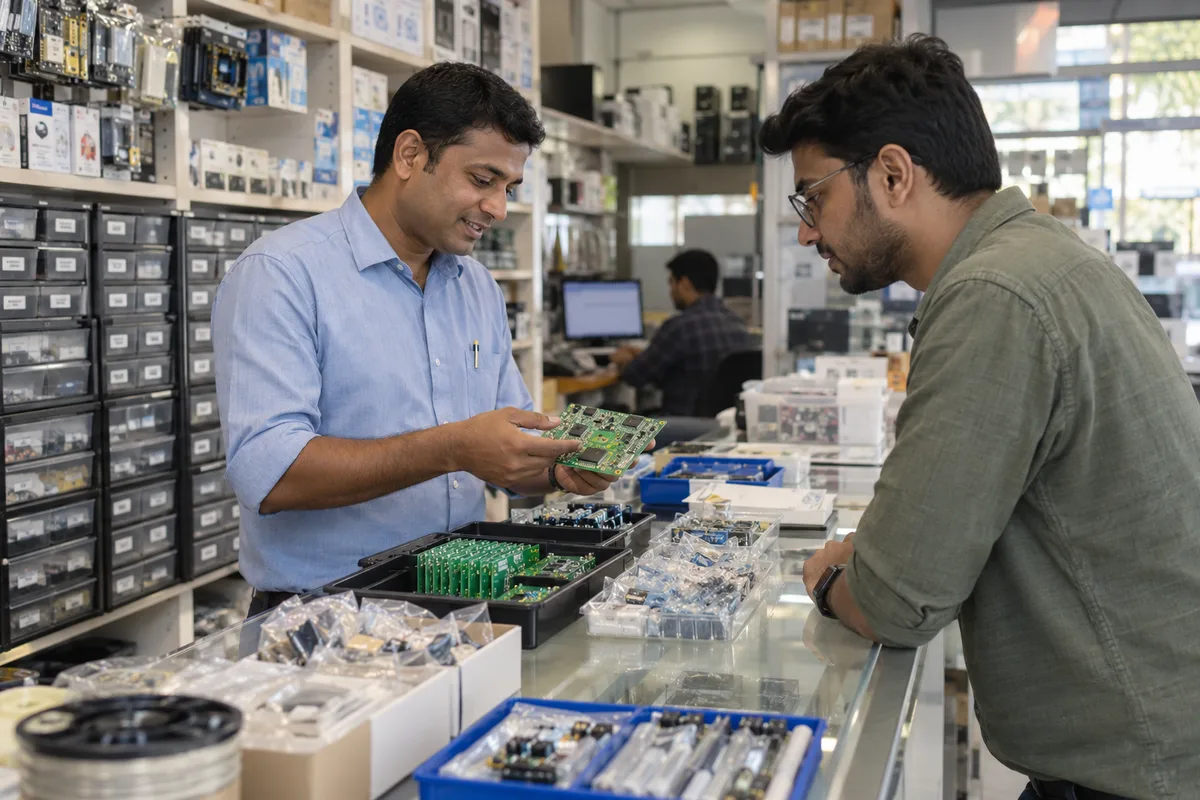
What social media means
Social media is the ongoing posting your business does on platforms such as Instagram, Facebook and LinkedIn to stay visible to customers and prospects between purchases. GullySales plans a posting calendar, writes captions and designs the images so the page looks active and answers what a visitor would ask.
Also for electronic component manufacturers
- Content marketing for electronic component makers
- Lead generation for electronic component makers
- SEO for electronic component makers
- Buyer personas for electronic component makers
- CRM for electronic component makers
- Follow-up systems for electronic component makers
- WhatsApp marketing for electronic component makers
- Digital marketing for electronic component makers
Sales and marketing for electronic component manufacturers, the overview.
Last updated 14 Nov 2026.
For electronic component manufacturers
Where it usually goes wrong, and what we would do.
“LinkedIn is where buyers and engineers look”
A design engineer or a sourcing head checks a supplier's profile before replying. A page with real plant pictures and part announcements answers the question of whether the company is active and serious.
“A test bench photograph says more than a slogan”
An image of a life test or a reflow trial, with the part and the result stated plainly, shows how the product behaves. Stock photographs of circuit boards show only that the post is decoration.
“New releases need a plain announcement”
A new series launched without a post is missed by every engineer who does not read the catalogue. A short note with the key ratings and a link to the datasheet reaches them where they already scroll.
“Your own engineers are the best voice”
A post from the quality head explaining a failure mode gets read by peers. A generic company post gets scrolled past. Engineers trust engineers.
What we do
What we deliver for electronic component manufacturers.
The work available for this need. We agree the deliverables and responsibilities for your engagement in writing.
Platform choice note
A short decision on which channels fit your buyers, such as LinkedIn and a video channel for process clips, with reasons.
Result: The team stops posting where no buyer is present.
Plant and process content plan
A list of recurring subjects such as incoming inspection, winding, plating and final test, each photographed once with permission.
Result: A bank of real material exists before the first post.
New-part announcement format
A fixed layout giving part family, ratings, approvals and datasheet link.
Result: Every release is announced the same way.
Engineer-voice posts
Short notes written with your quality or design head on failure analysis, derating and storage.
Result: Peers see technical knowledge in the company.
Enquiry routing from social
A tag on each link so sample requests from a post can be traced.
Result: You can see which posts led to a request.
How the result is measured
- Posts published
- Engagement rate
- Enquiries from social profiles
Recorded as a baseline before work starts, so every later report has an honest comparison.
Posts and pieces to plan
Plan posts that show engineers where the part is tested.
- Test bench with a part under load
- A photograph or short clip of the bench setup, naming the test and the part family, taken with no customer drawings visible.
- New part release
- A plain announcement with the rating, the package and a link to the datasheet, written by the engineer who developed the part.
- Process step on the plant floor
- A winding, plating or assembly step in a clean area, shown with a line on what is checked at that stage.
- Application note summary
- A short post pointing to a published note, with one finding stated and a link for engineers who want the detail.
- Engineer's explanation of a design choice
- A post in the voice of your own design engineer on why a part is built a certain way, reviewed for accuracy first.
Who it is for
This is written for these electronic component manufacturers.
- Capacitor and resistor makers
- Connector, terminal and cable assembly makers
- Transformer, inductor and magnetics makers
- Relay, switch and contactor makers
- Crystal, oscillator and filter makers
- Sensor and thermistor element makers
- Fuse, surge protection and circuit protection component makers
- Semiconductor packaging and assembly units
Before you decide
When this may not be the right fit.
- Your engineers cannot spare time to write or review a post, and a marketing writer would publish technical claims unchecked.
- Customer approvals for photographs are not on record, and an image of their board or drawing would break trust.
- You want consumer reach, though the buyers are a small group of engineers and purchase managers on LinkedIn.
Before you decide
Agree the work. Know how to judge it.
Social media marketing for electronic component makers: use these checks to prepare, choose the scope, and review what changes.
Bring the right evidence
Review the posts that produced useful conversations, not only the ones with the most views. Gather buyer questions and decide which team member can contribute credible material.
Make the scope clear
Choose the audience and channel before setting a posting volume. Agree who supplies material, approves posts, and handles messages, including complaints or questions the agency cannot answer.
Check the work in use
Follow a post through to the profile, website, and response. A useful report explains the quality of conversations and enquiries, alongside reach and engagement.
Know when to change course
If publishing takes time away from unanswered buyer messages, fix the response routine first. Do not expand to another channel without a clear reason for being there.
These are discussion points, not a fixed package. GullySales confirms the deliverables, responsibilities, fee, and term in writing after reading your brief and speaking with you.
Before we start
What to have ready before the work starts.
The records, access and decisions this work needs from electronic component manufacturers. Anything missing is noted in the written scope, with who will supply it.
- Photographs and short clips from the plant
- Pictures of the line, the test bench and the packing area, taken with your permission and cleaned of customer markings. The first posts are built from them. If none exist, we plan a photo walk first and delay posting.
- A list of what is confidential
- Customer names, drawings and part markings that must never appear. Every post is checked against it. When the list is missing, we assume the strictest limits and ask you to relax them post by post. Your quality head or sales head can own the list, and we ask them to review it whenever a new customer or programme starts.
- Test results you are allowed to share
- Summaries of tests such as ratings verification or a reliability run, in a form your quality head has approved for outside use. They give the posts substance. If none are cleared, posts show the process, not the results. An approved summary might say only which standard method was followed and that the lot passed, without showing a customer's limits.
- Admin access to the company page
- The login or the name of the administrator of the existing profile. We cannot publish or route messages without it. If the page was set up by a former employee, ownership is recovered first.
- A reviewer for each technical post
- One engineer who reads each post for accuracy before it is scheduled. An unreviewed figure is a risk with design customers. If the reviewer is unavailable, publication waits.
How it works
How the social media work runs
The work itself, in order. How an engagement starts, from your brief to a written scope, is set out on our method page.
- 1
Walk the plant and the test bench
We visit the production floor, the incoming inspection area and the test bench, or review photographs if a visit is not possible. You tell us what may be shown and what is confidential, such as a customer's marking. We leave with a list of scenes worth posting that show control, not just machinery. We also photograph nothing that shows a customer's marking, a drawing on a screen or an unreleased part, and we write that rule into the notes your floor staff will follow.
- 2
Find where your engineers and buyers gather
We look at the professional network and the groups your customers' engineers follow, and at who already follows you. You choose one platform to begin with, where purchase heads and design engineers already read, and the profile is set up with a route to the sample form.
- 3
Choose which engineers will speak
We ask your application and quality engineers who is willing to be the voice for a post, and agree what each may discuss. A post carries more weight when an engineer writes it. You approve the arrangement, and we draft with them, not for them.
- 4
Draft the first announcements and process posts
We write a new-part announcement in a fixed plain format with the specification, the datasheet link and the sample route, and a process post from the plant walk. Your engineer checks every figure before anything is scheduled. The process post names the check being shown, such as incoming inspection or final test, so a quality head reading it recognises the step.
- 5
Route comments and messages to a person
We agree who answers a technical question left in a comment, who handles a sample request that arrives by message, and what is recorded in the CRM. A reply that waits for a week costs the interest, so you name the owner.
- 6
Trace enquiries back to the posts
We ask new enquirers where they saw you, log it, and compare with the enquiries counted before posting began. You decide which post types brought sample requests and which only brought likes.
Where this fits
Three pieces of sales work, in this order.
This work sits inside sales process design, at stage 0, foundation. The audit comes before it, and sales management keeps it running.
Step 1
Sales audit
Find where deals are being lost and what to fix first.
Start here if you cannot say where orders are lost.
Step 2 · you are here
Sales process design
One written way to sell, from first enquiry to repeat order.
Start here if every salesperson sells differently.
Step 3
Sales management
A target, a review routine and someone who owns the number.
Start here if the team has targets and no routine.
FAQ
Questions owners ask before they call.
Not here? More answers, or ask on WhatsApp.
Is social media worth the effort for a B2B component business?
Who should write the posts?
What should a component maker never post?
What should a component maker never post?
Can we tag customers in our posts?
Is it worth posting about exhibitions?
How much does it cost?
How long is the contract?
How soon will we see results?
Who will actually do the work?
More for electronic component manufacturers
Related work to consider.
Closest to this: content and social
Also for electronic component manufacturers
Or start from the overview: sales and marketing for electronic component manufacturers.
Your next practical step
Tell us what you are trying to grow, and we will read it before we call.
Eight short steps, mostly taps. Skip anything you would rather answer on the call.