Electronic component manufacturers · Digital marketing
Put your parts in front of the engineers and buyers who search before they call.
Digital marketing for a component maker joins the website, search, email and marketplace work around one aim: engineers finding and sampling your parts. GullySales plans the pieces in an order that suits a long design cycle and a small buyer list.
Scope, fee, reporting and term are agreed in writing after we have read your brief and spoken to you.
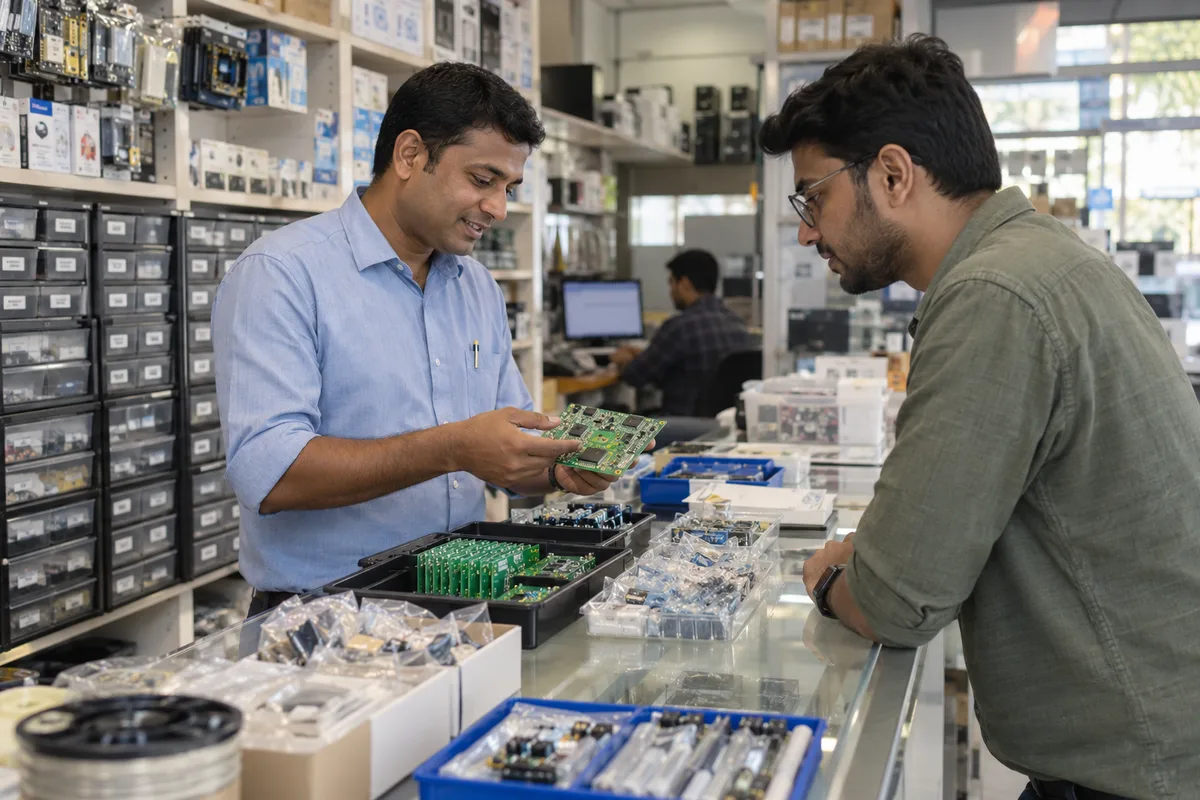
What digital marketing means
Digital marketing is the combined work of search, social media, advertising and website channels running together rather than as separate projects with separate people. GullySales runs these as one connected system so a change in one channel, such as a new offer, is reflected everywhere at once.
Also for electronic component manufacturers
- Buyer personas for electronic component makers
- Lead generation for electronic component makers
- SEO for electronic component makers
- Social media marketing for electronic component makers
- Content marketing for electronic component makers
- CRM for electronic component makers
- Follow-up systems for electronic component makers
- WhatsApp marketing for electronic component makers
Sales and marketing for electronic component manufacturers, the overview.
Last updated 14 Nov 2026.
For electronic component manufacturers
Where it usually goes wrong, and what we would do.
“The buyer list is small, so reach matters less than fit”
A component maker may serve a few hundred active engineers. Spending to reach thousands of strangers wastes budget; the work is to be present when a known type of engineer searches.
“Channels must work with each other”
A search brings an engineer to a family page, the page offers a sample form, the form feeds the CRM and a follow-up message goes out. A break at any link loses the person.
“Paid search suits a few well-chosen parts”
Advertising on exact part terms or on application phrases can bring an engineer to a page. Broad terms bring students and hobbyists, who cost money and never order.
“Email to existing contacts is the quiet earner”
Engineers who have taken samples are the warmest audience. A note on a new series or a revised datasheet reaches people who already know the company.
What we do
What we deliver for electronic component manufacturers.
The work available for this need. We agree the deliverables and responsibilities for your engagement in writing.
Channel plan
A short plan naming which channels to use, which to skip and the reason for each.
Result: Spending follows the places your buyers actually look.
Part-family landing pages
Pages built for search and for paid traffic, each with a sample form.
Result: Every visit has somewhere useful to land.
Paid search set-up on chosen terms
Campaigns on part and application terms, with exclusions for hobbyist searches.
Result: Clicks come from people with a plausible need.
Email to sample recipients
A note to past sample requesters on new releases and revised documents.
Result: Warm contacts hear from you at relevant moments.
Enquiry source report
A report of which channel led to which sample or quote.
Result: You can see what is worth continuing.
How the result is measured
- Enquiries across channels
- Cost per enquiry overall
- Channel mix by contribution
Recorded as a baseline before work starts, so every later report has an honest comparison.
Searches your buyers type
Cover the few searches that decide a design-in.
- your company name plus datasheet
- The first check after a distributor mentions you. The datasheet library, the site and the listings must agree on part numbers.
- manufacturer of wire wound resistors in India
- A part-family page suited to a small paid search campaign, ending at a sample request form for the exact family.
- alternative to imported relay
- A cross-reference page for buyers moving off imports, naming the equivalent and the points the engineer should check.
- approved supplier for electronic components
- A quality and approvals page with certificates held and audit information, for the quality head.
- capacitor datasheet pdf download
- The datasheet library page, with revision dates and a request for a sample next to each file.
Who it is for
This is written for these electronic component manufacturers.
- Capacitor and resistor makers
- Connector, terminal and cable assembly makers
- Transformer, inductor and magnetics makers
- Relay, switch and contactor makers
- Crystal, oscillator and filter makers
- Sensor and thermistor element makers
- Fuse, surge protection and circuit protection component makers
- Semiconductor packaging and assembly units
Before you decide
When this may not be the right fit.
- Your site has no sample request path, so a paid click for a part would end at a general contact form.
- You cannot count enquiries by source, and a long sales cycle needs that record to show what worked.
- You want mass reach, though the buyer list is small and fit matters more.
Before you decide
Agree the work. Know how to judge it.
Digital marketing for electronic component makers: use these checks to prepare, choose the scope, and review what changes.
Bring the right evidence
Bring a recent won order and an enquiry that went nowhere. Trace how each buyer found you, what they asked, and who handled the next step. A channel list alone will not explain the difference.
Make the scope clear
Choose one offer and one buyer group first. Agree which part needs attention: being found, getting a useful enquiry, or turning an enquiry into an order. Separate recommendations from the work required to carry them out.
Check the work in use
A useful plan names the first change, its owner, the evidence behind it, and the number that will show whether it worked. Ask what has deliberately been left out and why.
Know when to change course
If your team cannot answer the enquiries it already receives, improve that handover before buying more traffic. If the offer itself is unclear, test it with buyers before adding channels.
These are discussion points, not a fixed package. GullySales confirms the deliverables, responsibilities, fee, and term in writing after reading your brief and speaking with you.
Before we start
What to have ready before the work starts.
The records, access and decisions this work needs from electronic component manufacturers. Anything missing is noted in the written scope, with who will supply it.
- The enquiry log with sources marked
- A record of enquiries from the website, marketplaces and calls, with the source where known. The baseline depends on it. If sources are unmarked, we start marking now. Rough marks such as a distributor name or a trade-show tag are sufficient for a first count.
- A shortlist of part families to push
- The families you want new design-ins for, ranked by what you can supply and support. The plan follows it. If every family is a priority, the plan spreads thin.
- A budget you can afford to learn with
- A sum you accept may produce no direct order, together with your view on paid search at all. The channel plan is sized to it. If you set none, we plan without paid channels. A modest sum is acceptable, because the plan starts with the cheapest channels, the website and email to existing contacts.
- Access to the site and accounts
- Logins to the website editor, the email tool and any marketplace account. We cannot connect or measure anything without them. If a vendor holds them, we need their handover. Where a marketplace login belongs to an agency, we ask for a written handover before any change.
- A sales engineer to take every enquiry
- The person who answers each sample request and call. Channels that bring enquiries to an empty desk waste the spend. If staffing is short, we limit the channels. Where the sales engineer travels, a named deputy keeps the enquiries from waiting in an inbox.
How it works
How the digital marketing work runs
The work itself, in order. How an engagement starts, from your brief to a written scope, is set out on our method page.
- 1
Find where enquiries come from today
We read your enquiry log, the marketplace dashboards and the sample register to learn which channels already bring engineers and buyers. You correct our reading from memory of who rang whom. The result is a plain list of what is working and what only feels busy. We also mark enquiries that arrived with no source recorded, so the gap is visible and not buried in a channel that looks successful.
- 2
Choose the part families worth promoting
From the order book, you pick the part families where a new design-in would matter greatest, and we set aside the rest for now. A small buyer list rewards focus, so the channel plan is built around these families.
- 3
Settle who owns each channel
For the website, search, email and marketplaces, we write the person responsible and the tool they use. A channel without an owner is left out. You confirm, since you will be accountable for the time. Where one person holds all the channels, we write which tasks sit in the sales office and which belong to a vendor, so nothing is left without a name.
- 4
Prepare the landing pages and the email
We draft a landing page for each chosen family and an email to recent sample recipients, each with one sample route. Your application engineer checks every figure before anything is approved. The email to recent sample recipients asks whether the part reached the right bench and offers a test report, which gives the engineer a reason to reply.
- 5
Switch channels on in an order you can trace
We release the landing pages first, then the email to existing contacts, then paid search on a few well-chosen terms. You see each channel working before the next begins, so a result can be traced to one change. Paid search is limited to a few part numbers or ratings that engineers type, with the landing page matching the term, and we note the terms in your channel plan.
- 6
Reconcile enquiries against the sample register
We tag each enquiry with its channel, then compare samples dispatched and projects opened with the register we read at the start. You decide which channels to continue and whether any budget should follow. We also write down which enquiries came from people outside your target list, so the next round of terms can exclude them.
Where this fits
Three pieces of sales work, in this order.
This work sits inside sales process design, at stage 0, foundation. The audit comes before it, and sales management keeps it running.
Step 1
Sales audit
Find where deals are being lost and what to fix first.
Start here if you cannot say where orders are lost.
Step 2 · you are here
Sales process design
One written way to sell, from first enquiry to repeat order.
Start here if every salesperson sells differently.
Step 3
Sales management
A target, a review routine and someone who owns the number.
Start here if the team has targets and no routine.
FAQ
Questions owners ask before they call.
Not here? More answers, or ask on WhatsApp.
Where should a component maker start?
Is paid advertising worth it for us?
How do we judge digital work in a long sales cycle?
How do we judge digital work in a long sales cycle?
Should we advertise on marketplaces at all?
How do we judge the work when design-ins take so long?
How much does it cost?
How long is the contract?
How soon will we see results?
Who will actually do the work?
More for electronic component manufacturers
Related work to consider.
Closest to this: strategy and research
Also for electronic component manufacturers
Or start from the overview: sales and marketing for electronic component manufacturers.
Your next practical step
Tell us what you are trying to grow, and we will read it before we call.
Eight short steps, mostly taps. Skip anything you would rather answer on the call.