Electronic component manufacturers · Lead generation
Bring in design engineers and approved-vendor buyers who need the part you make.
Lead generation for a component maker means attracting the engineers who specify parts and the buyers who release orders, and sorting one from the other. GullySales works on the datasheet requests, sample forms and distributor enquiries that bring in those people, and on the log that shows which became projects.
Scope, fee, reporting and term are agreed in writing after we have read your brief and spoken to you.
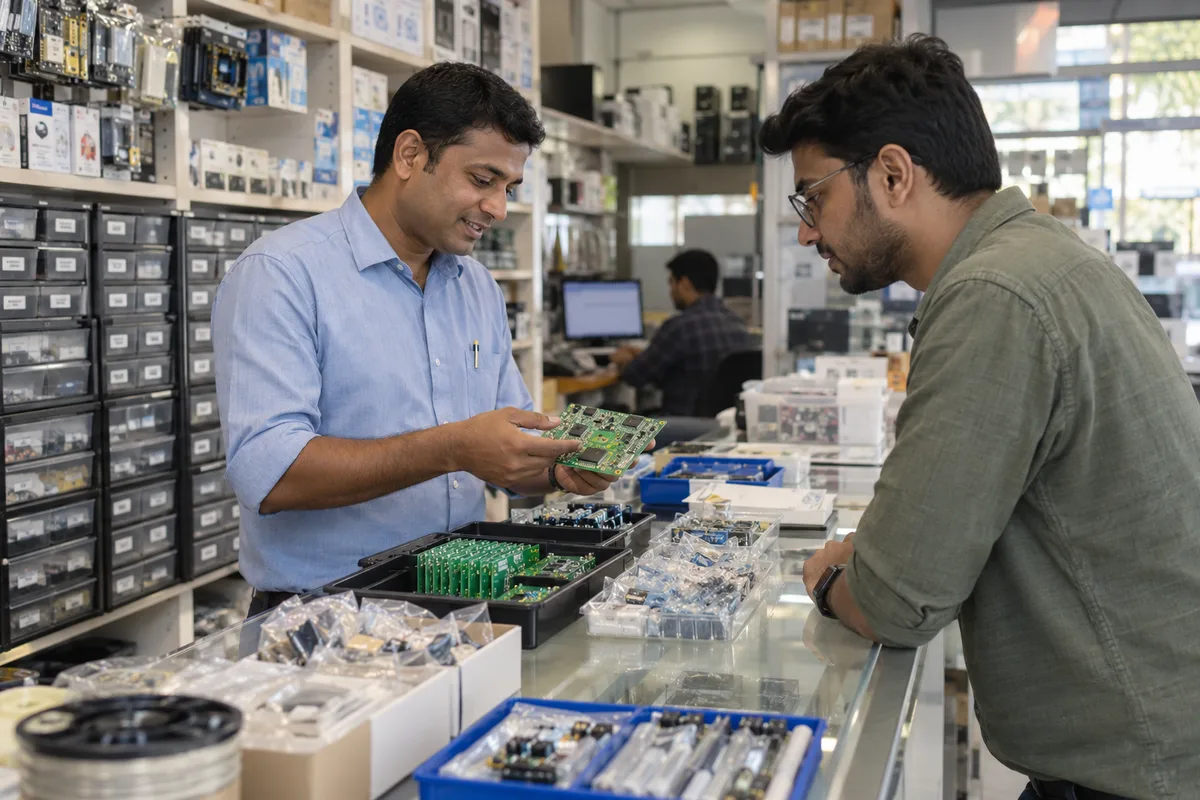
What lead generation means
Lead generation is the combined work of every channel that brings in a new enquiry, whether from search, adverts, referrals or a stall at an exhibition. GullySales runs these channels together and reports the number of enquiries each one produced, not the activity behind it.
Also for electronic component manufacturers
- CRM for electronic component makers
- Follow-up systems for electronic component makers
- SEO for electronic component makers
- Social media marketing for electronic component makers
- Content marketing for electronic component makers
- Buyer personas for electronic component makers
- WhatsApp marketing for electronic component makers
- Digital marketing for electronic component makers
Sales and marketing for electronic component manufacturers, the overview.
Plan the next part of the work
Last updated 21 Nov 2026.
For electronic component manufacturers
Where it usually goes wrong, and what we would do.
“A sample request is the real lead”
A buyer asking for a price list may only be comparing rates. An engineer asking for three samples of one part number has a board on the bench. Treat the sample form as the main door and give it the fields that let your team qualify the project.
“Distributor enquiries hide the end customer”
When a counter in a trading market asks for a quote, the engineer behind it stays unknown. Lead generation needs a rule that asks the distributor for the end application, so the enquiry is worth following up.
“A part-number search is a buying signal”
Someone typing an exact part code or a rating into a search box already has a design in mind. Pages built around ratings and part families meet that search, where a general company page does not.
“Trade-show contacts decay without a record”
Cards collected at an electronics exhibition go into a drawer. A contact becomes a lead only when the part of interest, the application and the next step are written beside the name.
What we do
What we deliver for electronic component manufacturers.
The work available for this need. We agree the deliverables and responsibilities for your engagement in writing.
Sample request form by part family
A short form asking for part number, quantity, application and the end product, placed on every family page.
Result: Each sample dispatched has an engineer, a project and a reason attached.
Datasheet gate rules
A decision on which documents open freely and which ask for a work email, written down and applied across the library.
Result: The team knows which downloads are leads and which are only reading.
Distributor enquiry rule
A written note on what a distributor must tell you about the end buyer before you quote, and when your own team joins the conversation.
Result: Larger enquiries reach your sales team rather than stopping at a counter.
Marketplace enquiry sorting
IndiaMART and similar enquiries sorted into standard-part buyers, serious engineers and noise, with a reply for each.
Result: Every marketplace enquiry carries a label and an owner.
Exhibition follow-up sheet
A one-page sheet filled at the stand with part, application and next step for each contact.
Result: The post-event call list is ready the day the stand is packed.
How the result is measured
- Relevant enquiries by source
- Duplicate and unsuitable enquiries
- Time to the first response
- Accepted enquiries reaching an agreed next step
Recorded as a baseline before work starts, so every later report has an honest comparison.
What to capture
Record the part, the application and the path the enquiry took.
- Part family and rating requested
- Capacitor, relay, connector or magnetic part, with the value or rating. The application team sees at once if the request fits a line you make.
- End product and application
- What the engineer is designing, such as a motor drive or a meter. It shows whether the part is a design-in or a replacement.
- Sample requested and dispatched
- The date a sample left and who asked. This is the event that starts the design-in follow-up, and it should be entered the same day.
- Direct or through a distributor
- Whether the enquiry came from the engineer or via a distributor. It decides who owns the contact and who gets the follow-up call.
- Annual quantity the buyer expects
- The volume the engineer states in their own words, so the team can tell a prototype run from a scheduled order.
Who it is for
This is written for these electronic component manufacturers.
- Capacitor and resistor makers
- Connector, terminal and cable assembly makers
- Transformer, inductor and magnetics makers
- Relay, switch and contactor makers
- Crystal, oscillator and filter makers
- Sensor and thermistor element makers
- Fuse, surge protection and circuit protection component makers
- Semiconductor packaging and assembly units
Before you decide
When this may not be the right fit.
- Your application team has no one to reply to sample requests as they arrive, so more requests would sit unanswered.
- You have no rule on who owns an enquiry that came through a distributor, and new leads would start a quarrel.
- Your datasheets are out of date, and a gate that collects contacts for old files would send engineers away.
Before you decide
Agree the work. Know how to judge it.
Lead generation for electronic component makers: use these checks to prepare, choose the scope, and review what changes.
Bring the right evidence
Define the organisations or buyers you can serve and the reasons they would consider a conversation. Bring examples of accepted and rejected prospects so the selection rule is visible.
Make the scope clear
Agree the research sources, contact approach, qualification rules, and handover. Clarify which meetings count as accepted and what happens to replies that are not ready to buy.
Check the work in use
Review why a prospect was selected and what was learned from the response. Count held, relevant conversations separately from contacts found, messages sent, or meetings booked.
Know when to change course
If the same objection appears repeatedly, adjust the offer or buyer group before increasing outreach. Respect a request to stop contact and keep the exclusion in the record.
These are discussion points, not a fixed package. GullySales confirms the deliverables, responsibilities, fee, and term in writing after reading your brief and speaking with you.
Before we start
What to have ready before the work starts.
The records, access and decisions this work needs from electronic component manufacturers. Anything missing is noted in the written scope, with who will supply it.
- The sample dispatch register for two seasons
- A record of samples sent, with part number, recipient and date, in whatever form it is kept. It is acceptable on paper or in a sheet. Without it, we cannot tell which enquiries ever became projects, and the baseline has to be started from today.
- Marketplace and portal enquiry exports
- The enquiries received through trade portals and marketplaces, saved as they arrive, with the sender and the part asked about. We sort them into real and noise. If they sit only in a personal inbox, the sorting waits until they are forwarded.
- A written distributor agreement or understanding
- Whatever terms govern which accounts the distributor may approach and which you keep. The enquiry rule is drawn from it. When it is missing, the rule is a proposal and the sales head must settle it before use.
- A named person to answer sample requests
- One person in the plant or sales office who reads each request and decides whether a dispatch is made. A form without an owner collects requests that go stale. If nobody is named, the form is not switched on.
- Exhibition cards and badge scans
- The cards and scans collected at past shows, even if untidy, for sorting into the contact record. Contacts without a record fade. If the cards were lost, the show source is marked as unmeasured.
How it works
How the lead generation work runs
The work itself, in order. How an engagement starts, from your brief to a written scope, is set out on our method page.
- 1
Open the sample dispatch register first
We begin with the register of samples sent, the part numbers, the recipient company and the engineer named on the slip. You tell us which of those became a board design and which went nowhere. That shows which kind of enquiry truly leads to an order, and it sets the baseline for everything that follows.
- 2
Sort enquiries into engineer, buyer and distributor
We take the last season's enquiries from the website, the marketplace listings, the exhibition cards and the distributor calls, and label each by who asked. You correct the labels, since your sales engineer knows which distributor enquiry hid an end customer. The sorted list becomes the model for every source.
- 3
Decide which part families get a sample form
Not every part family should be offered free. You decide which families get a sample request form, what the engineer must state on it, such as the application and the expected volume, and who approves a dispatch. The form is then drafted from your answers.
- 4
Set the distributor rule with the sales head
We sit with the person who owns distributor relations and write the rule: which enquiries go to a distributor, which stay with you, and how the end customer is recorded. Both sides see the rule before it is used.
- 5
Run a test enquiry through each source
We submit a sample request, a marketplace enquiry and a distributor-style enquiry from outside, and follow each to the person who answers. You see where one stalls, such as a form that reaches a shared inbox nobody opens.
- 6
Compare projects opened against samples sent
After the sources run, we count enquiries by type, samples dispatched and design projects opened, and set them beside the figures from the register we read at the start. You decide which source to widen and which to close.
Where this fits
Three pieces of sales work, in this order.
This work sits inside sales process design, at stage 1, prospecting and lead generation. The audit comes before it, and sales management keeps it running.
Step 1
Sales audit
Find where deals are being lost and what to fix first.
Start here if you cannot say where orders are lost.
Step 2 · you are here
Sales process design
One written way to sell, from first enquiry to repeat order.
Start here if every salesperson sells differently.
Step 3
Sales management
A target, a review routine and someone who owns the number.
Start here if the team has targets and no routine.
FAQ
Questions owners ask before they call.
Not here? More answers, or ask on WhatsApp.
Which source of leads suits a component maker best?
Do marketplace enquiries count as leads?
How do we stop distributors taking every lead?
Does a sample request count as a lead?
Should we ask every engineer for a project name before a sample goes out?
How do we avoid sending samples to students and hobbyists?
How much does it cost?
How long is the contract?
How soon will we see results?
Who will actually do the work?
More for electronic component manufacturers
Related work to consider.
Closest to this: leads and follow-up
Also for electronic component manufacturers
Or start from the overview: sales and marketing for electronic component manufacturers.
Your next practical step
Tell us what you are trying to grow, and we will read it before we call.
Eight short steps, mostly taps. Skip anything you would rather answer on the call.