Food product manufacturers · Website
Give the buyer a page that answers the licence, the pack and the price question.
A website for a food manufacturer is the page a distributor, procurement manager or export buyer opens to check that you are real, licensed and able to supply. GullySales works on the range pages, the trade enquiry route and the compliance details that those buyers look for.
Scope, fee, reporting and term are agreed in writing after we have read your brief and spoken to you.
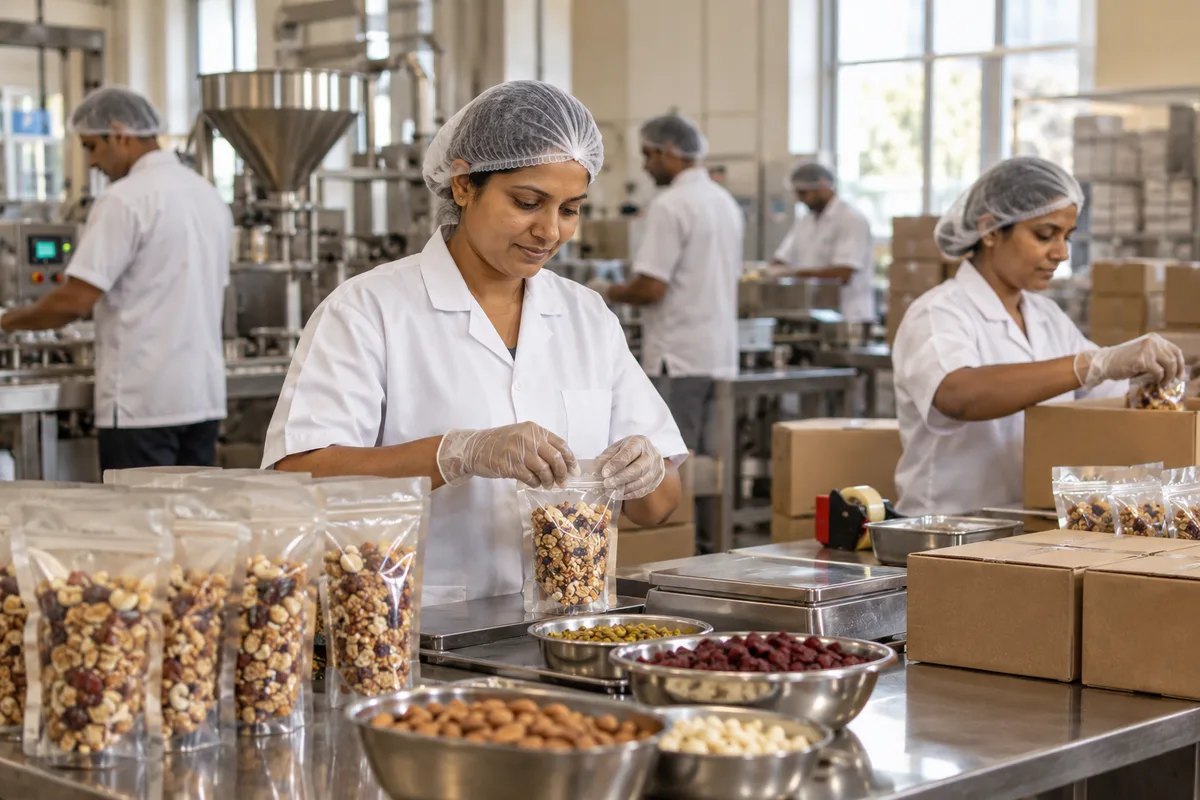
What website means
A website is the page a customer lands on after searching, clicking an advert or scanning a code, and it decides whether they call or leave. GullySales builds and maintains sites that load quickly, explain the offer plainly and make the enquiry form or phone number easy to find.
Also for food product manufacturers
- SEO for food product manufacturers
- Local SEO for food product manufacturers
- PPC ads for food product manufacturers
- Lead generation for food product manufacturers
- Digital marketing for food product manufacturers
- Social media marketing for food product manufacturers
- Content marketing for food product manufacturers
- Email marketing for food product manufacturers
Sales and marketing for food product manufacturers, the overview.
Last updated 5 Oct 2026. Rules for this trade differ by state and professional body, and they change. We describe restrictions in general terms, so check the current position with your own council or adviser before you publish anything.
For food product manufacturers
Where it usually goes wrong, and what we would do.
“The buyer checks the licence before the second call”
A supermarket buyer or exporter wants to see that the maker is a registered food business with proper labelling. If the website hides this or has none, the call ends politely. A clear company page with licence details and plant information settles the first doubt.
“A range page that shows only pretty packs”
Photographs of jars and pouches please a shopper but do not tell a purchaser the pack weights, case size, ingredients or shelf life. The page that answers these questions gets the enquiry. A table beside each product earns the call.
“The enquiry form asks too little or too much”
A form with only a name and number brings vague calls, and a form of fifteen fields is abandoned. A bulk buyer wants to state product, quantity and city, and the team wants to reply with a rate. The form needs the fields that let the reply be useful.
“Mobile visitors outnumber the desktop buyer”
A distributor or shopkeeper opens the link from a WhatsApp message on a phone. Heavy images and tiny tables make them leave. The site has to load and read well on a mid-range phone with a patchy connection.
What we do
What we deliver for food product manufacturers.
Every deliverable, what it covers for you, and the result it is there to produce. Nothing here is an extra.
Range pages with trade details
Each product with pack sizes, case quantity, ingredients as printed on the pack and ordering information.
Result: A purchaser finds the specification without calling.
A company and compliance page
Plant description, licence details and certificates you hold, set out plainly and kept current.
Result: Buyers see who you are before they ask.
Separate enquiry routes
One form for distributors, one for bulk and HoReCa buyers and one for export, each asking what that buyer must state.
Result: The right person gets the right enquiry.
A phone-first layout
Pages built to read on a small screen, with a call and WhatsApp button placed where a thumb reaches.
Result: The link forwarded in a chat opens cleanly.
Content the owner can edit
A simple way to change prices, packs and notices without waiting on a developer.
Result: New launches and festival packs go up when you are ready.
How the result is measured
- Page load time
- Bounce rate
- Enquiries from the website
Recorded as a baseline before work starts, so every later report has an honest comparison.
Searches your buyers type
What a distributor, a chain buyer and a shopper look for on a food brand's site.
- become a distributor
- Districts open, margin structure in outline, what you ask of the distributor and a form for godown, vehicle and current brands. The sales head reads each one.
- private label food manufacturer
- A page for contract buyers stating what you make, the minimum batch, packing options and the licence details, with a form for the buyer's brief.
- brand name plus ingredients
- Range pages carrying ingredients, pack sizes and shelf life exactly as printed on the label, for a shopper who wants to check before buying.
- FSSAI licence and company details
- A page showing the licence as issued and the company address, since a chain buyer checks it before a second call.
- where to buy near me
- A list of towns and outlet types that stock the pack, updated by the sales officer so a shopper finds the nearest shelf.
Who it is for
This is written for these food product manufacturers.
- Spice, masala and blended powder makers
- Pickle, chutney and preserve manufacturers
- Namkeen, snack and savoury makers
- Sweets and traditional confectionery producers
- Ready-to-cook and instant mix brands
- Millet, health food and organic brands
- Flour mills and grain processors
- Beverage, juice and syrup makers
- Private label and contract food manufacturers
- Food exporters and merchant exporters
Not for
It is not the right fit if.
- No one will update the licence and stockist pages, so the site would show expired details to a chain buyer.
- Your range changes each season, so a site built around fixed packs would be out of date.
- The owner wants an online shop but has no courier or packing arrangement, so orders would sit unfilled.
How it works
How the website work runs
The work itself, in order. How an engagement starts, from your brief to a written scope, is set out on our method page.
- 1
Confirm structure and content
We agree the page list, what each page must answer, and who supplies the text and photographs, before any design starts.
- 2
Design the templates
The home page, a service page, a location page and the enquiry page are designed first, on phone and desktop, and shown to you.
- 3
Build and test
The site is built and checked on real phones and the common browsers. Every form, call button and WhatsApp link is tested end to end.
- 4
Load real content
Actual copy, images and information replace placeholders. Pages are read through once by you, since you spot wrong details we cannot.
- 5
Check before launch
Tracking, page titles, the sitemap and the privacy page are checked on the staging site. If an old site exists, its addresses are mapped so old links still land somewhere.
- 6
Launch and hand over access
The site goes live and we record the domain, hosting, content login and analytics in your name. The first live enquiry is traced to confirm tracking works.
Where this fits
Three pieces of sales work, in this order.
This work sits inside sales process design, at stage 1, prospecting and lead generation. The audit comes before it, and sales management keeps it running.
Step 1
Sales audit
Find where deals are being lost and what to fix first.
Start here if you cannot say where orders are lost.
Step 2 · you are here
Sales process design
One written way to sell, from first enquiry to repeat order.
Start here if every salesperson sells differently.
Step 3
Sales management
A target, a review routine and someone who owns the number.
Start here if the team has targets and no routine.
FAQ
Questions owners ask before they call.
Not here? More answers, or ask on WhatsApp.
Do we need an online shop or just an enquiry site?
Can we put nutrition or health claims on the site?
Will the website bring distributors by itself?
Does a food site need more than an ordinary company site?
How much does it cost?
How long is the contract?
How soon will we see results?
Who will actually do the work?
What do you need from us?
What if we are not happy with the work?
From the blog
Further reading for food product manufacturers.
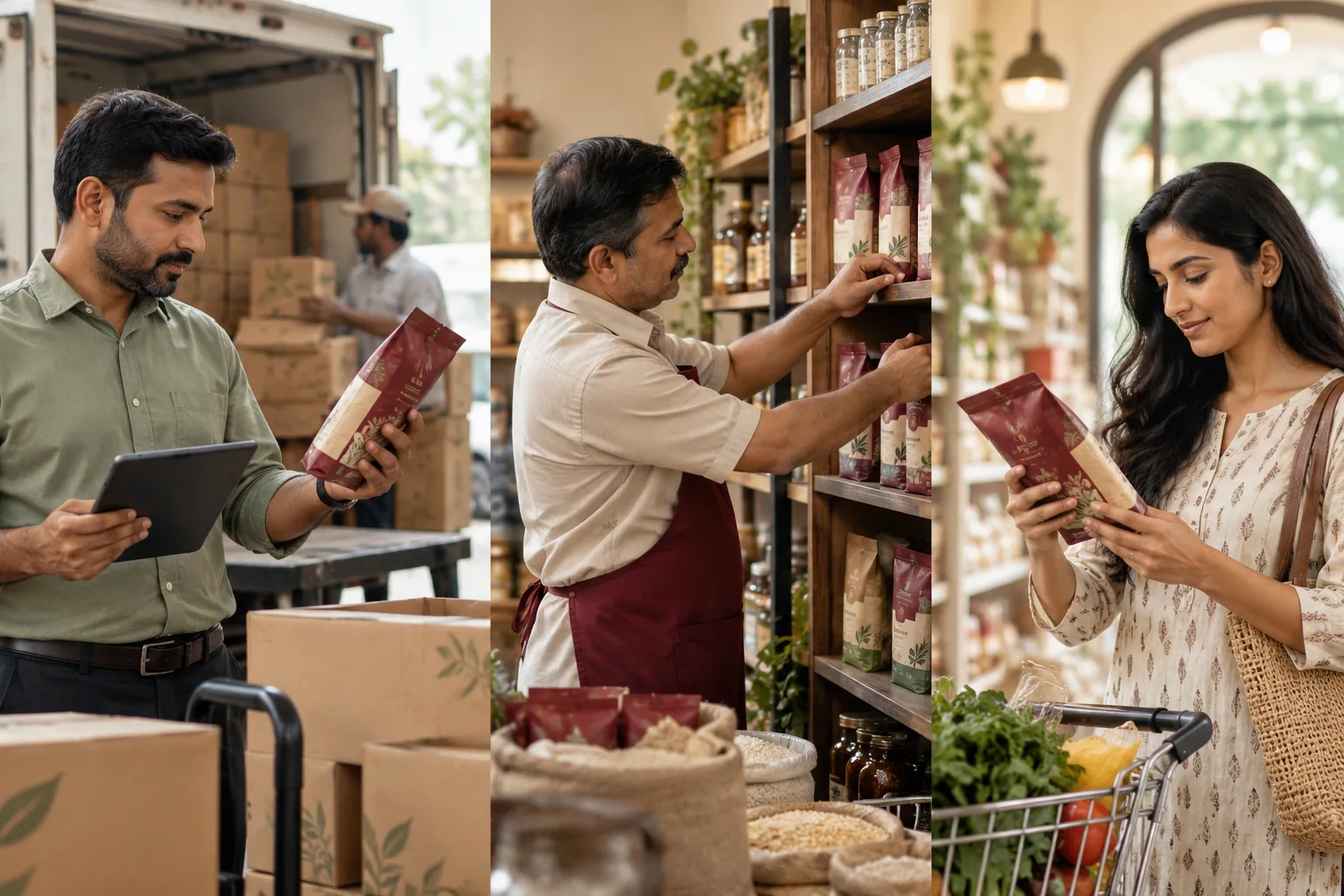 5 min read · 6 Oct 2026How food brands win the trade and the shopperA packed food or household brand is chosen twice: by the distributor, retailer or kitchen that stocks it, then by the shopper who picks it up. Here is what each buyer checks and where brands lose both.
 6 min read · 21 Sept 2026TV advertising vs OTT advertising: what are you actually buying?Television sells slots against ratings and prices the wastage in. OTT sells impressions to chosen people and charges for the choosing. Same film, two shops.
 8 min read · 21 Sept 2026How to advertise to distributorsA distributor is deciding whether to put working capital into your stock. Advertising that hides the investment, the margin and the territory brings you hundreds of enquiries and no distributor.
More for food product manufacturers
Everything else we would do for you.
Closest to this: search and visibility
Also for food product manufacturers
Or start from the overview: sales and marketing for food product manufacturers.
Your next practical step
Tell us what you are trying to grow, and we will read it before we call.
Eight short steps, mostly taps. Skip anything you would rather answer on the call.